What you actually pay for a diamond tennis bracelet or necklace
Diamond Tennis Bracelet
What you actually pay
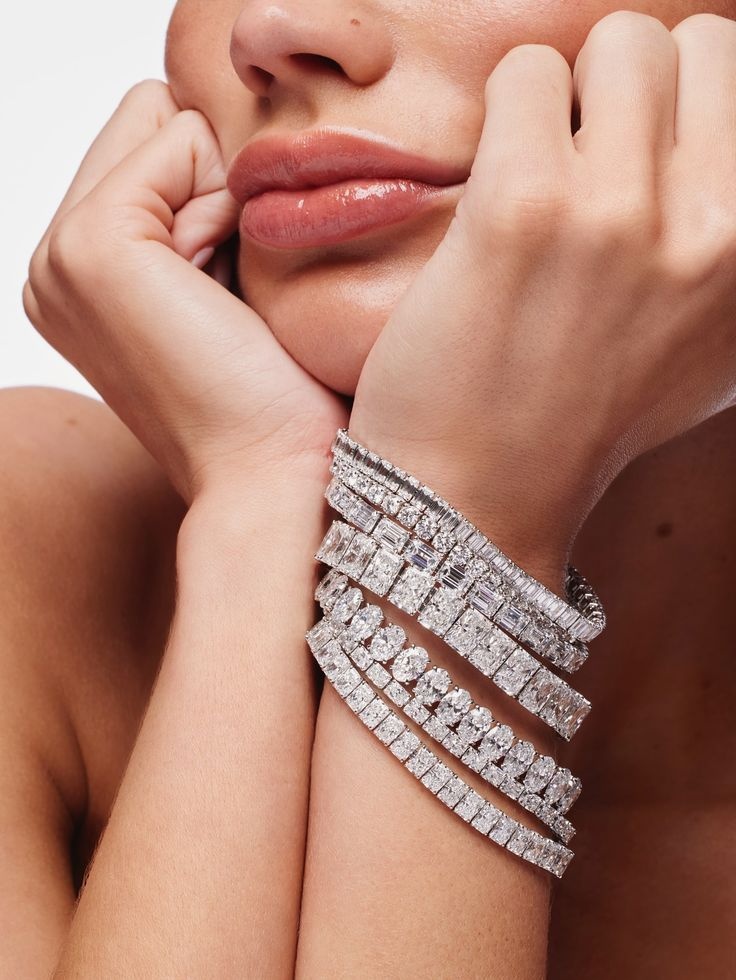
A diamond tennis bracelet or necklace in this edit starts at $1,895 and runs to $40,000, and almost all of that gap is carat weight. Below about $5,000 you are buying somewhere between 0.3 and 2.5 total carats, usually in 14-karat gold, often bezel set. Between $5,000 and $15,000 the stones get bigger or the line gets longer, which is why the necklaces cluster here rather than the bracelets. Above $17,500 you are paying for size, matched color across every stone, and in the top pieces a full riviere of graduated diamonds. The pattern holds across both retailers in this edit. Price per carat is not flat either, so a 5 carat line is far more than five times a 1 carat one: at benchmark quality, a 1 carat round runs roughly $4,000 to $6,000 per carat while a 2 carat runs $11,000 to $14,000 per carat (thediamondprice.com, April 2026). That is the real reason the jump from $5,000 to $40,000 buys less extra sparkle than it looks like it should.
The entry band: $1,895 to $4,895

14K Gold Baguette Diamond Tennis Section Necklace, 0.3 tcw
Lana Jewelry
$1,895

Diamond Tennis Bracelet in 14K Gold, 1.0 tcw
Bloomingdale's Fine Collection
$1,995

Diamond Bezel Tennis Bracelet in 14K White & Yellow Gold, 0.98 tcw
Bloomingdale's Fine Collection
$2,194.5
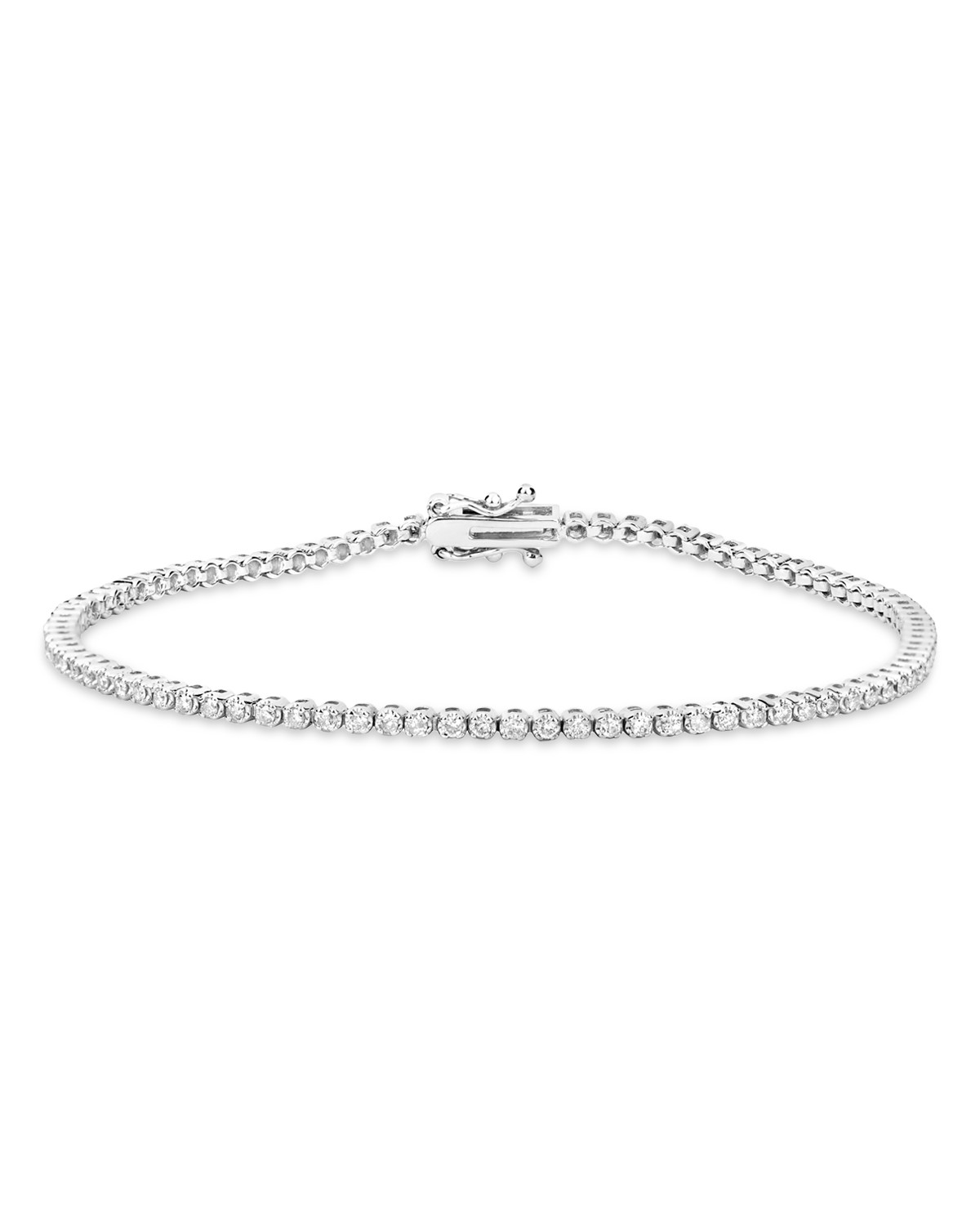
14K White Gold Diamond Tennis Bracelet
Meira T
$2,250

14K Gold Graduating Diamond Blake Tennis Necklace, 0.64 tcw
Lana Jewelry
$2,945

Diamond Station Tennis Bracelet in 14K Yellow Gold, 1.50 tcw
Bloomingdale's Fine Collection
$3,344

Tennis Bracelet, Petite in 14K Gold, 2.44ctw Round Brilliant Lab Grown Diamonds, 6.5"
Vrai
$4,600
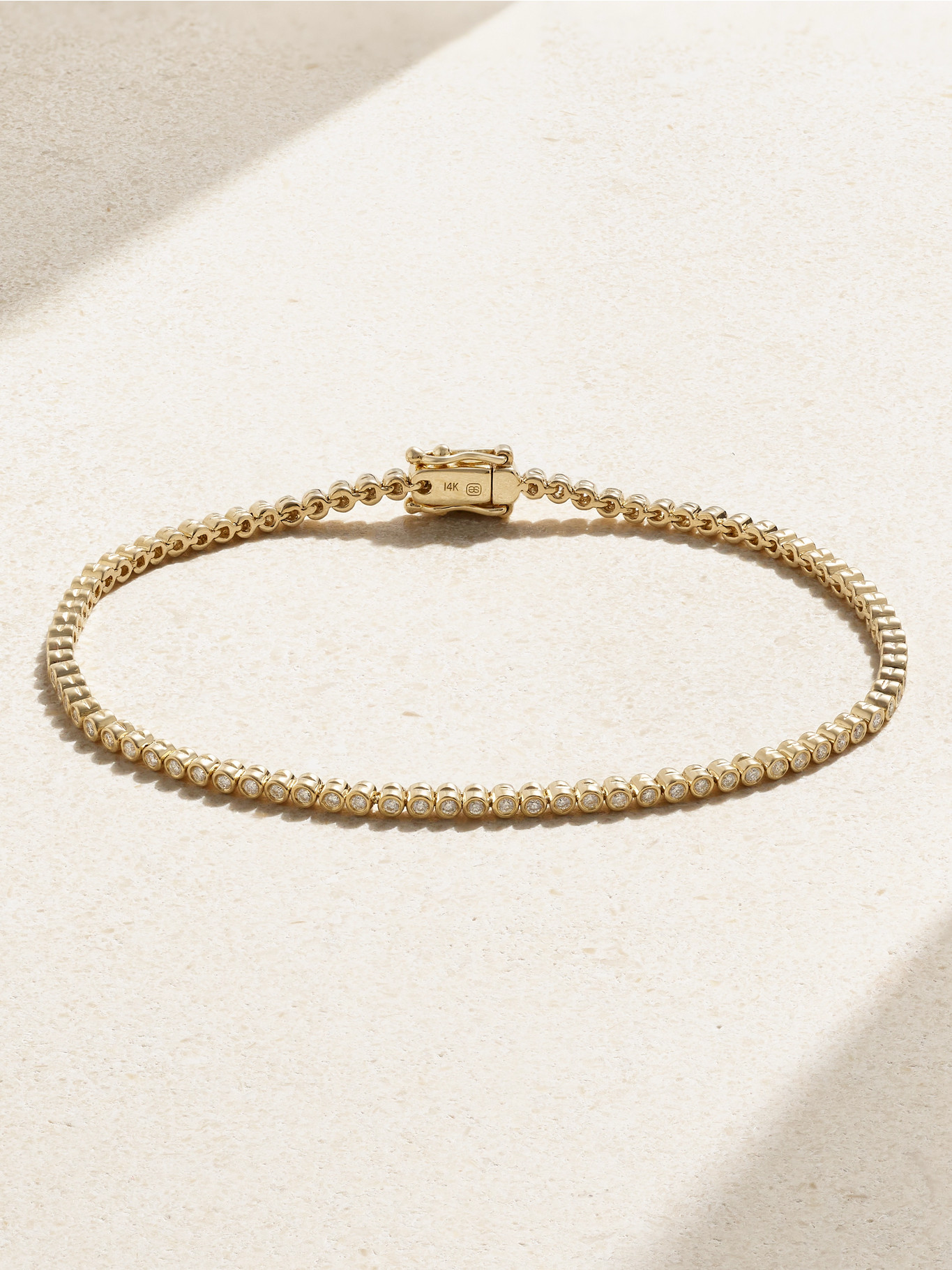
Eternity 14-karat gold diamond bracelet
Sydney Evan
$4,895
Where the money goes
Three things move the price inside a band, and carat weight is only the first. The setting matters more than most people expect. Four-prong settings show the most stone and the most light, bezel settings hide a rim of gold around each diamond and read quieter on the wrist, and a station or scattered line spaces the stones out so a modest total weight covers a full circumference. That is how a 0.98 carat bezel bracelet and a 3.25 carat prong-set one can sit within a few hundred dollars of each other. Second is the metal: 18-karat costs more than 14-karat and holds a warmer color, which is visible in the yellow-gold pieces here. Third is origin. Lab-grown stones run roughly 60 to 85 percent below natural per carat (thediamondprice.com, April 2026), which is why the two lab-grown Vrai pieces in this edit carry far more total weight than their prices suggest. None of that makes them a lesser purchase, but do not compare their carat figures directly against the natural lines.
The middle: $5,470 to $14,500
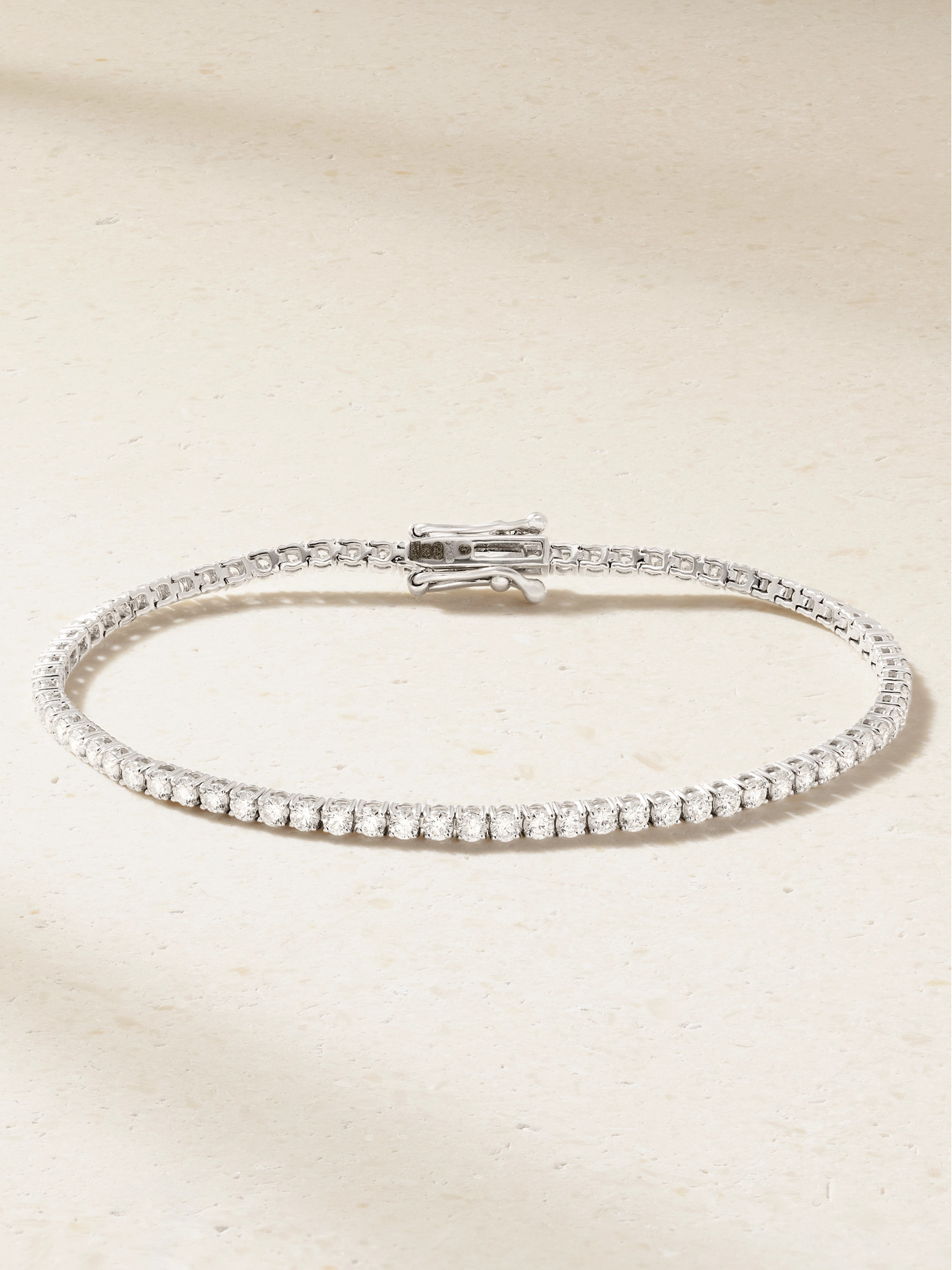
14-karat white gold diamond tennis bracelet
Stone and Strand
$5,470

Tennis Necklace, Petite in 14K Gold, 6.40 ctw Round Brilliant Lab Grown Diamonds, 16"
Vrai
$5,520

Diamond Station Tennis Necklace in 14K Yellow Gold, 1.0 tcw
Bloomingdale's Fine Collection
$6,200
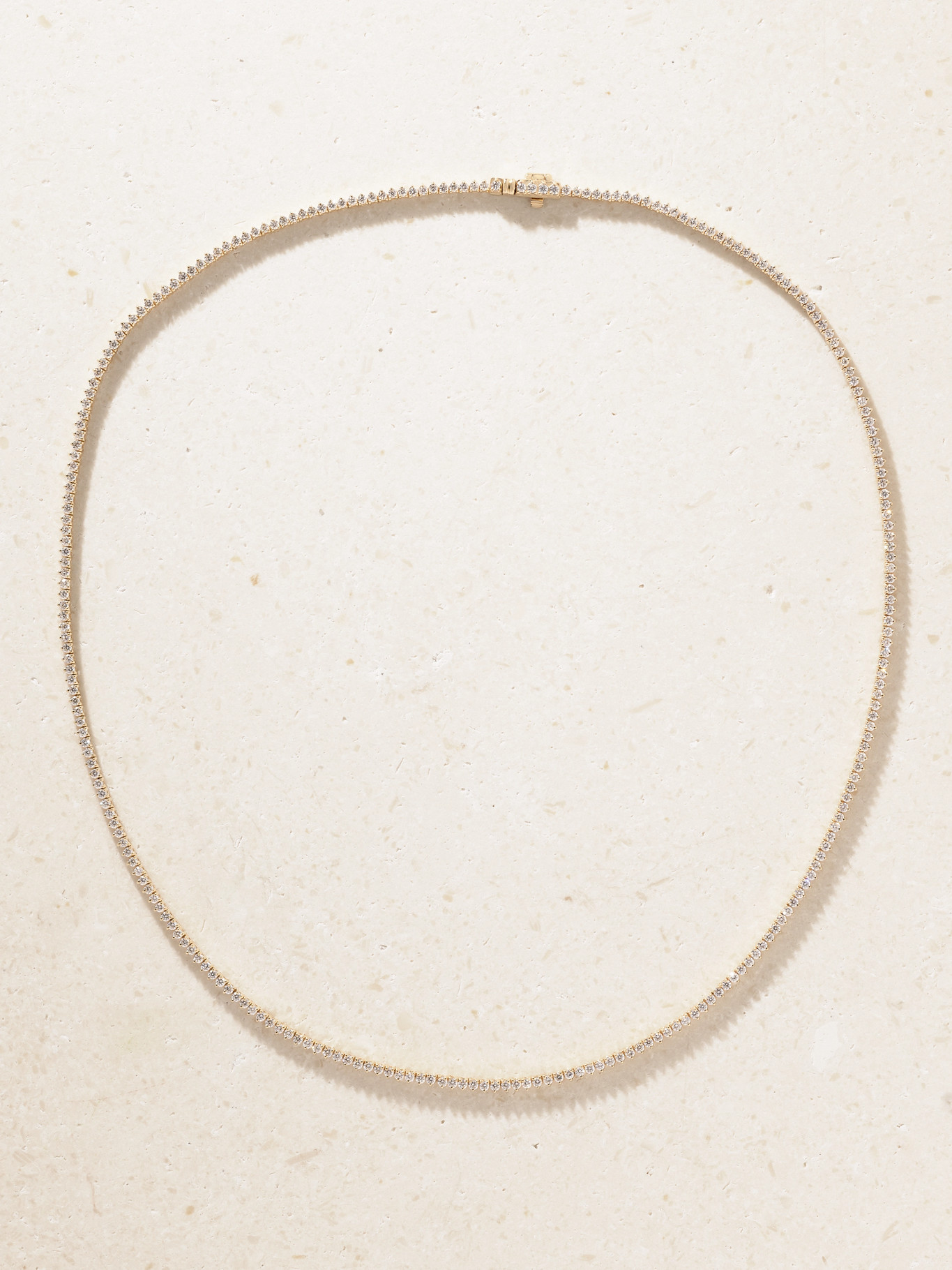
The Essential Dainty 14-karat gold diamond tennis necklace
Stone and Strand
$6,580

Diamond Tennis Necklace in 14K Yellow Gold, 2.0 tcw
Bloomingdale's Fine Collection
$7,800
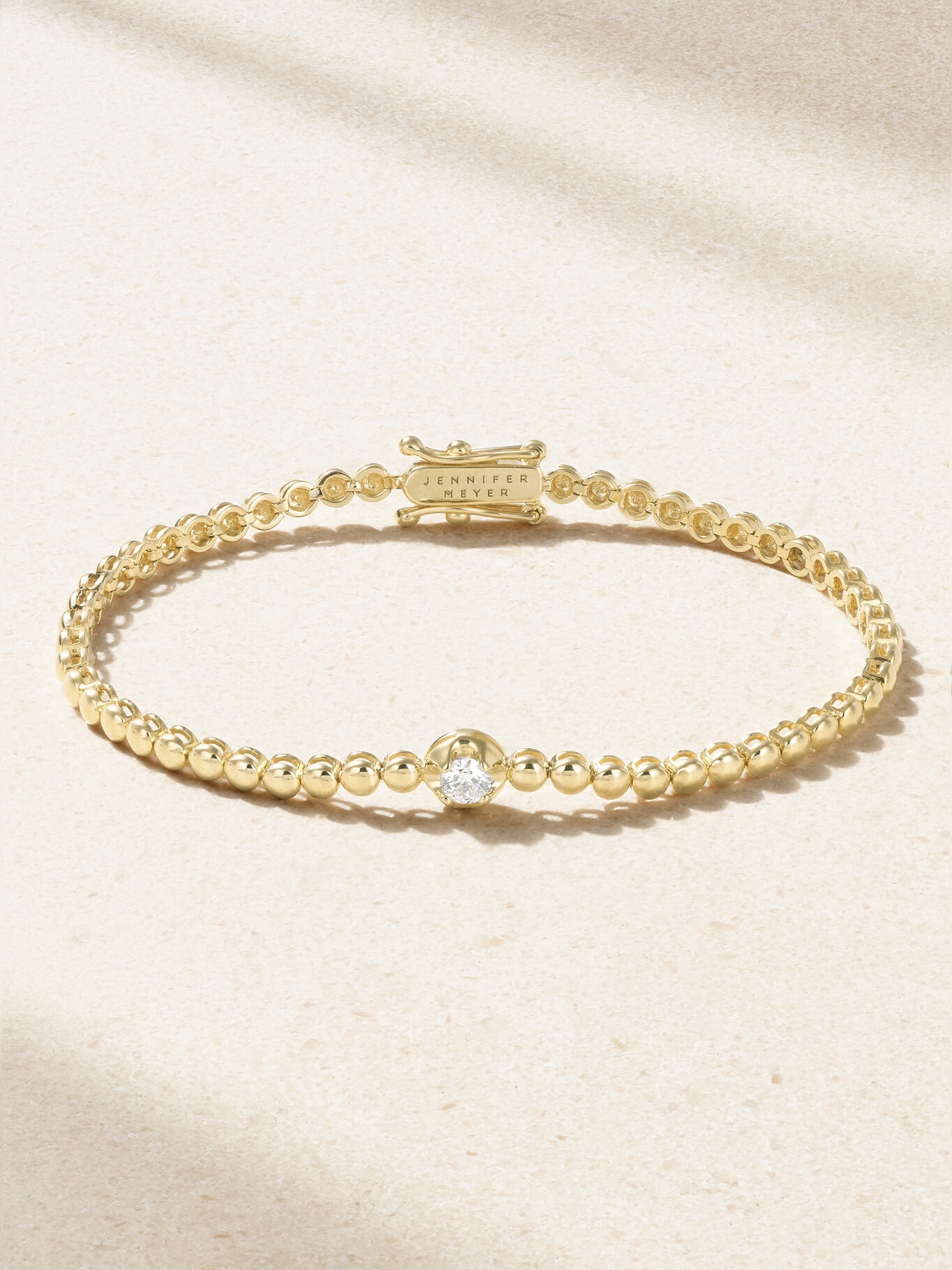
Mini Bezel 18-karat gold diamond tennis bracelet
Jennifer Meyer
$7,950
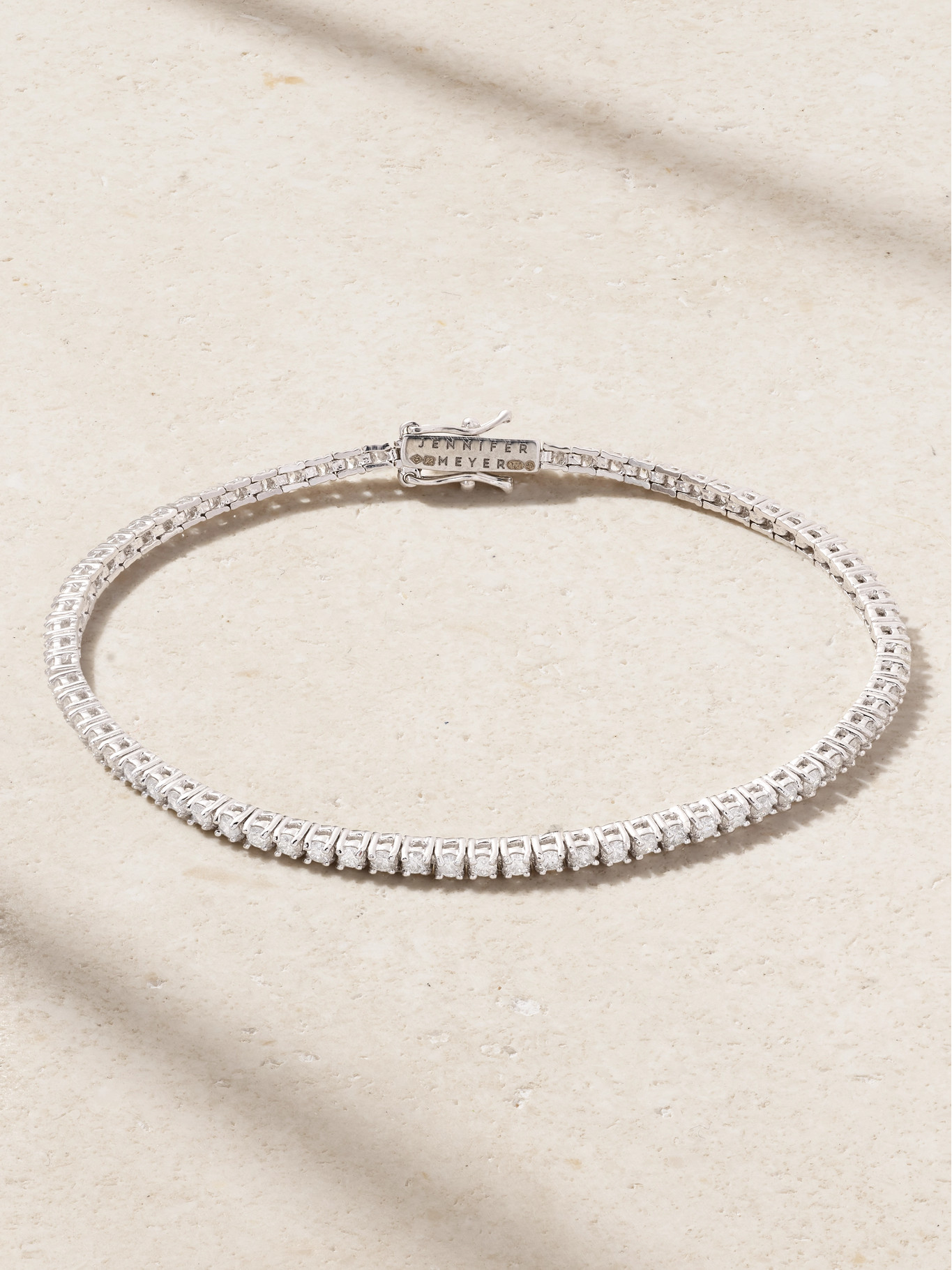
4-Prong small 18-karat white gold diamond tennis bracelet
Jennifer Meyer
$9,450
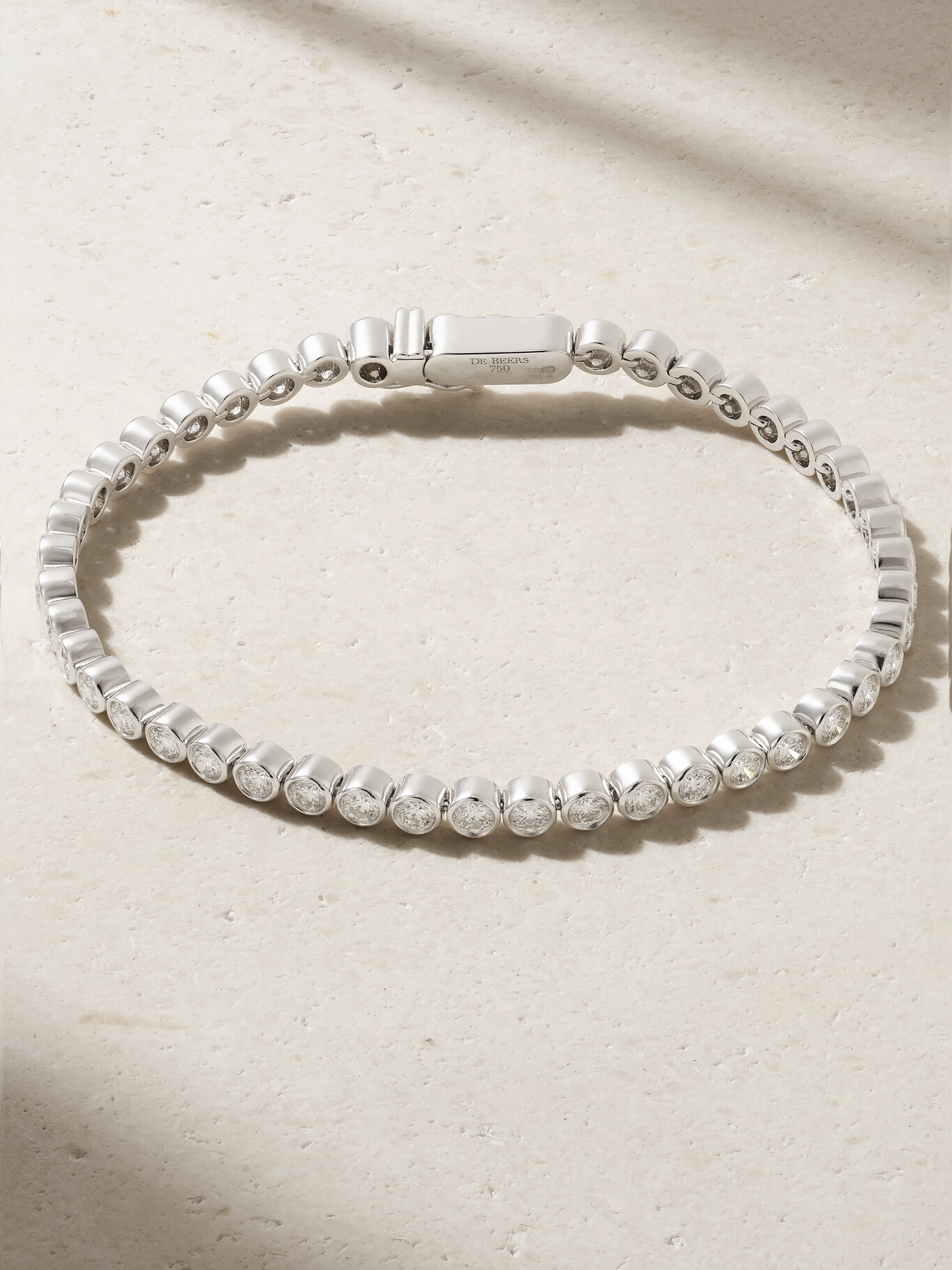
Diamond Lines DB Classic Eternity 18-karat white gold diamond bracelet
De Beers London
$14,500
How to buy one
Decide on length before anything else, because it cannot be changed cheaply. A bracelet should slide but not spin, which usually means a half inch of room beyond your wrist measurement, and a tennis necklace at 16 inches sits at the collarbone while 18 inches drops onto the chest and layers better. Then look at the clasp. A line of diamonds carries real weight, so a box clasp with a figure-eight safety catch is the minimum you want, and the pieces here that show a visible safety bar are the ones you can wear daily without thinking about it. If the piece is graduated, check that the taper is smooth in the photograph rather than stepped. And ask for the certificate on anything above roughly $10,000. Several pieces in this edit are sold as certified, which is worth more at resale than an extra tenth of a carat. Try the piece against the rest of what you wear first, because a white gold line and a yellow gold watch rarely sit well on the same wrist. Buy the setting you will actually wear rather than the biggest number of stones your budget reaches.
The top of this edit: $17,500 to $40,000

Diamond Classic Tennis Necklaces in 14K White Gold, 3.0-7.0 tcw
Bloomingdale's Fine Collection
$17,500

Tennis Necklace, Large in 14K Gold, 20ctw Round Brilliant Lab Grown Diamonds, 16"
Vrai
$19,000
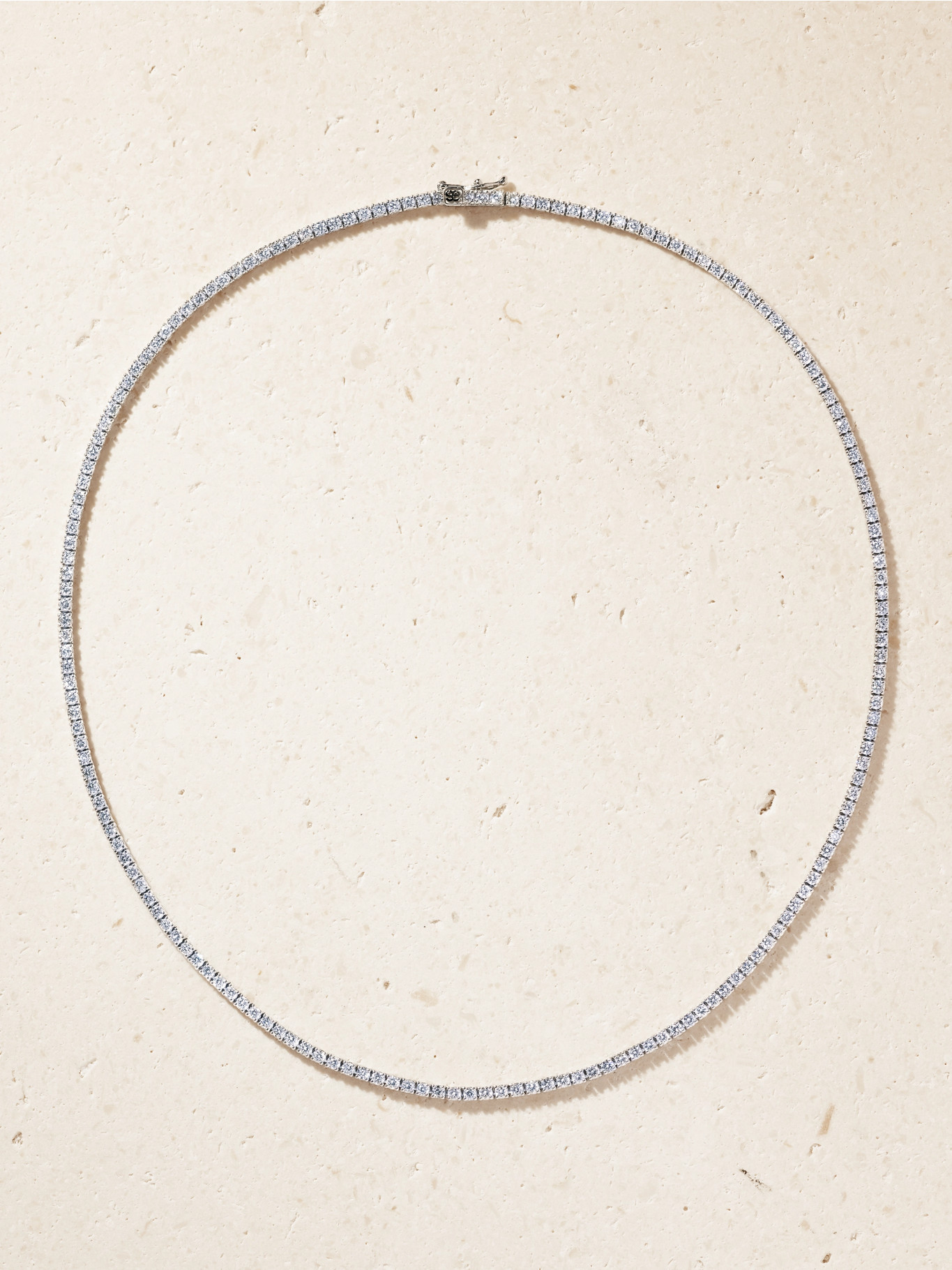
14-karat white gold diamond tennis necklace
Sydney Evan
$20,940
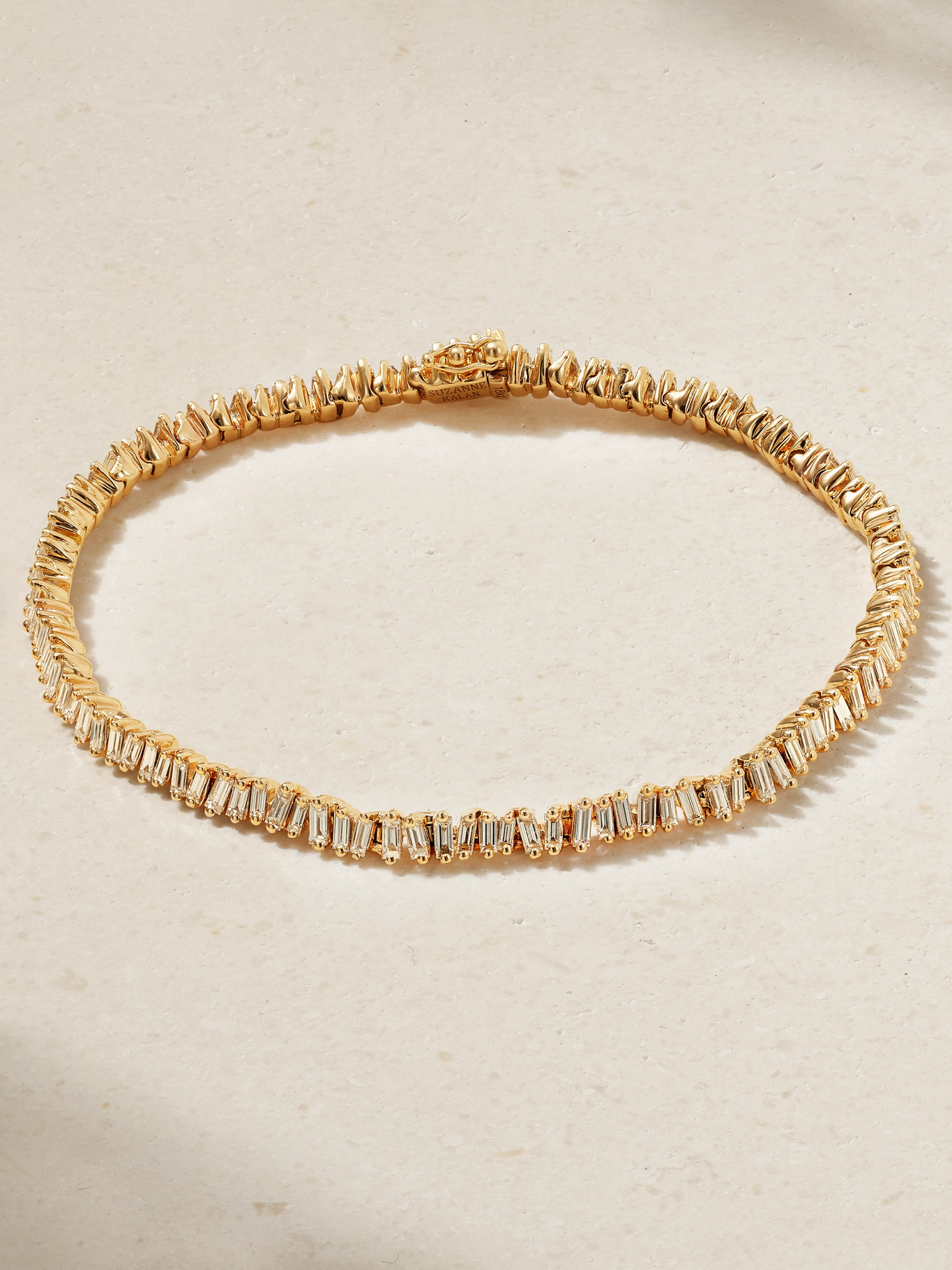
18-karat rose gold diamond tennis bracelet
Suzanne Kalan
$21,000

Certified Diamond Double Prong Tennis Bracelet in 14K White Gold, 5.0 tcw
Bloomingdale's Fine Collection
$24,000
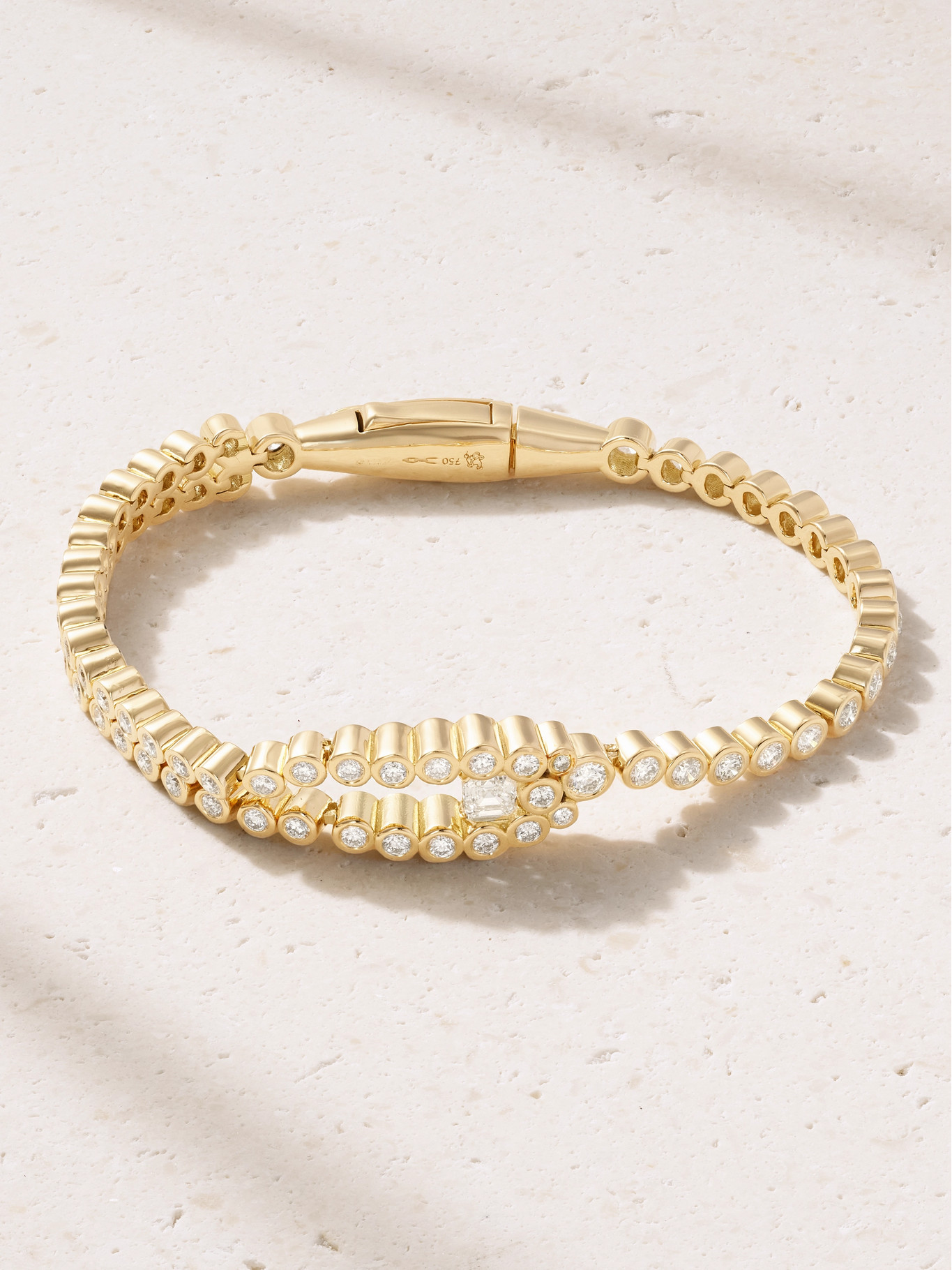
Tension 18-karat gold diamond tennis bracelet
Uniform Object
$29,500
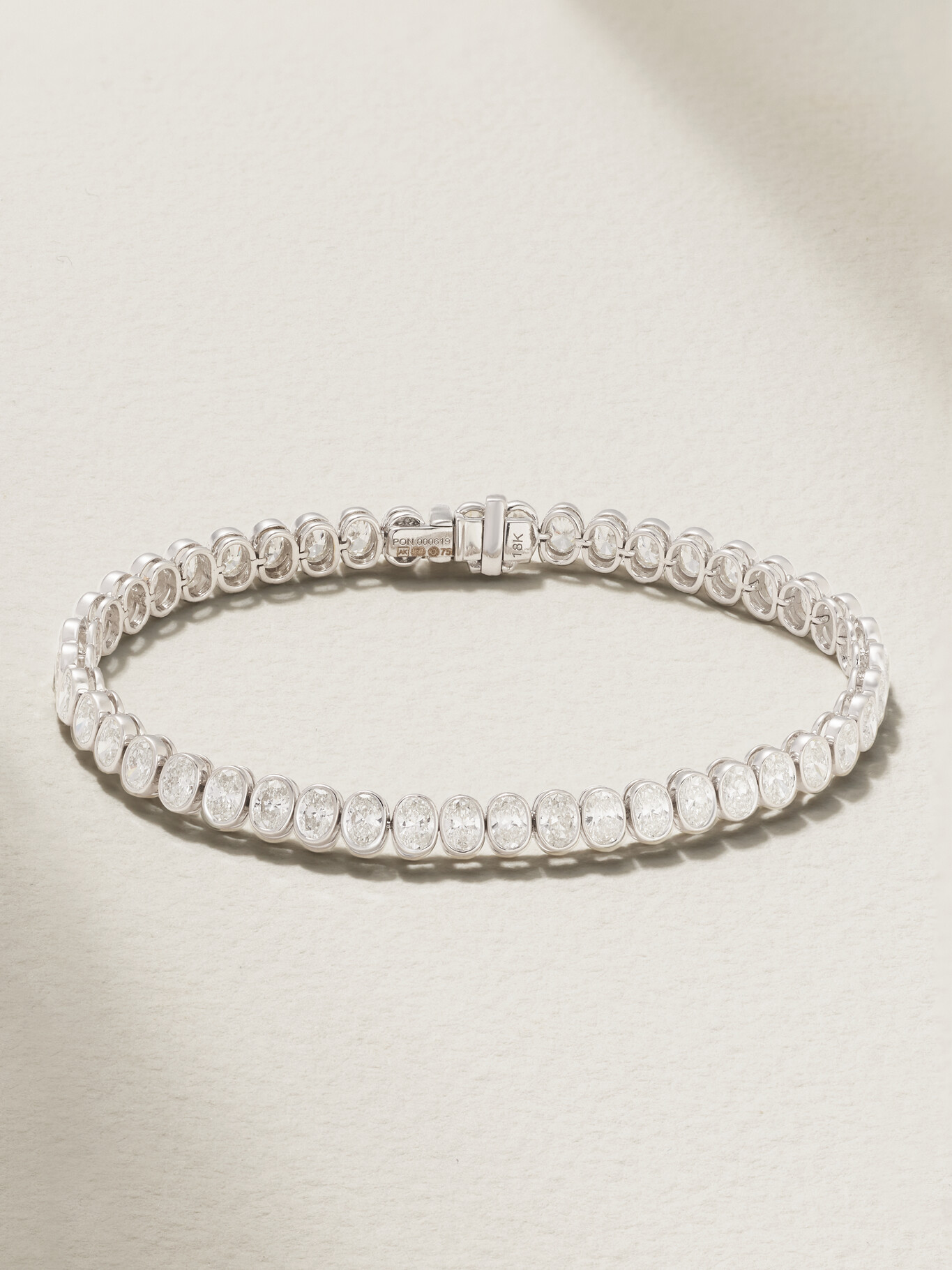
18-karat white gold diamond tennis bracelet
Anita Ko
$37,900

Certified Diamond Tennis Necklace in 14K White Gold, 15 tcw, 16.5"
Bloomingdale's Fine Collection
$40,000
Our honest take
The band that gives you the most for your money here is the middle one. Somewhere between $5,000 and $15,000 you get real stone size, a proper clasp, and a piece that reads as fine jewelry from across a room, without paying the steep per-carat premium that kicks in above two carats a stone. We would skip the very thinnest entry pieces if what you actually want is presence, because at 0.3 to 0.6 total carats a necklace reads as a delicate chain rather than a tennis line, and you will likely trade up within a year. This edit is not for anyone shopping a first piece of fine jewelry on a tight budget, and it is not the place to look for a statement cocktail necklace. If you take one thing away, put your money into carat weight per stone rather than length. A shorter line of bigger diamonds outshines a longer line of small ones every time.