Tailoring that fits off the rail: the shoulder rule, the rise and leg that need no hemming, and the skirts that read as suiting.
Tailoring That Fits Without Alterations

What fits without a tailor
Almost all tailoring needs altering, but the amount varies enormously depending on which measurement is wrong. The rule is simple: shoulders and rise cannot be fixed cheaply, and length can. So the pieces that work straight off the rail are the ones where the shoulder and the rise happen to suit you, whatever the length is doing.
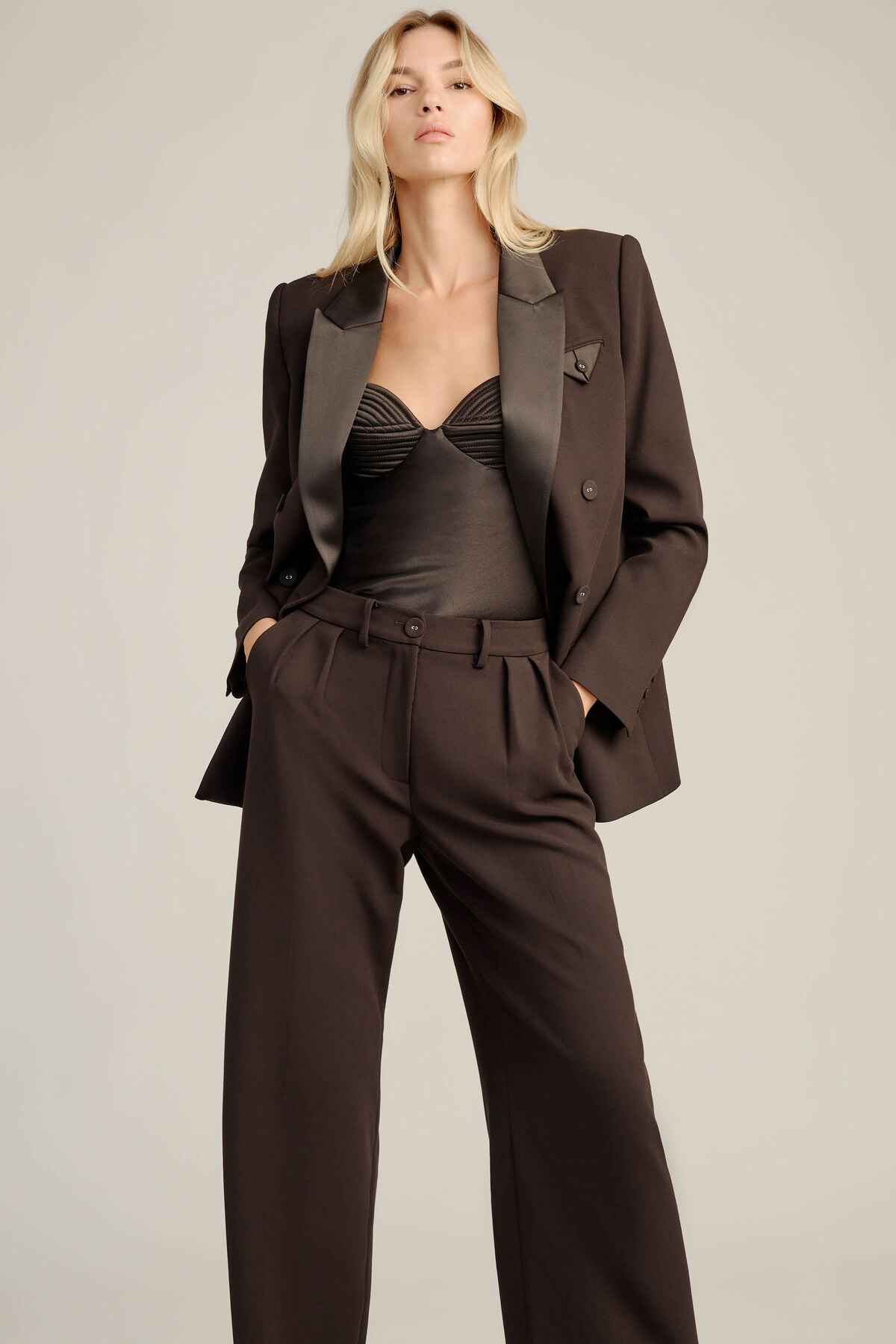
On a jacket, the shoulder seam should end where your own shoulder ends. If it sits past that, the sleeve head collapses and no alteration short of a rebuild fixes it. If it sits inside, the jacket pulls across the back. Everything else on a jacket, sleeve length, waist suppression, hem, is adjustable for a modest amount.
On trousers, the rise is the equivalent. If the crotch sits too low, the leg line is broken and a tailor cannot raise it without recutting the whole seat. Hem length, waist and taper are all easy.
So shop shoulder and rise first, and treat length as a detail. The pieces below are grouped as jackets, trousers, then skirts, which is the order in which the fit gets easier.



The measurements worth checking
For a jacket, four checks in the mirror. Shoulder seam at the shoulder edge. Sleeve ending at the wrist bone, so a shirt cuff can show. The ability to cross your arms in front without the back pulling. And a closure that meets without gaping at the bust, since a gape means the next size up and a waist taken in, not the size you are wearing. Wool crepe, flannel wool and compact milano knit hold a line and forgive a lot. Linen creases by design, and vegan leather and suede do not drape like tailoring at all, whatever they look like on the hanger.
For trousers, measure the rise on a pair you already like and match it. A mid to high rise flatters most shapes and keeps the leg long. Then decide the leg: straight is the most versatile, a wide or palazzo leg needs enough length to avoid looking cropped, and a flare needs a heel to work. The hem should break just above the shoe for a flat and touch the top of the sole for a heel. If the fabric has more than about three percent elastane, it will bag at the knee within a season.
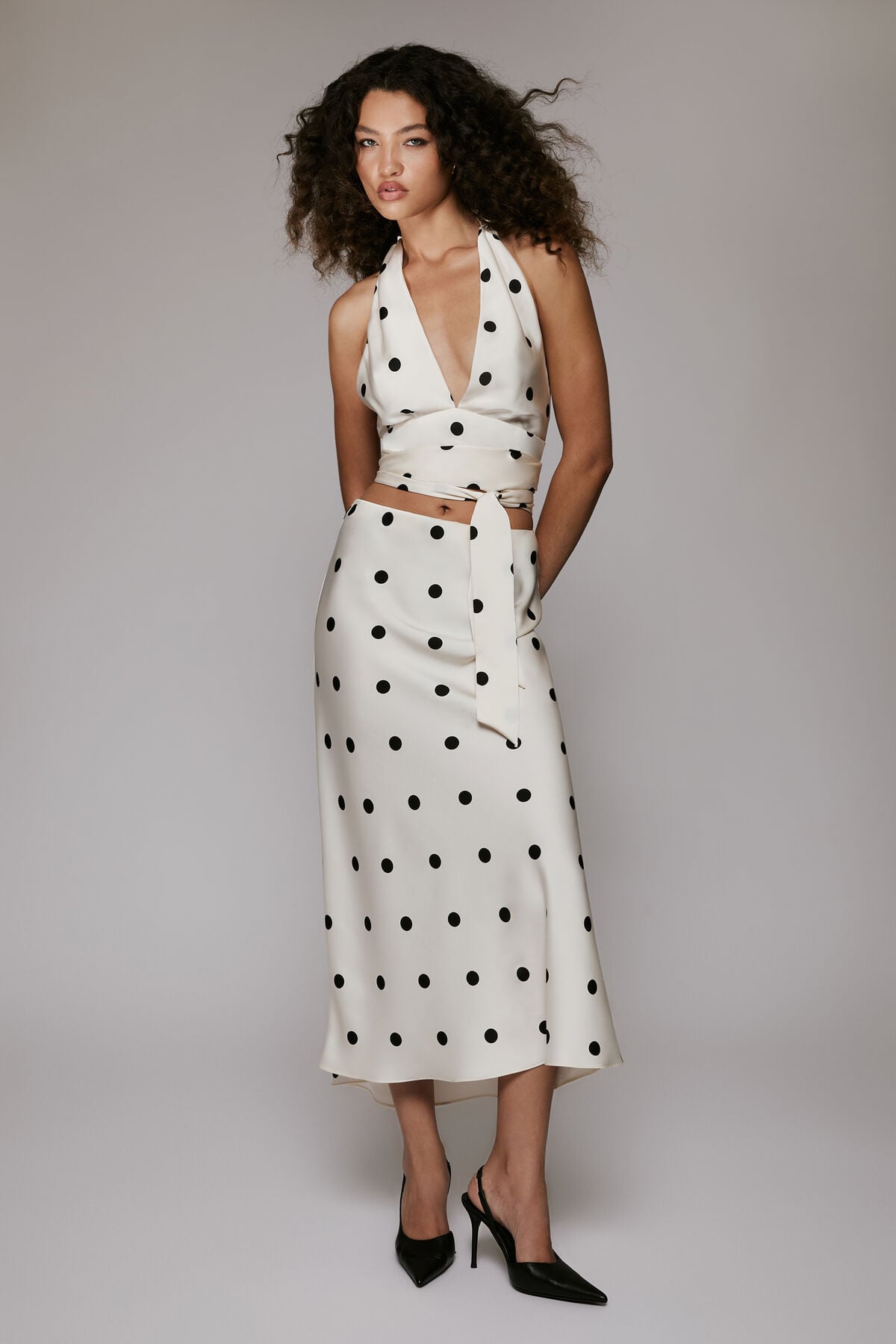
Skirts are the easiest of the three, because only the waist really has to fit. A midi in a suiting fabric, wool crepe, gabardine or a heavier viscose, reads as tailoring and needs no more than a waist adjustment.



Wearing it as separates
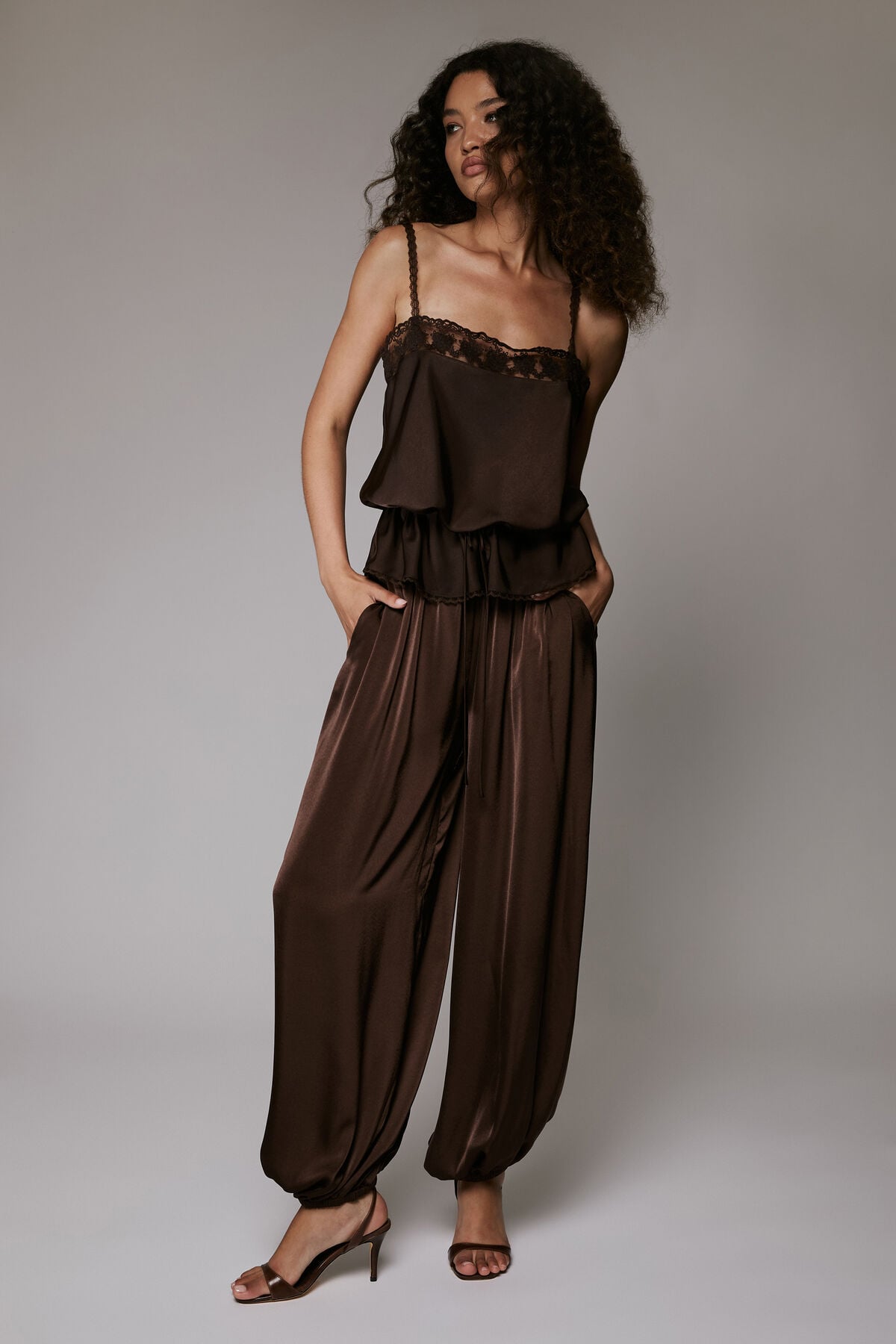
The most useful thing about buying tailoring rather than a suit is that the pieces work apart. Put the jacket over denim and a fine knit, wear the trousers with a silk camisole and no jacket, or pair the skirt with a plain crewneck. A suit worn as a suit is one outfit; the same two pieces worn separately are four.
If you do want the matched look, match the weight as well as the colour. A heavy wool jacket over a light trouser in the same shade still reads as a mismatch, and it is the most common way an expensive suit looks cheap.
Keep the layer underneath thin. Tailoring is cut to close over a shirt or a fine knit, not a sweater, and anything bulkier distorts the front. Push the sleeves up, leave the jacket open, and let the shoulder do the work. On shoes, a flat or a low block heel keeps the proportion honest with a straight leg, and a higher heel is what a wide or flared leg needs to avoid dragging.




A note from the Phia editors
We would rather see someone buy a mid-price jacket with the right shoulder and spend eighty on having the sleeves and waist adjusted than buy an expensive one that fits nowhere. The alteration is almost always the highest-return money in the outfit, and it is the step most people skip.
The corollary is that fabric is worth more than label here. Wool crepe and compact knits in the mid market outperform expensive linen and any vegan leather for how they hang and how they survive a commute. Squeeze the fabric, look at how it falls off your hand, and judge on that.
If you take one thing away, take the two-measurement rule. Shoulder on a jacket, rise on a trouser. Get those right on the rail, treat everything else as adjustable, and tailoring stops being intimidating and starts being the easiest thing in your wardrobe to buy.
Shop brands in this edit






Next read

Silk Camisole, Explained: How to Wear One Beyond Layering
The silk camisole beyond layering: how momme weight and cut change the drape, what to pair it with, and how to wash it without ruining it.
Read Editorial
Cashmere Wrap or Scarf: Which One Actually Travels Better
Cashmere wrap or scarf: which one earns suitcase space, how gauge and size change the answer, and the pullovers and cardigans that go with both.