An arched rose trellis gives climbing roses, clematis and jasmine a frame to hold while adding height to a flat garden. I sorted arches, obelisks and wall panels so you can match the frame to your space.
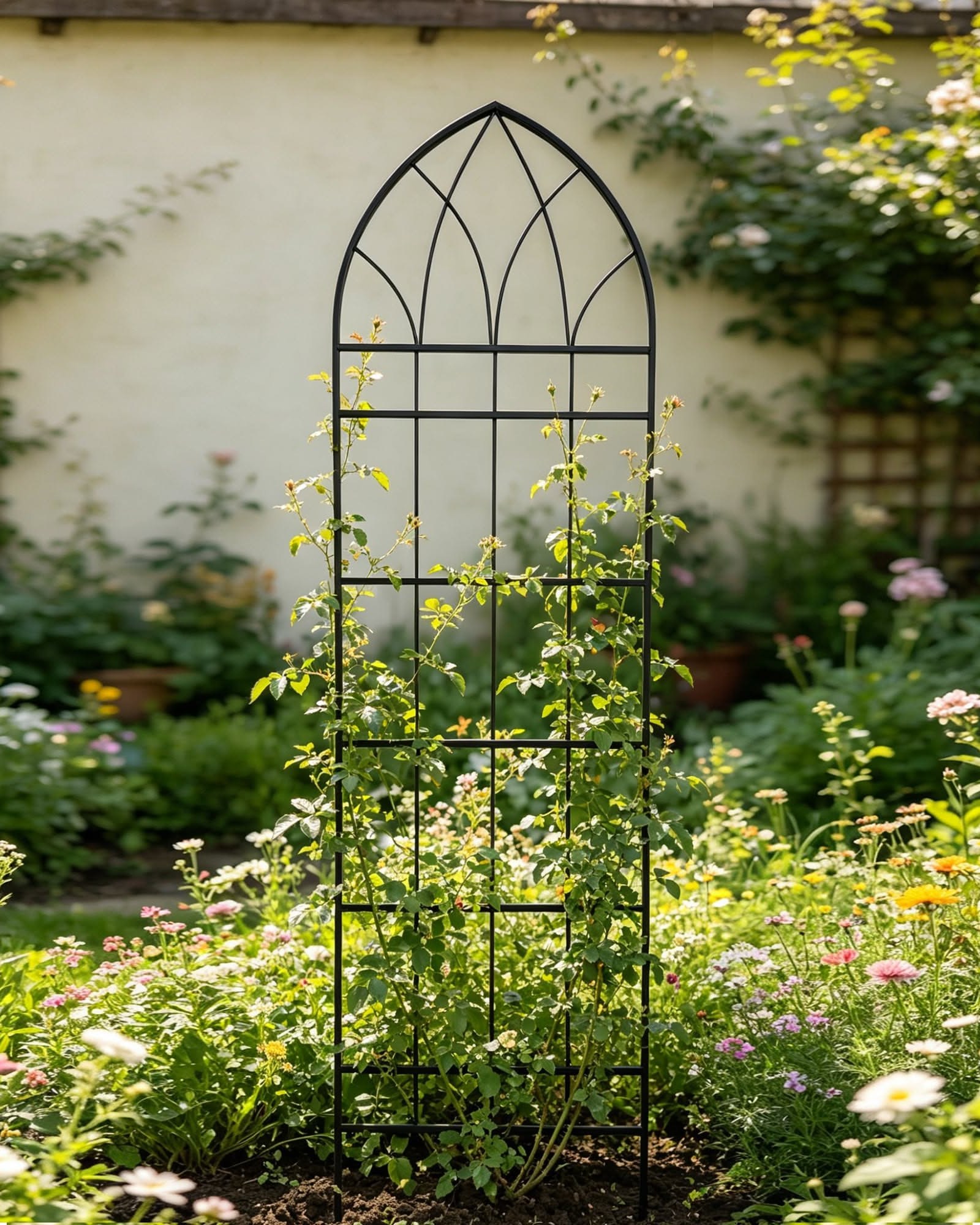
Arched Rose Trellis: Ideas for Climbing Roses and Bare Walls
Why a trellis earns its spot
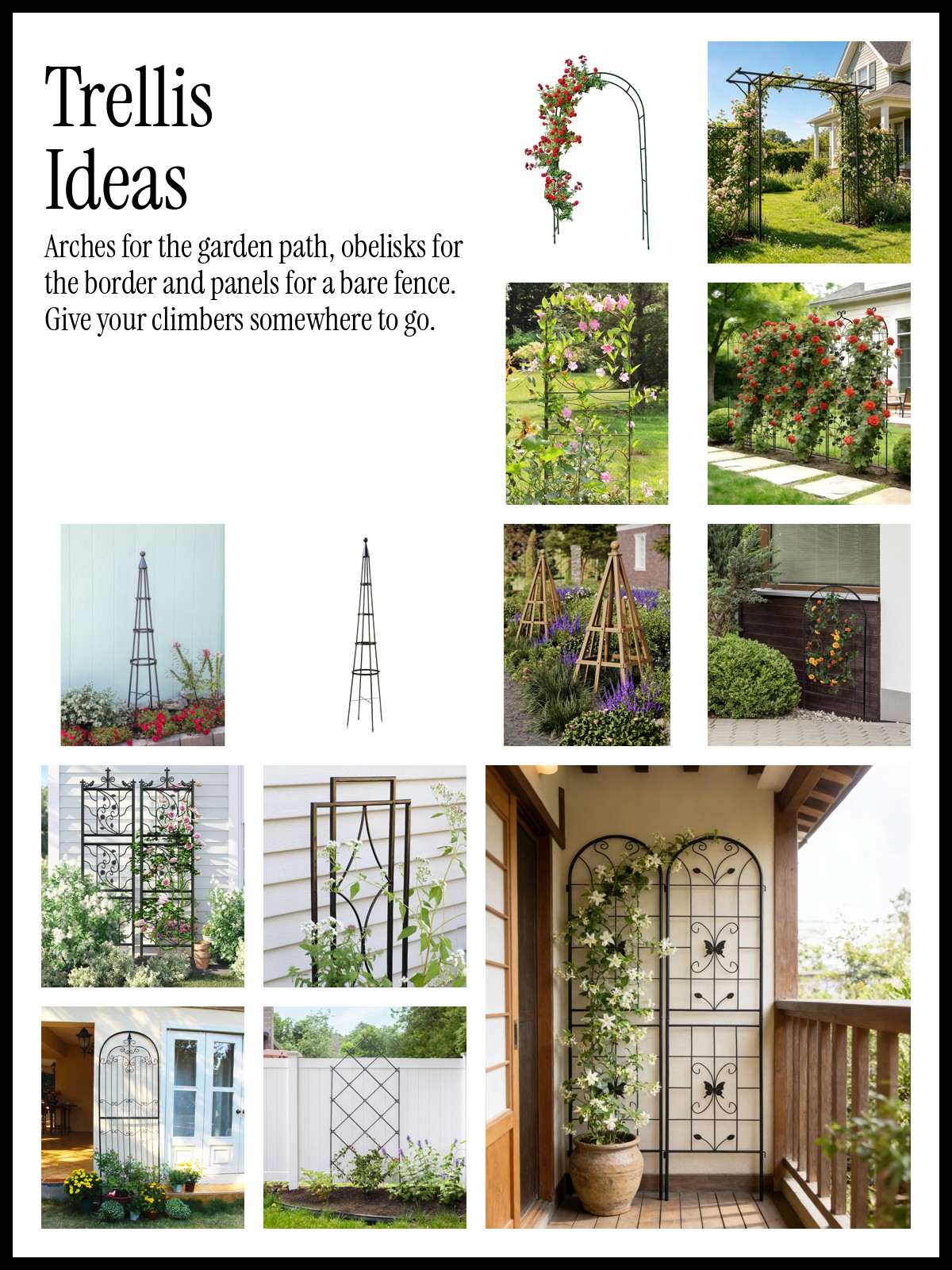
A trellis does two jobs at once: it gives a climbing plant a route upward and it gives the garden a piece of architecture to look at all year. That second job matters more than people expect, because roses and vines spend a long stretch of the calendar bare and a good frame keeps the bed looking planned in the meantime. Arches work best where there is already a path, since walking under something is what makes a garden feel designed rather than planted. A wide black steel arch like the Cupar is made for climbing roses, while the Scrollwork arch is a walk-through piece that reads closer to a small pergola. Choose the frame first, then choose the plant that will take a season or two to cover it.


Obelisks and freestanding trellises
Obelisks are the answer for anyone without a wall or fence to lean on. They sit in a border or a large planter and give sweet peas, clematis or climbing beans a tidy column to spiral up. The shape comes from formal kitchen gardens, where tall pyramids gave climbers somewhere to grow and gave the beds structure through winter. Iron versions with a finial, like the Mckayla and the Alarcon-Chacon, stay crisp when everything around them has died back, while the Vita cedar obelisk brings warm natural wood into the bed. The Winston Porter lattice is the outlier here, a freestanding four foot screen in matte black steel with an arched top.


Trellis panels for walls and fences
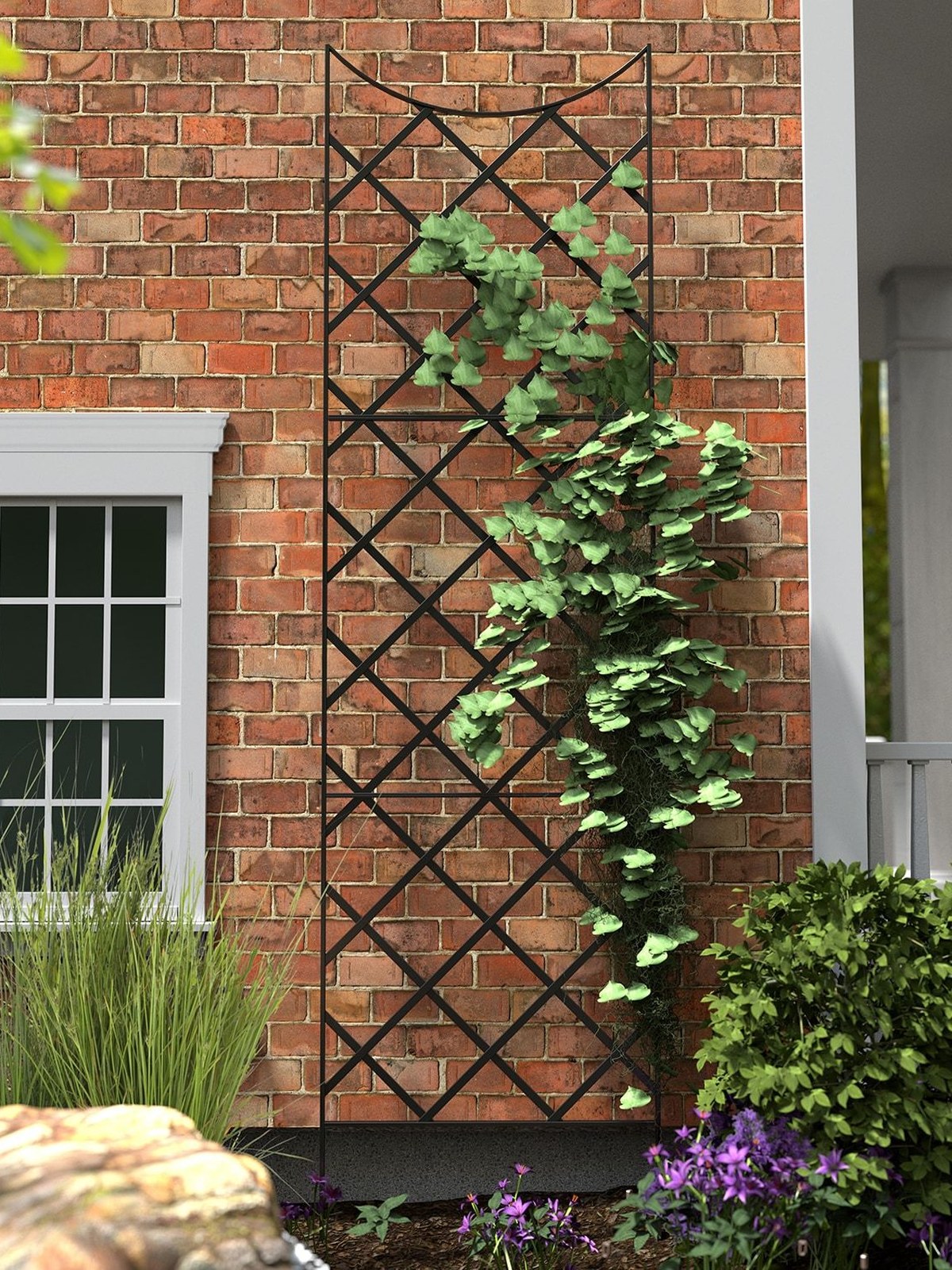
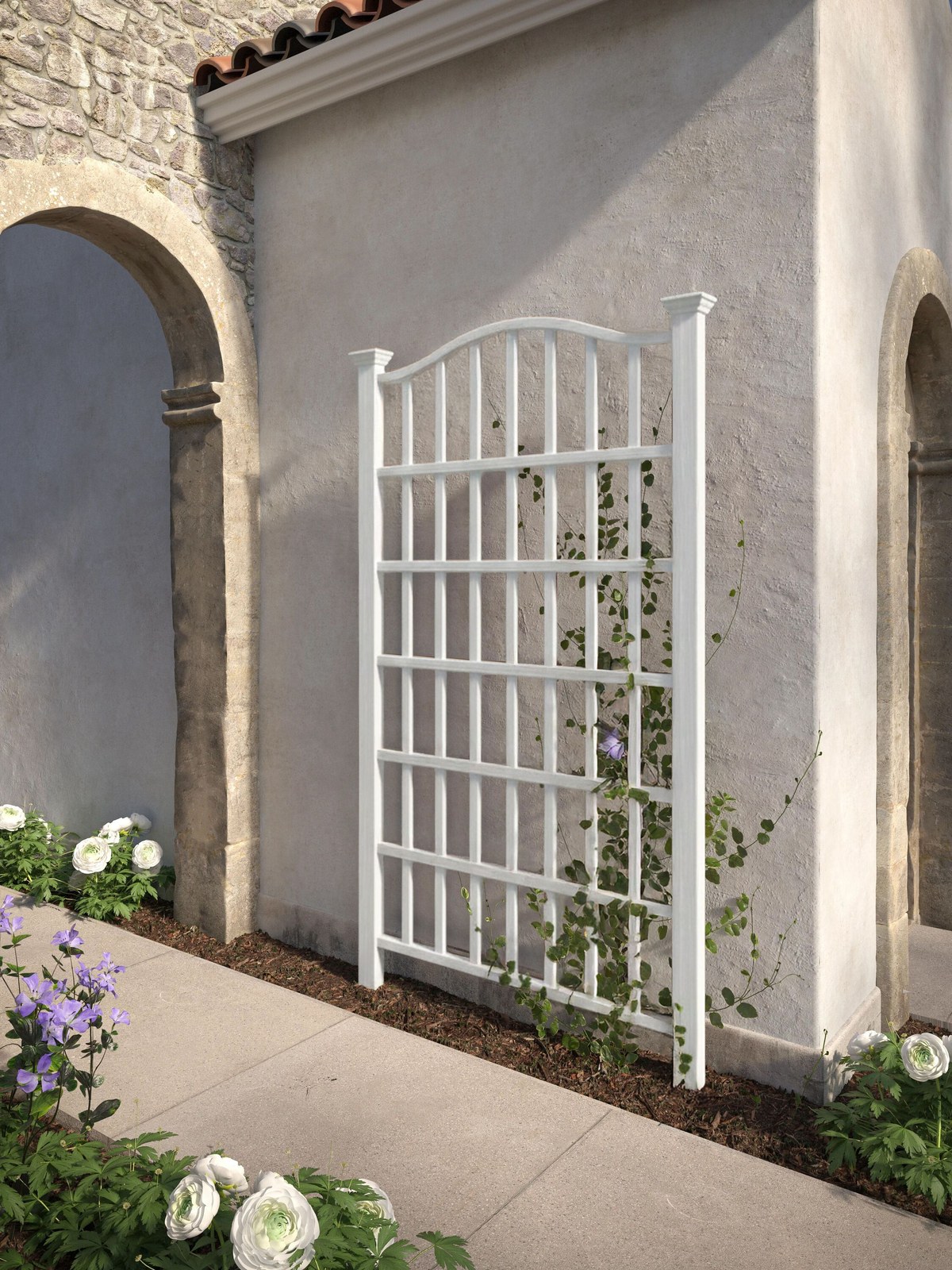
Flat panels turn a blank fence or a bare stretch of brick into something worth planting against. Mount them slightly off the surface so air can move behind the leaves and you can reach in to tie stems as they grow. Gothic and scrollwork patterns, like the Seniya and the Bronislawa, look good with nothing on them, which matters on a wall you see from the kitchen window every day. Diamond lattice, like the Chic Diamonds set and the Mountville panel, is the quieter option and suits star jasmine or climbing hydrangea that will eventually cover most of it. Black iron disappears behind green leaves, so it is the safest finish if you are unsure.