Are Birkenstocks worth it comes down to the pair, and this edit looks at the Arizona, Boston, Gizeh, Madrid, shearling and platform styles through construction, materials and repair. I say yes for the right pair, and I explain who should skip them.
Are Birkenstocks Worth It: The Cork Footbed Built to Be Mended
Are Birkenstocks worth it comes down to the pair, and this edit looks at the Arizona, Boston, Gizeh, Madrid, shearling and platform styles
The case for the Arizona
In 1774, the church archives of Langen-Bergheim, near Frankfurt, list a Johann Adam Birkenstock as a shoemaker. It is the first documented link between the name and the craft, and the family stayed at the bench for generations. That is a long time to keep making the same kind of object, and it is the right place to begin when you ask the plain question: are Birkenstocks worth it.
My answer is yes, for the right person and the right pair. Konrad Birkenstock developed the first fully three-dimensional last in 1897, and his insole was shaped to the foot and flexible, unlike the metal supports of the day. Karl Birkenstock began mass production of the footbed sandal in 1962. The footbed is still the point: a core of cork and latex, two layers of jute, a suede lining where the foot rests. Outsoles, footbeds and uppers can be replaced one by one, and cobblers restore worn pairs. A shoe built to be mended is a different proposition from a shoe built to be replaced.
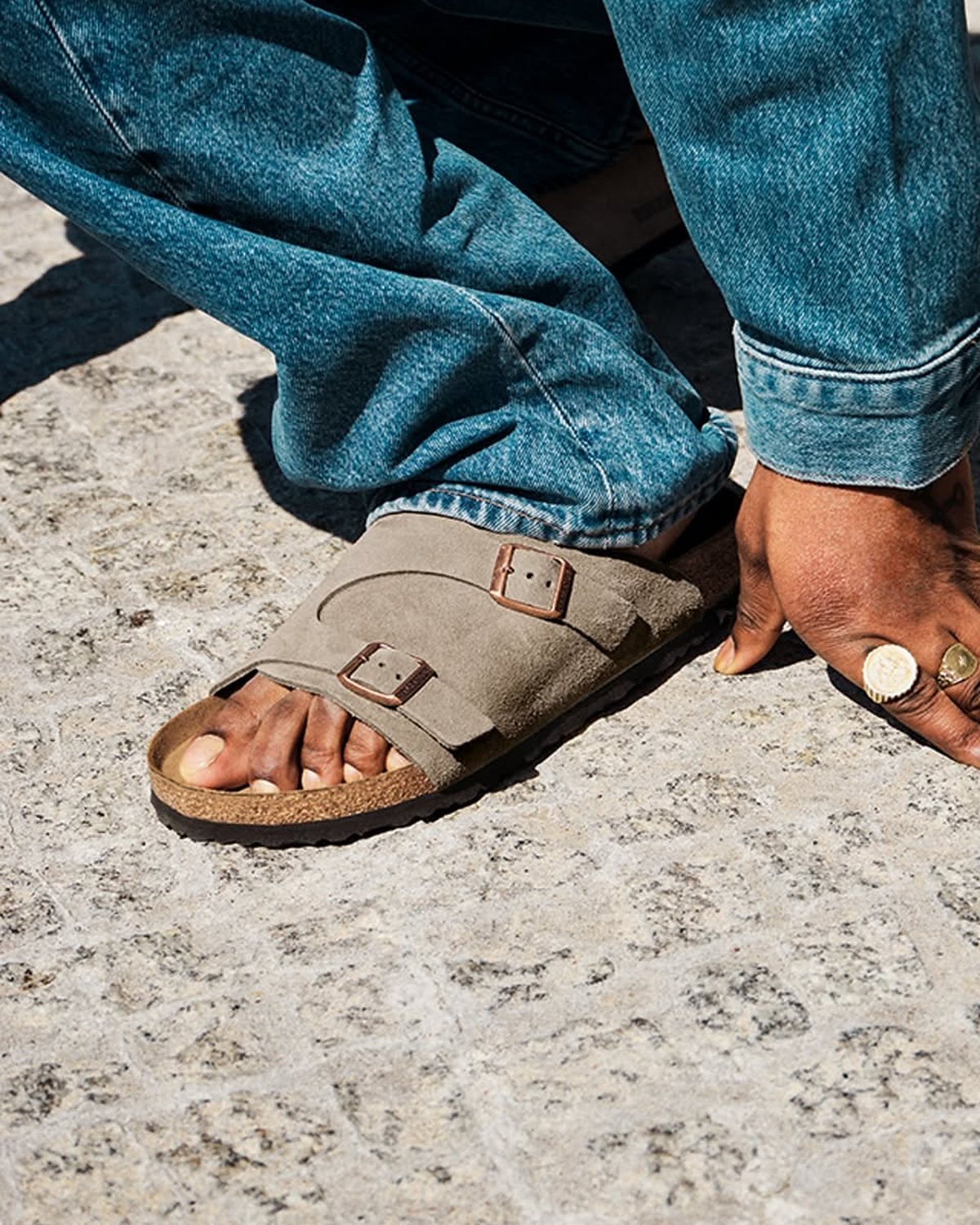
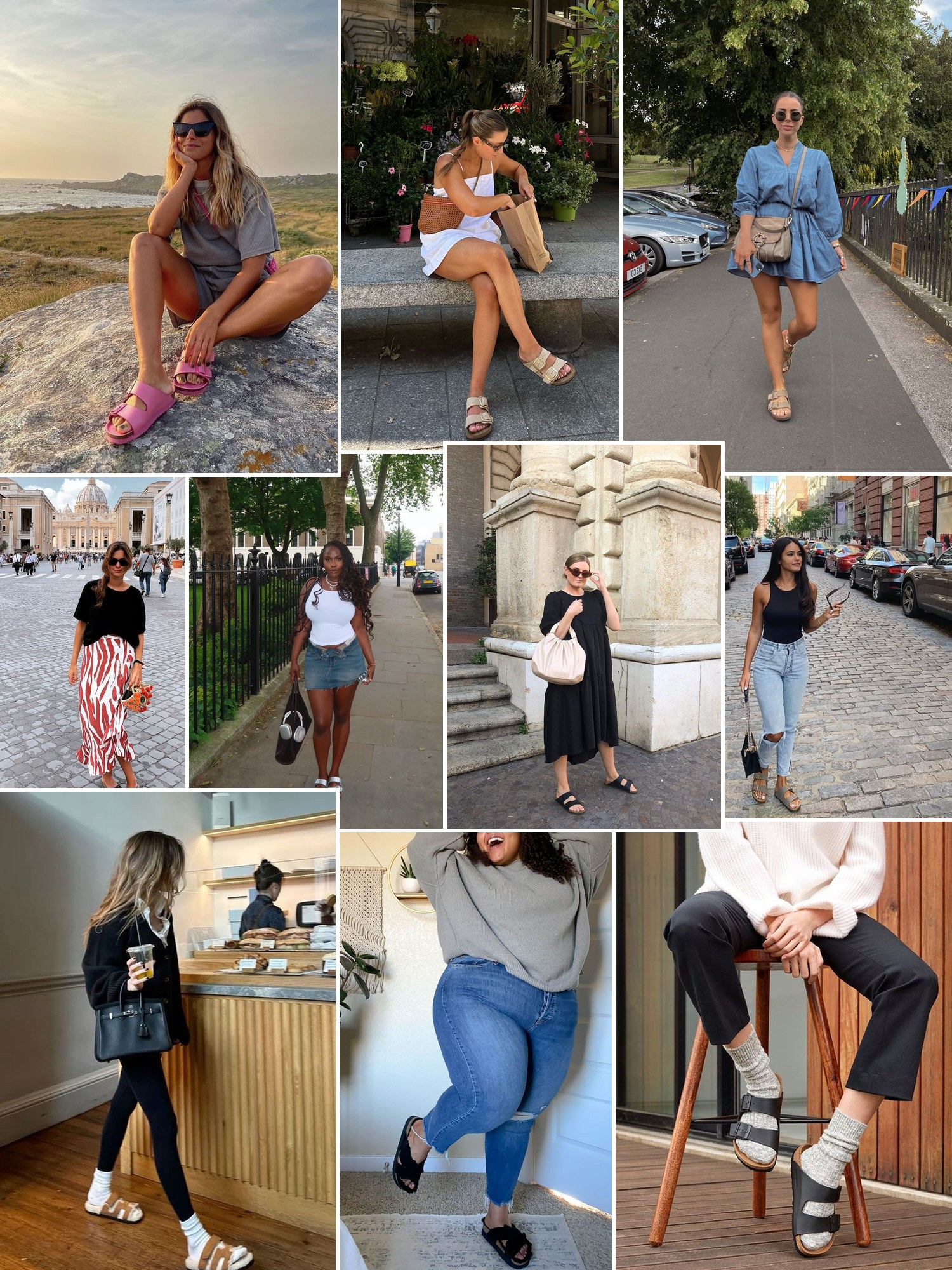
So the Arizona is where I would begin. The Arizona Soft Footbed in taupe suede has gold-tone buckles and a foam layer under the foot, the one I would give to someone who has never owned a pair. The Arizona Birko-Flor in brown is the synthetic version, made in Germany with a leather lining, which makes it the easier one to wipe down after a rainy commute. The Arizona Exquisite Leather in black is the quiet one, and the Arizona Big Buckle in light rose is the one for people who want the shape with a little more personality. The silver metallic Big Buckle works with an October slip dress and tights.
The practical test: stand in them. Your toes should sit just short of the front edge, and your heel should land in the cup, not on the rim.

Arizona sandals

Arizona Soft Footbed Sandal
Birkenstock
$154.95

Arizona Birko-Flor Sandal
Birkenstock
$117.95

Arizona Big Buckle Sandal
Birkenstock
$129.95

Arizona Suede Sandal
Birkenstock
$139.95

Arizona Exquisite Leather Sandal
Birkenstock
$209.95

Arizona Big Buckle High Shine
Birkenstock
$174.95

Arizona Big Buckle Leather
Birkenstock
$174.95

Arizona Soft Footbed Metallic Leather
Birkenstock
$154.95
Boston clogs, the closed-toe case
The Boston arrived in 1976, and the company's CEO calls that launch radical: a unisex clog in natural materials. It was an immediate hit with medical professionals and chefs who needed toe protection, which tells you something about how it holds up on a long shift. Closed toes also make it the sensible Birkenstock for a cold, wet October.
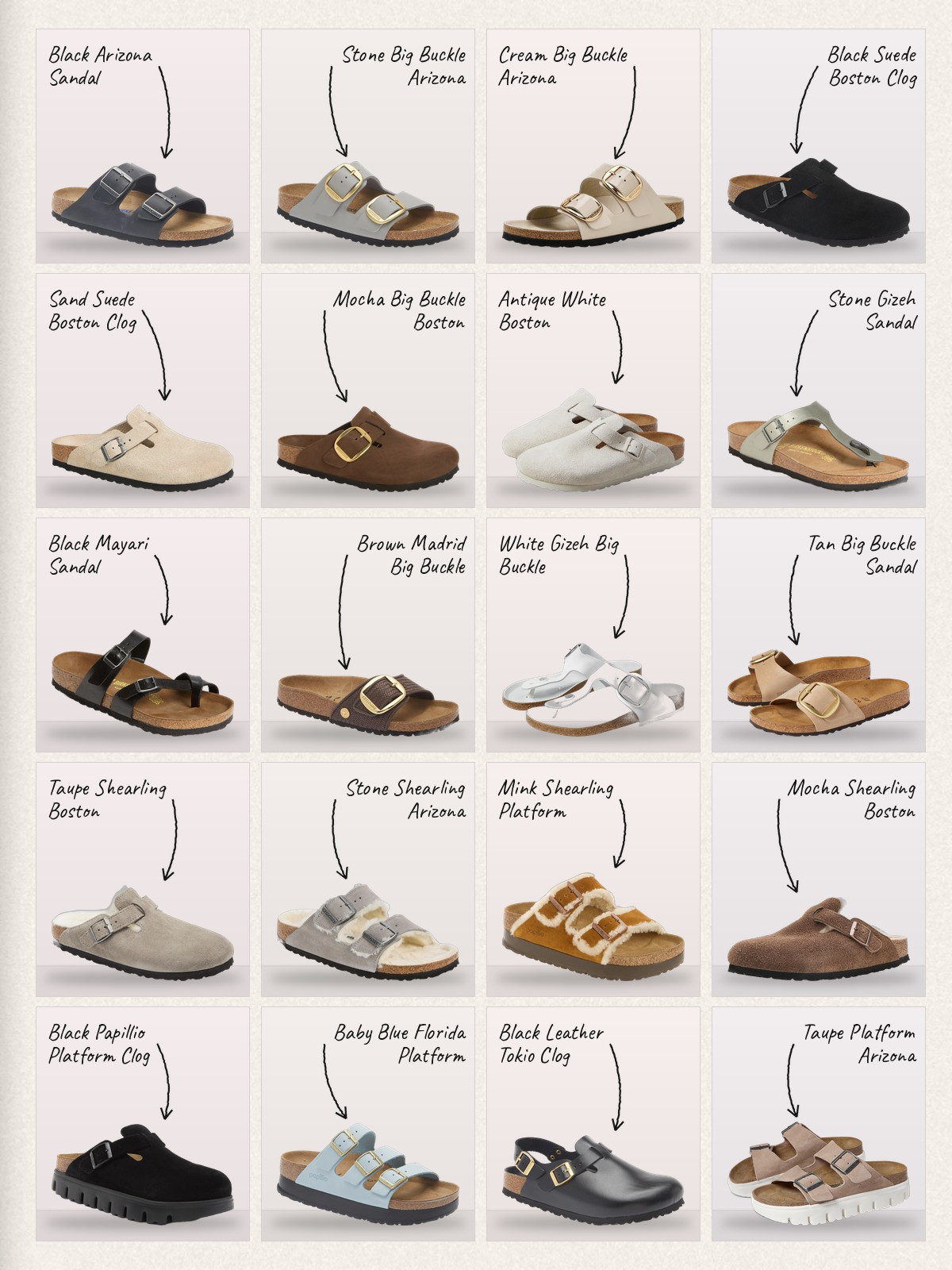
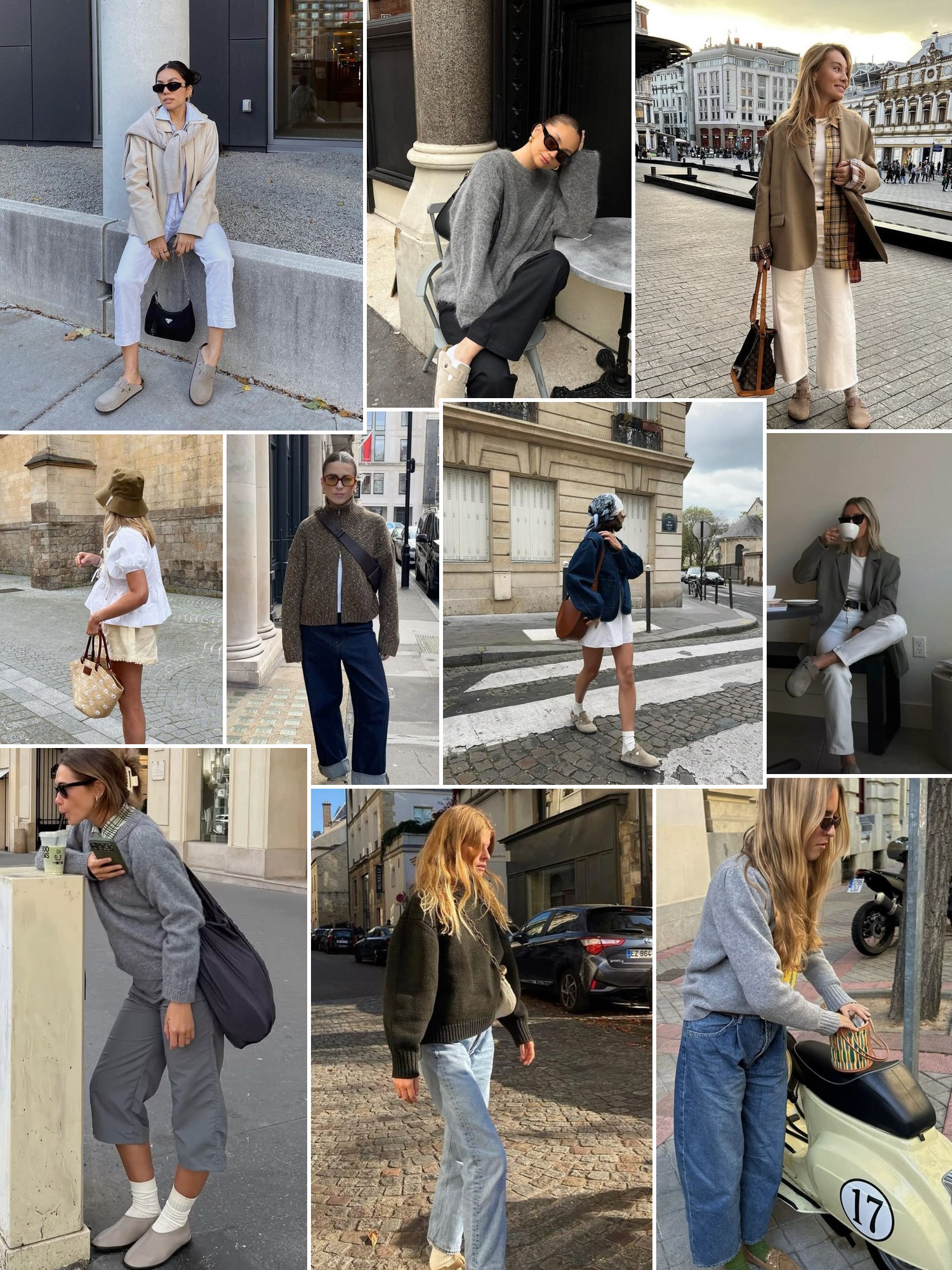
The suede ones are the soft way in. The Boston Soft Footbed in black and in charcoal has a foam layer over the contoured footbed, so it feels gentler from the first day. The Boston Clog in dark tea brown has the plain cork footbed and takes longer to settle, but I would say it ends up closer to your foot. The Boston Big Buckle in cognac nubuck, with its oversized gold-tone buckle and cream sole, is made in Germany and looks best with wide-leg trousers that stop just above the ankle. The Braid Clog in black has a braided leather strap, and the Rivets version adds gold studs, for people who find the plain clog too serious.
Test: press the suede with your thumb. Pale colors, like the antique white soft footbed clog or the sandcastle nubuck, show every scuff, so decide whether you are willing to brush them. Wear them with thick socks and a long wool skirt.
What I would skip: the antique white pair if your commute is on wet pavement every day.

Boston Soft Footbed Clog
Birkenstock
$169.95

Boston Soft Footbed Clog
Birkenstock
$169.95

Boston Braid Clog
Birkenstock
$164.95

Boston Big Buckle Clog
Birkenstock
$179.95

Boston Clog Suede
Birkenstock
$154.95

Boston Clog Soft Footbed Suede
Birkenstock
$139.98

Boston Clog Rivets
Birkenstock
$174.95

Boston Big Buckle Clog Nubuck Leather
Birkenstock
$179.95
Gizeh, Madrid and Mayari, the thong and slide ones
Gizeh came in 1983, and Madrid is the original footbed sandal Karl Birkenstock put into mass production, sold under that name since 1979. Neither has the two-strap hold of an Arizona, so check how much your foot slides forward on the footbed before you commit.
The Gizeh thong is the one for people who are fine with a strap between the toes. The Gizeh in brown Birko-Flor is the hardwearing synthetic, the Gizeh Oiled Leather in Habana is a dark brown that picks up a patina, and the white leather Big Buckle has an oversized silver buckle that I would pair with straight jeans for a warm weekend away. The Madrid is a single wide strap, so it is a slide in everything but name: the Big Buckle in beige, the sandcastle nubuck, the gold metallic leather. The Mayari has crossed toe-loop straps and two buckles, in black Birko-Flor and in brown oiled leather, and it holds better than a Gizeh for walking.
Birko-Flor is a synthetic, and I would pick it where water is a worry. Oiled leather needs more care but ages better, and it is a material a cobbler can work with. On repairs, the footbed and sole can be replaced separately, so a worn cork bed does not end the pair. Check the maker's own warranty and repair terms for the pair you pick.
What I would skip: the metallic Madrid if you want one open shoe for every outfit. It is a statement and works best as a second pair.

Gizeh Birko-Flor Sandal
Birkenstock
$112.95

Mayari Birko-Flor Sandal
Birkenstock
$99.95

Madrid Big Buckle Sandal
Birkenstock
$189.95

Gizeh Big Buckle Leather
Birkenstock
$164.95

Gizeh Oiled Leather
Birkenstock
$139.95

Madrid Big Buckle Nubuck Leather
Birkenstock
$154.95

Madrid Big Buckle Leather
Birkenstock
$154.95

Mayari Oiled Leather
Birkenstock
$139.95
Shearling clogs, sandals and boots for winter
Shearling is where Birkenstock stops being a summer shoe. The Boston Genuine Shearling Lined Clog in white is a suede clog with a plush lining over the cork-and-latex footbed, and I think of it as a slipper that can go to the post office. Warmth is the case for them: you get the footbed and the lining in one shoe, so they are more useful from October to March than a standard sandal.
Look at the construction. The Arizona Genuine Shearling in beige and the Arizona Shearling Suede in stone coin keep the two buckled straps, so you can still adjust the fit over a thick sock. The Boston Shearling in dark tea and the Buckley Shearling in taupe are the closed versions. The Arizona Platform with shearling trim, in mink natural on a chunky lug sole, is the odd one, from the Papillio line, and it looks best with cropped trousers. The Uppsala boots are the proper cold-weather ones: a zippered ankle boot and a lace-up chukka style, both in dark tea suede with shearling lining.
Test: slip your hand inside, feel for where the lining ends, and press the footbed under the heel. Brush suede in one direction and keep it away from salt.
What I would skip: shearling Arizonas on a day you expect rain. They are made for dry cold and sitting indoors, and the Uppsala is the better pick for slush.

Boston Genuine Shearling Lined Clog
Birkenstock
$179.95

Arizona Genuine Shearling Sandal
Birkenstock
$164.95

Arizona Platform Sandal With Genuine Shearling Trim
Birkenstock
$154.95

Boston Shearling Clog Suede
Birkenstock
$179.95

Arizona Shearling Suede
Birkenstock
$164.95

Buckley Shearling Clog Suede
Birkenstock
$174.95

Uppsala Shearling Zippered
Birkenstock
$190

Uppsala Mid Lace-Up Shearling Suede
Birkenstock
$144
Platform sandals and the shoe-like clogs
A platform changes the question. The footbed is still there, but the sole above the ground is higher and heavier, and so you need to check the weight in your hand before anything else. If a pair feels clunky off your foot, it will feel clunkier at the end of a day.
The Papillio Boston Chunky Platform Clog in black suede is the boldest here, and the Arizona Chunky Platform in warm sand suede, on a thick white lug sole, is its summer-weight cousin. The Florida Flex in baby blue is only a 1 inch platform with arch support, a flexible one for anyone who wants lift but not height. The Almina in black nubuck is a two-strap platform with a cork-look sole. Then there are the shoes that are not sandals at all: the Tokio clog in beige leather with its deep heel cup and bone-pattern tread, the Naples in taupe suede with a stitched apron toe, the Lutry 365 in oyster with a heel strap, and the Buckley in gray taupe. Those four are the ones I would wear to an office.
Pairing: the Naples and Buckley take trousers and knit socks well in October, and the Lutry with a slip skirt and tights.
What I would skip: the baby blue Florida Flex if you need shoes that hide dirt on commutes. Light colors in suede and nubuck are lovely and demanding.

Papillio Boston Chunky Platform Clog
Birkenstock
$154.95

Florida Flex Platform Sandal
Birkenstock
$86.36

Tokio Clog
Birkenstock
$164.95

Arizona Chunky Platform Sandal
Birkenstock
$144

Naples Clog Suede
Birkenstock
$164.95

Lutry 365 Clog Suede
Birkenstock
$154.95

Buckley Clog Suede
Birkenstock
$154.95

Almina Platform Sandal Nubuck
Birkenstock
$140
Who should buy them, and who should not
So, are Birkenstocks worth it, in short. For anyone who stands, walks, or lives in flat shoes, yes. The cork and latex footbed, the jute layers, and a construction that lets a cobbler replace the sole, footbed or upper add up to something built to last, not something to throw away.
In order, I would do this: pick the shape first, the Arizona for sandals or the Boston for closed toes. Then pick the material for how you live: leather and oiled leather for ageing, Birko-Flor for rain, suede if you will brush it. Then stand in them before you decide. If you want a heel-high shoe, a very narrow foot, or something that goes with a formal dress, the answer is no, and I would not push it.
A shoemaker was entered in a church register in 1774, and the family has been fitting feet since. I would trust that over a trend.