This best full coverage foundation for mature skin edit covers hydrating bottles, serum formulas, long-wear finishes, sticks and the primers and brushes that help them sit. I would start with moisture and add coverage in thin layers.
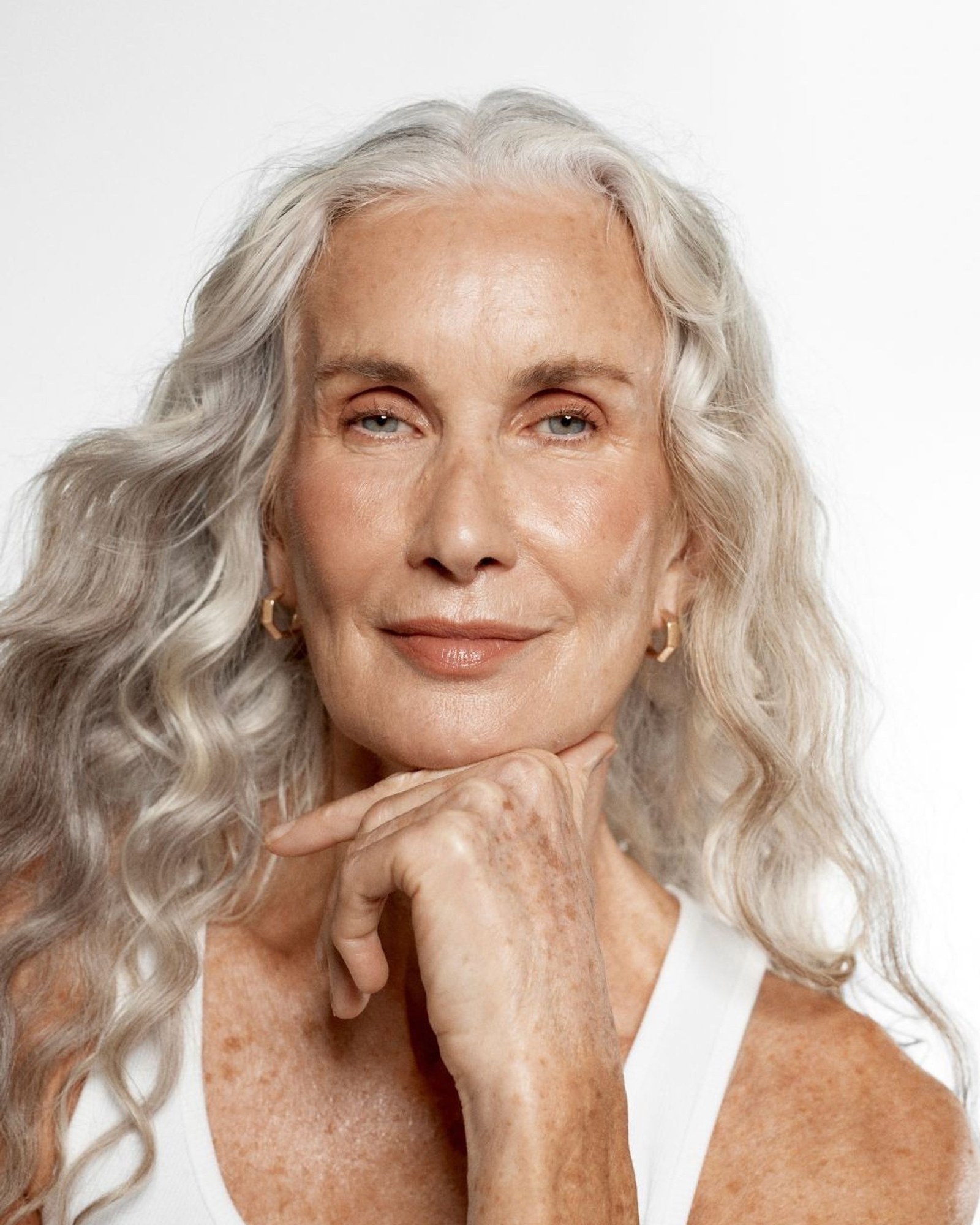
Best Full Coverage Foundation for Mature Skin: Hydration First, Thin Layers After
A thin, translucent idea that still works
Dear Friends, in 1937 a make-up built for a film camera walked onto a screen for the first time. Max Factor's Pan-Cake, developed with Technicolor and first used in Vogues of 1938, was a thin, translucent cake applied with a wet sponge, and it cut time in the makeup chair from two hours to just over fifteen minutes. Models on set kept taking it home, and by February 1938 it was in the shops. What can we take from that. Good coverage was never meant to look like a mask. It was meant to disappear.
That is the lesson I would bring to the best full coverage foundation for mature skin. Skin in your sixties and seventies is thinner and loses water more easily, so the formula has to give moisture back while it covers. Hydration first, then pigment, in thin layers (you can always add more, you cannot take it off). Below you will find modern options in five groups, from glowy bottles to sticks to the primers and brushes that make them behave.
Group one is the hydrating full coverage bottles. The Dior Forever Skin Glow comes in a glass bottle with a black cap and has hyaluronic acid, niacinamide and peptides. The Laura Mercier Flawless Lumière is a luminous liquid with medium to full coverage, and the NARS Natural Radiant Longwear is a lighter pump bottle with a natural radiant finish. Tarte's hydrating serum foundation is a slim bottle with lightweight full coverage, so it is the one I would reach for when skin feels tight. Clarins Skin Illusion is full coverage with hyaluronic acid, Fenty's Soft'Lit and Too Faced's Born This Way build from medium toward full, and the Estée Lauder Futurist Hydra Rescue adds SPF 45.
Test any of them on your jaw and neck in daylight, then wait a few minutes before judging. Foundation looks different once it has settled.
Hydrating full coverage foundations

Forever Skin Glow Foundation
Dior
$60

Born This Way Undetectable Medium-to-Full Coverage Foundation
Too Faced
$49

Timeless Hydrating Foundation
Tarte
$42

Flawless Lumière Radiance-Perfecting Foundation
Laura Mercier
$49

Natural Radiant Longwear Foundation
NARS
$55

Soft'Lit Naturally Luminous Hydrating Longwear Foundation
Fenty Beauty
$44

Skin Illusion Longwear Full Coverage Foundation
Clarins
$54

Futurist Hydra Rescue Moisturizing Foundation SPF 45
Estée Lauder
$55
Serum foundations with skincare inside
Estée Lauder began in 1946 with Estée and her husband Joseph, and its foundations still lean on skin care. You can see it in the Re-Nutriv Ultra Radiance liquid with peridot and SPF 20, and in the Re-Nutriv Serum Creme, a creme foundation in a jar-style pump with hyaluronic acid. If your skin runs dry, the creme is where I would look first.
Clinique's Even Better Clinical Serum Foundation is a 24-hour full coverage liquid with SPF 25. Smashbox's Always On has hyaluronic acid and adaptogens with buildable coverage. Bobbi Brown's Intensive Serum Foundation promises fuller coverage that does not cake or crease, and Tom Ford's Architecture Radiance goes up to SPF 50. Sisley's Phyto-Teint Perfection is the high coverage one with plant skincare, while the Sisleÿa Le Teint is a lighter, luminous fluid with medium coverage.
Here is a fitting-room test. Put a stripe along the cheek and another beside the nose, then smile and frown. If the line sits in the creases after ten minutes, the formula is too thick for you. A damp sponge pressed on top sheers out whatever is left.
What I would skip: matching the shade on your wrist. The jaw and neck tell the truth.

Even Better Clinical Serum Foundation Broad Spectrum SPF 25
Clinique
$39

Always On Skin-Balancing Foundation with Hyaluronic Acid and Adaptogens
Smashbox
$45

Intensive Serum Foundation SPF 40/30
Bobbi Brown
$84

Phyto-Teint Perfection
Sisley Paris
$135

Architecture Radiance Hydrating Foundation SPF 50
Tom Ford
$100

Re-Nutriv Ultra Radiance Liquid Foundation SPF 20
Estée Lauder
$140

Re-Nutriv Ultra Radiance Serum Creme Makeup
Estée Lauder
$160

Sisleÿa Le Teint Anti-Aging Foundation
Sisley Paris
$235
Long-wear natural finish foundations
Laura Mercier launched in March 1996 with four products: a foundation primer, a foundation, a concealer and a setting powder. Mercier was the creative voice, her partner Janet Gurwitch ran the business. I like that idea in a foundation, the Real Flawless Weightless being a long-wearing, waterproof liquid with medium buildable coverage.
Long wear can feel rigid on dry skin, so the question is how matte it goes. Charlotte Tilbury says her Airbrush Flawless was born in 2015 because she wanted full coverage that did not feel heavy and cakey, and it promises matte, not flat. Estée Lauder's Double Wear has glycerin and hyaluronic acid in 57 shades. Lancôme's Teint Idole Ultra Wear lists full and buildable coverage, and the Dior Forever Skin Wear and NARS Natural Matte both aim at a blurred natural matte. Armani's Luminous Silk and Hourglass's Ambient Soft Glow are the softer ones, with niacinamide in the Armani and a light-diffusing glow in the Hourglass.
Look at the area around the mouth and under the eyes after an hour. That is where a matte foundation shows its age first.
What I would skip: a flat matte finish on a very dry day. It tends to make texture louder.

Airbrush Flawless Foundation
Charlotte Tilbury
$52

Double Wear Stay-in-Place Longwear Matte Foundation
Estée Lauder
$52

Forever Skin Wear Blurring Natural Matte Foundation 24h Ultra Wear
Dior
$60

Teint Idole Ultra Wear Natural Matte Foundation
Lancôme
$53

Natural Matte Longwear Foundation
NARS
$55

Luminous Silk Natural Glow Blurring Foundation with 24 Hour Wear
Armani Beauty
$69

Real Flawless Weightless Perfecting Waterproof Foundation
Laura Mercier
$54

Ambient Soft Glow Foundation
Hourglass
$60
Foundation sticks, balms and creams
Powder foundation settles into fine lines and makes texture more obvious, one makeup artist told Glamour UK, which is why I think sticks and creams are worth a look. A cream is easy to warm with your fingers and press in, which is the opposite of dusting something on.
The Dior Forever Skin Perfect stick has buildable coverage and hydration. Hourglass's Vanish stick promises double the pigment of traditional foundation for full coverage, and Bobbi Brown's Skin Foundation Stick has a transparent base with skin tone correct pigments. Lancôme's Teint Idole Shape Stick works as foundation, concealer or bronzer. Ogee's Sculpted Complexion and Lune+Aster's Dawn to Dusk stick are cream formulas with skincare, and Charlotte Tilbury's Unreal Skin Sheer Glow Tint is hydrating with a second-skin glow. The Fenty Eaze Drop stick is the lighter one, buildable and natural, so it suits the days when full coverage feels like too much.
Swipe two stripes on your cheekbone, not your hand, and blend with a finger, then step back to a window. If it drags, the skin needs a drop of moisturizer first, and if it sits in a line, use less.
What I would skip: dragging a stick across the whole face. Dot it and blend.

Forever Skin Perfect 24H Multi-Use Foundation Stick
Dior
$58

Vanish Seamless Finish Liquid Foundation Stick
Hourglass
$49

Skin Foundation Stick
Bobbi Brown
$57

Teint Idole Shape Stick Blurring Multi-Use Stick
Lancôme
$46

Sculpted Complexion Foundation Stick
Ogee
$48

Dawn to Dusk Foundation Stick
Lune+Aster
$26

Unreal Skin Sheer Glow Tint Hydrating Foundation Stick
Charlotte Tilbury
$48

Eaze Drop Blur + Smooth Foundation Stick
Fenty Beauty
$40
Hydrating primers and foundation brushes
Laura Mercier's Foundation Primer is widely described as the first complexion primer sold to the public. Before it, makeup artists did the same thing backstage with their own formulas. Her Pure Canvas Hydrating tube plumps skin so makeup goes on evenly, which sounds right for a dry day.
Estée Lauder's Futurist Peptide-Power serum primer has hyaluronic acid and peptides. NARS's Light Reflecting Hydrating primer is lightweight with a natural glow, and Tatcha's Liquid Silk Canvas is a weightless protective one. Then the tools: Fenty's Foundation Brush 145 is tapered for a streak-free finish, Hourglass's Vanish brush is shaped for a seamless one, and Tom Ford's Cream Foundation brush 02 is made for cream and solid formulas. The Beautyblender Pro is the black version of the pink original.
One makeup artist in Vogue suggests waiting 10 to 20 minutes after skin care before foundation, and I agree: an ordinary morning will not allow it, so apply your primer first thing, then get dressed and have your coffee before foundation.
What I would skip: a heavy layer of powder over everything. Overpowdering, another artist warns, makes skin look dry.

Futurist Peptide-Power Hydrating Serum Primer with Hyaluronic Acid
Estée Lauder
$58

Pure Canvas Primer Hydrating
Laura Mercier
$48

Light Reflecting Hydrating Primer
NARS
$44

The Liquid Silk Canvas Featherweight Protective Primer
Tatcha
$55

Foundation Brush 145
Fenty Beauty
$36

Vanish Foundation Brush
Hourglass
$52

Cream Foundation Makeup Brush 02
Tom Ford
$79

BeautyBlender Pro
Beautyblender
$20
How I would choose one
Moisture comes before shade. A hydrating bottle or a serum foundation comes first, a primer sits underneath, and a stick is for the days you want less. Then add coverage in thin layers, the way Max Factor's sponge did in 1937.
I would test two in daylight, wait ten minutes, and keep the one that still looks like skin. Finish with a primer you like and a brush or damp sponge you trust, because the tools matter as much as the bottle.
Pan-Cake was built for the brightest lights in Hollywood, and it still had to look like skin. Coverage is only good when nobody can see it.
With love, and soft skin,