Black tie attire for women starts with the level of evening, not a demand to wear black. I trace the dress code from Tuxedo Park to floor-length gowns, chocolate brown, and the dressy cocktail option.
Black Tie Attire for Women: The Dinner Jacket's Long Afterlife
A jacket's long afterlife
In 1886, Tuxedo Park, New York, gave its name to a new kind of dinner jacket. The familiar story sends its resident James Brown Potter to Henry Poole for advice before dinner with the Prince of Wales, but Poole says no record of Potter survives in its ledgers. I like that little seam between legend and ledger. The American name is old, but the question behind it stays familiar: how formal does tonight want me to be.
The jacket itself came earlier. Henry Poole says the Prince asked for a short coat at Sandringham in 1865, which the tailor cut from the tailcoat. That history matters because the black tie dress code begins with men's eveningwear, not a command for women to wear black. Emily Post places black tie just below white tie and above business attire, then lists a formal floor length evening gown, a dressy cocktail dress, and the dressiest little black dress for women.
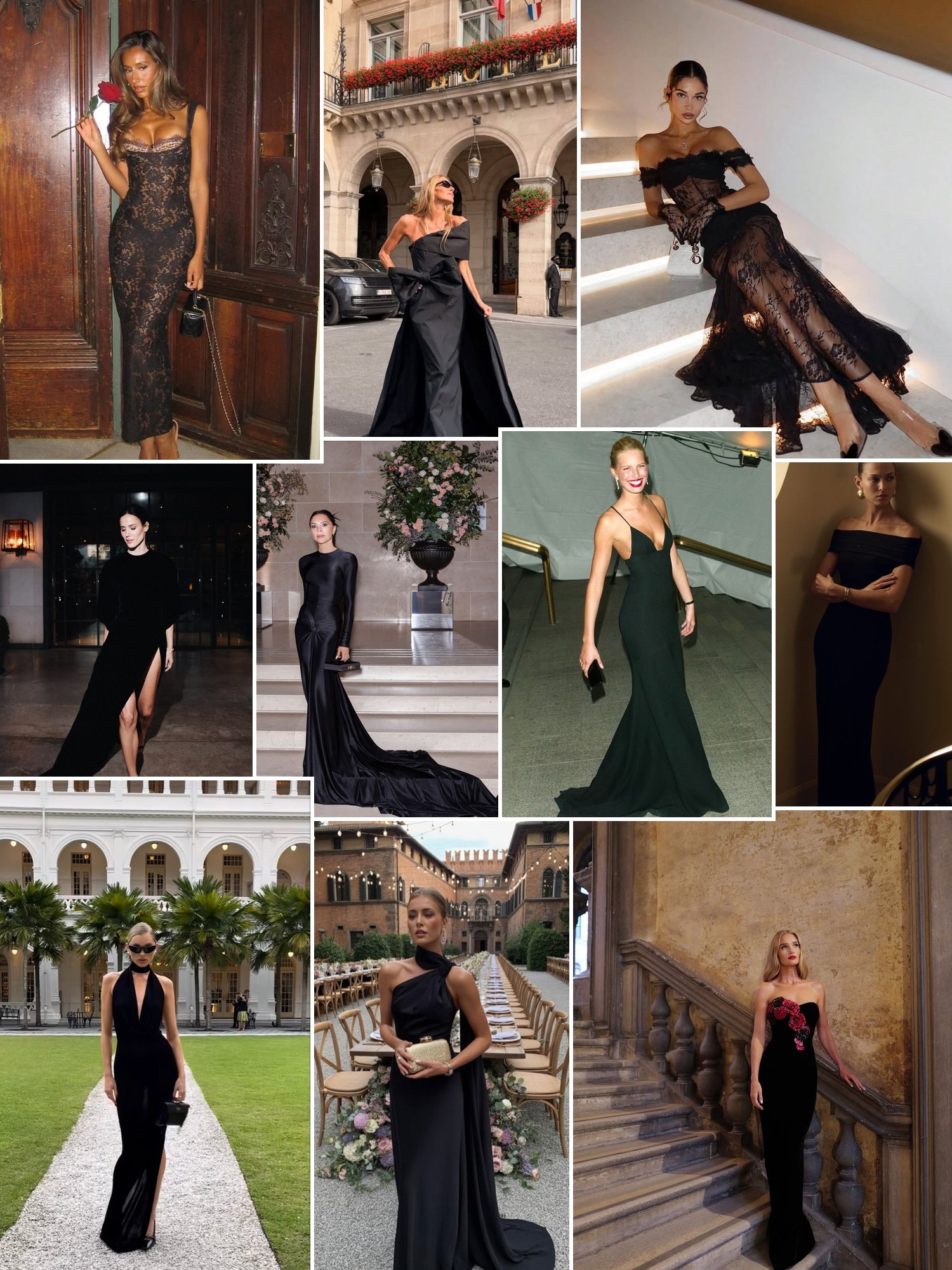
For me, black tie attire for women is a question of register, not a uniform. Black tie dresses need not be black, and Debrett's says long, or at least not very short, is usually best. Black tie gowns are a particularly easy answer when an invitation is spare, though Emily Post leaves room for the dressy cocktail option.
I would treat this first group of black gowns as a study in silhouette rather than shade. The Auriella Maxi Gown and Henrietta Maxi Dress offer the cleanest long-line starting point; the Strapless Puzzle Gown, Malini Gown, and Halter Fishtail Gown make the names themselves a useful guide to proportion. The Amira Gown and Cami Gown keep the same dark palette, while the Ariana Velvet Gown introduces a different surface. My practical test would be simple: sit, walk, and check the hem against the shoes before settling on the night.


Red, wine, and plum gowns
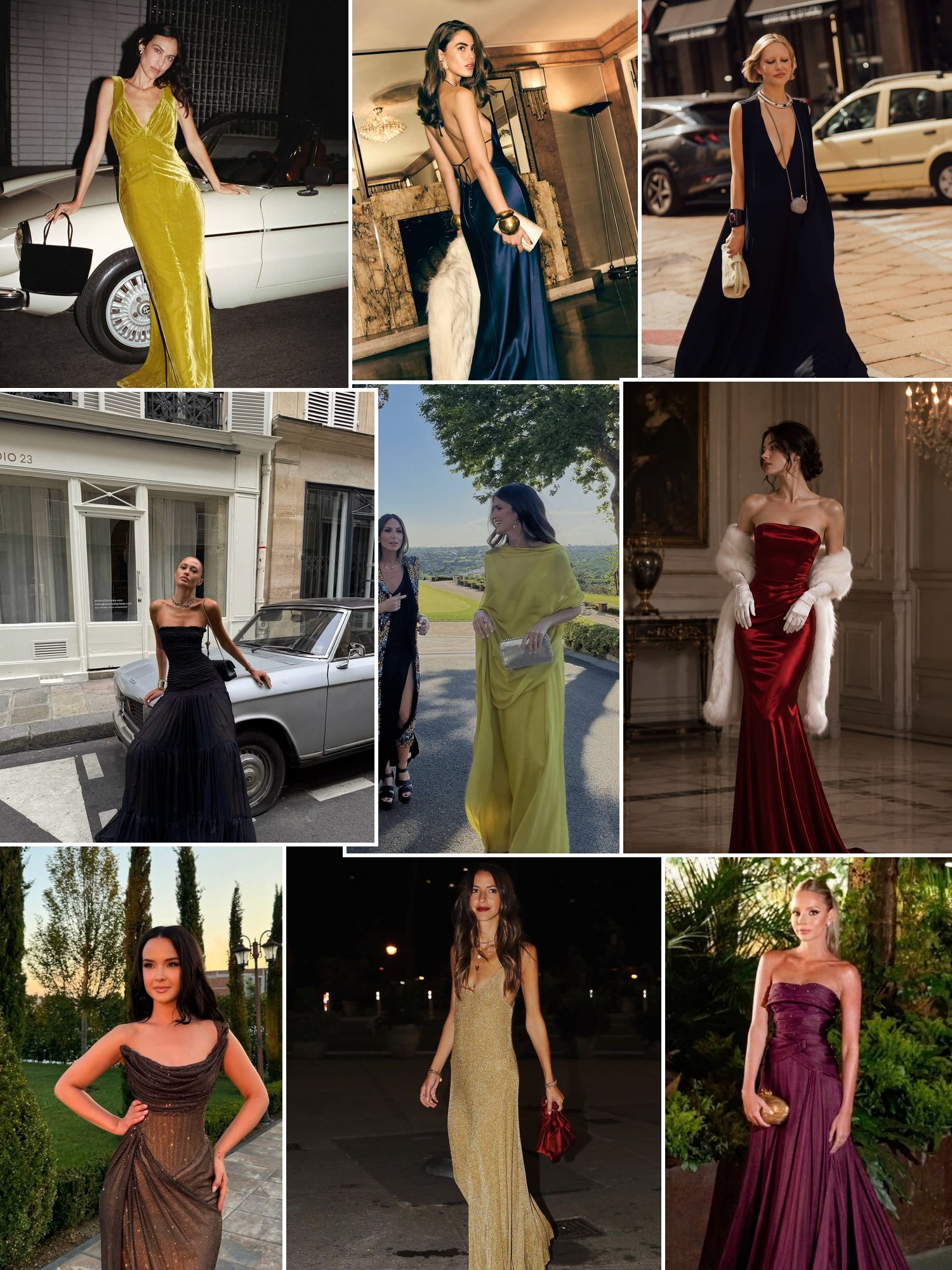
In a dim room, oxblood can drift toward brown and red can feel bright; I would check the color in daylight as well as under warm light. Debrett's makes one useful point: the dress need not be black. In this color story, that permission gives red, wine, and plum a place in the evening without changing the level of formality.
The Dilruba Gown and Liana Gown are both oxblood, so I would compare their line rather than assume the two colors do the same thing. The Madeline Gown in wine shifts the palette warmer; the Chloe Halter Maxi Dress in red turns up the volume. I would also look at the Hera Gown in boysen berry or the Ivy Gown in crimson when I wanted a more distinct red note.
For black tie gowns, I would keep the finishing quiet: one metal in the earrings, a small evening bag, and a wrap if the walk to the venue is cold. If the invitation says black tie optional, Emily Post also lists a dressy cocktail dress and separates, but a long gown remains an easy response. What I would skip: trying to turn an afternoon red dress into an evening answer with sparkle alone. I would check the hem, fabric, and exact invitation wording before deciding.


Navy and blue gowns
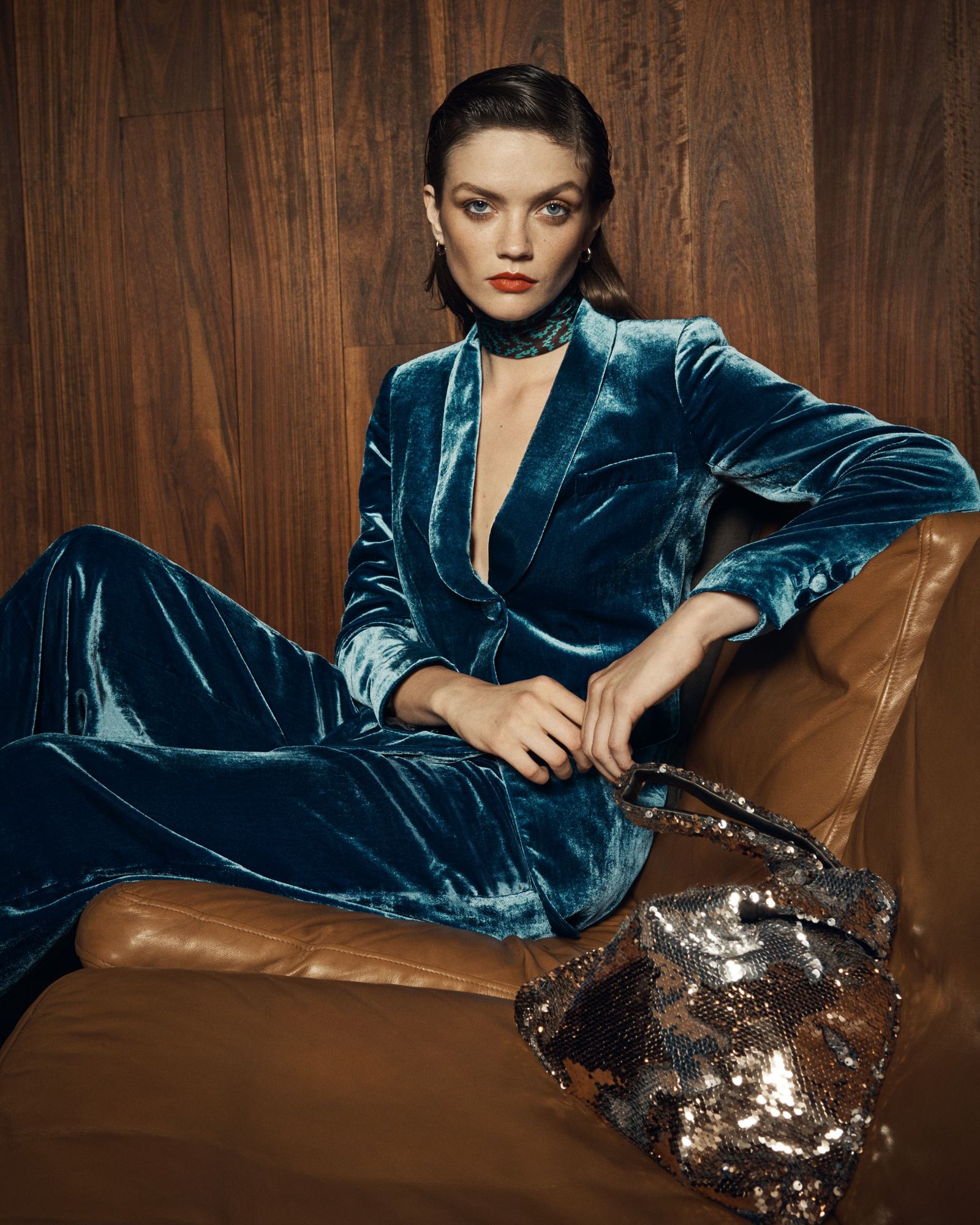
Blue is a useful test of how much color an evening look can carry. I would hold navy and ice blue next to the accessories I already have before deciding, since the same long silhouette reads differently at either end of the palette.
The Spain Maxi Dress and Janhvi Maxi Dress both sit in navy; the Petra Gown is blue, and the Evolet Gown is ice blue. The Chloe Gown is navy blue, the Clea Gown is navy, and the Asada Maxi Dress is midnight. The Joyceann Sweetheart Gown in deep indigo makes a bridge between almost-black and brighter blue.
For the darker side, I would pair a silver earring with navy or indigo and let the dress carry the color. With ice blue, I would keep the bag and shoes softer, perhaps silver or a pale neutral, rather than add another loud shade. My fitting-room check would be to view a light dress in daylight, sit down, and make sure the hem works with the shoe. Debrett's puts white tie above black tie and says shorter dresses or trousers are not acceptable for women at white tie. That contrast makes any blue here feel like a choice, not a loophole.


Chocolate and bronze gowns
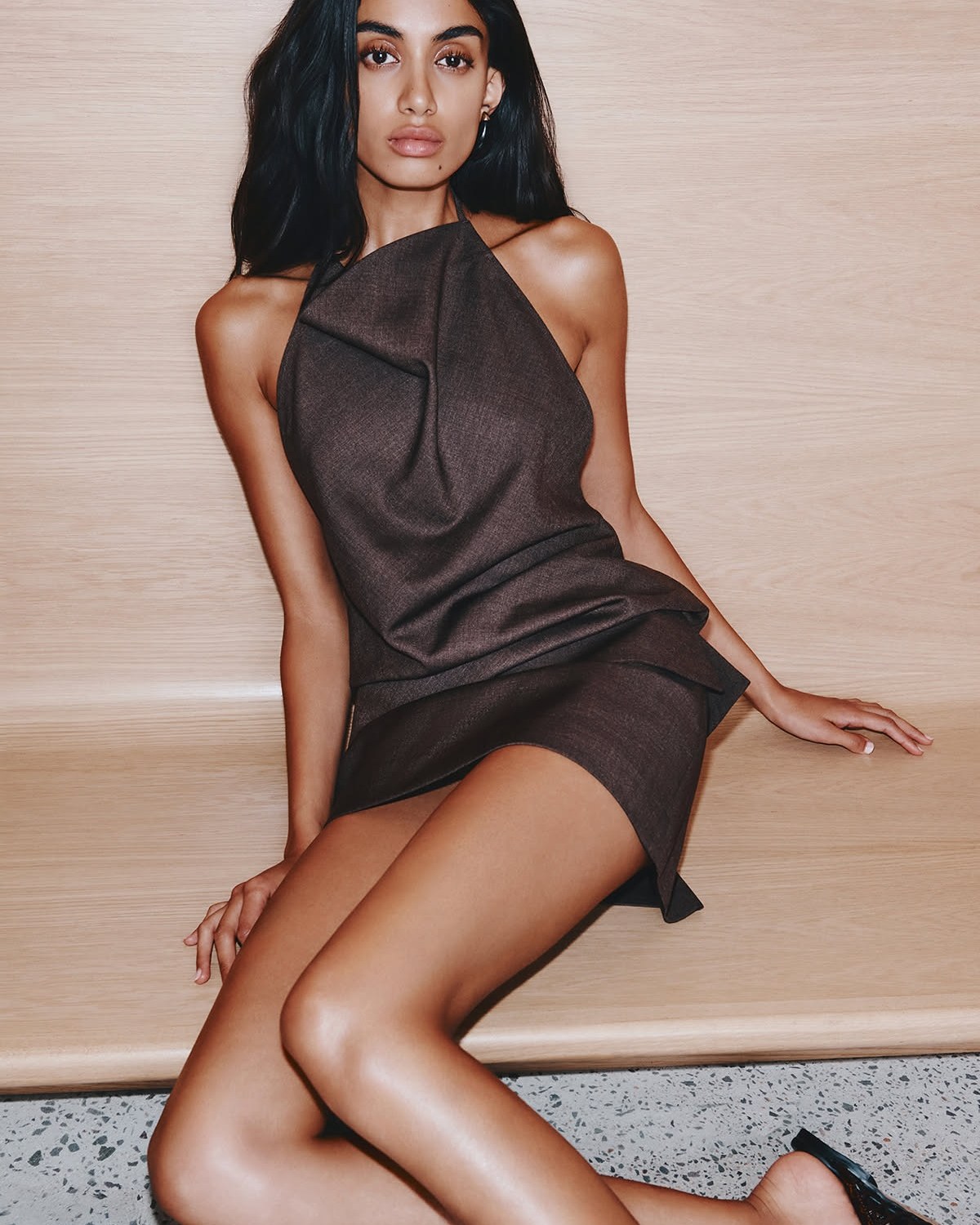
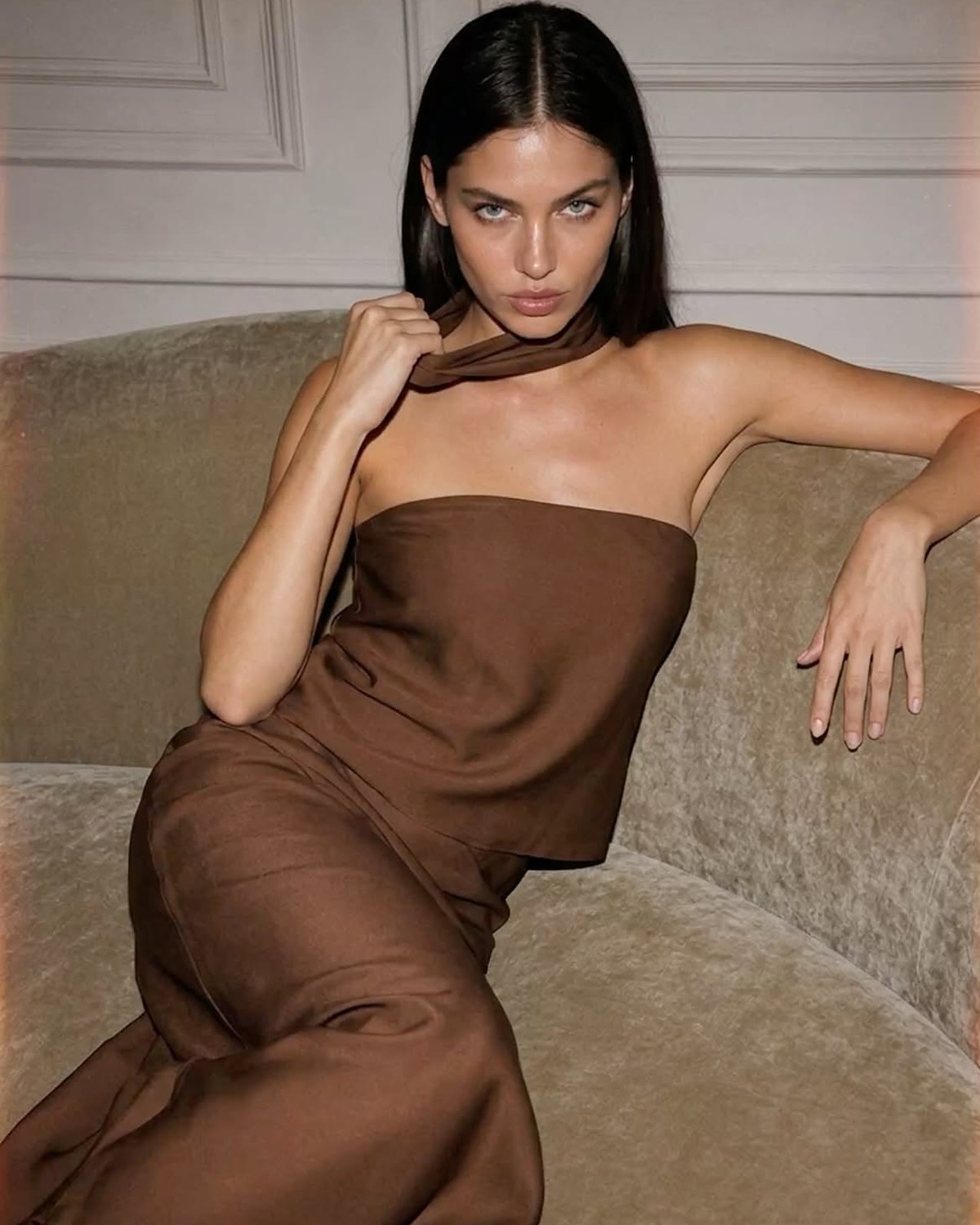
Chocolate brown entered the evening conversation with a runway assist: Vogue called it a trending color in 2025 and described mocha silk in a look for a black-tie winter wedding or gala. I like a trend with a practical argument behind it. Brown has a softer presence than black while still reading as a deliberate evening choice.
The Vanessa Maxi Dress in bronze metallic is the brighter neighbor to the chocolate group. The Cleo Gown and Samira Gown both appear in chocolate brown; the Delphi Gown also goes chocolate, while the Clara Gown is simply brown. The Halter Turtle Fishtail Gown in chocolate, the Ella Gown in cocoa, and the Bita Gown in chocolate round out several close shades. I would decide whether I want bronze to catch the light or brown to settle into it before choosing accessories.
To style these, I would use one metallic detail at most, then let a dark shoe or a small black bag make the contrast. I would check the color in both warm and cooler light, because brown can shift beside bronze. What I would skip: matching every accessory to the exact shade. These colors have enough character without turning the outfit into a swatch card.


Sequins and metallic gowns
Vogue's October 1926 caption called Chanel's black crepe de chine frock the 'Chanel Ford,' the dress the magazine said the world would wear. I love the idea of a simple dark dress becoming a fashion story, but a little black dress and evening formality are not interchangeable. Debrett's makes that distinction plainly: wearing black alone does not guarantee the right level of formality. Texture can do some of the talking instead.
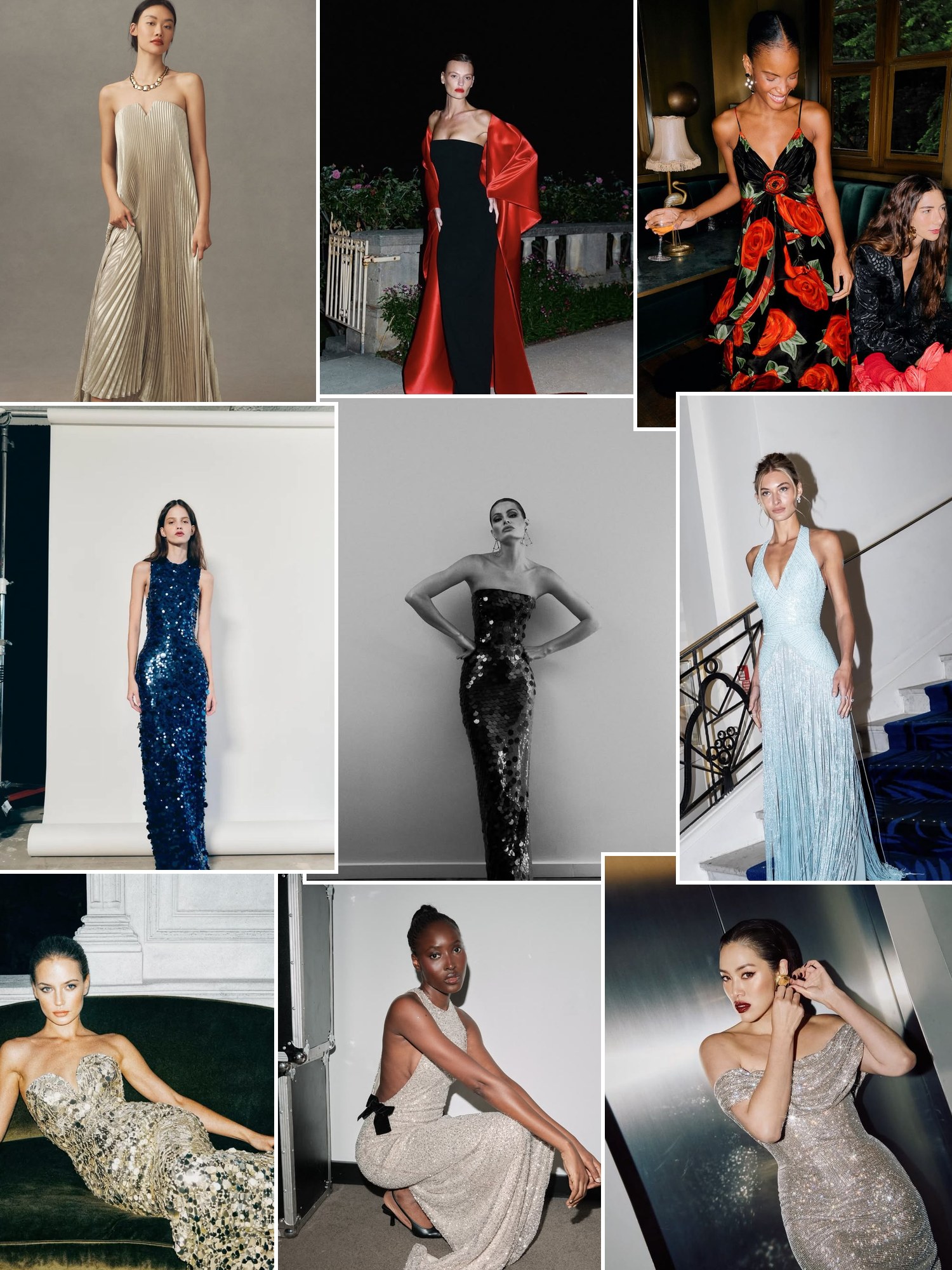
The V-Neck Embellished Gown in metallic, Jessie Sequin Maxi Dress in black, and Emmy Gown in silver black metallic each take shine in a different direction. Saba Dress in golden port and Anida Dress in metallic pewter make the color more specific; Maya Gown in blue sequin brings a cooler note. Etta Sequins Maxi Dress returns to black, while the Strapless Shirred Front Fishtail Gown in gold lame is the brightest answer.
With reflective fabric, I would let one element catch the eye and keep the rest quieter. I would inspect a gown under soft indoor light as well as a brighter one, then check the hem and sit down before calling it finished. If the dress has sequins, I would also check that the evening bag's hardware will not snag the surface. The point is not to outshine the room, just to look considered once the lights come up.


The invitation comes first
I would decide in this order: read the invitation twice, ask the host what they mean if the dress code is unclear, then choose the length. For true black tie, I would reach for a formal evening gown; if it says optional, Emily Post allows a dressy cocktail dress or separates. Only then would I pick the color, whether it is black, wine, navy, brown, or something that catches the room's light.
After that, I would check the hem against my shoes and make sure I can sit through dinner without managing my skirt all night. It is a small practical ending for a dress code with an elaborate origin story. Somewhere between Henry Poole's ledger and Tuxedo Park's legend, the point was always to arrive ready for the evening.