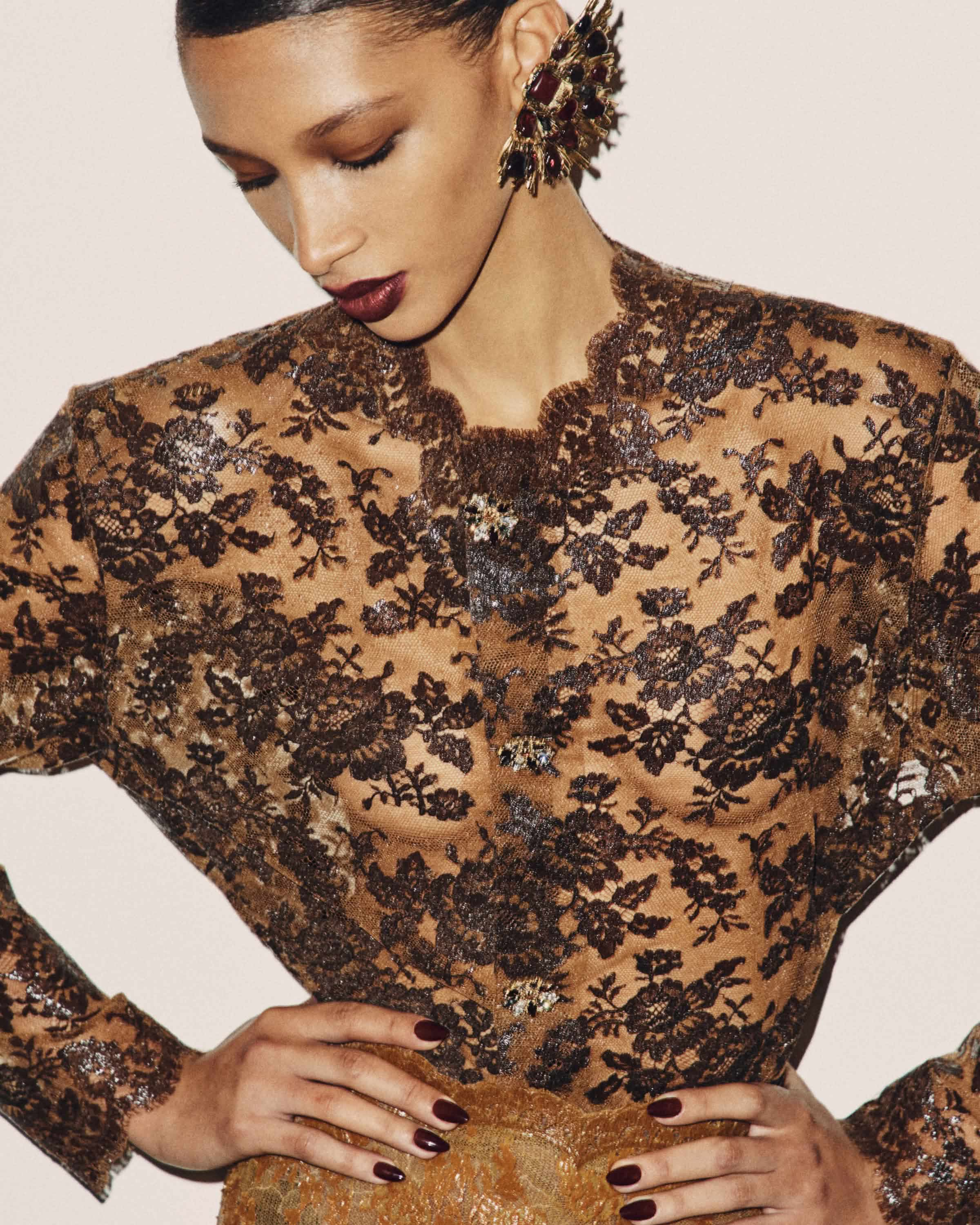
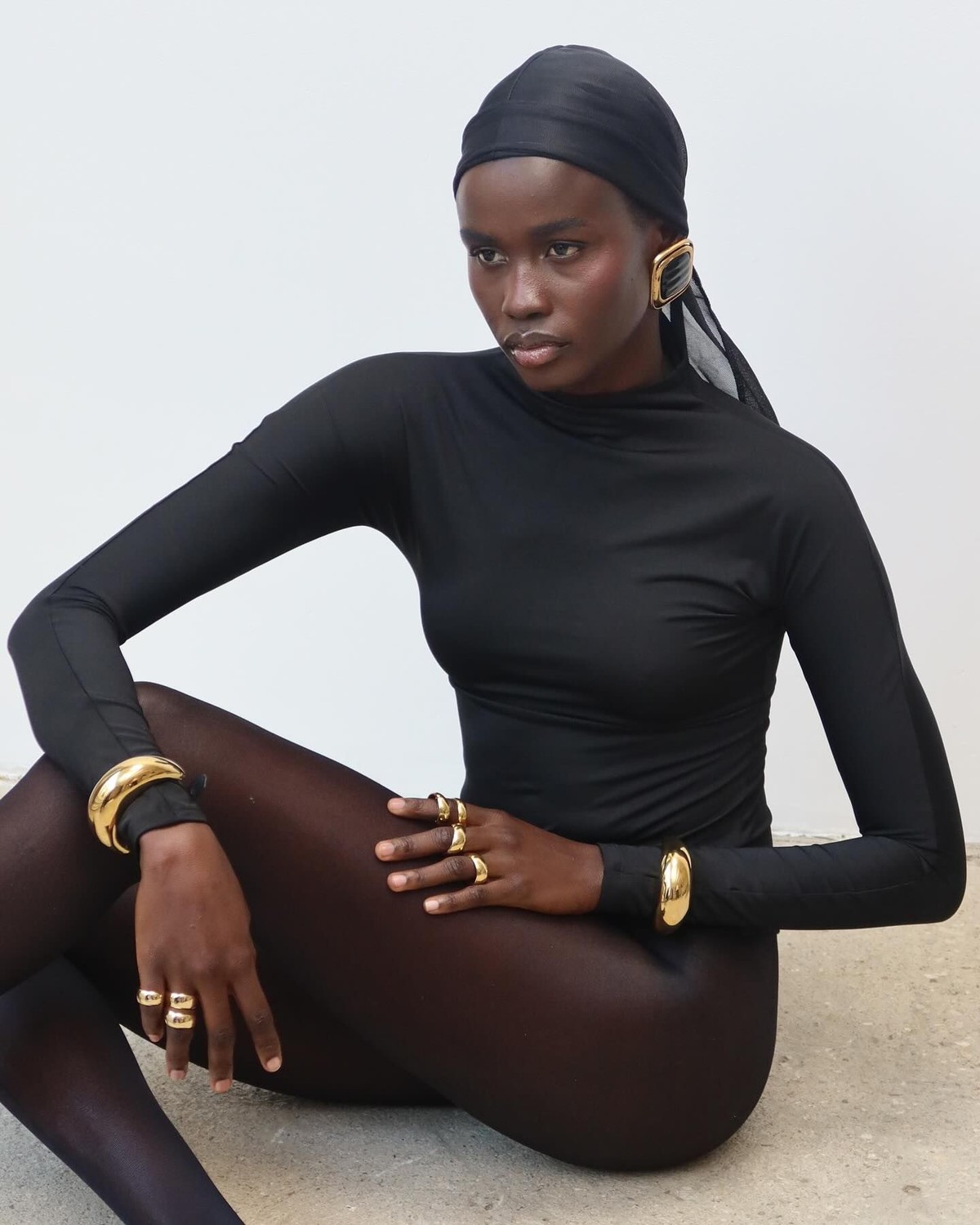
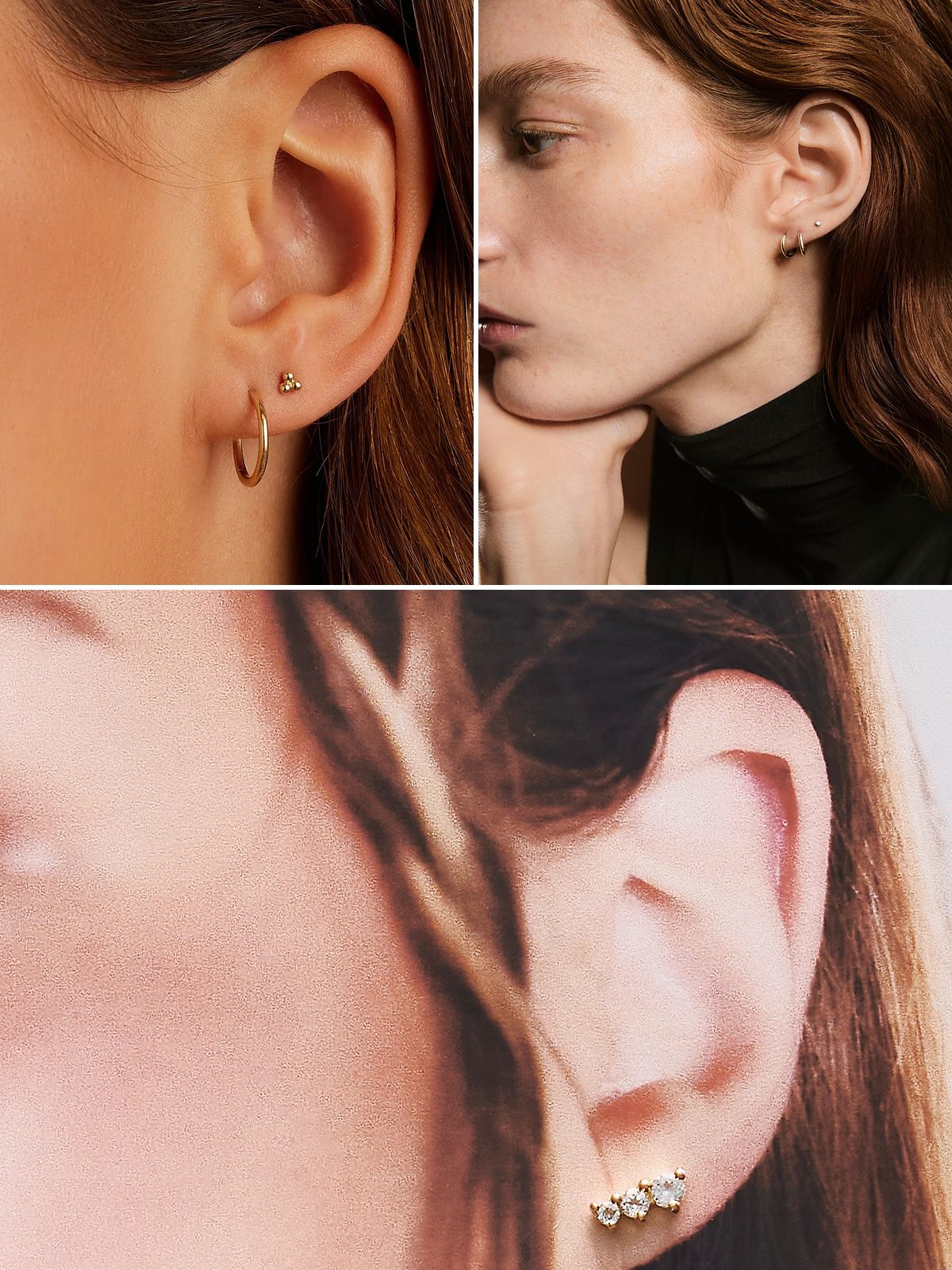
Cartilage earrings range from close gold hoops and flat backs to bright stones and cuffs that skim the upper ear. I would choose the setting for its placement, then keep the rest of the ear quiet.
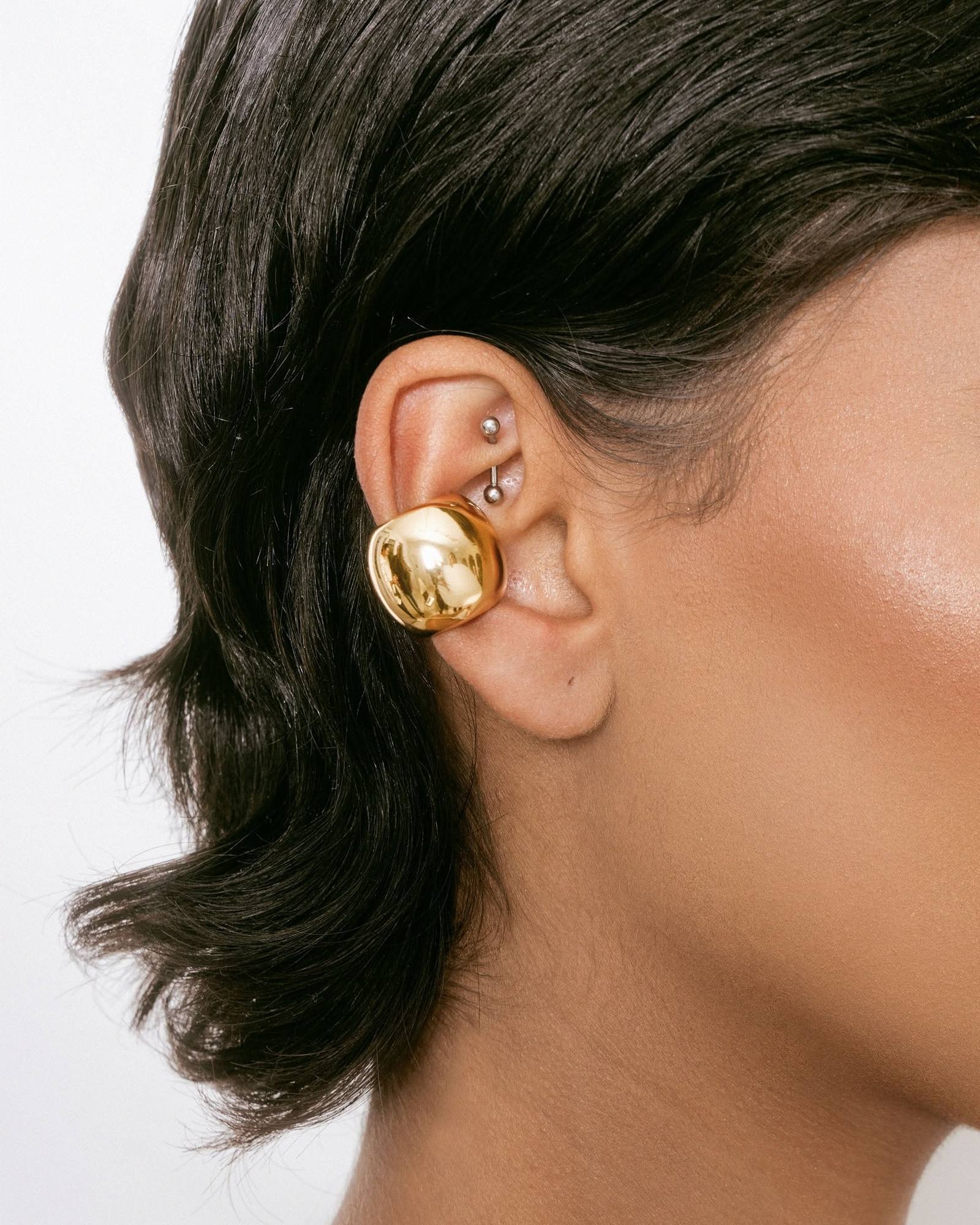
Cartilage Earrings: A Small Piece of Upper-Ear History
The upper ear, considered
In West Hollywood in 1978, Jim Ward opened the first piercing studio, a modern marker for jewelry that sits outside the old lobe-only picture. Cartilage earrings have a surprisingly long prehistory: a V&A pair of Sri Lankan koppu, dated around 1870, was worn through the helix, with gold and silver, granulation, and screw-together halves. I like that the upper ear was already being treated as its own small landscape, long before anyone said ear stack.
By 1993, Maria Tash had turned a home piercing practice into Venus Modern Body Arts in Manhattan’s East Village. Her approach was unusually design-minded: she studied the folds of cartilage and the needle angle, then made jewelry to sit where the ear could actually carry it. This edit goes from close gold hoops to tiny points of light, not a lineup of matching pieces.
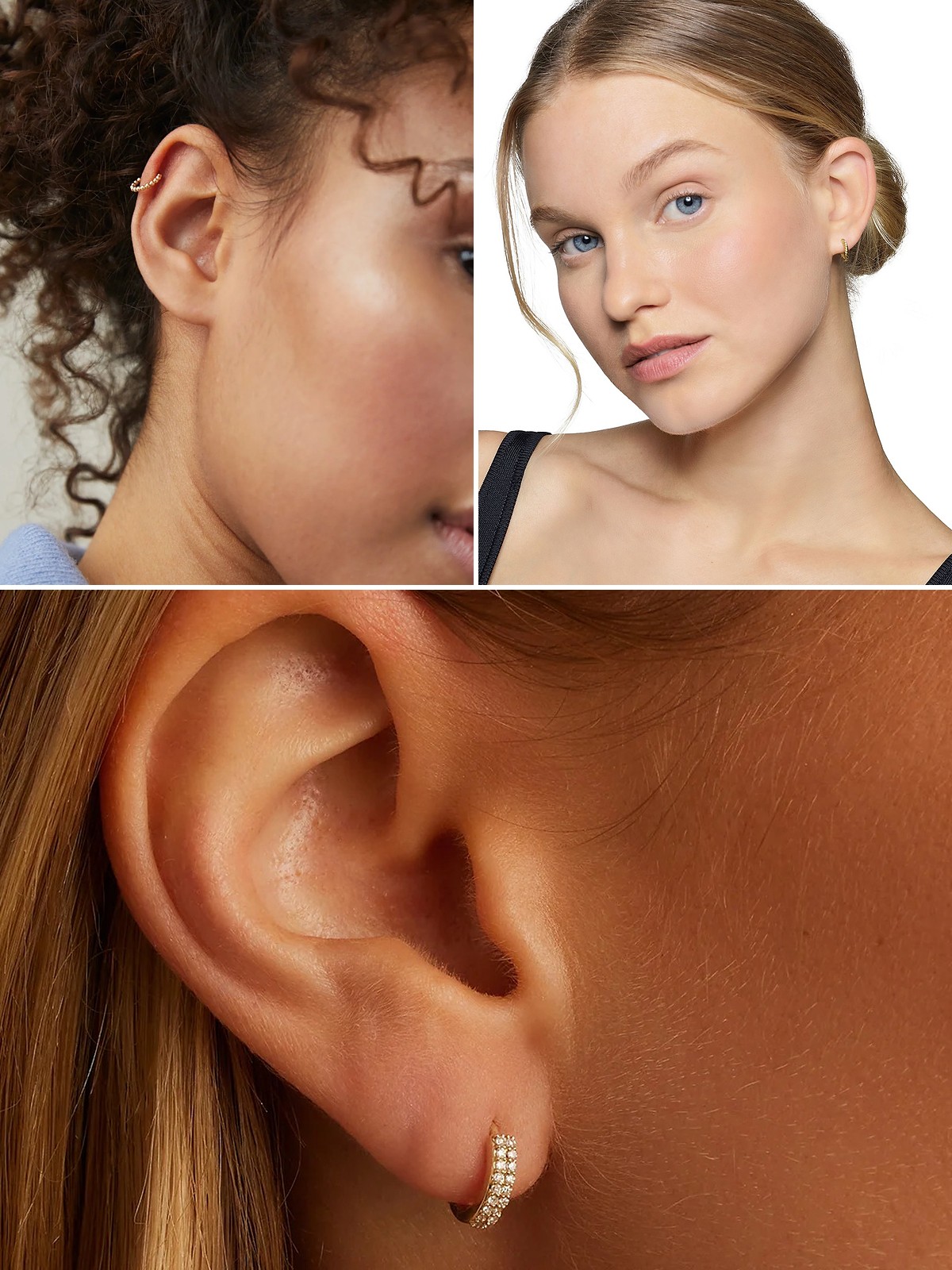
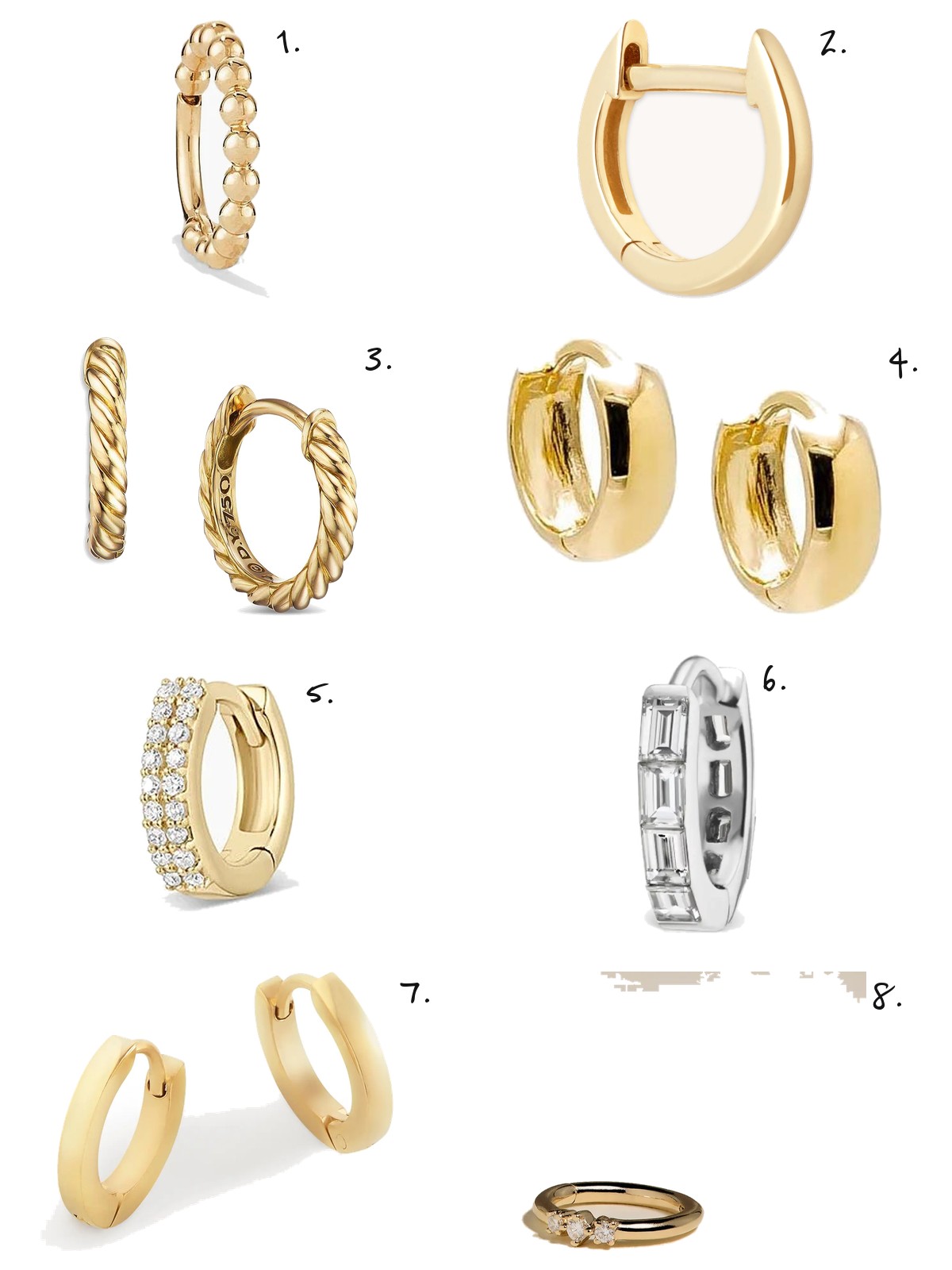
The Beaded Mini Hoop adds hollow-sphere texture in 10k gold; the Simple Piercing Hoop is polished recycled 14k with a straight post for healed cartilage. David Yurman’s Sculpted Cable Micro Huggie brings a tactile surface, while by Adina Eden’s Wide Solid Cartilage Huggie keeps the shape compact at 10mm. The Double Down Single Huggie sets a double row of eighteen diamonds beside a 9mm hoop, and Maria Tash’s baguette eternity hoop makes the brightest line. I would compare diameter, post, and clasp before deciding, then check whether the piece is sold singly. One deliberate point is enough.
Gold cartilage hoops

Cartilage Beaded Mini Hoop
Mejuri
$148

Simple Piercing Hoop in Solid Gold
Astrid & Miyu
$285

Sculpted Cable Micro Huggie Hoop Earrings, 10.7mm
David Yurman
$850

Wide Solid Cartilage Huggie Earring 14K
by Adina Eden
$300

14K Diamond Double Down Single Huggie
Gorjana
$350

Invisible Set Baguette Diamond Eternity Hoop Earring
MARIA TASH
$1,495

Dainty Huggie Hoop Earrings
Mint & Lily
$49

Diamond Triology Seamless Piercing Hoop in Solid Gold
Astrid & Miyu
$260
Flat backs, tiny gold points
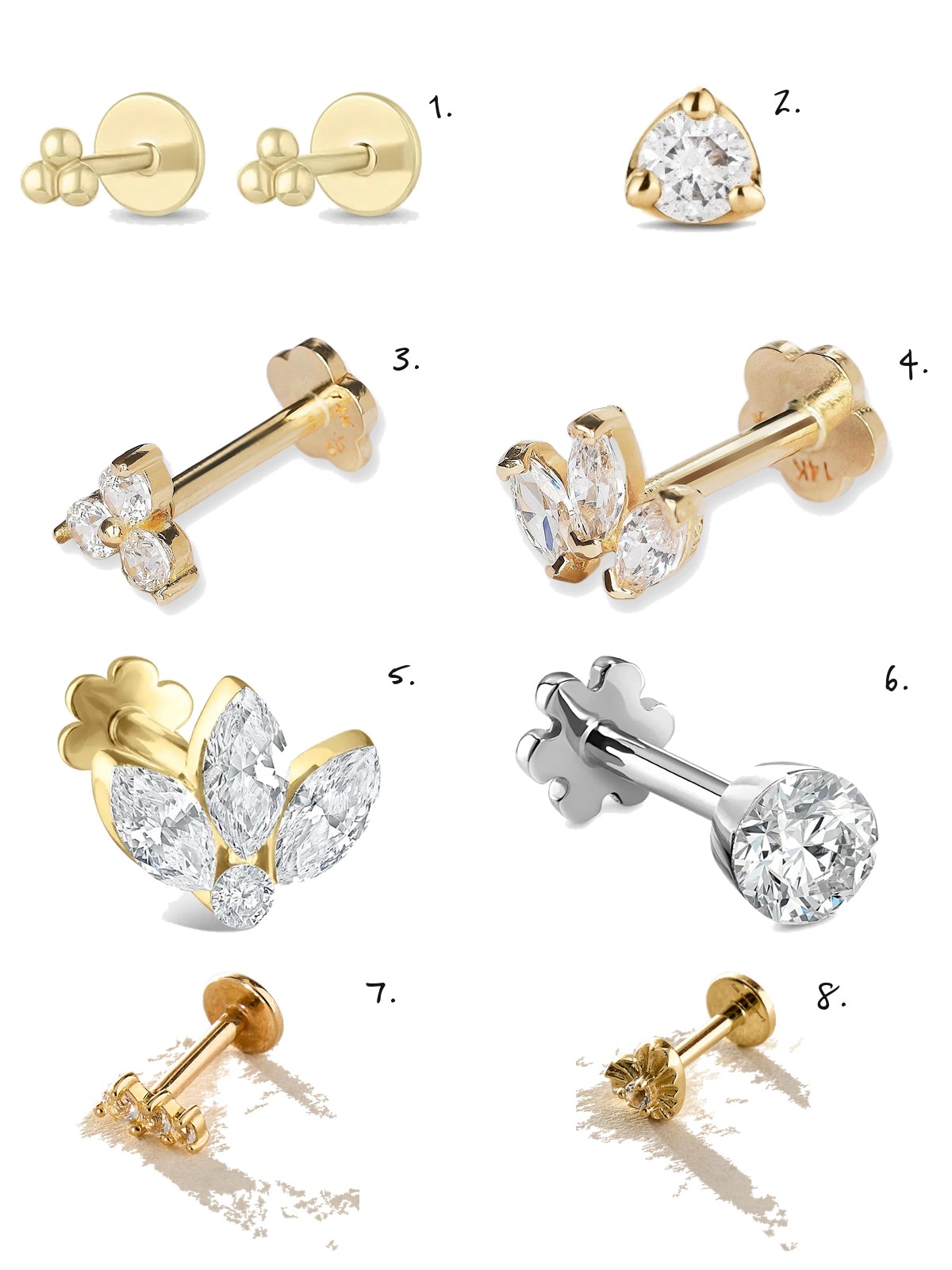
A tiny stack can get busy quickly, so the back matters as much as the stone. The 14K Gold Trio Flat Back Studs put three tiny gold points on threaded flat backs; Mejuri’s Single Baby Diamond Stud keeps the top nearly spare and has a flat-back option. For a little more geometry, Curata’s Trinity Labret sets three cubic zirconia stones on a 6mm bar, while its Lotus Flower labret goes floral in a 6-by-4mm top. I like Maria Tash’s Invisible Diamond Lotus for the sculptural outline, and her white-gold Invisible Diamond Threaded Stud for one precise glint.
The Shimmer Flatback uses white topaz in 9k yellow gold; the Gold Heart Flatback adds another white-topaz point in a tiny heart. That mix of stones, settings, and post types is why I would check the actual size and attachment, not only the front. The Association of Professional Piercers says fit, material, size, weight, and finish all contribute to everyday suitability. What I would skip: stacking the lotus, trinity, and heart on the same tiny stretch just because all three are small. One shape should lead; the others can be quieter.

14K Gold Trio Flat Back Studs
Gorjana
$236

Single Baby Diamond Stud
Mejuri
$98

Cubic Zirconia Trinity 3-Stone Labret Cartilage Stud, 14K Yellow Gold
Curata Jewelry
$95.2

Cubic Zirconia Lotus Flower Labret Cartilage Stud, 14K Yellow Gold
Curata Jewelry
$100.1

Invisible Diamond Lotus Threaded Stud Earring
MARIA TASH
$1,795

Invisible Diamond Threaded Stud Earring
MARIA TASH
$815

Shimmer Flatback Earrings
Local Eclectic
$115

Gold Heart Flatback Earrings
Local Eclectic
$140
Diamonds and colored stones
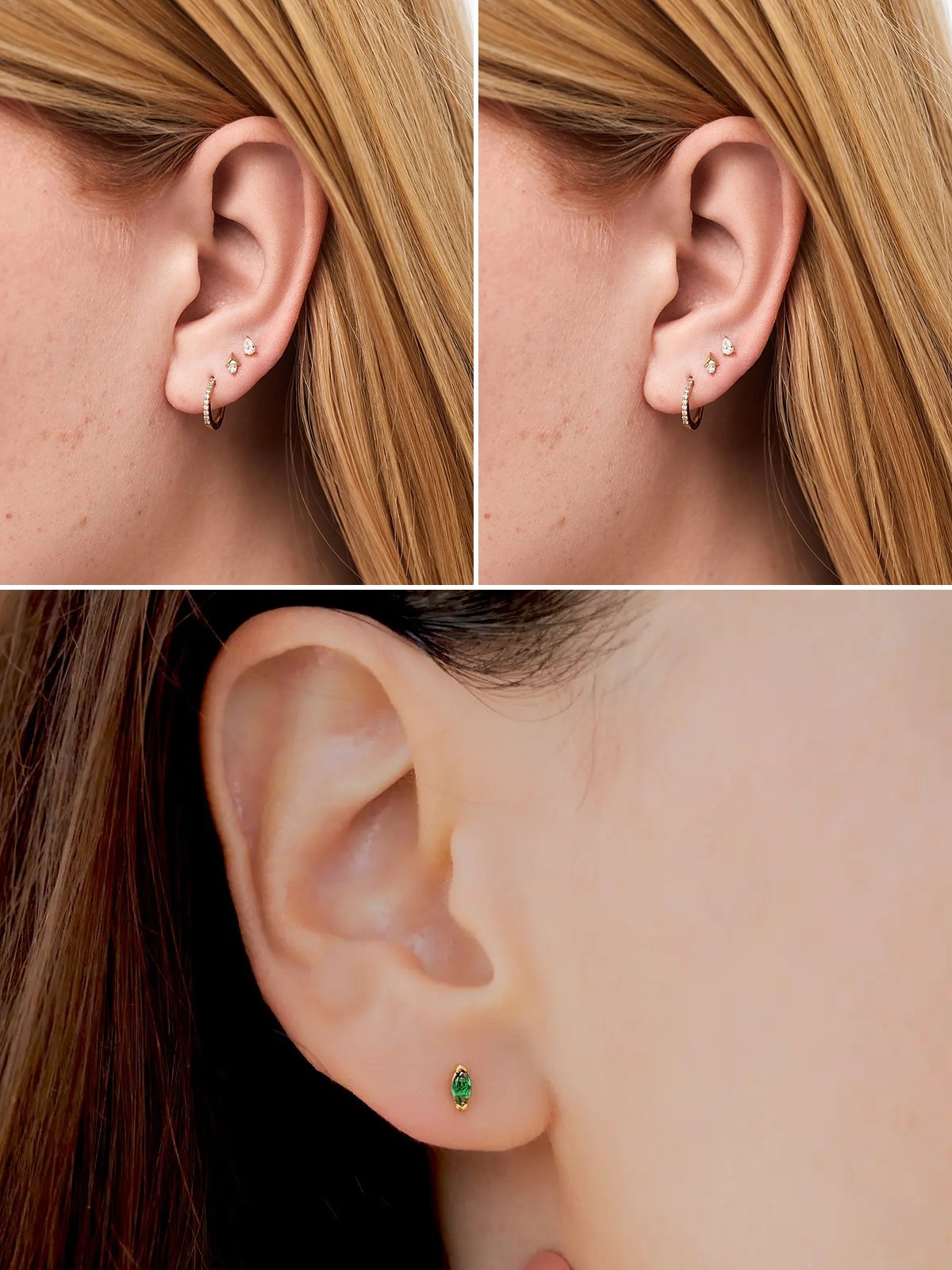
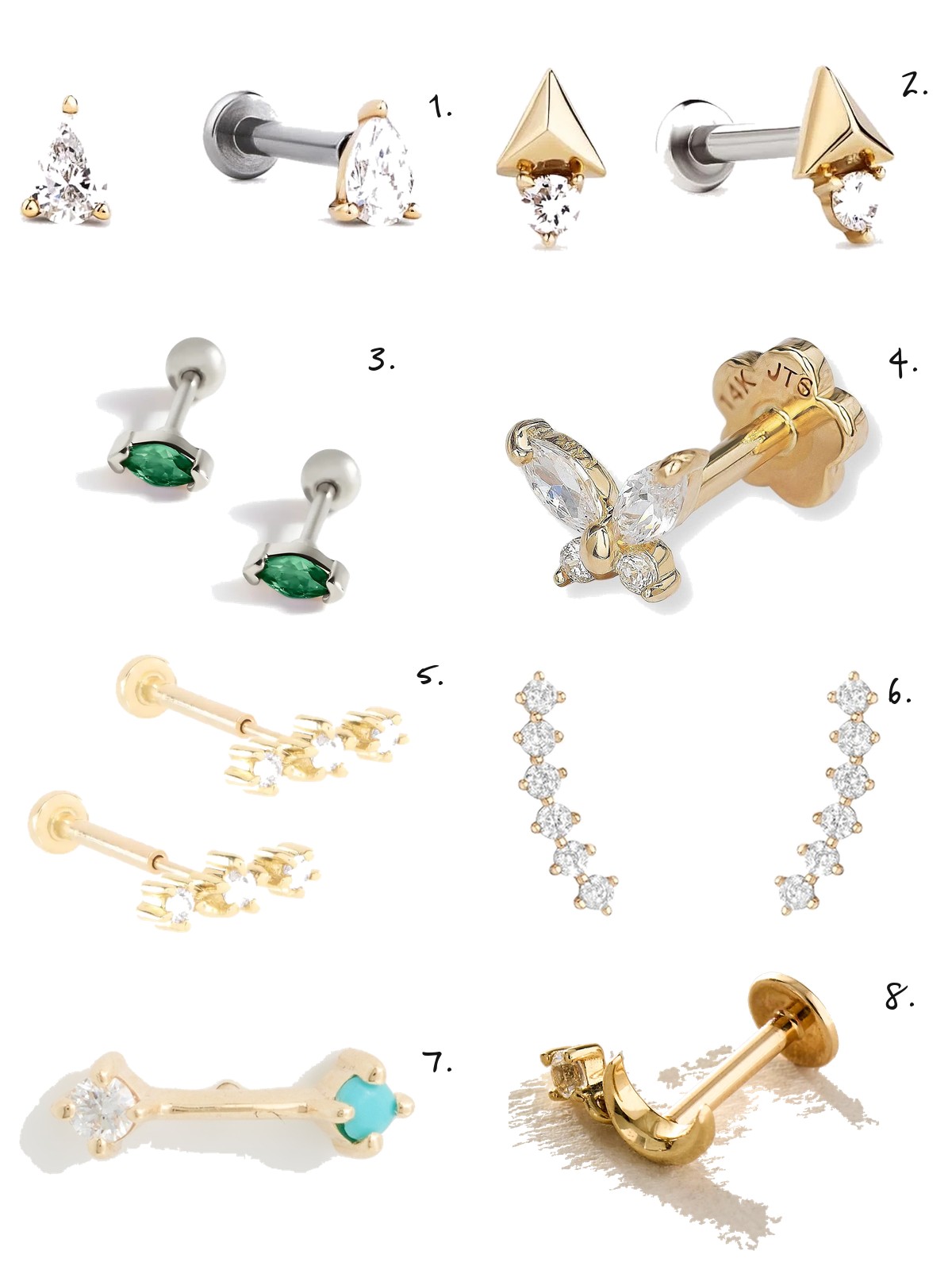
A stone looks intentional when the setting’s scale fits the fold, not when it tries to outshine everything nearby. I would let Ana Luisa’s Diamond Pear Flatback lead with its 0.13ctw diamonds, then use the Pyramid Flatback as a more geometric counterpoint. The Marquis Gemstone Sleeper adds green cubic zirconia, while Curata’s Butterfly Labret makes the motif literal in a 4-by-5mm top. Catbird’s Diamond Snippet is recycled 14k gold with a tiny 0.039ct diamond; Aurate’s curved climber maps white sapphires along the upper ear. Zoe Chicco pairs turquoise with one diamond, and Local Eclectic’s Crescent Moon finishes the group with white topaz.
The upper ear has held detailed ornaments for a long time: the V&A’s Sri Lankan koppu from about 1870 uses granulation and silver beads made to imitate pearls. I would take that as a reminder to mix texture thoughtfully, not as a reason to add every stone at once. Check the visible top’s width and the post and backing details before choosing; the setting is what faces out, but the hardware still decides whether it suits that spot.

Diamond Pear Flatback Studs
Ana Luisa
$250

Diamond Pyramid Flatback Studs
Ana Luisa
$230

Marquis Gemstone Sleeper Stud Earrings
Mint & Lily
$29

Cubic Zirconia Butterfly Labret Cartilage Stud 14K Yellow Gold
Curata Jewelry
$100.1

Flat Back Diamond Snippet Stud (Single)
Catbird
$258

Lab Grown White Sapphire Climber Flatback Earrings
Aurate New York
$148

14k Gold Prong Turquoise and Diamond Single Stud Earrings
Zoe Chicco
$325

Crescent Moon Flatback Earrings
Local Eclectic
$115
Cuffs and climbers up the ear
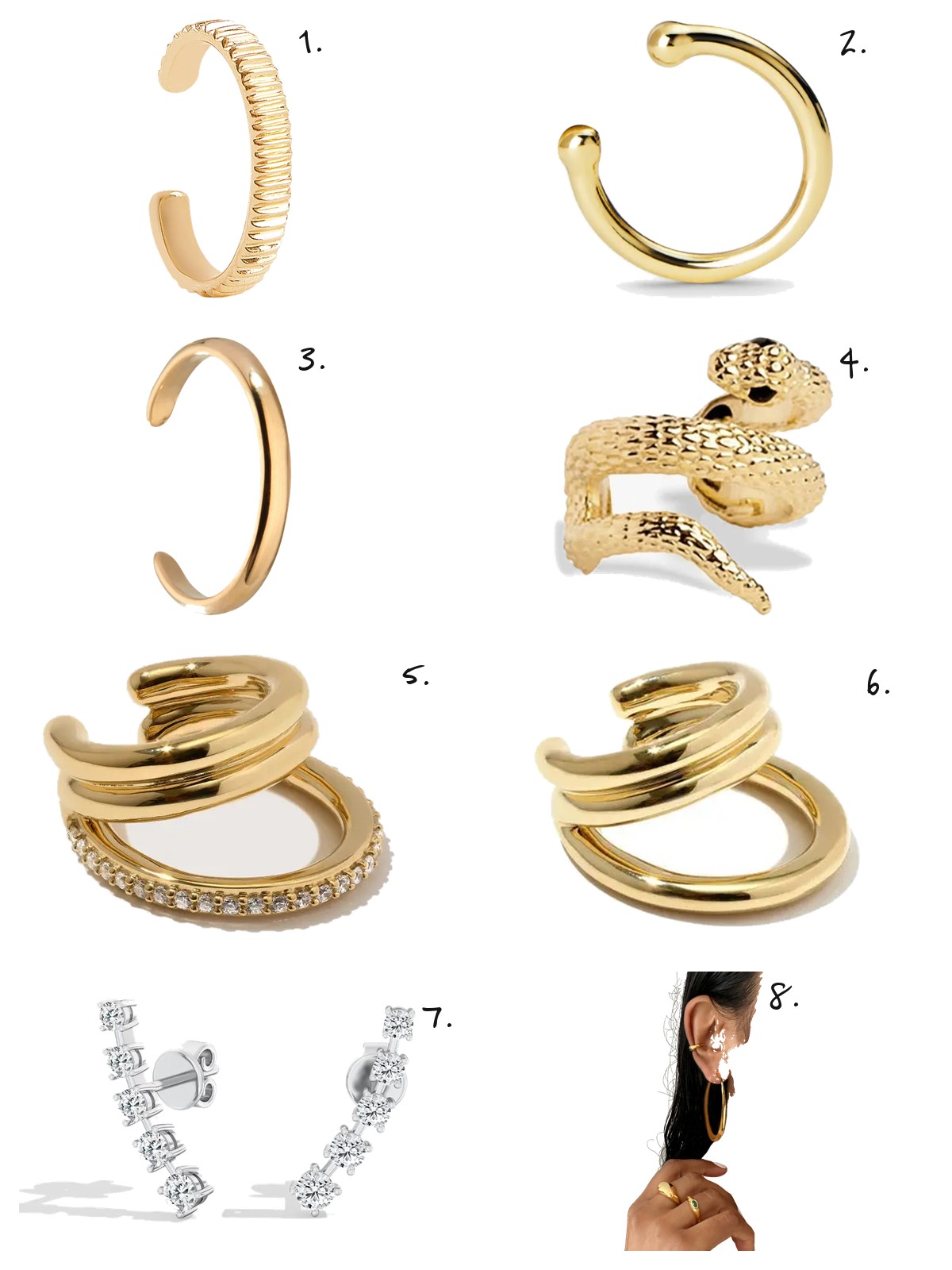
Not every upper-ear look needs a new piercing. The Fountain Ear Cuff is recycled 14k with coin-edge detail, and the adjustable Gold Ear Cuff uses the same no-piercing logic with a more sculptural line. Ana Luisa’s Simple Ear Cuff is gold layered over sterling silver; Awe Inspired’s Serpents Embrace curves a vermeil snake around the helix. For more texture, Otiumberg’s Pavé Concero adds pavé to recycled sterling under 14k vermeil, while the Concero without pavé keeps the twist. The Orbit Ear Climbers are solid 14k white gold with graduated lab diamonds, and Monica Vinader’s Deia cuff is sized for the lower helix.
A cuff can suggest an upper-ear stack without a piercing: EL PAÍS notes that ear-placement names track specific anatomy, from upper helix to conch and tragus. I would set one cuff beside a plain stud, not stack two cuffs in the same narrow fold. Before buying, check the opening or inner diameter against the intended spot; the V&A koppu used a two-part screw construction, so an old ornament is a history lesson, not a fit template. What I would skip: forcing a cuff to sit where its opening or curve does not belong.
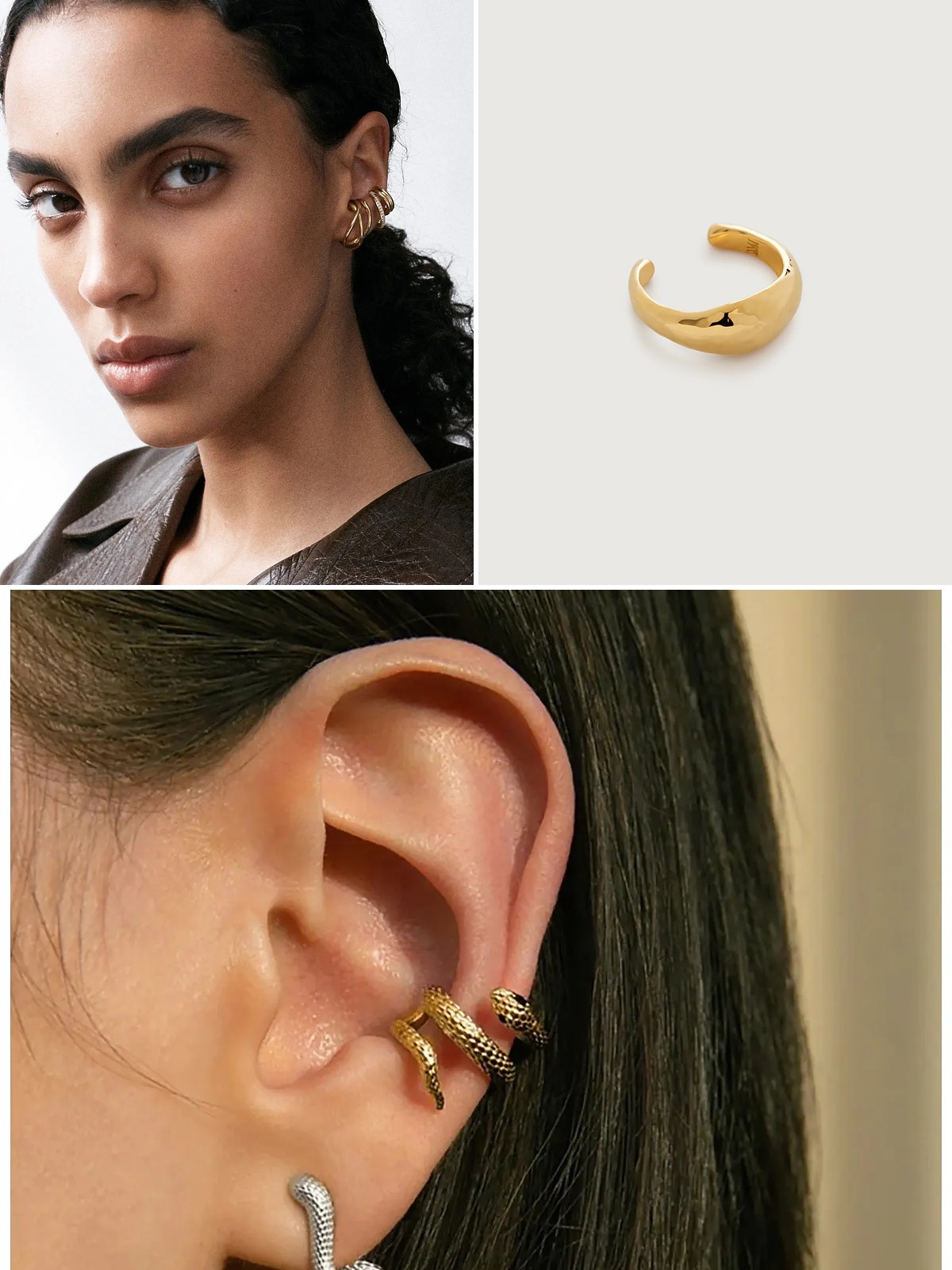

Fountain Ear Cuff
Catbird
$148.5

Sterling Silver, Simple Ear Cuff
Ana Luisa
$40

Gold Ear Cuff
Catbird
$168

Serpents Embrace Ear Cuff
Awe Inspired
$90

14kt Gold Vermeil Pavé Concero Ear Cuff
Otiumberg
$265

14kt Gold Vermeil Concero Ear Cuff
Otiumberg
$180

Orbit Ear Climbers Lab Diamond Earrings in 14K Gold
Everlee
$1,398

Deia Ear Cuff
Monica Vinader
$75
One small composition
My first choice would be whether I want a piercing or only the upper-ear line: the cuffs are the no-hole answer, while the hoops, flat backs, and climber need their intended placement. Then I would choose one anchor, gold texture or a stone, and keep the rest of the ear comparatively spare. Before changing any jewelry, I would make sure the piercing has healed and check the fit, post, finish, and weight; a piece can be beautiful and still be wrong for the anatomy.
For me, cartilage earrings are more about placement than silhouette. I would start with the easiest line for that ear, add one detail if it earns its space, and leave a little air around it. Jim Ward’s 1978 studio is a good reminder that the point was always intention, even when the jewelry was small.