Clarks: a 40-pair edit spanning Wallabees, desert boots, loafers, boots, clogs and sandals, framed by a story that starts in Street, Somerset. I trace the brand from its 1825 beginnings to the moccasin shape that still catches my eye.
Clarks: The Somerset Shoemaker Behind the Wallabee
A beginning in Street
In 1949, Nathan Clark’s Desert Boot launched at the Chicago shoe fair, an early public moment for a design inspired by off-duty officers’ rough suede boots from Cairo. WWD traces its next chapters through jazz musicians, beatniks and mods. I like a shoe story with a real starting place, but Clarks began even earlier, in Street, Somerset.
The company’s history starts in 1825, when Cyrus Clark opened a tannery and his brother James worked alongside him. James turned sheepskin rug offcuts into slippers, and its first shoes were handmade Brown Petersburghs. By 1883, the Hygienic range was among the early footwear designed around the shape of the foot. That practical thread is a better introduction than treating the label as an archive behind glass.
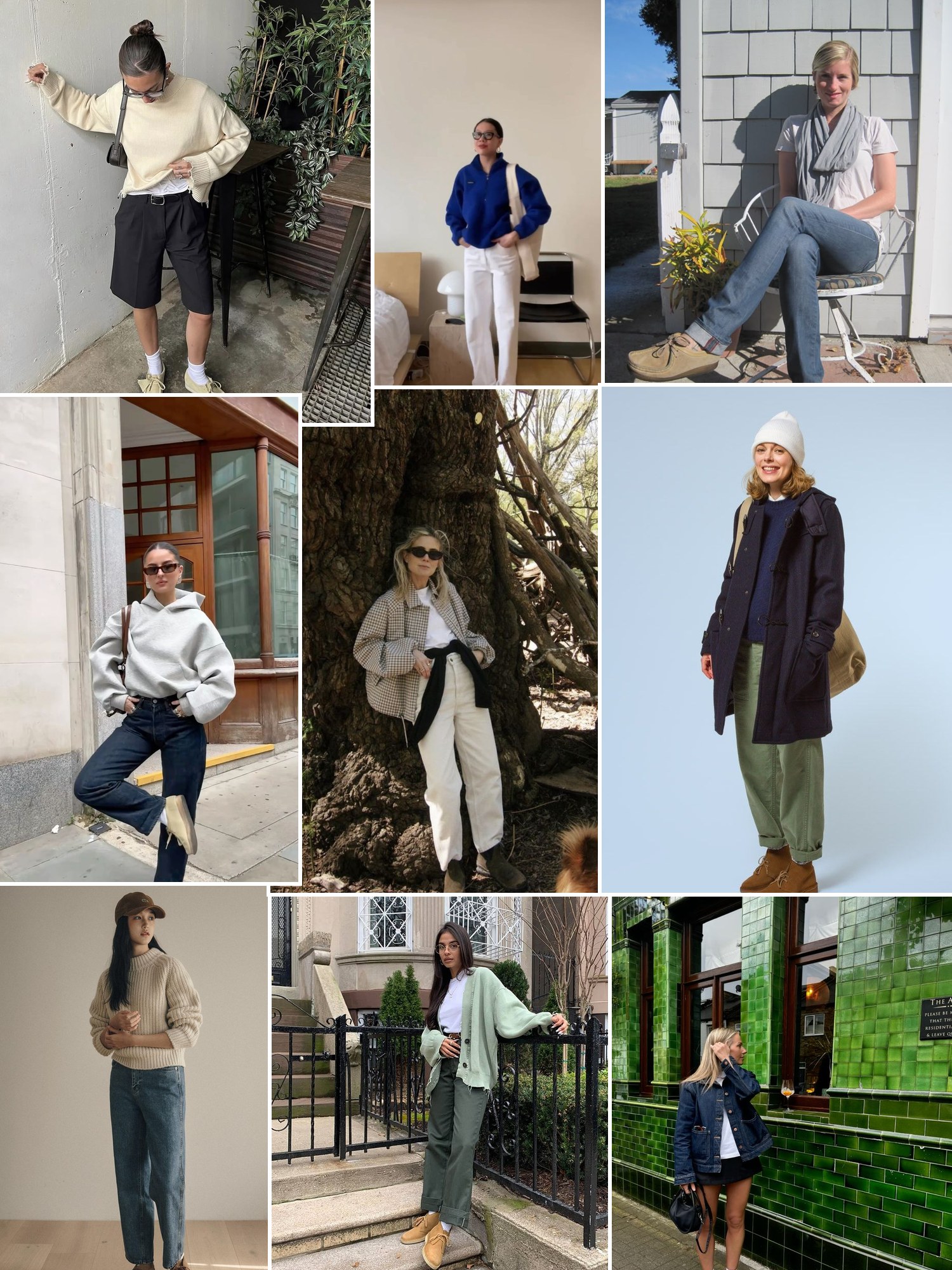
Here the Wallabee makes the case in several registers. The Wallabee Maple Suede keeps suede and pebble crepe sole front and center; the Wallabee Beeswax trades into leather; and the Black Suede makes the stitched apron read crisp. The Ginger Suede is warmer, Cola Suede runs dark, and Dark Teal, Berry and Ash pull the color story sideways.
I would wear Maple with straight jeans and a long wool coat, Beeswax with easy trousers, and one of the brighter suede options with a quiet knit. Before picking a color, I would check the lacing and toe shape against the hem lengths already in my closet. A low-profile shoe only does its job when the trouser lands where I want it.


Desert boots, from sand to suede
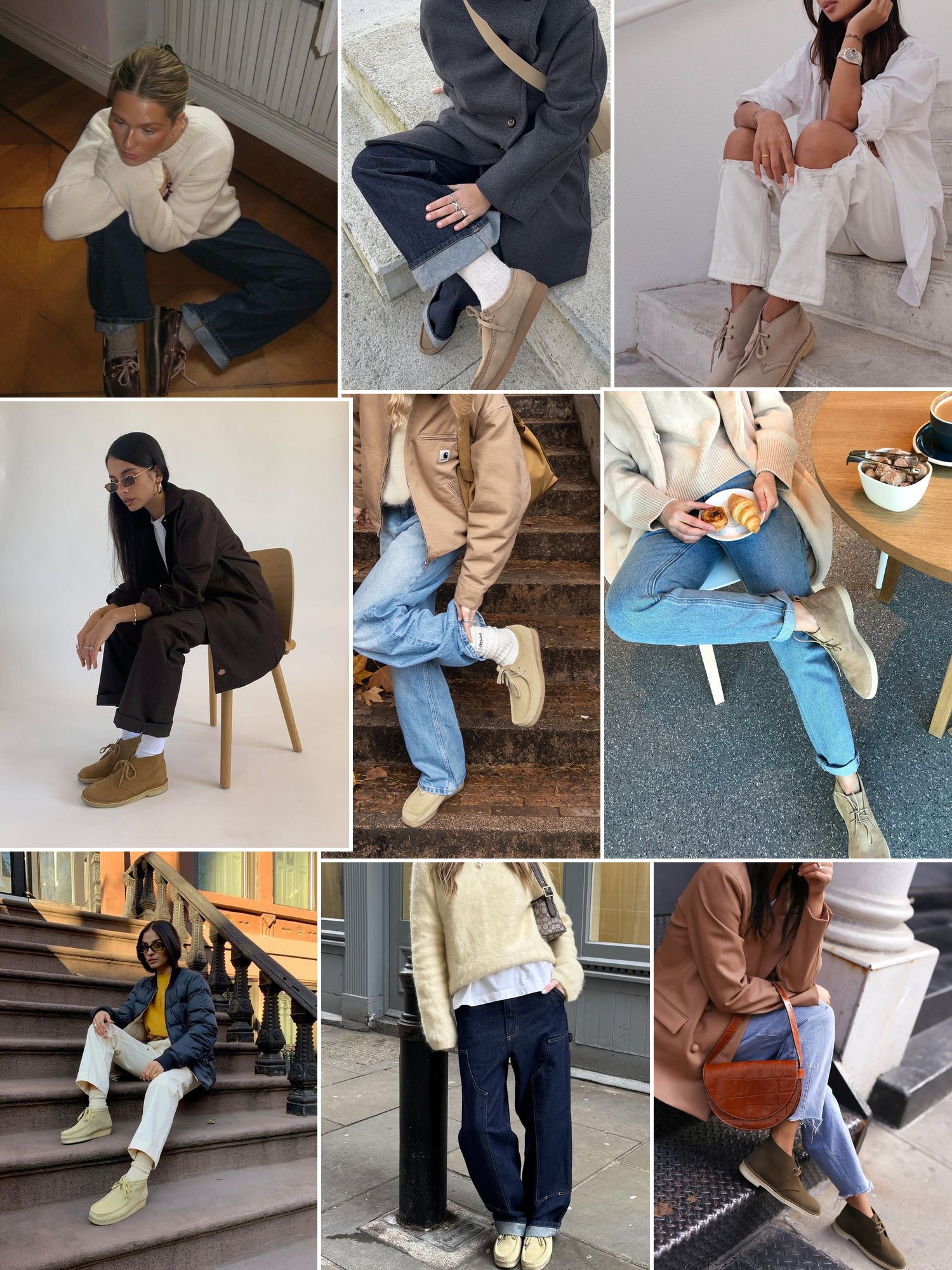
The Desert Boot launched in 1950, though the silhouette was designed by Nathan Clark in 1949 and drew on Cairo-market suede boots worn by off-duty officers. That origin explains why a spare chukka and crepe sole can take different wardrobe moods without needing extra fuss. I would start with the Desert Boot in Sand Suede, the clearest read of the original, then compare the Beeswax leather version for a deeper color.
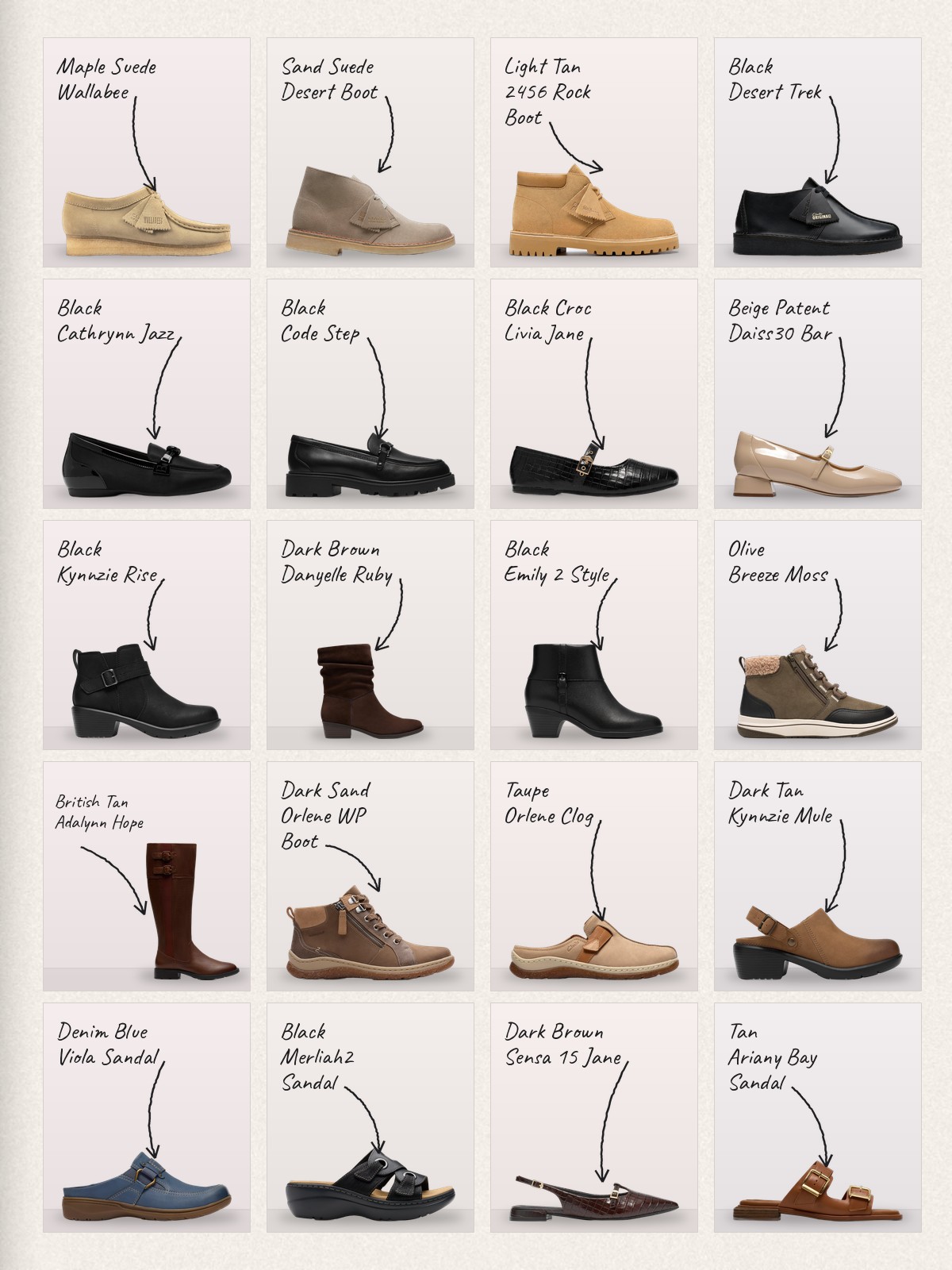
The Black Suede Desert Boot changes the mood without changing the ankle height. The Desert 2456 Rock uses light tan suede, a padded collar and hiking-style laces, so it leans more outdoorsy. The Desert Trek in Beeswax brings its foot-shaped profile and fobs; the Black Smooth Leather Trek feels dressier, while Sand Suede and Black Suede Treks give the center seam more contrast.
My styling test would be to look at the boot with both straight jeans and a skirt, then see how the shaft sits at the ankle and whether the lacing leaves enough room for a sock. What I would skip: wearing a pale suede pair through the slushiest part of a rainy commute without checking the care guidance first. The shape is simple; the upkeep deserves an honest look.


Loafers and Mary Janes with a point
The distinction I pay attention to in a loafer or Mary Jane is where the upper stops and the shoe begins. The old Hygienic range was among the early designs shaped around the foot, and that idea gives me a useful lens for these modern profiles: shape first, decoration second. The black Cathrynn Jazz is a slip-on with a cushioned footbed; the Westlynn Bella adds a chunky sole; the Code Step puts its cushioning window in a lug sole.
Carleigh Lily’s mushroom nubuck and grippy sole make it the softer-looking pick. The Livia Jane’s black croc finish and strap make a simple flat feel more composed, while Shaya Jane brings patent shine. Sensa 15 Jane is the pointed dark brown slingback with a mini T-bar, and Daiss30 Bar uses beige patent with a rounded toe and dainty strap.
I would wear the chunkier pairs with cropped straight pants, then let the Mary Janes meet a skirt and opaque tights. At home, I would check whether a strap lies comfortably over the instep and whether the heel holds without a grip from my toes. The point is not to chase the dressiest option, but to choose a shape that makes a weekday outfit feel considered without demanding a special occasion.


Boots for changing weather
The Desert Boot’s route through jazz, beatnik and mod wardrobes gives these boot choices a little context without turning them into a costume. I would sort this group by the part of the day I need it for. Kynnzie Rise is the black leather ankle boot with a side zip and stretch panels; Danyelle Ruby softens a dark-brown suede upper with a block heel; Breeze Emma is a light black slip-on.
Emily 2 Style makes black leather more dressed with its small buckle and supportive heel. Carleigh Jade goes for dark tan nubuck, and Breeze Moss is the olive boot-sneaker with a Cushion Soft footbed. Adalynn Hope gives the knee-high shape a British tan leather finish; Orlene Top WP brings dark sand nubuck into a waterproof Chelsea profile.
I would pair Kynnzie Rise with a midi skirt and tall socks, or Danyelle Ruby with a long knit dress. My fit check is calf and ankle room: sit, stand, and see whether a knee-high shaft or stretch panel stays where it should without changing how I walk. What I would skip: picking a taller boot by color alone before checking shaft height against the skirt or pant hems I actually wear.


Clogs and sandals for the in-between
I see clogs and sandals as the shoes that solve a quieter wardrobe problem: what goes on when a lace-up feels like too much, but I still want a finished line. The Orlene Clog comes in black and taupe nubuck with a rice-husk outsole, while Kynnzie Mule’s swivel strap gives a slip-on a second setting. Carleigh Viola stands out in denim-blue nubuck with a stretchy insert and statement hardware.
Merliah2 Cove keeps the black leather sandal on a wedge; Cecily Step uses champagne leather and a polished buckle; Ariany Bay returns to tan straps and a Contour Cushion footbed. These are not all shoes for the same day. I would save the wedges and dressy flats for dry plans, while the clogs take loose denim and a jacket.
At a fitting, I would check the strap on Kynnzie Mule first, then walk a few steps in each sole shape and make sure the pair stays secure when I turn. For October, a clog with a wool sock is an easier bridge than insisting a sandal solve a damp commute. The useful part of this group is having an answer ready for a dry day, a long errand, or a change of plans.


Choose the shoe for the day
I would make the choice in this order: decide on ankle height, choose suede or leather for the life I expect the shoe to have, then settle the color against the coats and trousers already waiting by the door. The Wallabee keeps an outfit relaxed; a Desert Boot adds a bit of shape; the Mary Jane is the one I would reach for when a skirt needs a grounded shoe.
The company began by turning leftover sheepskin into slippers, so there is a small pleasure in choosing by the detail that will actually get used. In 1949, the Desert Boot made its way onto a Chicago shoe-fair floor. I would let the next pair make its own quiet exit from the house.