Some garments look better after three years and some look finished after three washes, and the difference is mostly fibre and construction rather than price. Below, wool and cashmere, silk and cotton and linen, and leather and suede, with how each one ages and what it needs.
Clothes That Age Well
There is a category of clothing I have started buying almost exclusively, and it is not defined by brand or price. It is things that improve.
Most of what is sold to us is at its best in the shop. That is the whole design brief: look excellent under a spotlight, on a hanger, unworn. Then it goes home with you and every wash takes something away.
A smaller set of things works the other way. Leather softens and takes the shape of you. Good cotton relaxes and gets better against skin. Linen crumples into something that looks lived in rather than neglected. Denim fades exactly where you sit and bend, which is to say it becomes a record of you.
That is a much better thing to spend money on than newness, and it is also the honest answer to buying less. You buy less when the things you own keep getting more comfortable to wear.
Wool And Cashmere

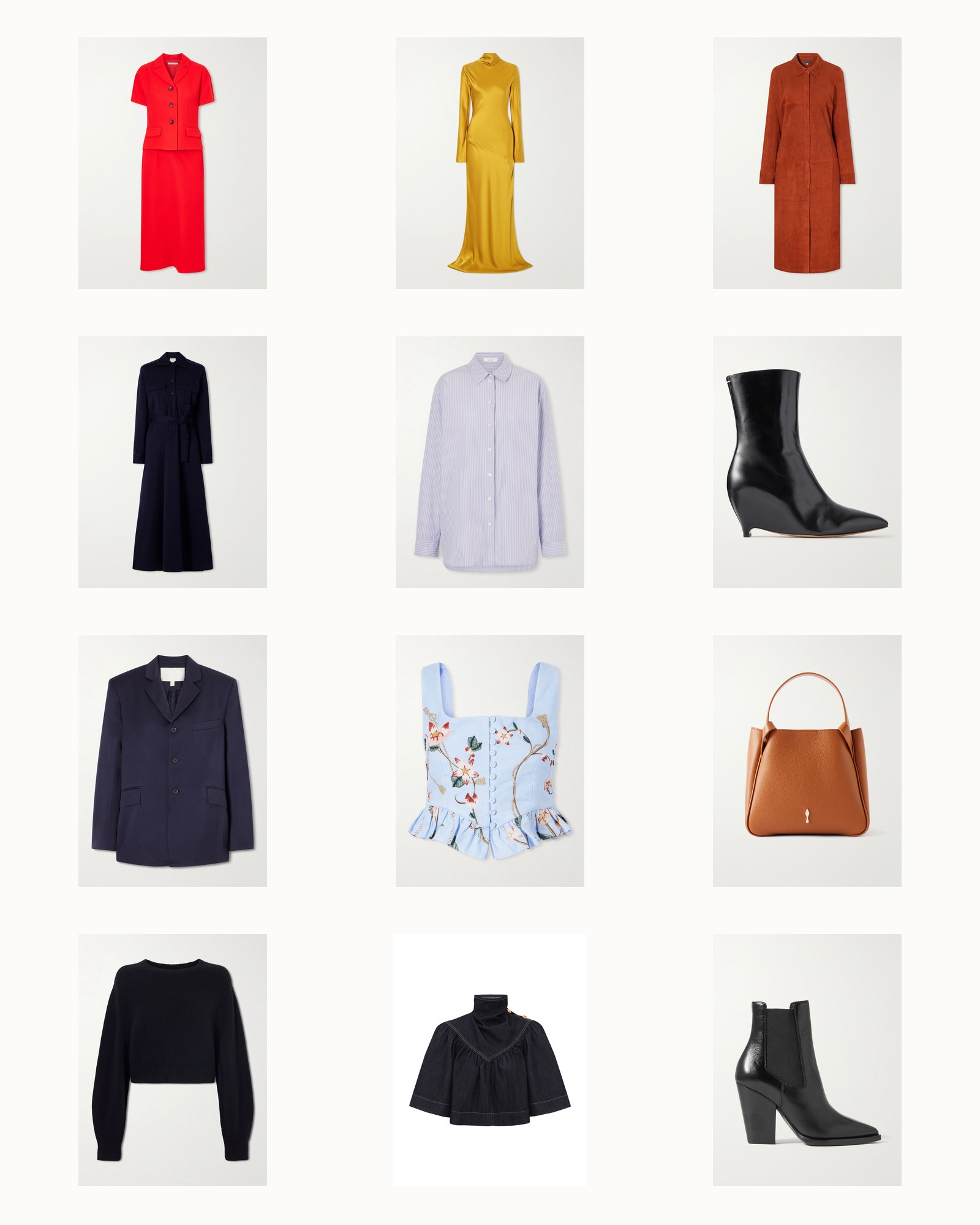
Alexina wool-crepe midi dress
Emilia Wickstead
$2,660

The Dora wool-jersey midi dress
Giuliva Heritage
$1,980

The Stewart wool blazer
Rùadh
$1,520

Masie cropped wool and cashmere-blend sweater
Khaite
$1,180

Cashmere cardigan
Toteme
$790

Menorca cropped cashmere sweater
Le Kasha
$650

Valiant Merino Straight Skirt
Zimmermann
$525

Mick Fine Merino Knit Top
A.L.C.
$220
Wool and cashmere age well when the fibre is long and the yarn is plied, and badly when it is neither.
What that means in a shop: two-ply or heavier yarn resists pilling far better than single-ply, and a tight, dense knit outlasts a loose fluffy one even though the fluffy one feels nicer for the first week. Merino is the workhorse and takes daily wear. Cashmere is warmer for the weight and needs more care. Alpaca has almost no memory, so it drapes beautifully and will not spring back into shape.
Care, which is genuinely half of it: wash less than you think, always cool, always flat to dry. Fold, never hang, or the shoulders stretch into little points. Buy a cashmere comb and use it after the third or fourth wear, before the pills lock together.
The wool tailoring in this group is the longest-lived thing here. A wool jacket that gets brushed and rested between wears will outlast almost anything else you own.
Silk, Cotton And Linen

Gio open-back silk-cloqué maxi dress
Tove
$1,720

Sisilia cotton-poplin shirt
The Row
$1,250

Eslabón Navegante floral-embroidered linen cropped top
Agua By Agua Bendita
$850

Denim Cape Top
Zimmermann
$675

Denim Fitted Blouse
Zimmermann
$525

Lara Satin Pleated Midi Dress
A.L.C.
$380

Floriette ruffled satin-jacquard blouse
Dôen
$270

Halsey Cropped Cotton Rib Tank
A.L.C.
$88
Silk, cotton and linen are the fibres that get more comfortable and slightly less pristine, which is the trade.
Silk is stronger than it looks and hates two things: sunlight and deodorant. It also does not need dry cleaning in most cases, and gentle hand washing in cool water with a little conditioner keeps it far softer than solvent does. Expect the colour to shift slightly. That is normal.
Cotton and linen both soften permanently and both shrink once. Buy with that in mind, wash before you judge the fit, and stop ironing linen if you want to enjoy owning it.
Leather and suede are the clearest case of all, and the rules are short. Keep them dry, condition smooth leather once or twice a year, brush suede after every wear, and let both rest rather than wearing the same piece daily. A leather skirt or a suede boot treated that way looks better at five years than at five weeks. Untreated, it cracks at the fold points and there is no coming back.
Leather And Suede

Becky suede midi dress
Stouls
$2,885

Heel-less leather ankle boots
Maison Margiela
$2,050

Bettina mini embellished leather tote
Christian Louboutin
$1,650

Theo leather ankle boots
Saint Laurent
$1,350

Crinkled-leather clutch
Rick Owens
$1,125

Marta Leather Midi Skirt
A.L.C.
$895

Melody leather mini skirt
Arma
$615

Demi Leather Mini Skirt
A.L.C.
$250
Our honest take
We would rather own six things that age than twenty that do not, and we think most people already know this and buy against it anyway, ourselves included.
What we would skip: anything where the surface is the product. Coatings, bonded finishes, printed faux textures. They cannot be repaired and they cannot improve, they can only wear off.
Also worth saying plainly: none of this works without maintenance, and the maintenance is boring. If you will not comb the cashmere or brush the suede, buy the merino and the smooth leather instead, which are the forgiving members of this list.
What we would spend on first: the wool tailoring, then the leather. Both are decades-long purchases if you do the small things, and both are visibly better made at this level than below it.
If you take one thing away: read the composition label before you look at the price. A garment's future is written there, and no amount of money spent on a bad blend will change it.