A coat is the one garment strangers judge and the one you wear most, so it is the clearest case for buying once and keeping it. Below, what to check on wool coats, leather and suede outerwear, and blazers, including the details that decide whether it survives a decade.
Coats Worth Keeping For Years
Outerwear is the only category where I have never regretted spending more, and I have thought about why. It is partly use: a coat gets worn every day for five months and nothing else in your wardrobe works that hard. But it is mostly that a coat is the silhouette. Everything underneath is a rumour.
It is also the category where the market is least honest with you, because a wool coat and a wool coat can be separated by a decade of life and look nearly identical on a rail.
So this is a practical piece rather than a philosophical one. Three groups below, and for each of them the things I would physically check before paying.
And one general note: try every coat on over a jumper. A coat that fits over a T-shirt in September is a coat you cannot wear in January.
Wool Coats

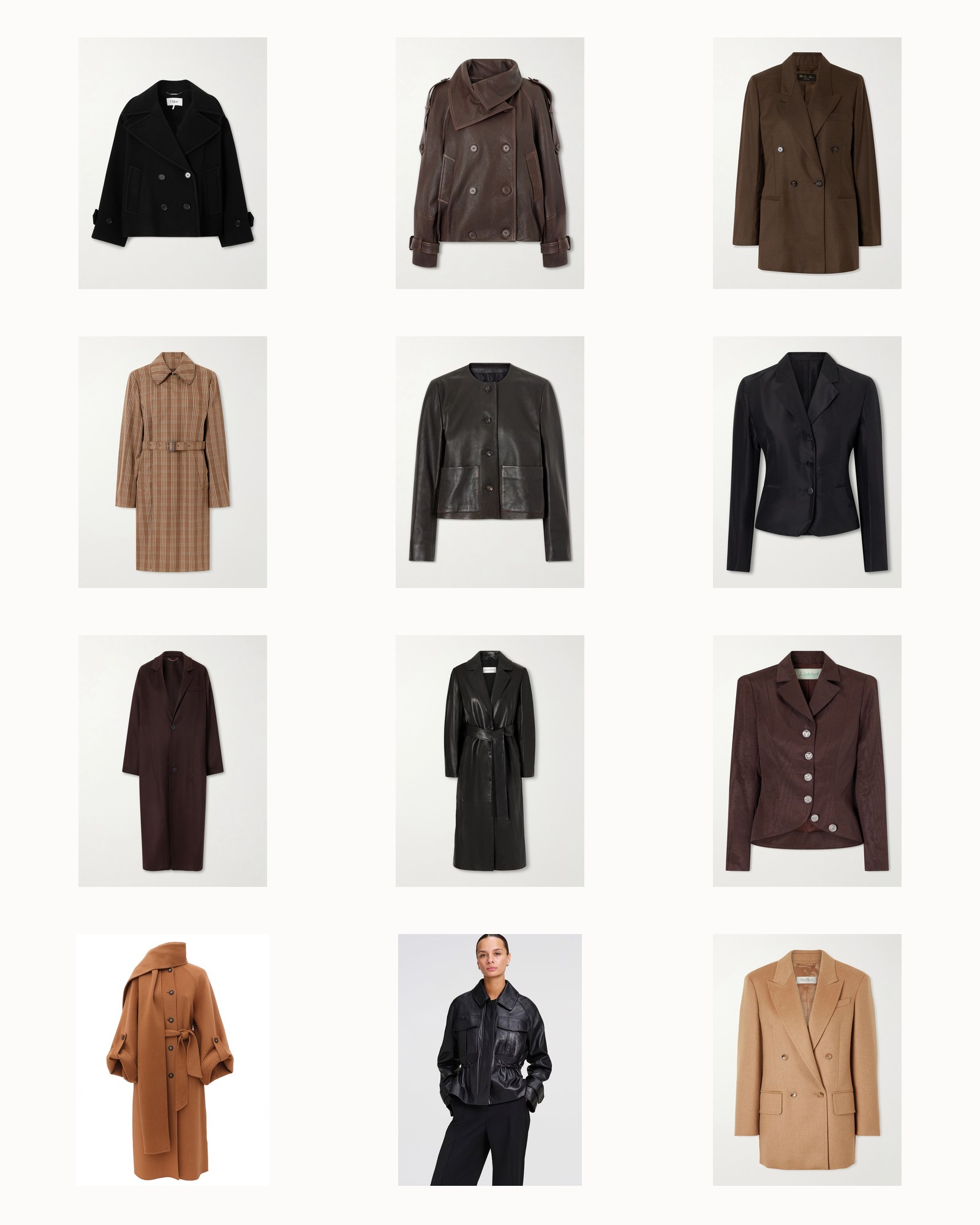
Overszied double-breasted wool-blend coat
Chloé
$2,890

Linear belted checked wool-canvas coat
Wales Bonner
$2,555

Wool-blend coat
Victoria Beckham
$2,250

Valiant Wool Scarf Coat
Zimmermann
$1,950

Marin wool-blend twill trench coat
Nili Lotan
$1,790

Manilla belted recycled-wool twill coat
Skall
$1,475

Rowan Oversized Wool Coat
A.L.C.
$995

Gaia oversized double-breasted wool-blend coat
The Frankie Shop
$495
Wool coats. Weight is the first signal and the hardest to fake. A proper winter coat has real mass in the hand; if it feels like a shirt, it will not hold a line and it will not hold heat. Look for melton, double-faced wool or a heavy twill.
Then read the composition. Wool with a small percentage of cashmere is softer and pills faster. Wool with polyamide or nylon is more durable and less lovely. Recycled wool is often shorter-fibre, which means more pilling, and that is a genuine trade rather than a scandal.
Check the lining across the shoulders and down the back. A full lining in a smooth fabric means the coat will slide over knitwear instead of dragging. A half lining is fine on a lighter coat and irritating on a heavy one.
Last, look at the shoulder. A dropped shoulder gives you room and reads relaxed. A set shoulder reads sharper and is much less forgiving of the wrong size.
Leather And Suede Outerwear


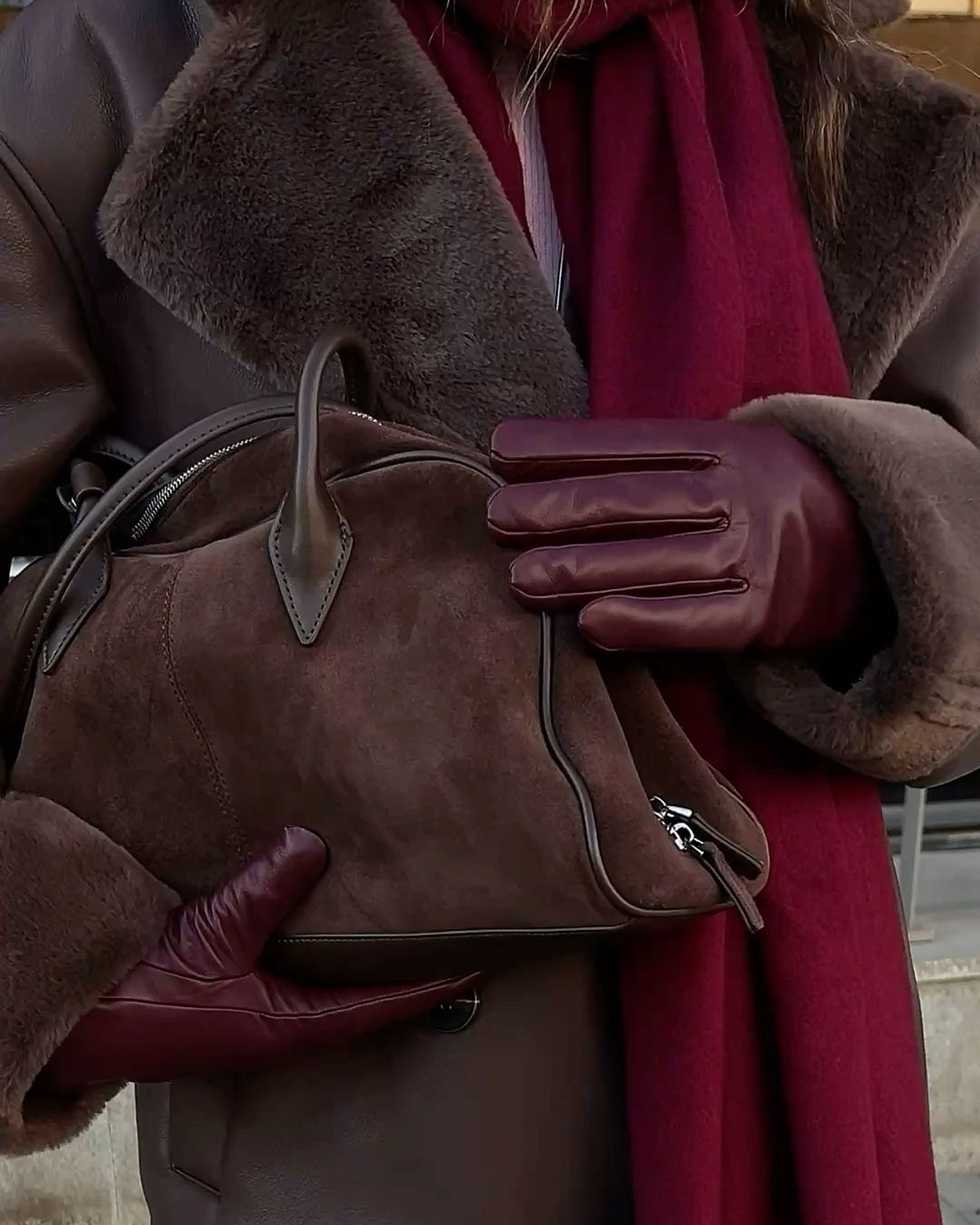
Leather and suede age better than almost anything else, on one condition: you have to treat them like they are alive, because they are.
For leather, full-grain and top-grain are what you want, and the words matter. Genuine leather is a lower grade despite sounding like the highest. Look at the cut edges: a finished, painted edge is a sign of care in the make. Suede should feel dense rather than fuzzy, and it will mark, permanently, so a pale suede jacket is a commitment rather than a purchase.
Care is simple and non-optional. Brush suede after wear. Proof it before winter. Condition smooth leather once or twice a year and keep it off radiators. Never dry either one with heat.
Blazers are the third group because a good blazer does outerwear work three seasons out of four. The detail to check is the chest: press the front panel between your fingers and see if you can feel a separate floating layer. That is canvas, and it is why some blazers keep their shape for twenty years.
Blazers

Oversized double-breasted virgin wool blazer
Loro Piana
$3,650

Silk-faille blazer
Gucci
$3,300

Twill embellished blazer
Wiederhoeft
$2,750

Olimpia camel hair blazer
Max Mara
$2,340

Cropped crepe blazer
Galvan
$1,795

Julago Mels pinstriped wool blazer
Acne Studios
$1,400

Amoako devoré blazer
Destree
$840

Stretch-jersey blazer
Norma Kamali
$395
Our honest take
We would buy fewer coats than most people own and spend more on each. Three is plenty: one heavy and plain, one lighter and interesting, one blazer that can leave the house alone.
What we would skip: the coat that is only a colour. A strong colour is the fastest thing to tire of in a garment you wear every day, and it is the hardest to sell on. If you want colour, put it in the scarf.
What is genuinely worth the money here: the wool. The suede is beautiful and we would still tell you it is a second coat rather than a first, because it cannot take rain and pretending otherwise ruins it.
One more thing we believe and rarely see written: a coat you have owned for years and had altered is better than a new one at the same price. Shorten it, change the buttons, take the belt off. Alterations are the cheapest style available to you.
If you take one thing away: buy the coat that fits over your thickest jumper, and buy it in a colour you would happily wear five hundred days in a row. If you want to keep browsing, I also put together Best Designer Coats and Long Leather Coats.