Rubellite, peridot, blue topaz and amethyst without the jargon. What actually drives the price of a coloured stone ring, and how to buy your first one without regretting it.
Coloured Stones, Explained: How to Buy Your First Serious Ring

Colour first, everything else second
The single most useful thing to know about coloured stones is that the hierarchy is not the same as it is for diamonds. With a diamond, clarity and cut dominate. With a coloured stone, colour dominates almost completely.
Colour breaks into three parts. Hue is the shade itself. Saturation is how intense it is. Tone is how light or dark. A stone with strong saturation and a medium tone will look alive across a room. The same stone in the same size with a greyish saturation will look dull no matter how flawless it is under a loupe.
This is why two rings with identical stone weights can differ enormously in price, and why a photograph is a genuinely useful buying tool for coloured stones in a way it is not for diamonds.
Inclusions matter far less. Many coloured stones are expected to have them, and in some materials a visible internal texture is a sign the stone is natural rather than a fault. Do not pay a premium for a flawless coloured stone unless you can see the difference from arm's length.
Start here: the rings people actually buy first
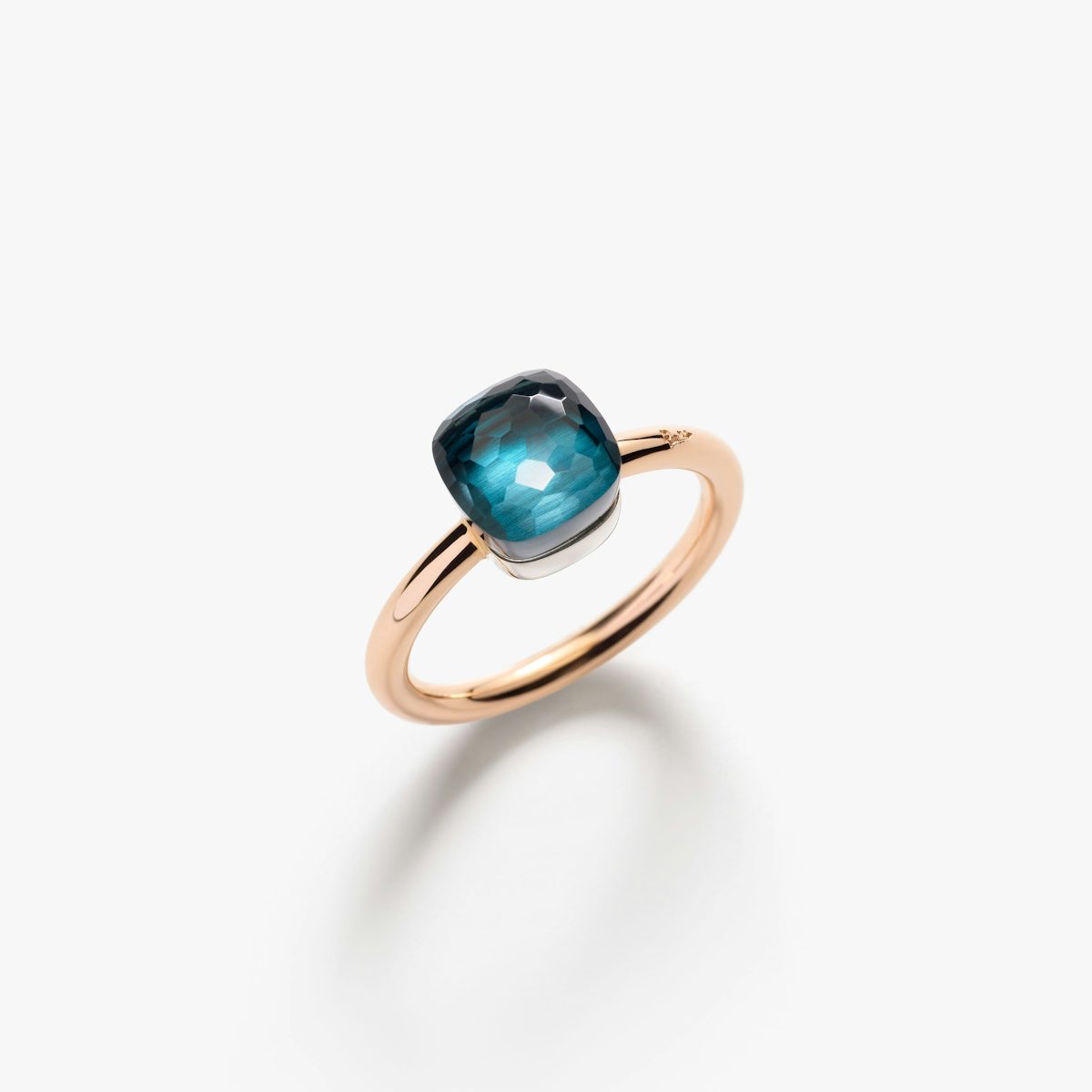
Pomellato Nudo Petit Ring
Pomellato
$2,500
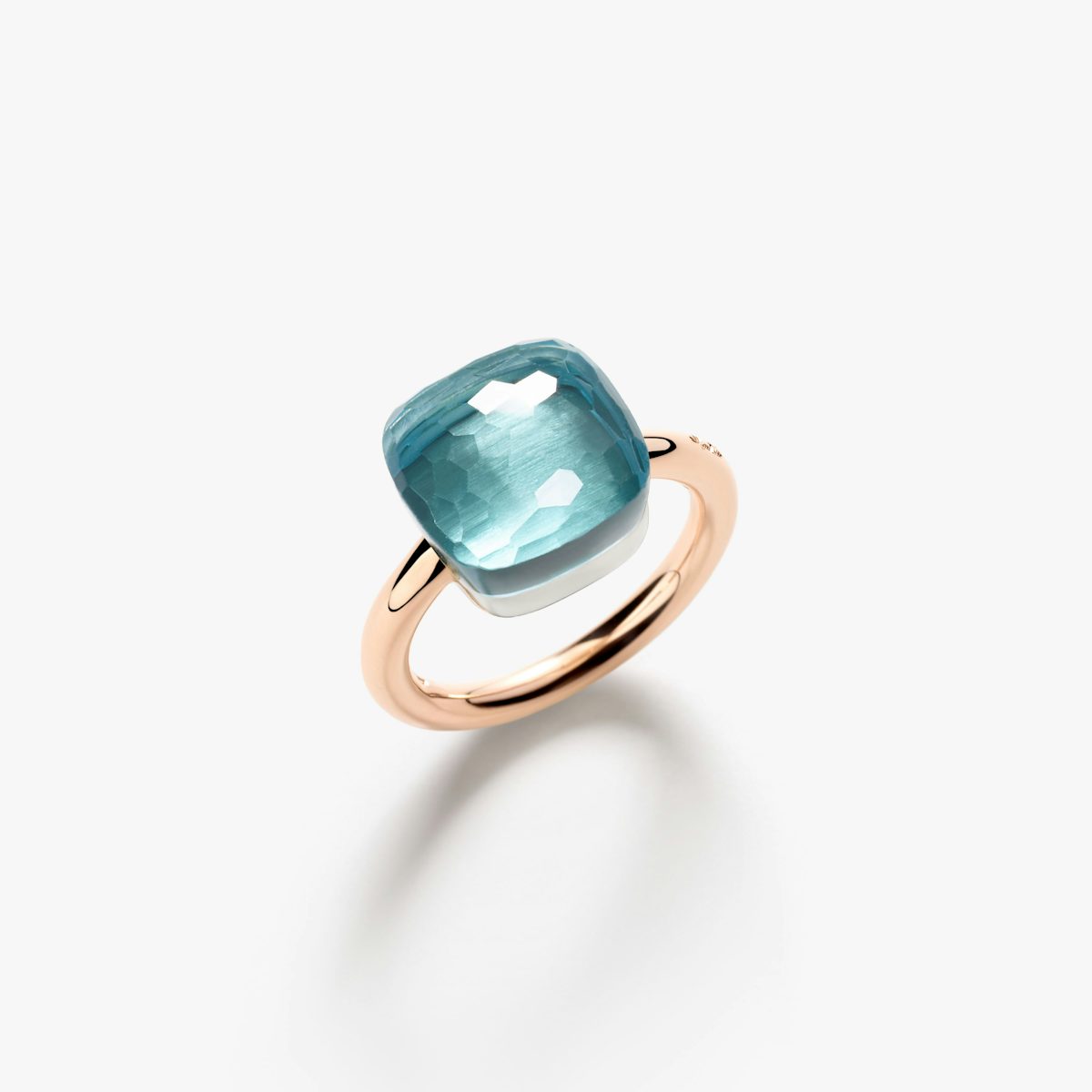
Pomellato Nudo Maxi Ring
Pomellato
$3,600
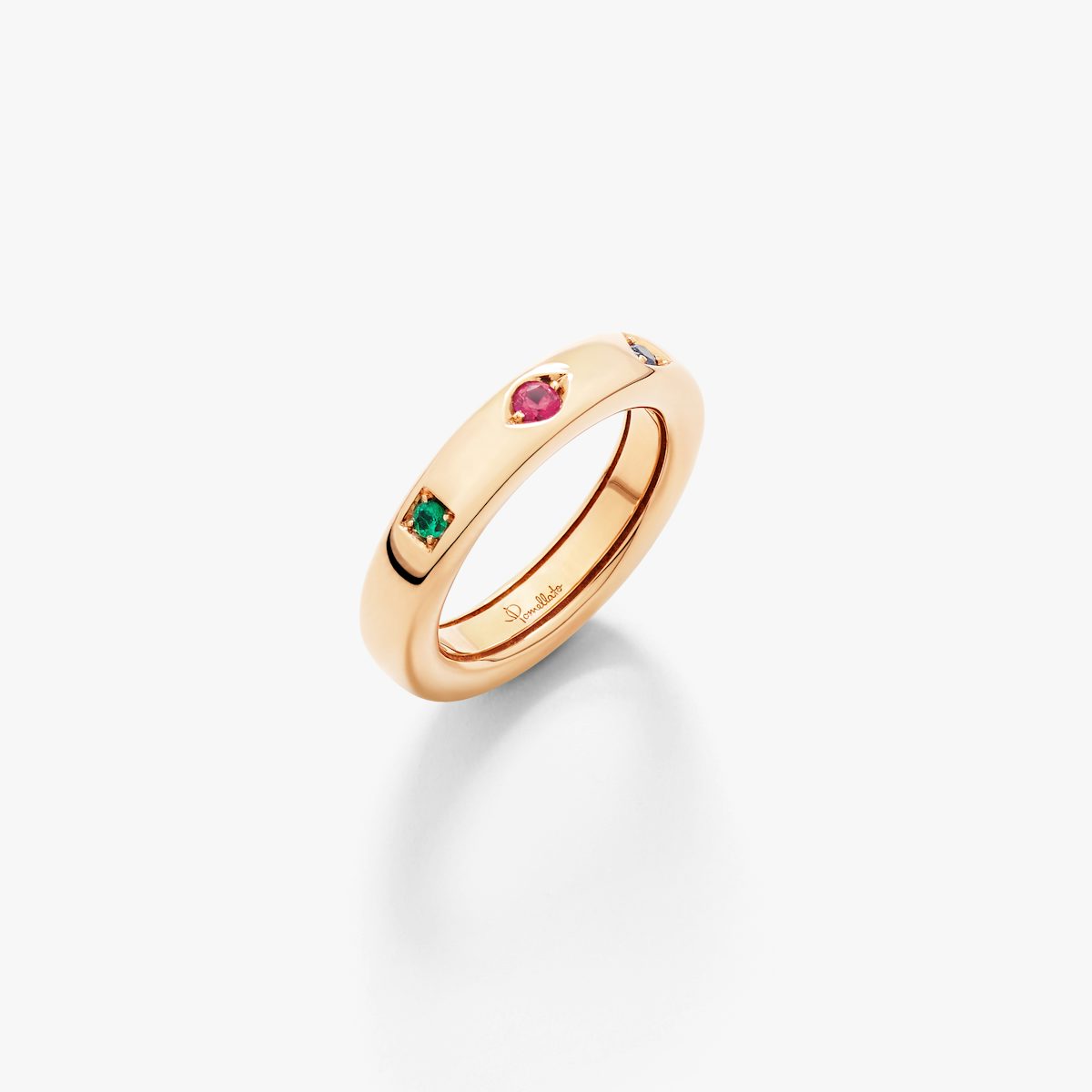
Pomellato Iconica Extra Slim Ring
Pomellato
$3,900
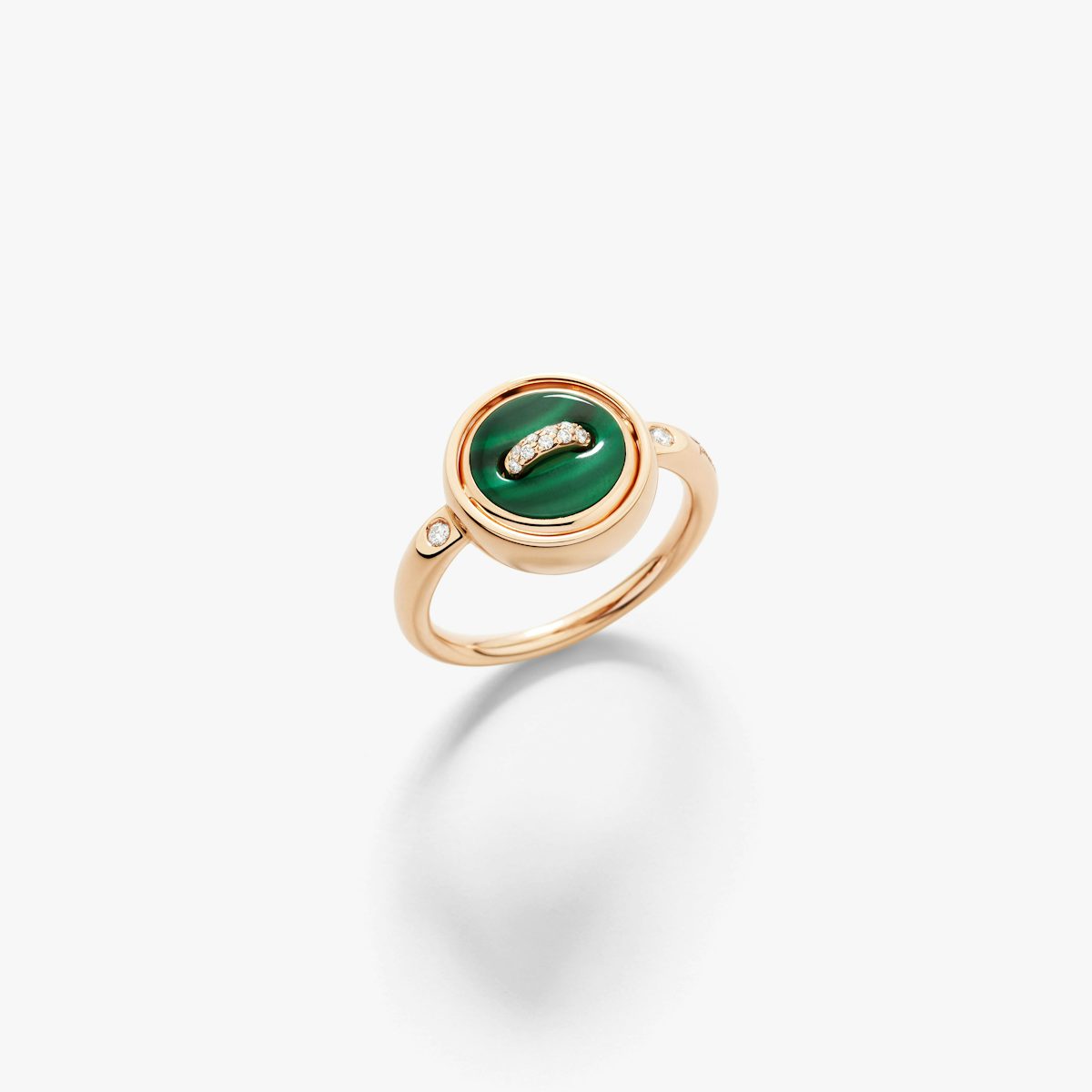
Pomellato Pom Pom Dot Reversible Ring
Pomellato
$4,500
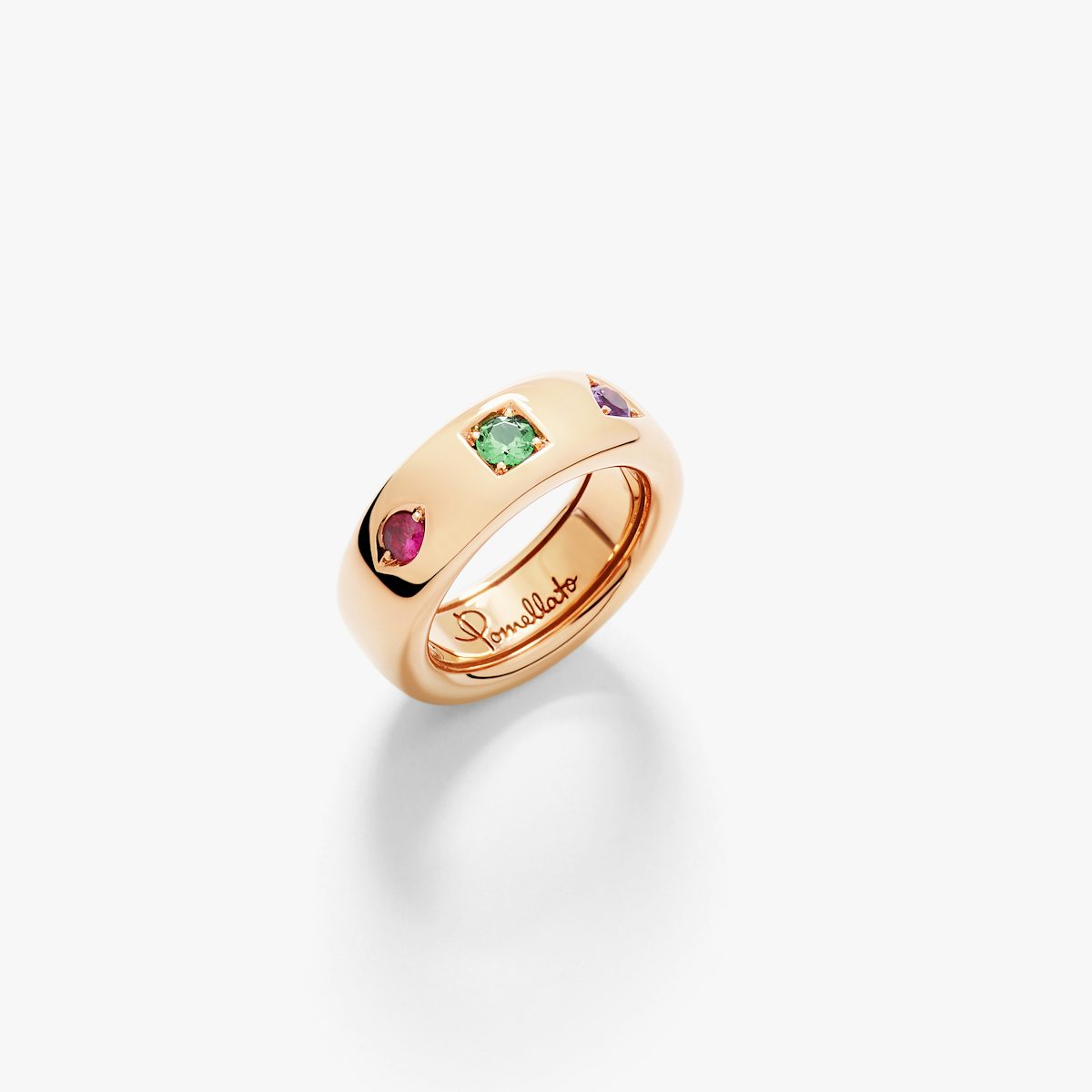
Pomellato Iconica Slim Ring
Pomellato
$5,050
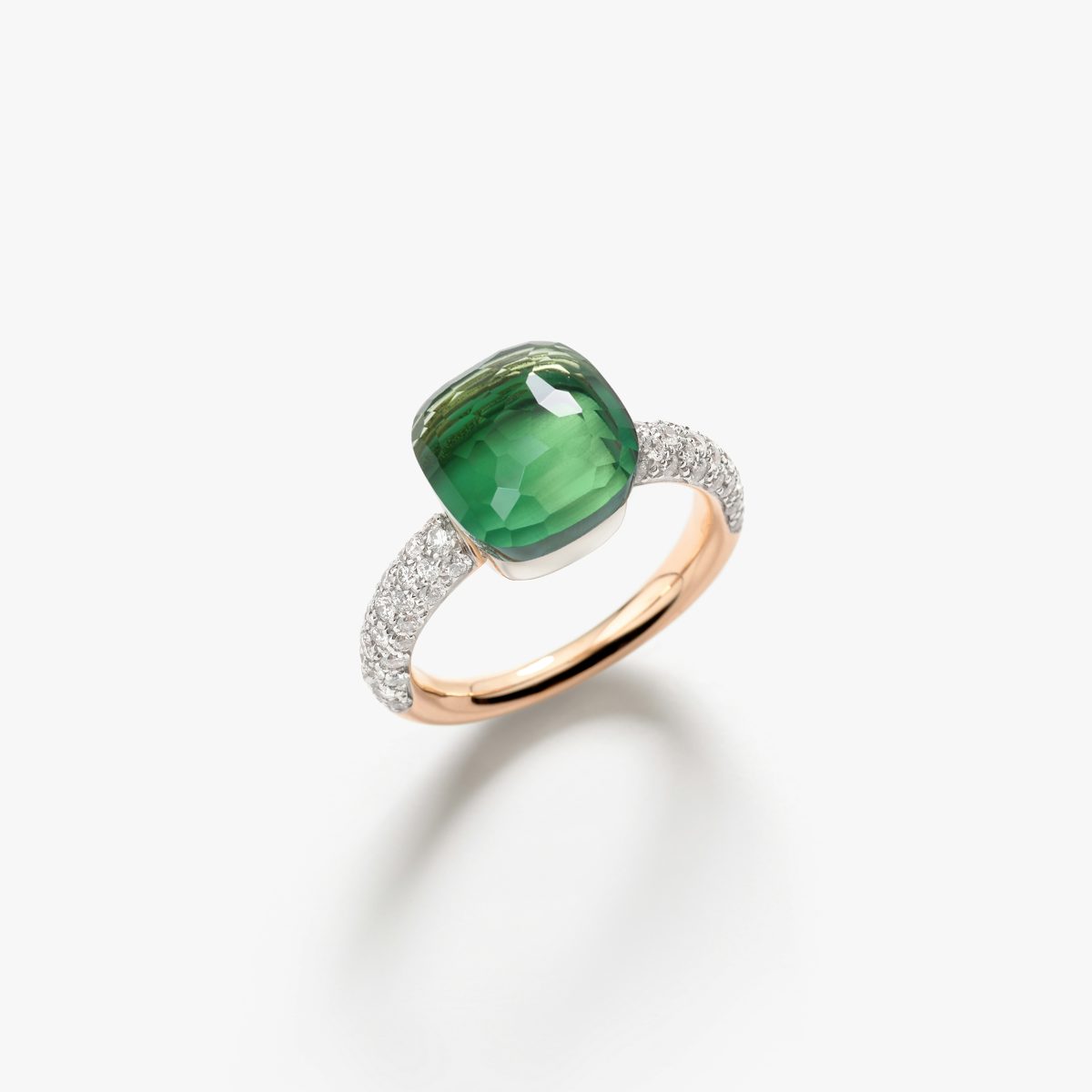
Pomellato Nudo Classic Ring
Pomellato
$6,600
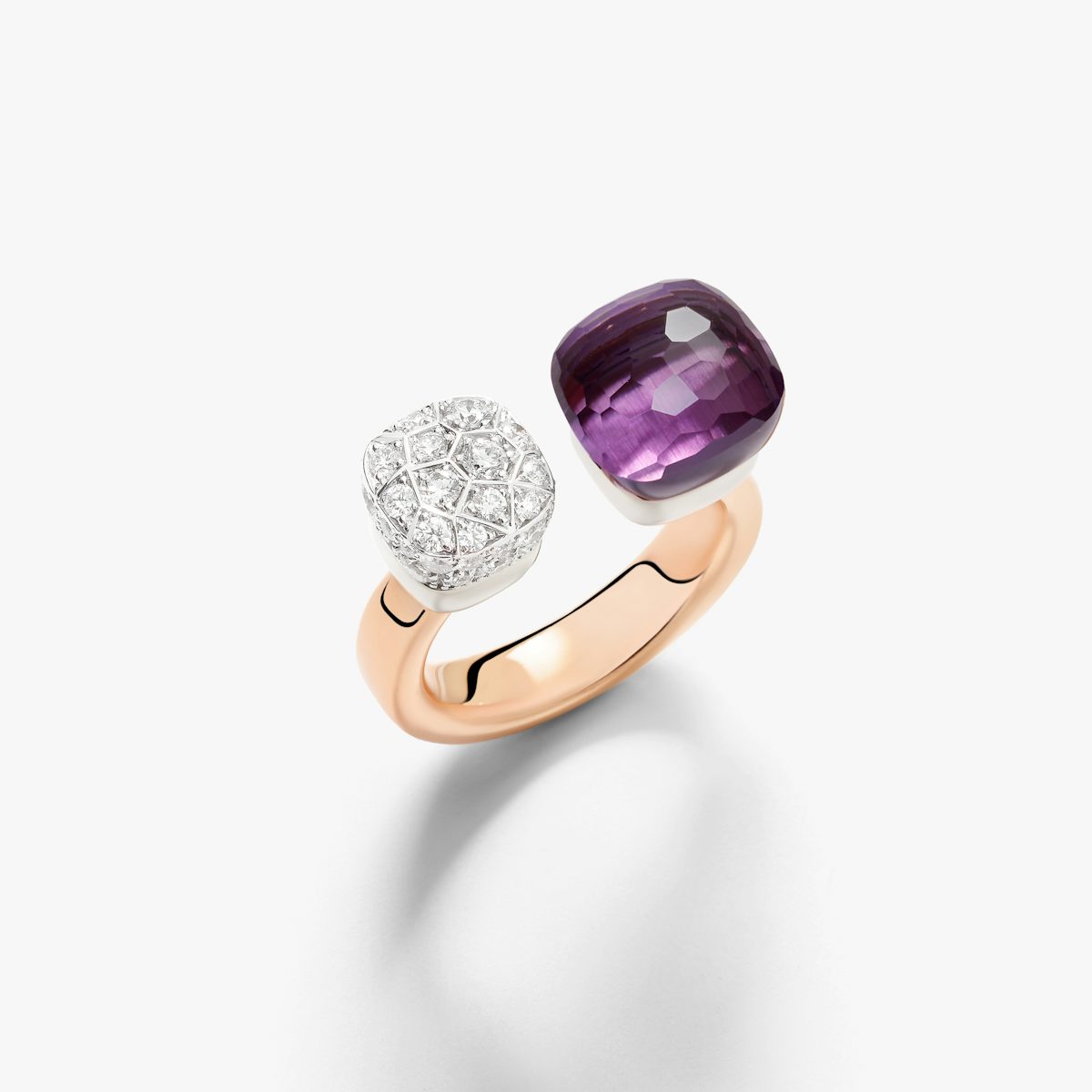
Pomellato Nudo Ring
Pomellato
$8,650
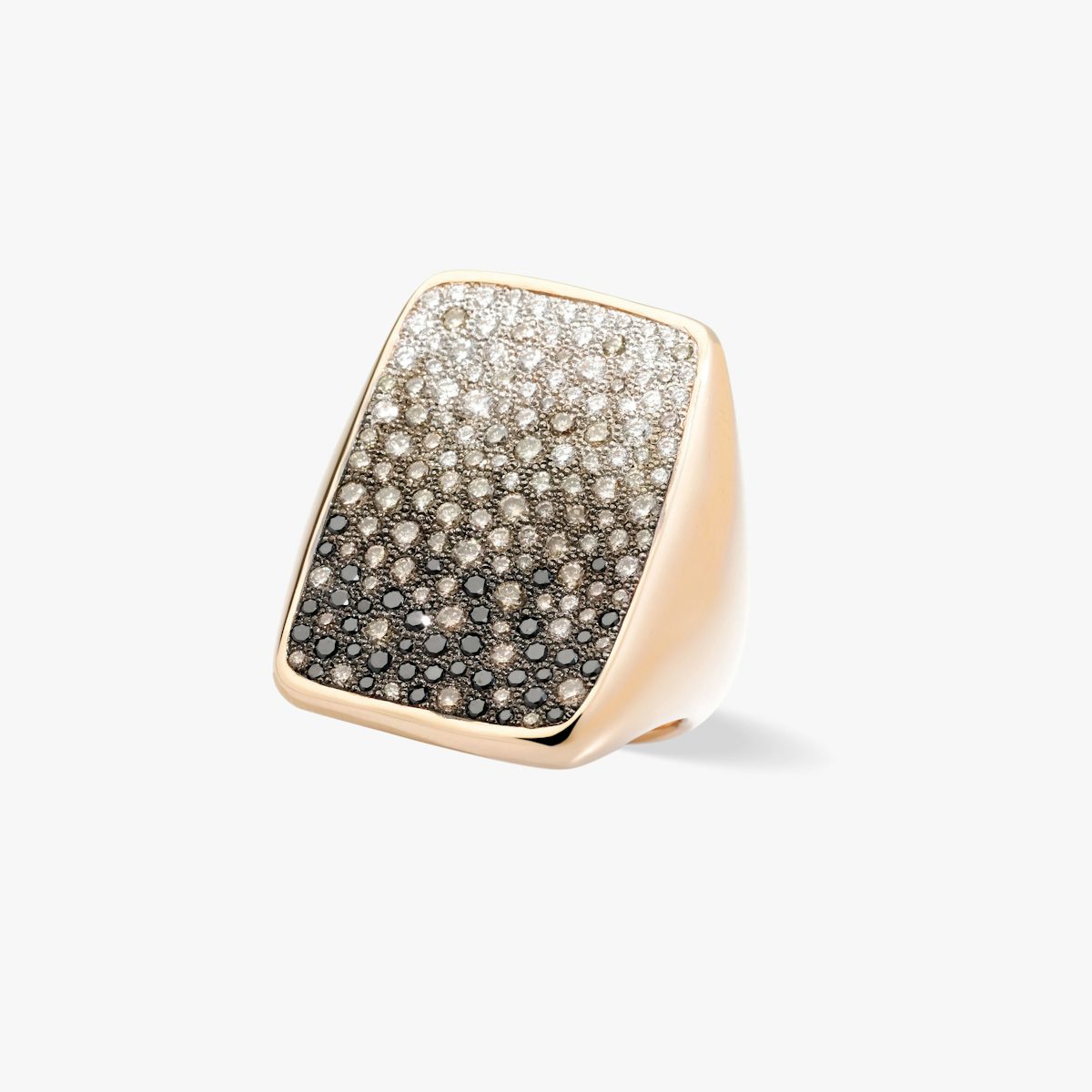
Pomellato Sabbia Ring
Pomellato
$13,150
Cut, setting and the practical questions
A faceted stone throws light and reads as formal. A smooth domed cabochon reads as softer and more modern, and it shows colour as a solid block rather than a sparkle. Neither is better. The cabochon is more durable in daily wear because there are no sharp facet edges to chip.
Hardness is the question nobody asks and everybody should. Sapphire and ruby are very hard and will take daily abuse. Amethyst, peridot and topaz are softer and will scratch over years of being worn on a working hand. That is not a reason to avoid them, but it is a reason to choose a setting that protects the stone, and to take the ring off before the gym.
Setting height matters for the same reason. A high setting catches on clothing and knocks against door handles. A lower, bezel-set or half-bezel stone is what you want if this is going to be your everyday ring rather than an evening one.
Ask about treatment too. Heat treatment is standard and disclosed. Dye and glass filling are not the same thing.
Earrings and bracelets, if you would rather start there
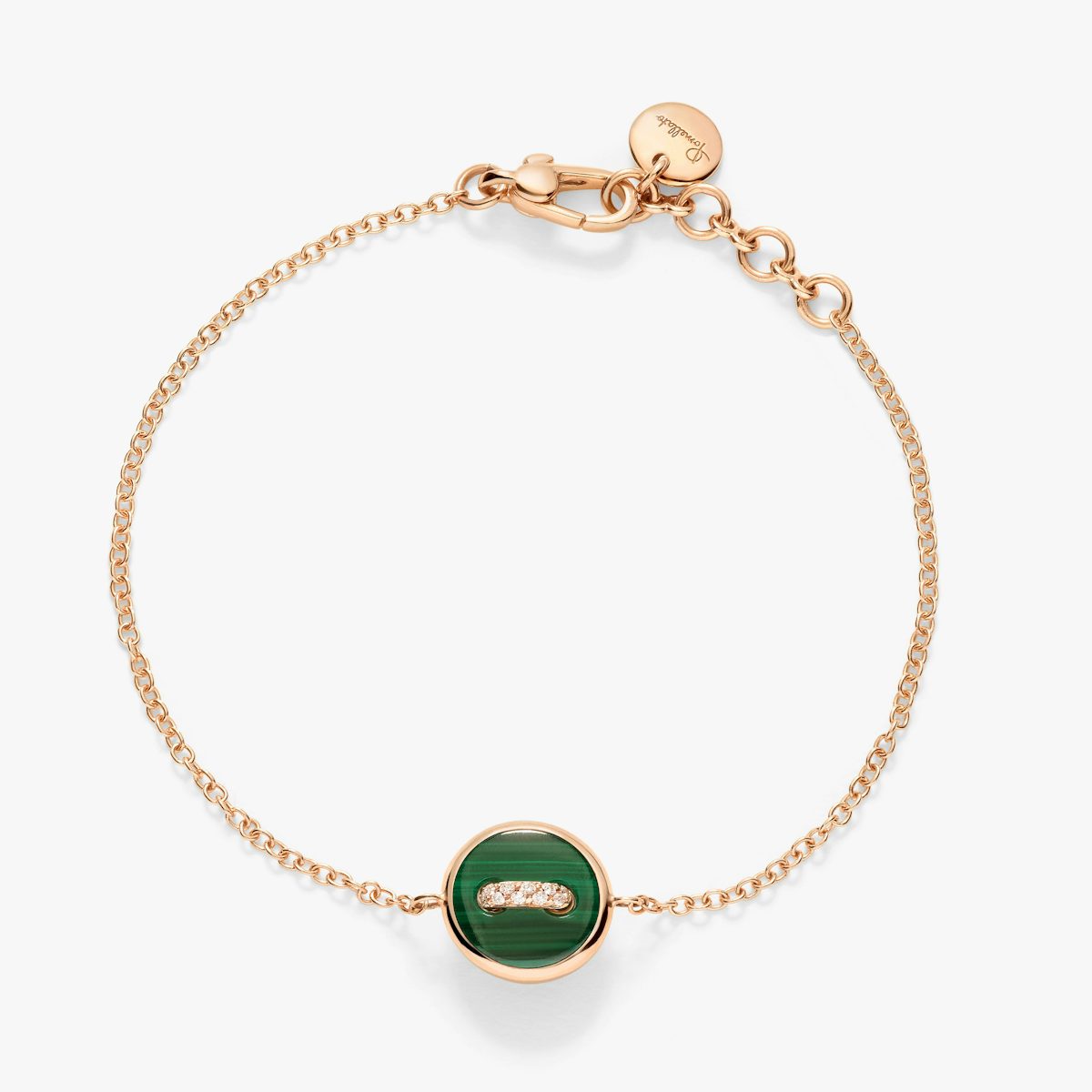
Pomellato Pom Pom Dot Bracelet
Pomellato
$2,550
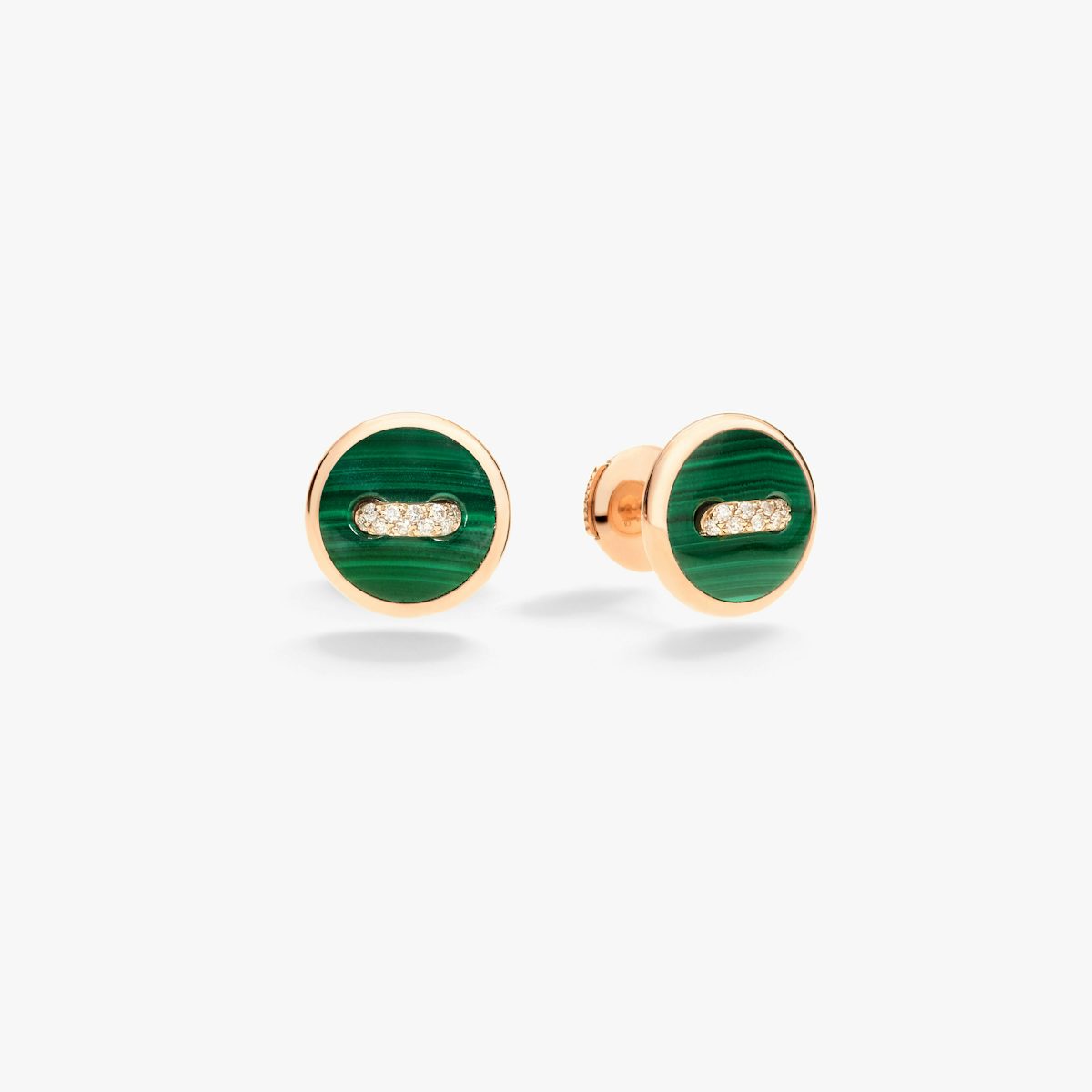
Pomellato Pom Pom Dot Earrings
Pomellato
$3,600
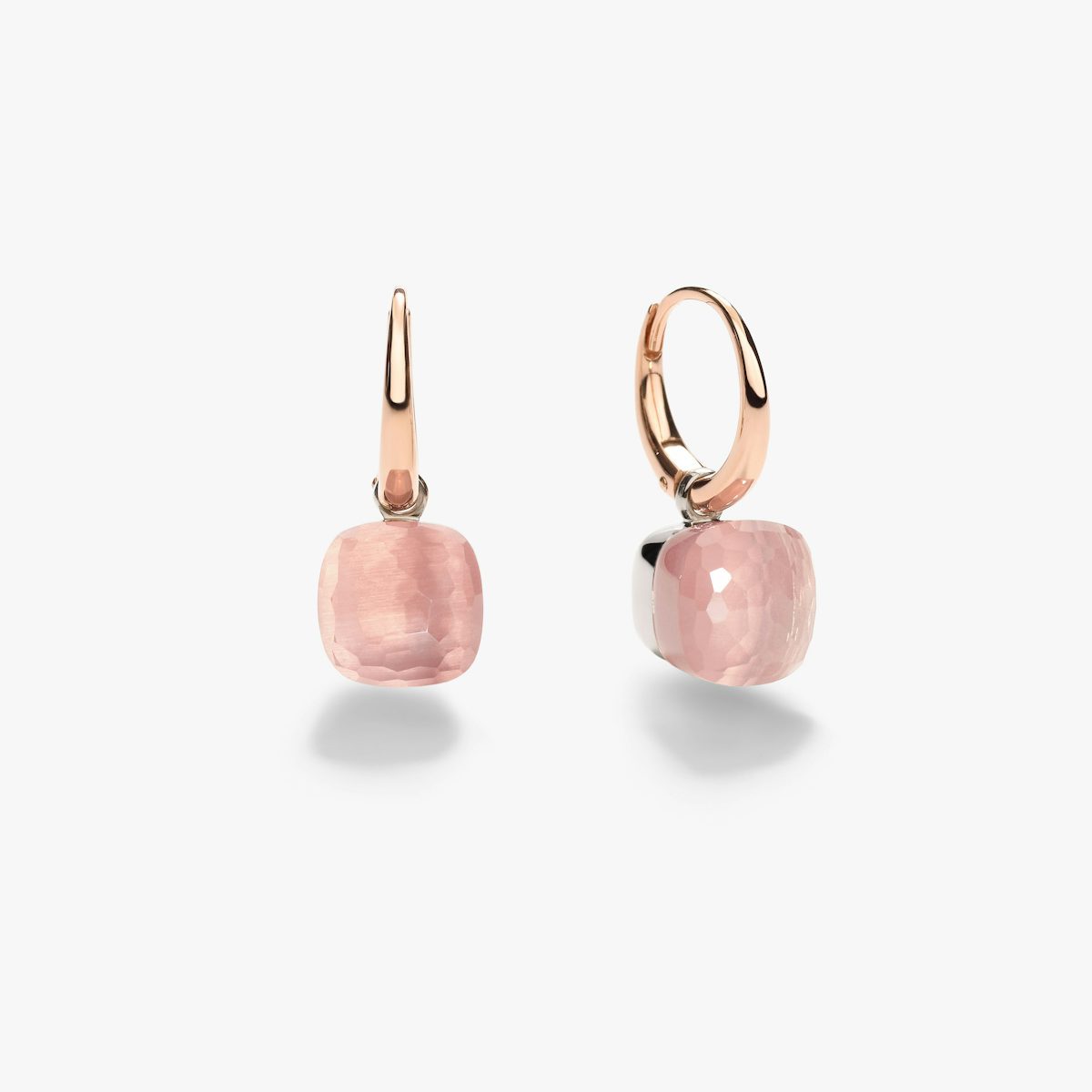
Pomellato Nudo Petit Earrings
Pomellato
$3,800
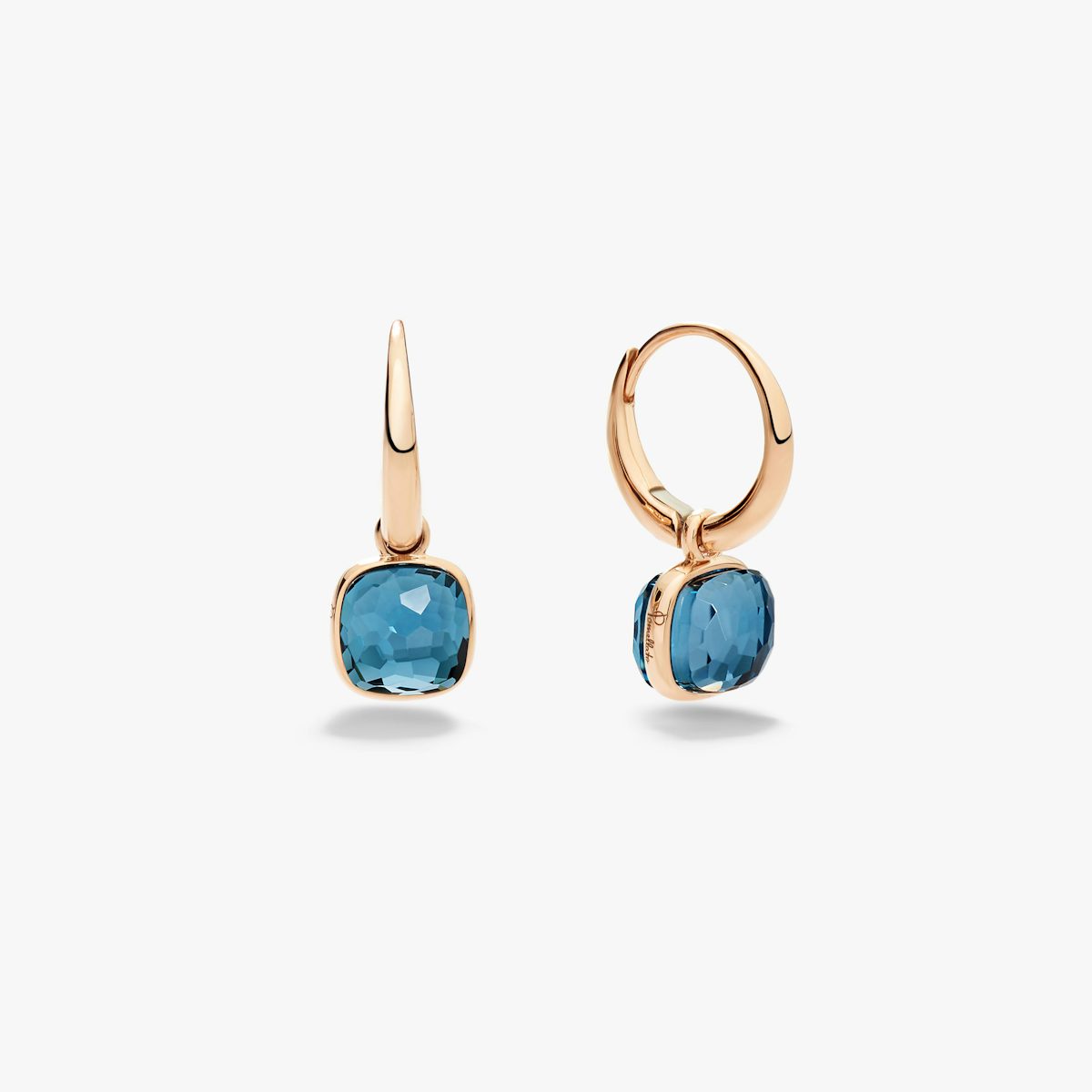
Pomellato Nudo Mini Earrings
Pomellato
$3,900
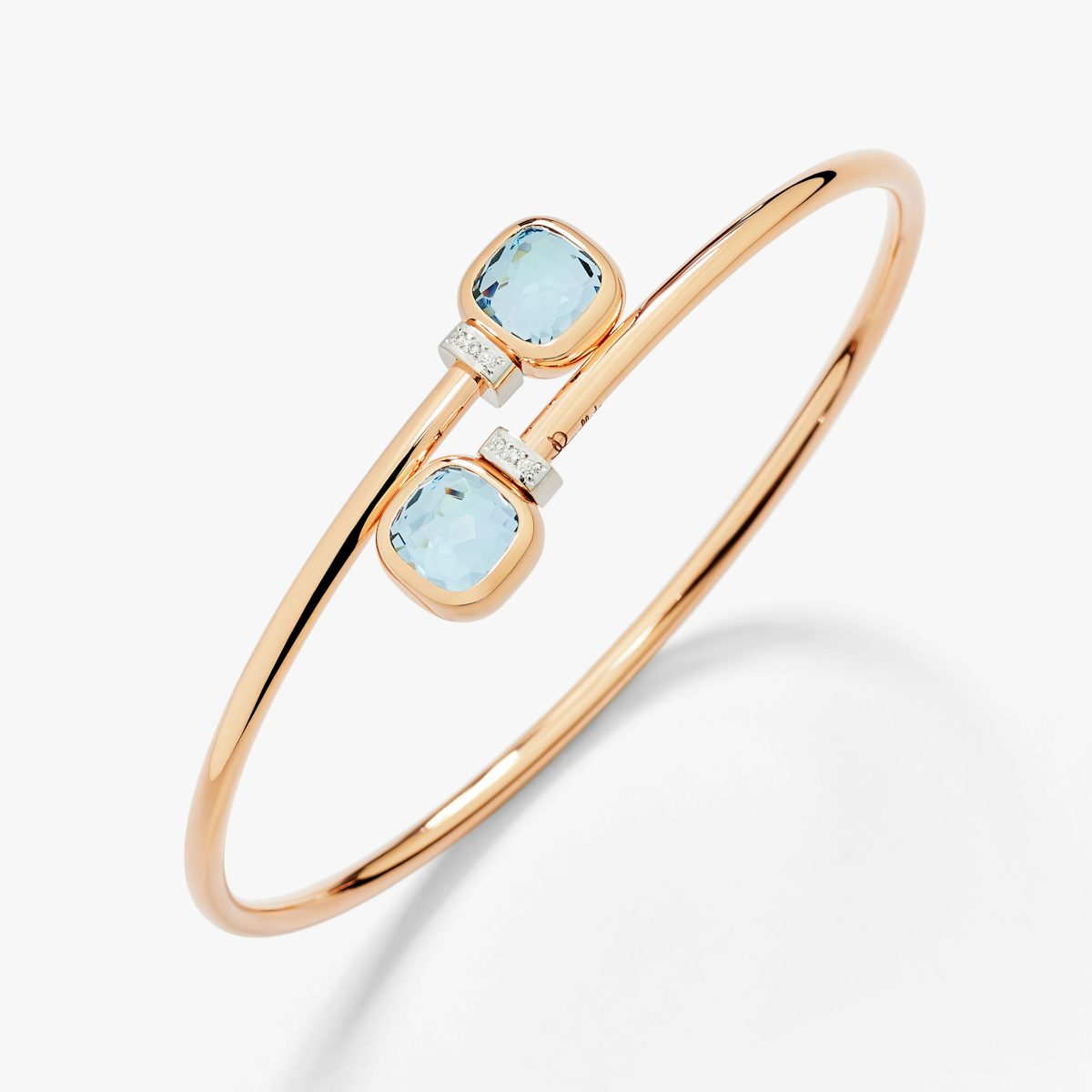
Pomellato Nudo Mini Bangle
Pomellato
$4,800
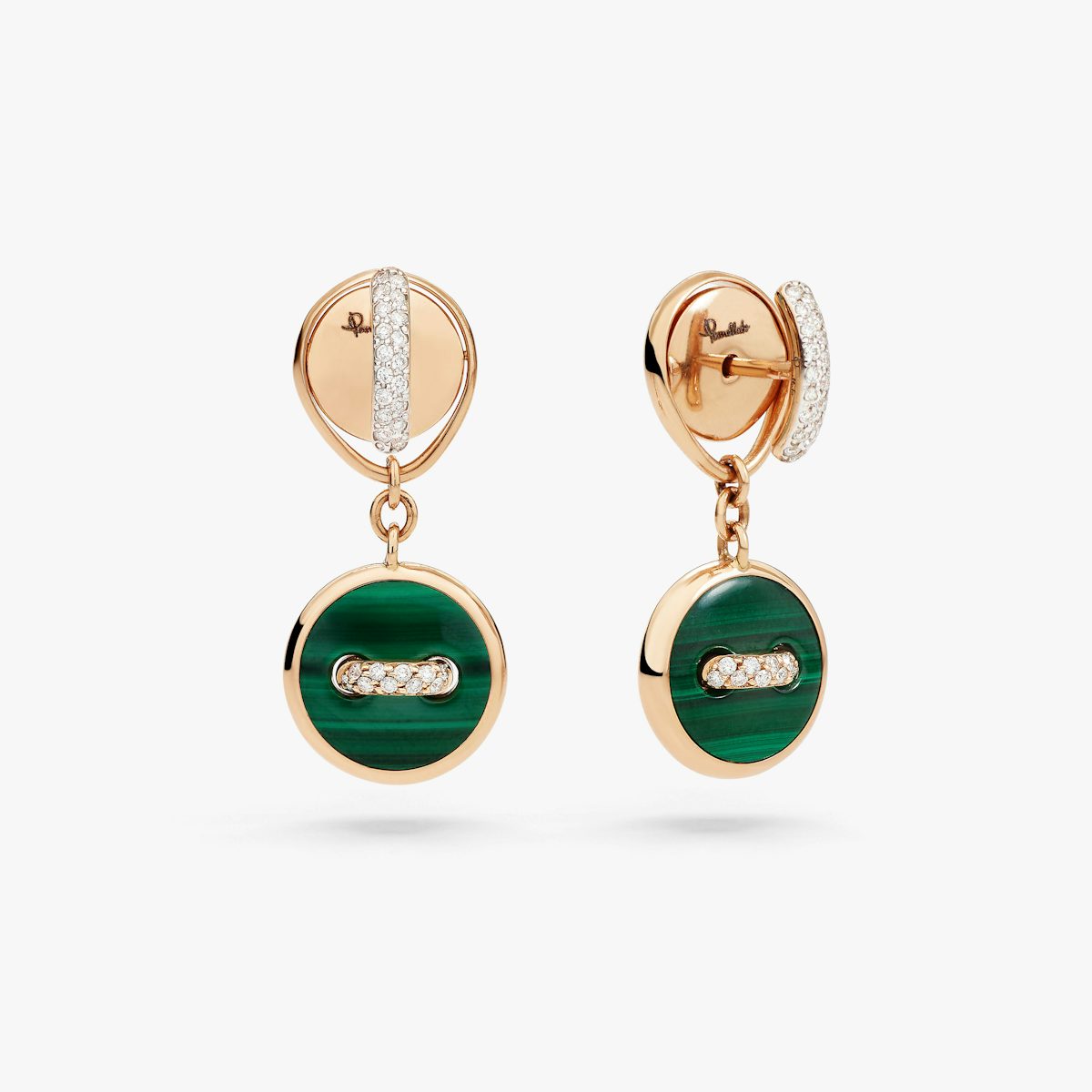
Pomellato Pom Pom Dot Reversible Earrings
Pomellato
$5,800
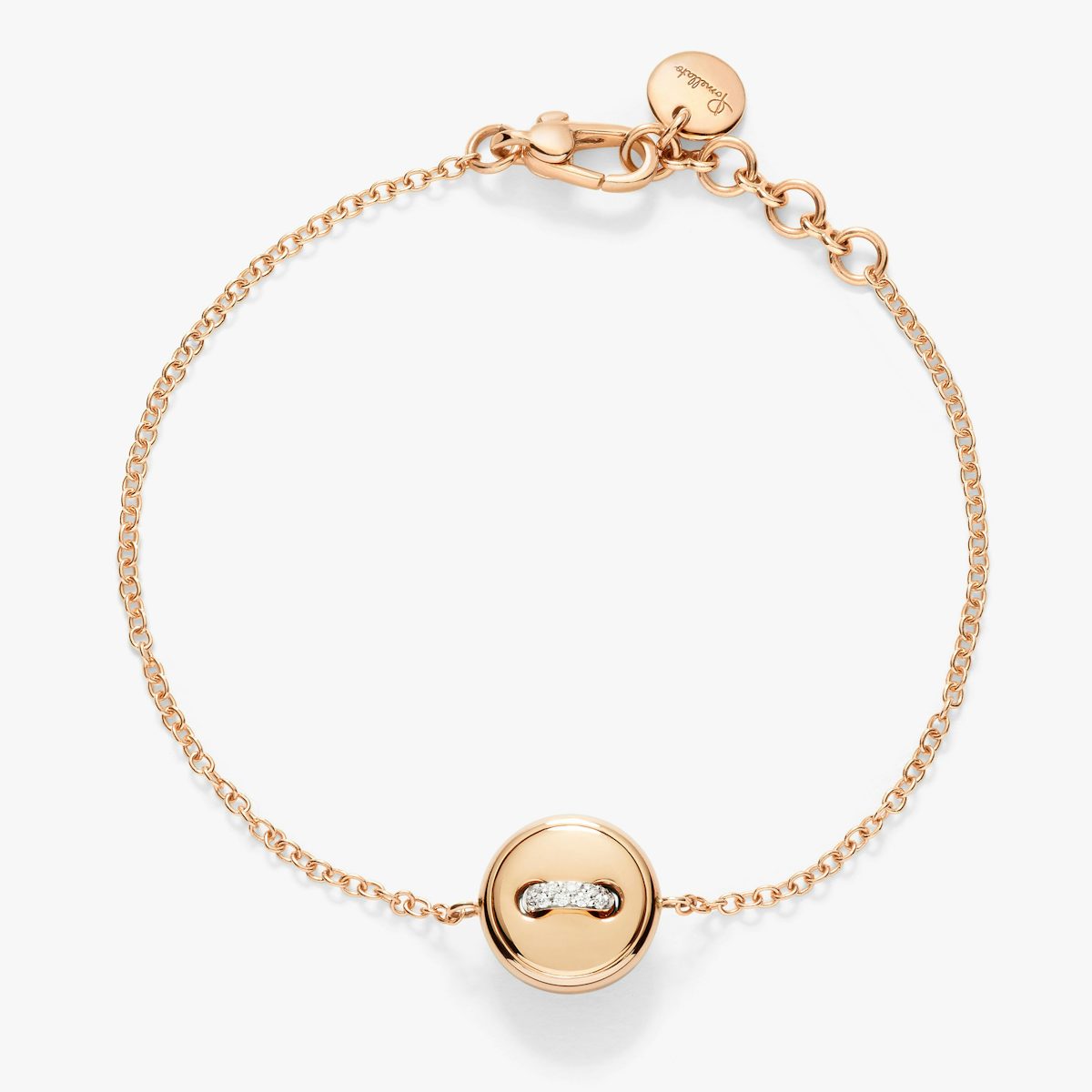
Pomellato Pom Pom Dot Reversible Bracelet
Pomellato
$5,800
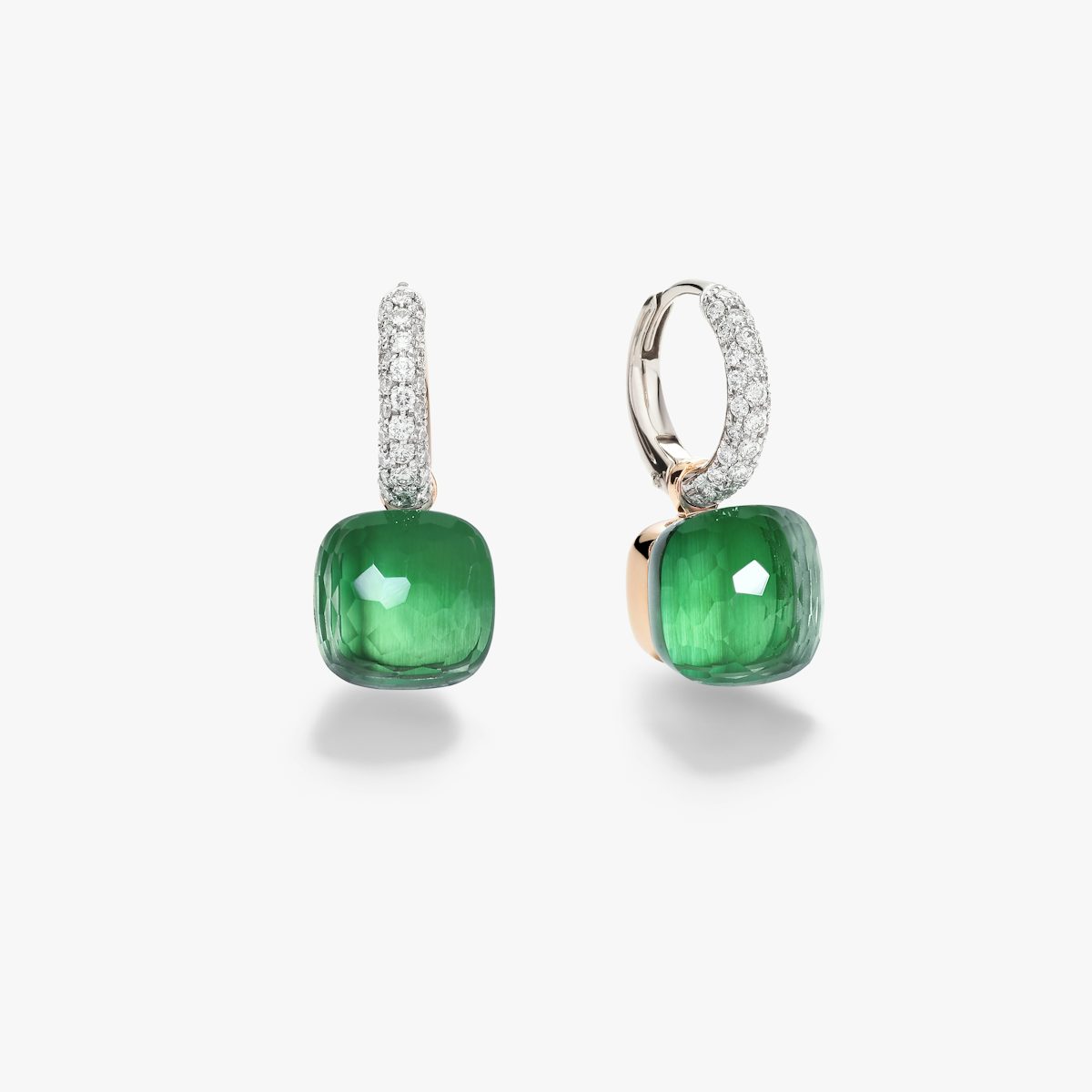
Pomellato Nudo Classic Earrings
Pomellato
$7,550
How much to spend, and on what
A first serious coloured stone ring generally lands somewhere between two and a half and six thousand dollars, and within that band the money goes further than people expect, because you are not paying the diamond premium.
Two spending strategies work. The first is one clear stone in a simple gold setting, which puts the whole budget into colour and gives you a piece that will read as important for decades. The second is a smaller stone with more design around it, which gives you something more distinctive but ties you to a particular look.
For a first purchase, we would take the first route. Simple settings age better, they can be reset later, and they sit alongside anything you buy afterwards.
Rings are also not the only entry point, and if you are hesitant about a size or a fit, earrings solve that. They need no sizing, they are easier to wear daily, and they show colour just as well.
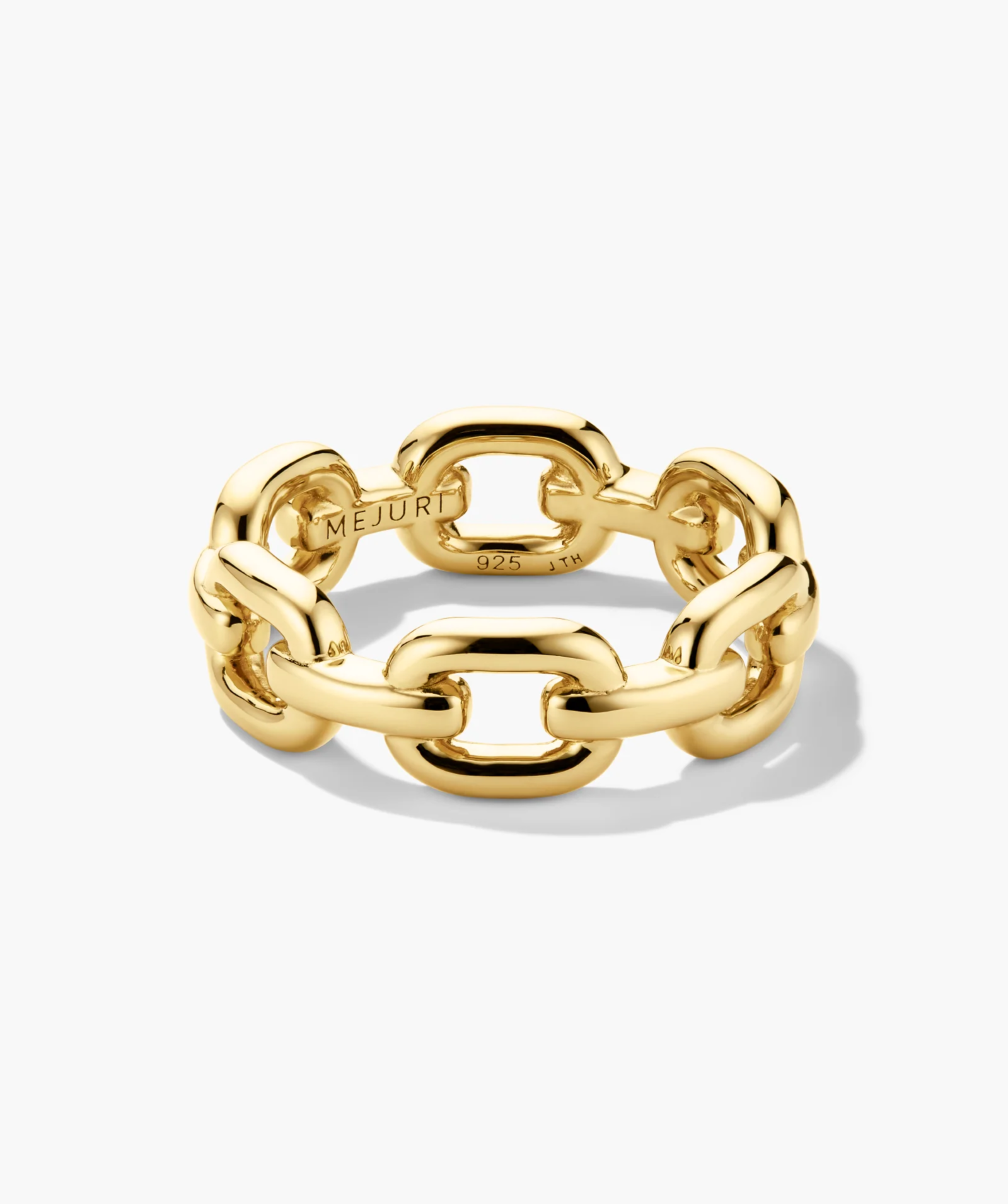
Below that, a set of plain and pave stackers to wear alongside, at a very different price.




A note from the Phia editors
Buy the colour you actually like. This sounds obvious and it is the advice most often ignored, because people buy the stone that is meant to be the good investment and then find they never reach for it.
Coloured stones are not investments in any useful sense. They are objects you wear. The rubellite that stops you in the shop window is a better purchase than the technically superior sapphire you feel neutral about, and in ten years you will have worn one of them two hundred times.
If you take one thing away, make it this: pick the stone on saturation and the setting on how you use your hands, and ignore almost everything else. A vivid stone in a low, protective setting is the ring you will still be wearing when the trend-led piece is in a drawer.
Shop brands in this edit

Next read

How to Build a Mix-and-Match Bikini Set
How to pair them without the result looking accidental.
Read Editorial
Mini and Midi Dresses for Warm-Weather Evenings
Short and mid length Rat & Boa dresses for hot evenings, with the minis and the midis shown separately and a note on which length suits which kind of night.


