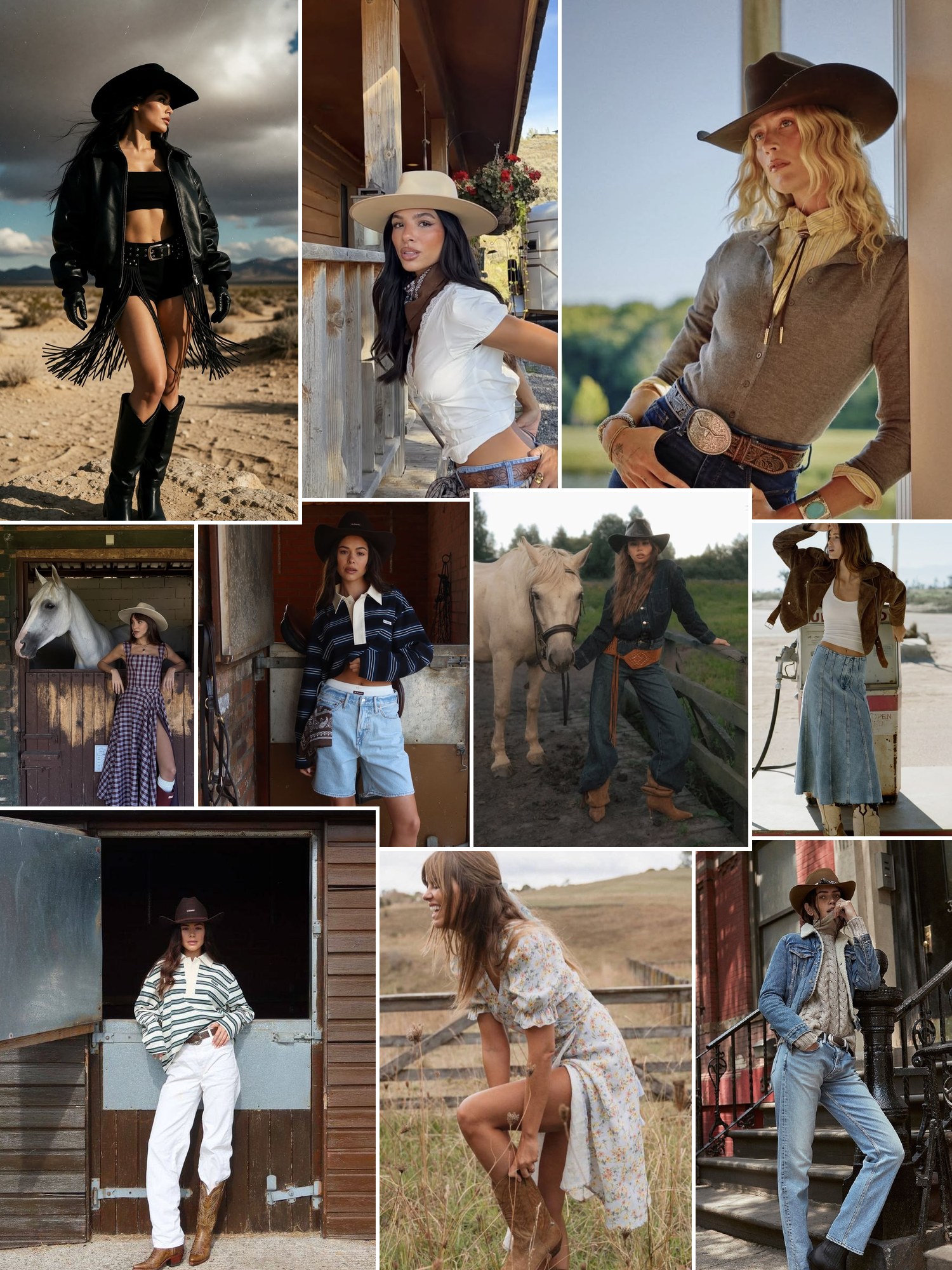
A cowgirl outfit can pair a riding boot with stitched denim, a prairie silhouette, and one clear western detail. I built this edit around the contrast between Wild West showmanship and the practical details that shaped boots.
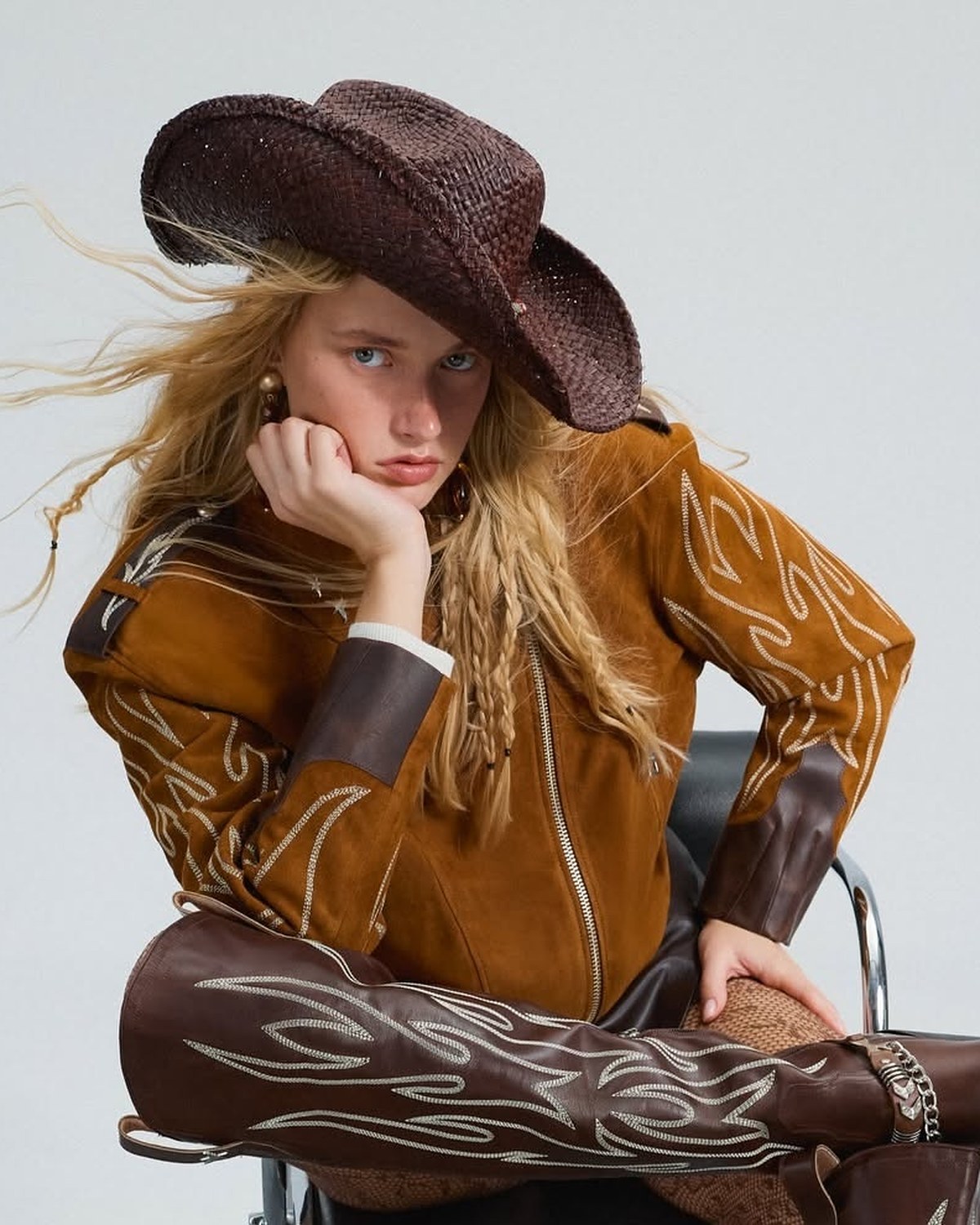
Cowgirl Outfit: Annie Oakley’s Wild West Stage and the Working Boot
The show opened in Omaha
In Omaha on May 19, 1883, Buffalo Bill Cody opened his Wild West show. Annie Oakley joined early in 1885, and I like that the cowgirl outfit story begins with a stage, not a dress-up rack. The show traveled as entertainment, but the boot stories that sit beside it are rooted in work and movement.
One Kansapedia account places the Hyer boot origin story in Olathe in 1875, when a cowboy asked a local shoemaker for a first-class pair. Justin dates its brand to 1879, and its company history describes H.J. Justin starting with repairs for cattlemen whose footwear was in poor condition. The Hyers later sent measurement charts to faraway ranches. H.J. Justin is credited with rows of stitching across boot tops to stiffen the leather. I like that mix of need and personal detail.
Tecovas gives a more recent chapter: its story dates founder Paul Hedrick’s effort to 2015, and says every boot is made by hand in over 200 steps. That is a useful reminder that Western dressing is not one fixed uniform.
Corral’s black-and-bone embroidered overlay boot lets the shaft lead, while the navy suede ankle boot and tan suede western boot keep the line shorter. Dolce Vita’s olive Mekala has a bandana-patterned shaft, side zipper, and dark trim, so I would give it some space under a straight jean hem. On a taller shape, Tecovas’s midnight Annie has a snip toe and 14-inch shaft; Frye’s Bordeaux Sacha adds a feathered shaft detail. I would check shaft and calf measurements against the hem I plan to wear, then let one detail speak.
Cowboy boots


Denim, with room for a boot
On a flare, I check the hem first: it should clear the boot shaft without swallowing the toe. Veronica Beard’s Grant wide legs keep the line clean with front patch pockets and western stitching, while Wrangler’s 70s Flare brings dark indigo, a high rise, and a 32-inch inseam. I would choose the leg shape before deciding how much embroidery I want.
Driftwood’s Farrah is more decorative, with wildflower embroidery down the sides and a 34-inch inseam. Wrangler’s Flower Child Wrancher has soft rigid denim and an ankle-length kick flare. For a wider line, Maje’s blue wide legs put floral stitching along the sides, while forte_forte adds satin inlays at the pockets and side legs. MOTHER’s side fringe is the one I would leave as the focal detail.
With these, I would use a plain tee or close-fitting knit so the stitching has space. Pilcro’s side-seam grommets are a small hardware note if embroidery feels like too much, and The Fringe Desperado Sneak Jeans bring contrast topstitching and side fringe. My fitting-room check is to sit, stand, and see whether the hem still works with the boot I plan to wear.
What I would skip: stacking side fringe, contrast pockets, and a heavily stitched shirt yoke all at once. If the jeans already carry the detail, a quiet belt is the better partner.

Grant High Waist Western Stitch Wide Leg Jeans
Veronica Beard
$378

70s Flare Western Stitch High Waist Flare Jeans
Wrangler
$119

Farrah Embroidered Flare Jeans
Driftwood
$218

Wrancher Mid-Rise Bootcut Jeans
Wrangler
$99

Pintbrode Floral Embroidered Wide Leg Jeans in Blue
Maje
$288

Cavalry High Rise Embroidered Jeans in Celeste
forte_forte
$865

The Fringe Desperado Sneak Jeans in Saddle Up
MOTHER
$530

Esme Mid Rise Wide Leg Grommet Jeans
Pilcro
$158
Yokes, snaps, and a little fringe
Before I notice fringe, I look at the yoke. The cut across the shoulders is what makes a shirt read western from a distance. Wrangler’s Super Western Shirt has a shaped yoke, decorative chest-pocket stitching, and snap-gusset cuffs; TWP’s Yellowstone shirt uses slate denim, a snap front, and two chest pockets. Those details can do the talking without a loud wash.
NASTY GAL’s black embroidered fringe shirt sets long chest fringe against colorful stitching, while The Tales’ Western Nights Opal keeps the base black and moves the fringe to the shoulders and sleeves. Pendleton’s Jolene is a longline virgin-wool jacket with fringe, and Show Me Your Mumu’s Western Denim Fringe Jacket brings pale washed denim instead.
THE GREAT. turns the yoke into a reversible brown-and-cream fleece panel. Zadig & Voltaire’s Adany is a wool-cashmere knit shirt with studs across the yoke. I would wear one of these pieces with clean dark denim and a boot that is already in the outfit, not add fringe in a second place. Check the snap closures and sleeve length before buying, especially if you want to tuck the shirt.
That choice keeps the shape clear for dinner or a show, and gives the yoke enough contrast to register. If I want a softer layer, I would wear it open over a plain tank.

Super Western Shirt
Wrangler
$99

Embroidered Fringe Western Shirt
NASTY GAL
$152

Yellowstone Denim Western Shirt
TWP
$495

Western Nights Opal Fringe Button Down
The Tales
$268

Jolene Western Fringe Jacket
Pendleton
$350

Western Denim Fringe Jacket
Show Me Your Mumu
$298

Reversible Western Yoke Jacket
THE GREAT.
$425

Adany Studded Western Shirt
Zadig & Voltaire
$286.8
Prairie florals with boots
Prairie silhouettes can get busy quickly, so I check the neckline and waist before I count the ruffles. SUGARLIPS’s Gardena is navy cotton with long sleeves, a drawstring waist, and a wide ruffle; Petal & Pup’s Kelda has a button-up bodice, a drawstring waist, and tiers. The waist detail gives me a clear place to break up the print with a belt, if I want one.
ALÉMAIS’s Dixie is cotton poplin with ric-rac trim and side-seam pockets, while BORGO DE NOR’s Biba pairs a vintage floral print with a contrasting belt and softly tiered skirt. Sézane x SEA NY’s Toma puts patchwork around a quilted bib and ruffled collar, so I would keep the accessories simple there. For a skirt instead of a dress, the Melissa maxi skirt and Isabella midi bring lace, ribbon, flower buttons, pockets, and boot-ready lengths.
The practical test is the hem against the boot shaft and the waist against where the drawstring sits naturally. I would check both before deciding whether the dress needs a jacket. Free People’s Morning Dew smocked mini has balloon sleeves and ruffle trim, so tall boots give it a grounded counterpoint. What I would skip: adding another tiered piece over a dress that already has ruffles at the hem and cuffs.

Gardena Floral Long Sleeve Cotton Dress
SUGARLIPS
$105

Kelda Floral Tiered Maxi Dress
Petal & Pup
$89

Dixie Floral-Print Cotton Poplin Maxi Dress
ALÉMAIS
$483

Biba Tiered Printed Cotton-Poplin Maxi Dress
BORGO DE NOR
$1,105

Toma Dress, Sézane x SEA NY
Sézane x SEA NY
$240

Melissa Vintage Style Cotton Maxi Skirt, ModCloth x Gunne Sax
ModCloth
$111.3

Isabella Romantic Prairie Midi Skirt, ModCloth x Gunne Sax
ModCloth
$104.3

Morning Dew Smocked Mini Dress
Free People
$168
Hats, conchos, and blue-green stones
With hats, I pay attention to the crown and brim before adding another accessory; they set the outline of the look. Brixton’s Odessa is open-weave straw and packable, Gigi Pip’s Ezra is Australian wool with a cattleman crown and adjustable inner sweatband, and Lack of Color’s Seashells hat puts dangling charms on natural raffia. I would pick one based on whether I want an airy texture or a more structured brim.
Then I would choose one metal or stone note. Treasure & Bond’s Aria has an ivory leather strap and antiqued silver conchos, while Lele Sadoughi’s heart concho belt uses turquoise-colored stones on a silver-plated chain. Kendra Scott’s Elisa pendant mixes bronze-veined turquoise magnesite and red oyster accents; the Noble necklace is a dark teal magnesite horseshoe. House of Olia’s Dorsei adds a turquoise bead strand and a gold-filled coin pendant.
These details already make a full sentence, so I would not stack hat charms, conchos, and oversized stones together. Check the hat’s measurements, the belt’s stated length and clasp, and necklace extender ranges against the neckline you plan to wear. The small choice is usually the one that lets the rest read like clothes, not props.

Odessa Packable Straw Cowboy Hat
Brixton
$99

Ezra Western Hat
Gigi Pip
$136

Seashells Cowboy Hat
Lack Of Color
$149

Aria Concho Leather Belt
Treasure & Bond
$30.99

Ruffle Heart Stone Concho Belt
Lele Sadoughi
$225

Elisa Vintage Gold Etch Frame Short Pendant Necklace in Bronze Veined Turquoise Magnesite Red Oyster
Kendra Scott
$75

Noble Vintage Silver Horseshoe Pendant Necklace in Variegated Dark Teal Magnesite
Kendra Scott
$75

Dorsei Turquoise Bead Coin Pendant Necklace
House of Olia
$400
Let the boots set the tone
I would begin by choosing the boot shaft against the hem I actually want to wear, then settle on jeans or a prairie skirt. After that, I would let one feature do the work: a stitched yoke, a little fringe, a hat brim, or a turquoise stone.
The history gives me room to mix spectacle with practical detail. Oakley joined Buffalo Bill’s show, while the Hyer and Justin stories point back to boots shaped around working needs. I would keep one practical anchor and one flourish. The show can keep the big entrance; I want the everyday version with a point of view.
For more outfit ideas: Country Concert Outfit, Country Wedding Guest Dresses, 70s Outfit, Long Skirt Outfits.