I compare diamond tennis bracelets and necklaces by carat weight, setting, metal and stone origin. The details that shape how each line catches the light matter as much as its length.
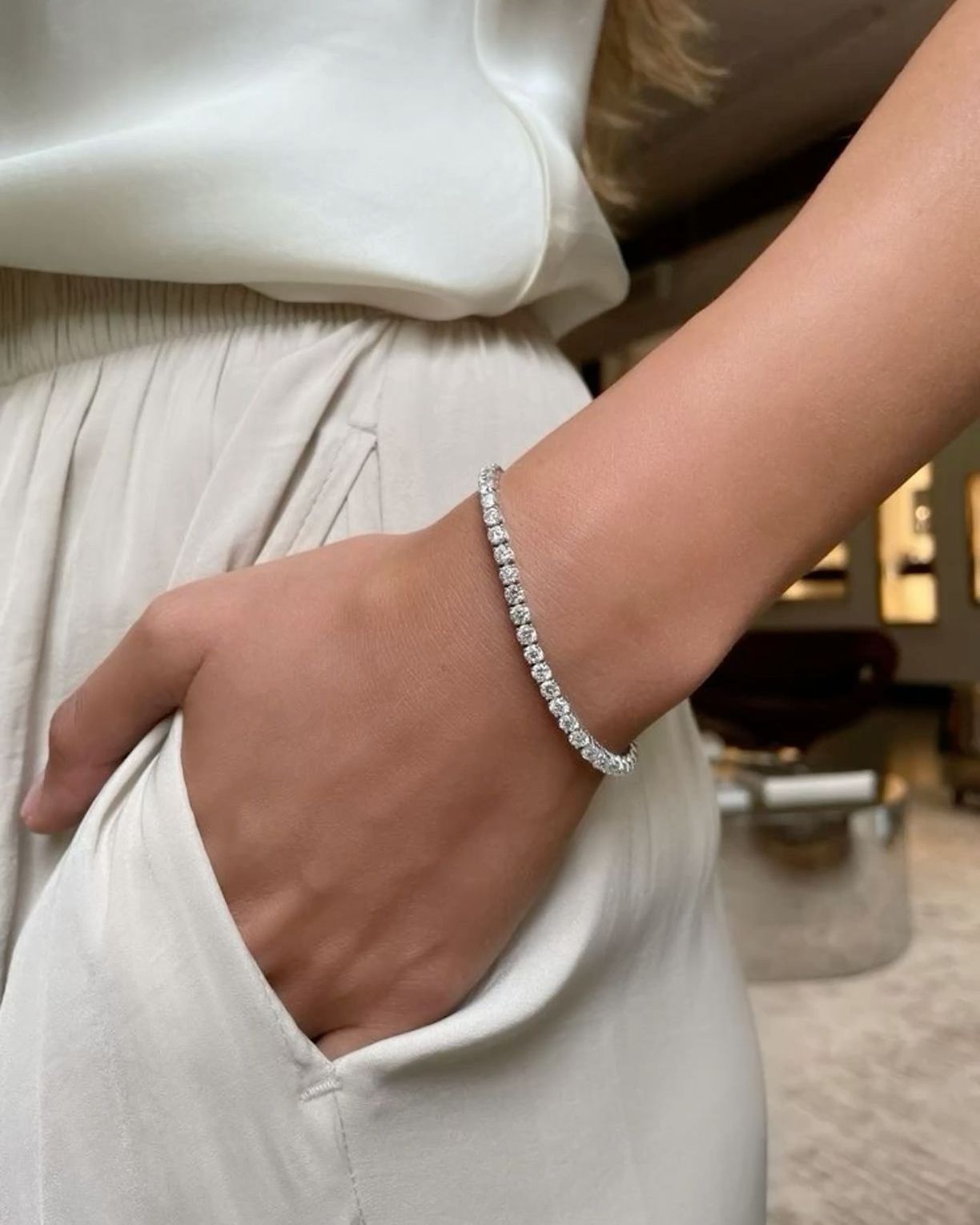
Diamond Tennis Bracelet
How carat weight shapes the edit
A diamond tennis bracelet is a single line of matched stones, and almost everything that separates one from another is carat weight, setting and metal. The lighter lines here hold between 0.3 and 3 total carats, usually in 14-karat gold and often bezel set. In the middle group, the stones grow or the line gets longer, which is why more necklaces appear alongside bracelets. The largest pieces bring together substantial stones, matched color and, in a few cases, a full rivière of graduated diamonds. I find that a longer line of small stones can read quite differently from a shorter line of larger, well-matched ones. Stone size and setting shape the sparkle as much as the total carat figure.
Entry bracelets and necklaces

14K Gold Baguette Diamond Tennis Section Necklace, 0.3 tcw
Lana Jewelry
$1,895

Diamond Tennis Bracelet in 14K Gold, 1.0 tcw
Bloomingdale's Fine Collection
$1,995

Diamond Crown Set Tennis Bracelet in 14K Gold, 1.50 tcw
Bloomingdale's Fine Collection
$2,175

Diamond Bezel Tennis Bracelet in 14K White & Yellow Gold, 0.98 tcw
Bloomingdale's Fine Collection
$2,194.5

14K White Gold Diamond Tennis Bracelet
Meira T
$2,250

Diamond Tennis Bracelet in 14K Gold, 2.25 tcw
Bloomingdale's Fine Collection
$2,736

14K Gold Graduating Diamond Blake Tennis Necklace, 0.64 tcw
Lana Jewelry
$2,945

Diamond Station Tennis Bracelet in 14K Yellow Gold, 1.50 tcw
Bloomingdale's Fine Collection
$3,344

Certified Diamond Tennis Bracelet in 14K Yellow Gold, 2.0 tcw
Bloomingdale's Fine Collection
$3,675

Certified Diamond Tennis Bracelet in 14K White Gold, 3.0 tcw
Bloomingdale's Fine Collection
$4,537.5

Tennis Bracelet, Petite in 14K Gold, 2.44ctw Round Brilliant Lab Grown Diamonds, 6.5"
Vrai
$4,600

Eternity 14-karat gold diamond bracelet
Sydney Evan
$4,895
How setting, metal and origin shape the look
I look at three details beyond carat weight. The setting changes how much stone you see: four-prong settings leave more diamond exposed, bezel settings add a rim of gold around each stone and read quieter on the wrist, while a station or scattered line spreads the stones around the circumference. A 0.98-carat bezel bracelet and a 5-carat double prong one make very different impressions because of that construction. Metal matters too. Eighteen-karat gold has a warmer color than 14-karat gold, which you can see in the yellow-gold pieces here. Stone origin is another distinction. The lab-grown Vrai pieces in this edit carry more total weight than many natural-stone lines, so I would not compare their carat figures without checking the origin first.
The middle band

14-karat white gold diamond tennis bracelet
Stone and Strand
$5,470

Tennis Necklace, Petite in 14K Gold, 6.40 ctw Round Brilliant Lab Grown Diamonds, 16"
Vrai
$5,520

Diamond Station Tennis Necklace in 14K Yellow Gold, 1.0 tcw
Bloomingdale's Fine Collection
$6,200

The Essential Dainty 14-karat gold diamond tennis necklace
Stone and Strand
$6,580

Diamond Tennis Necklace in 14K Yellow Gold, 2.0 tcw
Bloomingdale's Fine Collection
$7,800

Mini Bezel 18-karat gold diamond tennis bracelet
Jennifer Meyer
$7,950

4-Prong small 18-karat white gold diamond tennis bracelet
Jennifer Meyer
$9,450

Diamond Lines DB Classic Eternity 18-karat white gold diamond bracelet
De Beers London
$14,500
How to choose a line you will wear
Decide on length first, because it is not easy to change later. A bracelet should slide but not spin, which usually means a half inch of room beyond your wrist measurement. A 16-inch tennis necklace sits at the collarbone, while an 18-inch length falls onto the chest and layers more easily. Then look at the clasp. A line of diamonds carries real weight, so I want a box clasp with a figure-eight safety catch; the pieces here with a visible safety bar are the ones I would feel comfortable wearing every day. If the piece is graduated, check that the taper looks smooth in the photograph rather than stepped. Ask for a certificate on a substantial diamond piece. Several selections here are certified, which can matter at resale. Try the piece against the rest of what you wear first, because a white-gold line and a yellow-gold watch rarely sit well on the same wrist. Choose the setting you will reach for, not just the one with the highest stone count.
The top of this edit

Diamond Classic Tennis Necklaces in 14K White Gold, 3.0-7.0 tcw
Bloomingdale's Fine Collection
$17,500

Tennis Necklace, Large in 14K Gold, 20ctw Round Brilliant Lab Grown Diamonds, 16"
Vrai
$19,000

14-karat white gold diamond tennis necklace
Sydney Evan
$20,940

18-karat rose gold diamond tennis bracelet
Suzanne Kalan
$21,000

Certified Diamond Double Prong Tennis Bracelet in 14K White Gold, 5.0 tcw
Bloomingdale's Fine Collection
$24,000

Tension 18-karat gold diamond tennis bracelet
Uniform Object
$29,500

18-karat white gold diamond tennis bracelet
Anita Ko
$37,900

Certified Diamond Tennis Necklace in 14K White Gold, 15 tcw, 16.5"
Bloomingdale's Fine Collection
$40,000
More diamond lines for the wrist
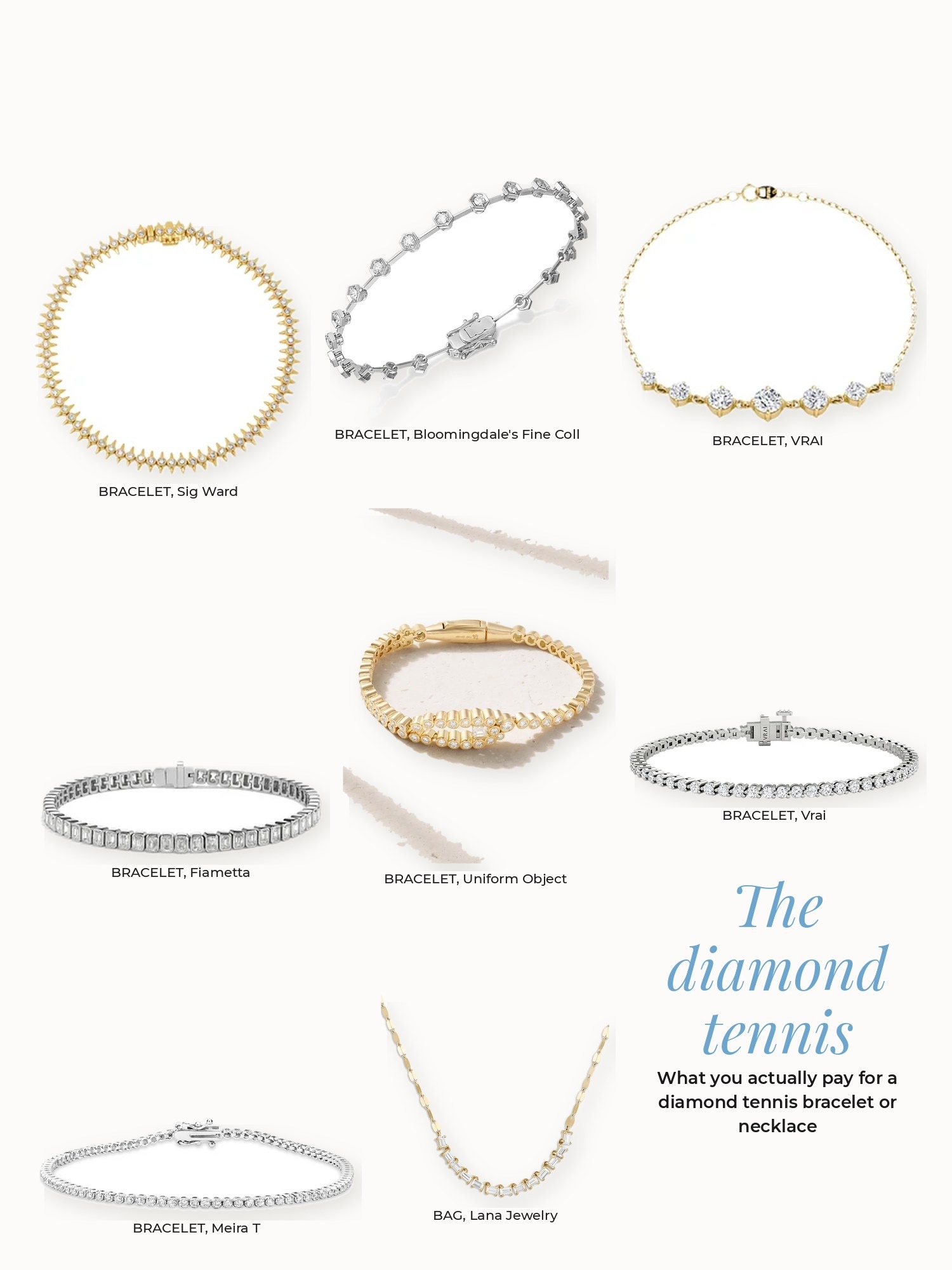
Fiametta, Sig Ward, VRAI, Gemella Jewels, Real Fine Studio and Melissa Kaye add diamond tennis bracelets in different stone sizes and shapes. A flexible setting lies flat against the wrist and wears beautifully with a watch.

14K White Gold Diamond Tennis Bracelet
Fiametta
$10,400

Orbis 14K Yellow Gold Diamond Tennis Bracelet
Sig Ward
$8,000

14K Yellow Gold Lab-Grown Diamond Tennis Bracelet
VRAI
$1,035

Double Bubble 18K Yellow Gold Diamond Tennis Bracelet
Gemella Jewels
$9,900

14K Yellow Gold Diamond Tennis Bracelet
Fiametta
$10,400

Reverie I 14K Yellow Gold Diamond Tennis Bracelet
Rene Barnes
$15,000

Metropolis 18K Yellow Gold Diamond Tennis Bracelet
Elior
$20,000

Onda 18K Yellow Gold Diamond Tennis Bracelet
Moritz Glik
$28,500

Mixed Form Tennis Bracelet White Gold
Real Fine Studio
$8,900

Mixed Form Tennis Bracelet in Yellow Gold
Real Fine Studio
$8,900

Adire 18K Yellow Gold Diamond Bracelet
Almasika
$15,500

Universum 18K Yellow Gold Diamond Bracelet
Almasika
$6,950

Audrey 18K Yellow Gold Diamond Tennis Bracelet
Melissa Kaye
$19,950

Spring 18K Yellow Gold Diamond Bracelet
Sidney Garber
$11,000

14K Gold Diamond And Labradorite Bracelet
Sydney Evan
$7,040

Sterling Silver Pearl And Diamond Bracelet
Sheryl Lowe
$795

Vintage 18K Gold Diamond Bracelet
Stephen Russell
$28,000

Fleur 14K Yellow Gold Diamond Eternity Bracelet
EF Collection
$6,595

Pierced Diamond Paperclip Bracelet
Sophie Ratner Jewelry
$675

18K White Gold Diamond Overlapping Cuff Bracelet
Yessayan
$28,000

Mid-Century Platinum Diamond Bracelet
Kentshire
$21,500

The Fluid Diamonds 18K Yellow Gold and Diamond Bracelet
Fernando Jorge
$9,500

18K White and Yellow Gold Feelings Diamond Bracelet
Nikos Koulis
$7,680

18K Gold Diamond Leather Bracelet
DEZSO BY SARA BELTRÁN
$2,600

18K Yellow Gold And Kundan Diamond Triangle Chain Bracelet
Amrapali
$1,090

Stellina 9K Gold Diamond Bracelet
Bea Bongiasca
$530

Oval Rough Cut Diamond Electra Bangle
Sylva & Cie
$62,750

Art Deco Platinum Natural Pearl and Diamond Bracelet
Simon Teakle
$36,000

The Diadem 14K Yellow Gold Diamond Bracelet
Rene Barnes
$24,000

The Lucky One Gold and Diamond Bangle
Lucy Delius Jewellery
$6,354

Dixon Floating-Diamond Bangle
GWYN
$4,800

Cascade Festive 18K White Gold Tourmaline Bracelet
Harakh
$89,000

Classic 18K Rose Gold Diamond Bangle
Suzanne Kalan
$12,000

Marquetry Diamond Cuff
Silvia Furmanovich
$8,800

Paloma "Lone Star" 14K Yellow Gold Diamond and Star Ruby Cuff
Annette Ferdinandsen
$5,950

14K Yellow Gold Tourmaline Bracelet
Jia Jia
$520

Clarity 18K Yellow Gold Diamond Bangle
Mindi Mond New York
$24,800

14K Yellow Gold Diamond Eternity Bracelet
EF Collection
$3,695

Crown Set Diamond Tennis Bracelet in 14K Gold, 6.0 tcw
Bloomingdale's Fine Collection
$6,000

Diamond Bow Tennis Bracelet in 14K White Gold, 5.00 tcw
Bloomingdale's Fine Collection
$4,759.5
Choose the line you will wear
The middle group balances visible stone size, a secure clasp and everyday wear. I would skip the very thinnest entry pieces if you want presence, because at 0.3 to 0.6 total carats a necklace reads as a delicate chain rather than a tennis line. This edit is not for someone looking for a first piece of fine jewelry or a statement cocktail necklace. Put your attention on carat weight per stone rather than length. A shorter line of larger diamonds can outshine a longer line of smaller ones. If you want to keep browsing, I also put together Diamond Jewelry and Best Diamond Necklaces.