This dirndl dress edit moves from Bavarian-inspired color to vintage finds and Oktoberfest-ready sets. I say how I would style each group and what I would inspect before wearing a secondhand piece.
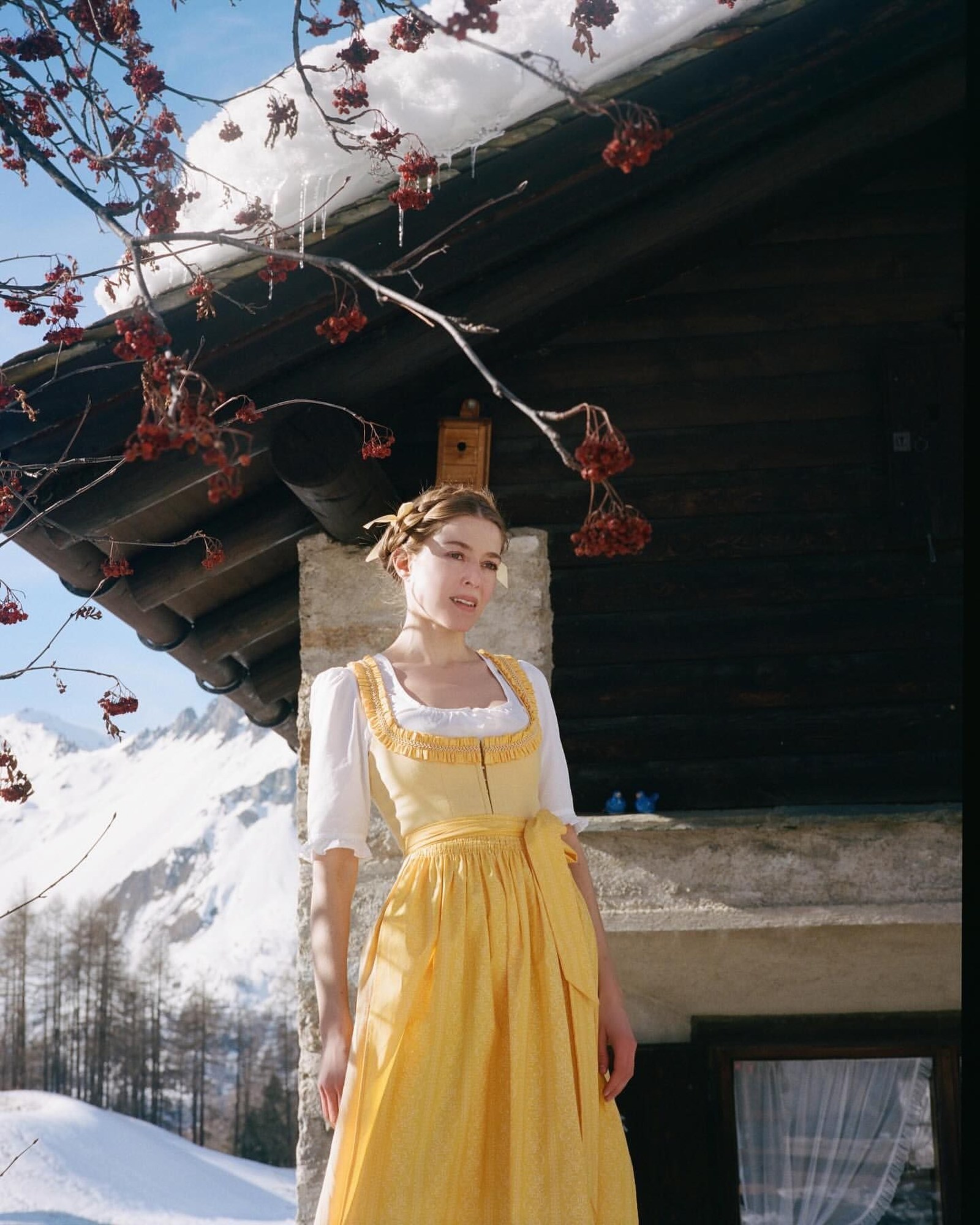
Dirndl Dress: Bavarian Color, Vintage Finds and Oktoberfest Sets
The first Oktoberfest grew out of a royal wedding. Official festival history says Prince Regent Ludwig and Princess Therese's wedding festivities began on October 12, 1810 and lasted five days; they ended with a horse race on a meadow outside Munich. I love that beginning. A dress associated with a festival comes with a quieter story before the celebration itself: the dirndl dress began as practical workwear, not an occasion uniform.
The festival's history describes the dirndl as work clothes, and its history of the garment traces farm maids across Bavaria and Austria. A Bavarian textile museum frames today's dirndl as both tradition and a fashion statement with new design accents. I like the tension rather than a strict rulebook: a familiar silhouette can be rooted and still make room for someone's own color instincts.
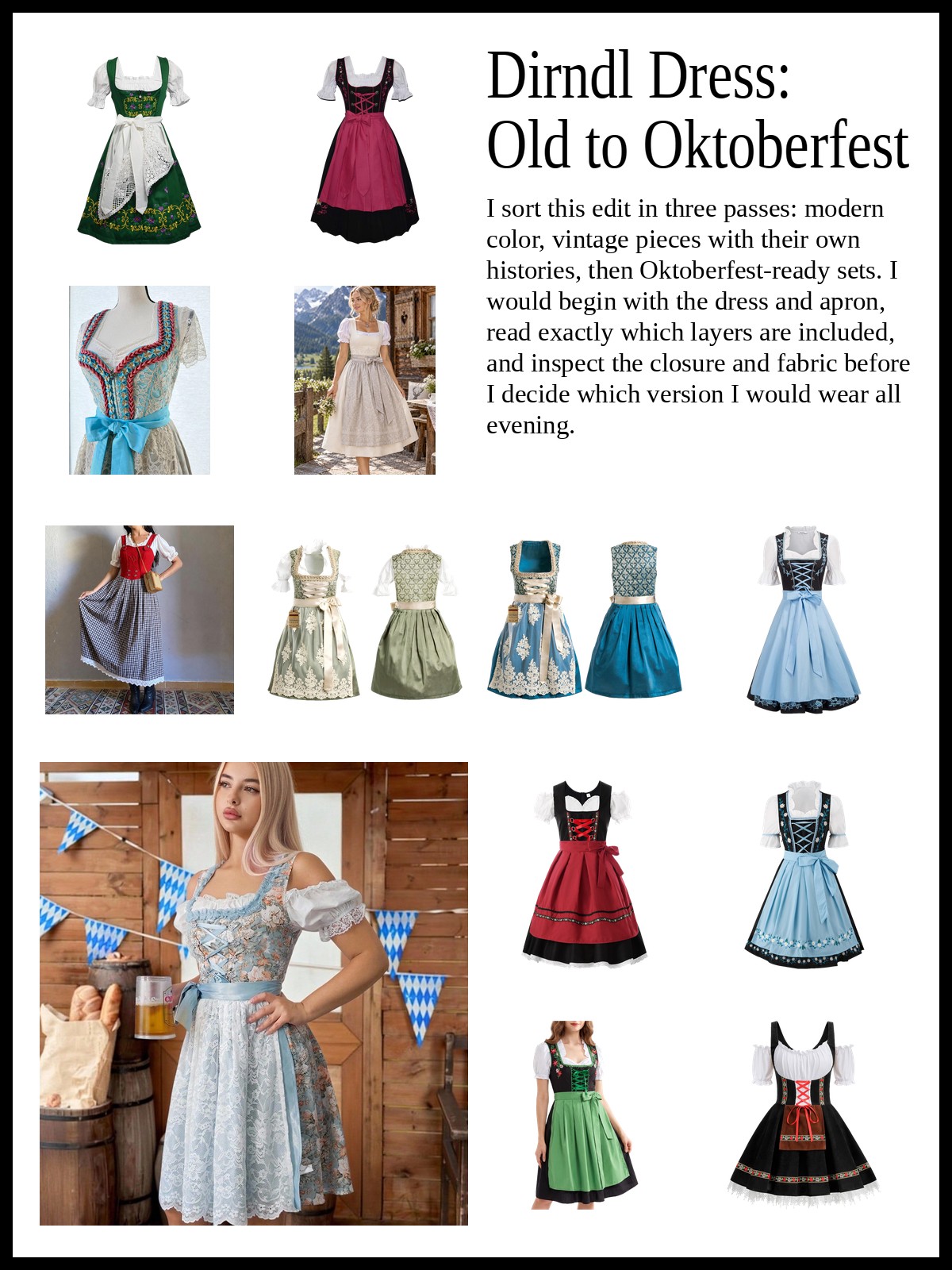
The first group is where I would start for color. Bavariana's Deluxe Lace Dirndl in turquoise and cream gives the palette a bright opening; Sportalm's Cotton-Linen Dirndl in cream and light gray is quieter. Stockerpoint's blue, black and white apron dirndl has three colors in play, while Krüger Madl's magenta rose print already carries plenty of detail. I would keep the rest of that outfit plain, letting the print take the lead. Oktoberfestattire's brown cotton dirndl is the earthy option in that group.
Alphorn's Linen-Bodice Dirndl Set has a red bodice against a black-and-white gingham skirt, a split I would let do its own work. Dirndl Trachten Haus's green long version with lace apron is calmer, while Edelweiss Creek's black-and-pink embroidery brings color back. I would check each closure, sit down in the bodice, and tie the apron securely before a long day. This is the right level of ceremony for me: one mirror check, one movement test, and out the door.
Heritage makers and modern dirndls

Deluxe Lace Dirndl
Bavariana
$229

Cotton-Linen Dirndl
Sportalm
$69.95

Dirndl with Apron
Stockerpoint
$72.05

Rose-Print Dirndl
Krüger Madl
$119

Linen-Bodice Dirndl Set
Alphorn
$182.38

Long Dirndl with Lace Apron
Dirndl Trachten Haus
$189.99

Embroidered Dirndl Dress
Edelweiss Creek
$119.99

Brown Cotton Dirndl Dress Alpine Folk Cottagecore Gown
Oktoberfestattire
$161.1
Vintage finds, checked closely
Vintage takes a different kind of patience: these are one-off finds, so I would choose the actual piece in front of me, not an imaginary replacement. Look at the closure and fabric details before you fall for the print.
AuroreVintage's blue-and-white gingham and NikasClothing's blue floral with apron make two different openings, one crisp and one with color on the bodice and the skirt. I would wear either with a plain blouse and keep the jewelry quiet.
Vintorique's long red floral jacquard has more surface and length. The powder-blue midi from vintagepavillon is the calmer color and the easiest one to wear past October. Each is a one-off, so don't shop from the first photo alone.
Ask for close photos of the zipper, every hook, seams, underarms and fabric edges. Test the closure gently, look for missing stitches, thin patches, old repairs or pulls, and check whether the cloth still moves smoothly. What I would skip: a listing that hides the closure or leaves the fabric condition vague. The rare print is not a reason to ignore a zipper that sticks or hooks that no longer meet.


Oktoberfest sets, layer by layer
With a set, I read the included pieces before I plan the blouse or shoes. Bavaria Trachten's green-and-gold Dirndl with Apron and Blouse already names two layers; the same maker's blue-and-gold dress is listed without a blouse, which changes what I would add. That little detail keeps the outfit from turning into a last-minute puzzle.
Esmara's dark-blue floral dirndl with apron has its own pattern; JASAMBAC's three-piece set signals a coordinated look by its name, so I would still read the listing and see what the pieces are. The red ReliBeauty option is bolder; I would let the color do the work instead of layering on competing prints.
Scarlet Darkness's embroidered set and GRAJTCIN's velvet dirndl take texture in different directions. Spooktacular Creations's Bavarian dress is the most costume-like of the group, so I would check exactly whether an apron or blouse is included rather than guessing from the image. Put the pieces together, tie the apron, sit down and move your arms before wearing the set out.
The navy three-piece from VeroAnnaVintage and CountryPeddlerBeth's blue floral embroidered corset dress with lace blouse both list a blouse, which is what I look for first. CountryPeddlerBeth's red Wenger set comes with its blouse too, and Piojoshopvintage's Hammerschmid set pairs a cherry corset and gingham skirt with a white blouse. AlvaMorgaineVintage's 1980s blue cotton dirndl with striped apron is the one I would read closely before ordering.
There is a difference between a three-piece name and a complete outfit: I would inventory blouse, apron and dress, then check each closure before the event.
Oktoberfest-ready dirndl sets

Dirndl with Apron
Esmara
$67.8

Dirndl with Apron and Blouse
Bavaria Trachten
$154.97

Blue Dirndl Dress
Bavaria Trachten
$119.97

Three-Piece Dirndl Dress
JASAMBAC
$75.99

Dirndl Dress
ReliBeauty
$39.99

Bavarian Dirndl Dress
Spooktacular Creations
$43.99

Embroidered Dirndl Set
Scarlet Darkness
$55.99

Velvet Dirndl
GRAJTCIN
$46.99

Long Red Dirndl Set – German Dress with Floral Embroidery, Lace Apron
TrachtenWorld
$189.99

Bordeaux Dirndl 55 cm Cotton Floral – Apron included, Satin ribbon & bodice hooks, Oktoberfest Dirndl dress, Austrian Bavarian traditional costume
Trachtenhans
$200.06

Traditional Bavarian Dirndl Dress for Women | Black & Red | Authentic German Oktoberfest Outfit | Alpine folk costume
FSSpotPK
$157.5

Light Blue German Dirndl Dress Bavarian Oktoberfest Outfit Traditional Lace Apron Trachten Beer Festival Maid Clothing Dress for Women
TiaMByTia
$70

Elegant Blue Cotton Dirndl Outfit | Comfortable & Breathable Dirndl | Daytime Bavarian Dress with Apron
Traditionaldirndl
$143.65

Dirndl size 36 Oktoberfest Bavaria green linen dress with shirt
Makhitra
$100

Dirndl size DE 42 / blue and rose dirndl dress / skirt length 70 cm / limited premium selection / sample dress from Trachtenhans
AlmtalTracht
$211.83

Red Style Women's Dirndl – Checked fabric Traditional German Dress with Apron & Blouse
AlpenRacewear
$135.15

Country Line Trachtenmode Dirndl Octoberfest Dress Size 36
Yarysheva
$50

Vintage Bavarian Style Dress, Lace-Up Puff Sleeve Dress, Navy Gingham Dirndl Dress, Checkered Apron Oktoberfest Costume
AryaDresses
$132.3

Dirndl Dress for Women |Olive Green Bavarian Dirndl | Traditional German Dress | Embroidered Midi Dirndl | Oktoberfest dress
SleshIndustry
$168

Women's Burgundy Dirndl Dress | Traditional German Bavarian Dress | Oktoberfest Dress | Alpine Embroidered Folk Costume
TheCraftyNookPK
$165

Pastel Yellow Dirndl Dress Pleated Skirt - Authentic Bavarian Outfit With Free Blouse & Apron
BavarianAlpine
$171.81

Dirndl size 40 Germany Oktoberfest Bavaria black checks with blue apron
Makhitra
$110

Royal Blue Velvet Dirndl Dress Set – Austrian Traditional Outfit (3 Piece)
Alpinedirndldesigns
$168.35

Vintage 1980s Blue Cotton Dirndl with Striped Apron
AlvaMorgaineVintage
$223.61

Dirndl Dress Set 3 Piece, Navy Blue with Apron and Blouse
VeroAnnaVintage
$78

Dirndl Corset Dress & Lace Blouse Set, Blue Floral Embroidery
CountryPeddlerBeth
$124.99

Vintage Wenger Dirndl Corset Dress & Blouse Set, Red White Floral
CountryPeddlerBeth
$114.99

Vintage Austrian Hammerschmid Dirndl Set, Cherry Corset, Gingham Skirt, White Blouse
Piojoshopvintage
$164.18
Color, condition, then the bow
I would narrow the choice in three passes: modern color, secondhand condition, or a set with the included layers named clearly. If vintage is the draw, condition comes before rarity, so inspect the zipper, hooks and fabric in close light. With a set, read what is and is not included before choosing a blouse.
The apron bow has a familiar shorthand. Austria's official tourism guide says left means single and right means in a relationship, engaged, or married. I would treat it as a convention, not a rule for reading a stranger; tie the bow where you like the line and fasten it securely. A dirndl can hold tradition and personal taste in the same outfit. I would give the zipper one test, the bow one tie, and then let the evening begin. If you want to keep browsing, I also put together Maxi Dress Finds.