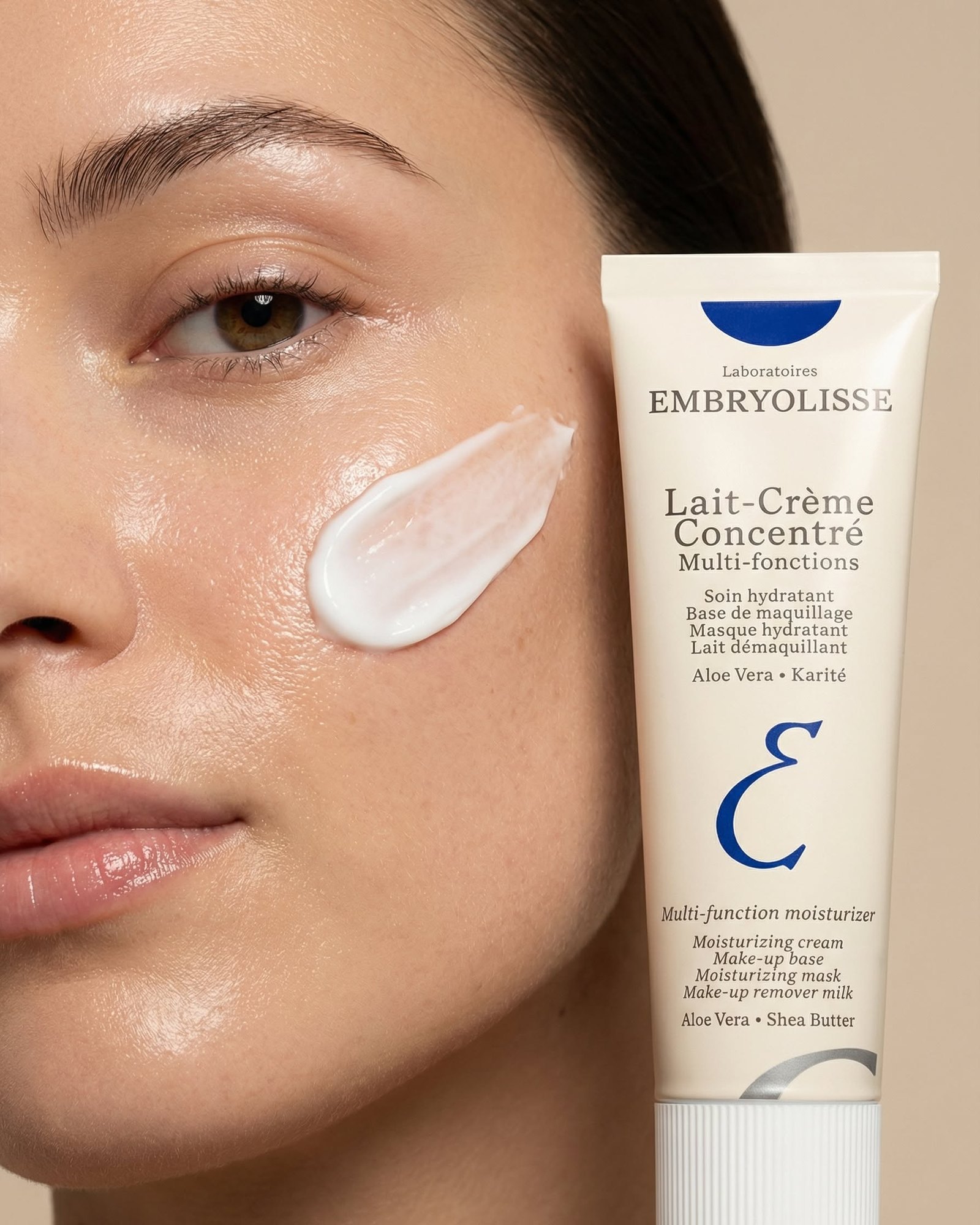
The meaning of Embryolisse starts in Paris, where it began as a hospital emollient before makeup artists adopted the tube. I go through Lait-Crème Concentré, the rest of the line and what pairs with it.
Embryolisse Explained: The Lait-Crème Story and Its Line
The wax room and the white tube
On 5 August 1889, a hall opened at the Hôpital Saint-Louis in Paris. It was the new Musée des Moulages, a room of wax casts of skin disease made to teach doctors, opened during the first International Congress of Dermatology. Some 4,800 pieces or more are still in it today. Row after row of human skin, rendered in wax, and every one of them a question about what a skin barrier needs.
Some sixty years later the same hospital is where the Embryolisse story starts. The brand says that in 1950 a dermatologist there, Doctor Tricot, developed Lait-Crème Concentré for his patients, that many dermatologists prescribed it by 1952, and that it appeared in the Vidal drug dictionary in 1955. By 1976, it says, film celebrities and makeup artists had taken it up as a base. The name comes from early animal embryonic extracts for smoothing, which the brand says it dropped more than 30 years ago in favour of plant proteins. So when I talk about embryolisse, I mean a hospital emollient that learned to work on a film set, and I think the plain tube is the point. It looks like what it is.
The trick is to start with the original and move outward only when you have a reason. Lait-Crème Concentré is what the brand calls a 6-in-1: moisturizer, makeup base, remover, mask, after-sun and aftershave care. The tube itself names aloe vera and shea butter, and retail listings add beeswax and soy proteins. Lait-Crème Sensitive is the version for touchy skin. The Hydra-Serum Moisturizing Booster goes under a cream, and Radiant Eye Stick is the cool one for mornings. Radiant Complexion Cream Apricot Glow is the tinted-feeling one for bare days, and the 3-in-1 Secret Paste is the compact one for a bag. The Micellar Lotion and the Gentle Waterproof Makeup Remover Milk Cream finish the day.
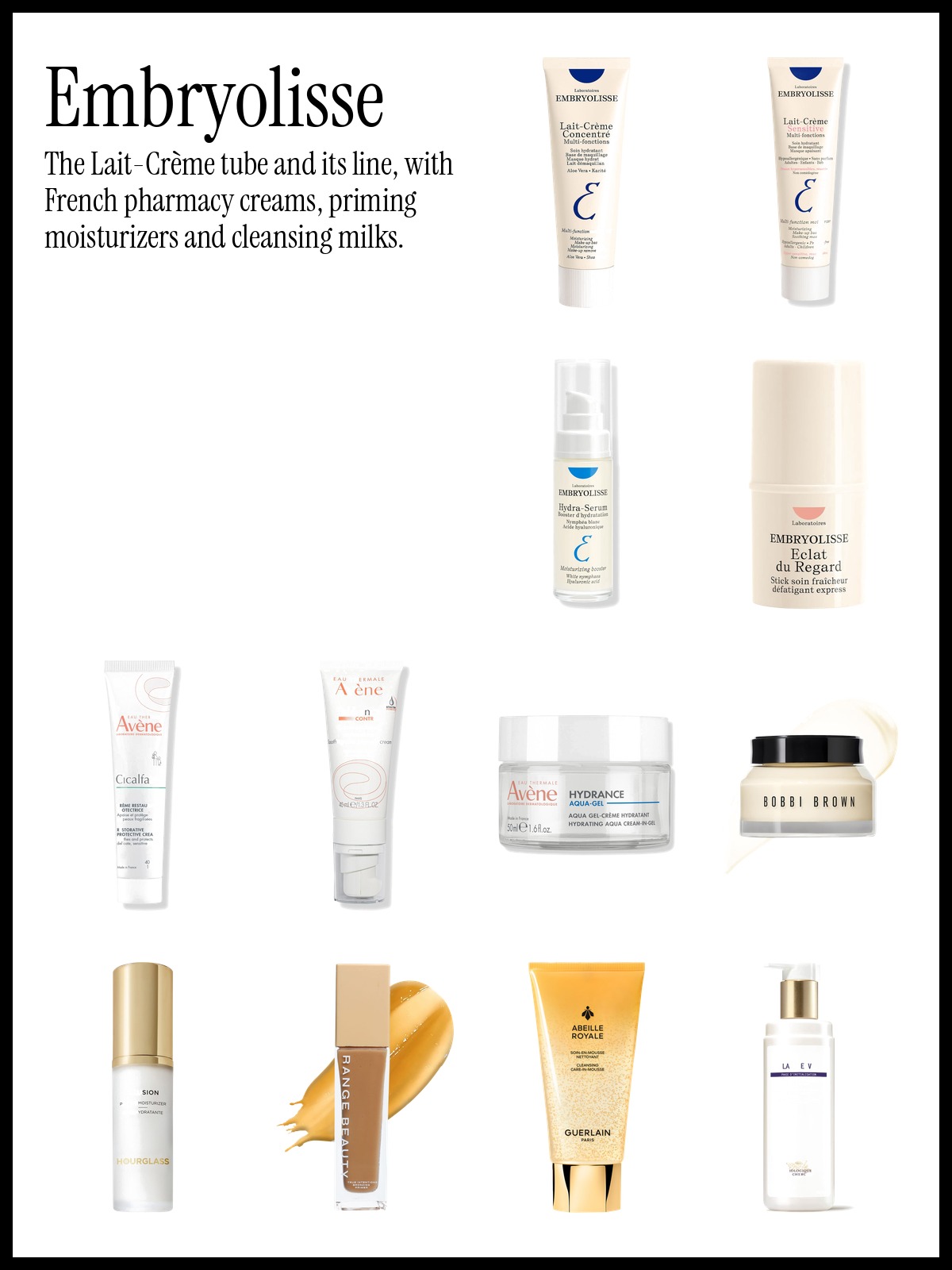
Embryolisse from Lait-Crème to Radiant Eye

Lait Creme Concentre 2.54 fl oz
Embryolisse
$32

Lait-Crème Sensitive Multi-Function Moisturizer
Embryolisse
$35

Hydra-Serum Moisturizing Booster
Embryolisse
$39

Radiant Eye Stick, Cool Treatment For A Brighter Look
Embryolisse
$28

Radiant Complexion Cream Apricot Glow
Embryolisse
$35

3-in-1 Secret Paste
Embryolisse
$33

Micellar Lotion, Cleansing and Make-up Remover
Embryolisse
$17

Gentle Waterproof Makeup Remover Milk Cream
Embryolisse
$27
French pharmacy moisturizers and repair creams
Pharmacy creams are best chosen by what your skin did yesterday. If it is angry, go calming. If it is tight, go hydrating. If it is fine, do not add anything.
Avène has three in the grid, and they are all for different moods. Cicalfate+ Restorative Protective Cream is the repair one, Tolerance Control Skin Recovery Cream is for skin that reacts, and Hydrance Aqua-Gel is the light, watery one for summer. La Roche-Posay Cicaplast Balm B5 is the multipurpose tube, the one to keep in a drawer for chapped patches. Vichy Minéral 89 Fragrance Free Cream and the 100H Rich version, also fragrance-free, are the pair if you want to skip scent altogether, which is worth noting because the Lait-Crème formula contains fragrance.
Caudalie's VinoHydra Deep Hydration Moisturizer and VinoHydra Sorbet Cream with hyaluronic acid are the two for people who want something closer to a gel than a balm.
A pairing I like: Lait-Crème at night on dry patches only, and one of these lighter creams on the rest of the face. You do not have to use one cream everywhere.
What I would skip: any of the richer creams on a humid day if your skin runs oily. That is the moment for the gel.

Cicalfate+ Restorative Protective Cream
Avène
$26

Tolerance Control Skin Recovery Cream
Avène
$40

Hydrance Aqua-Gel
Avène
$42

Cicaplast Balm B5 Soothing Therapeutic Multi Purpose Cream
La Roche-Posay
$20.99

Minéral 89 Fragrance Free Cream
Vichy
$32

Minéral 89 100H Rich Cream Fragrance-Free
Vichy
$32

VinoHydra Deep Hydration Moisturizer
Caudalie
$38

VinoHydra Sorbet Cream Moisturizer with Hyaluronic Acid
Caudalie
$38
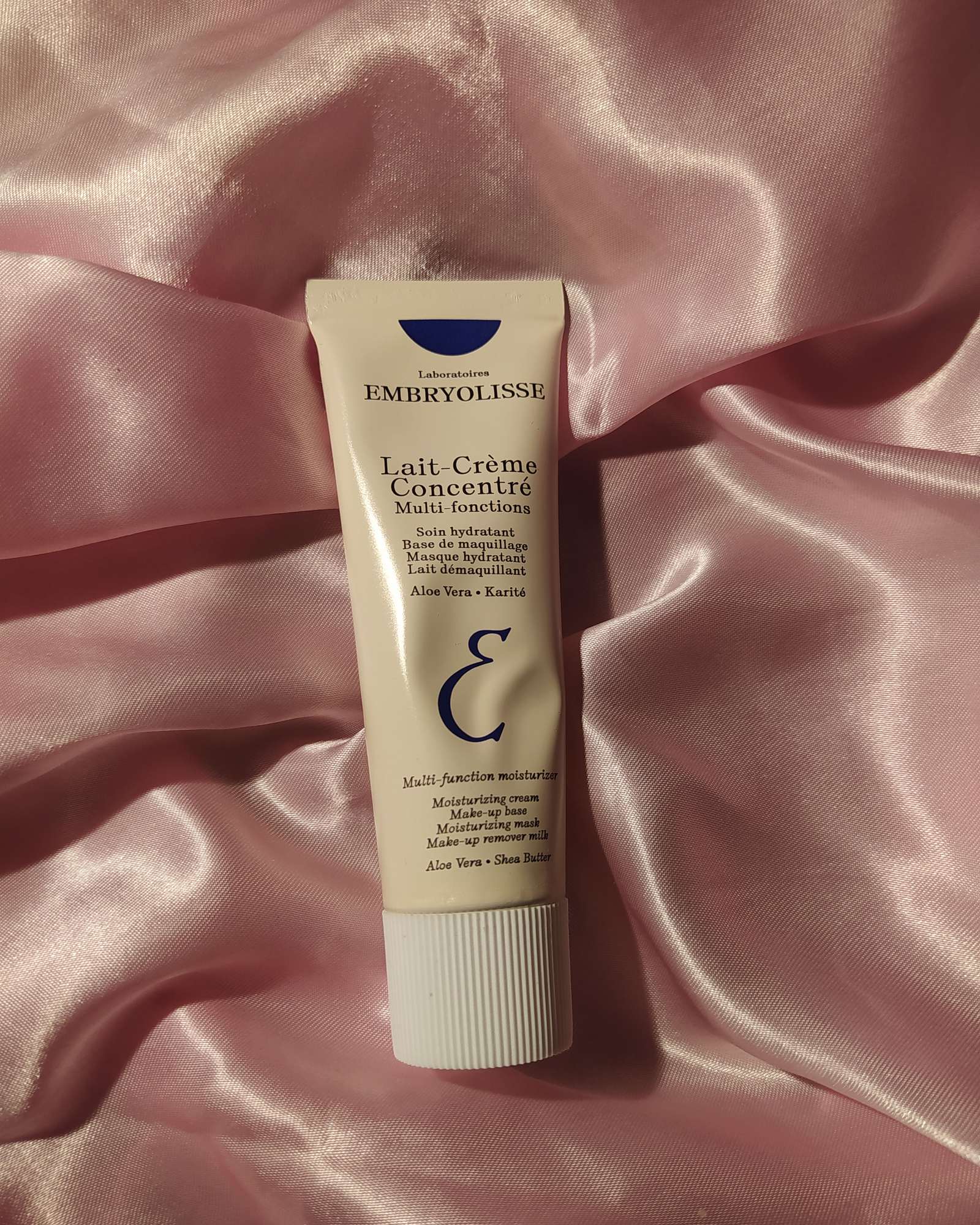
Primers and priming moisturizers for makeup prep
Put your moisturizer on, wait ten minutes, then put on your base. If the base slides, the cream is too rich. If it grips in patches, you need more hydration. Most makeup trouble is a prep problem, not a foundation problem.
The grid has two kinds of product, priming moisturizers and plain primers, and they behave differently. Bobbi Brown Vitamin Enriched Face Base+ and Hourglass Illusion Priming Moisturizer are the cream-and-primer hybrids, for people who want one step. Range Beauty True Intentions is a hydrating, soothing primer with vitamin E, and LAWLESS Forget the Filler is a line-smoothing moisturizer and makeup base in one.
Tatcha The Silk Canvas Protective Primer is the silky, protective kind of primer by name, and MAKE UP FOR EVER Step 1 Primer Hydra Booster is the one to try if your skin feels thirsty by noon. Prada Refine Blurring Extending Primer is the blurring option, and Grown Alchemist Skin Defense Primer is the one with a skincare bent.
On dry skin I use a cream under my base, and a true primer only on the parts that need help, like the T-zone or around the nose.
What I would skip: a thick cream as a primer under a long-wear foundation on a hot day. It will lift the base off your face by lunch.

Vitamin Enriched Face Base+ Moisturizer & Primer
Bobbi Brown
$70

Illusion Priming Moisturizer
Hourglass
$58

True Intentions Hydrating and Soothing Primer with Vitamin E
Range Beauty
$30

Forget the Filler Skin-Plumping Line-Smoothing Moisturizer + Makeup
LAWLESS
$52

The Silk Canvas Protective Primer
Tatcha
$55

Step 1 Primer Hydra Booster
MAKE UP FOR EVER
$42

Refine Blurring Extending Primer
Prada
$50

Skin Defense Primer
Grown Alchemist
$40
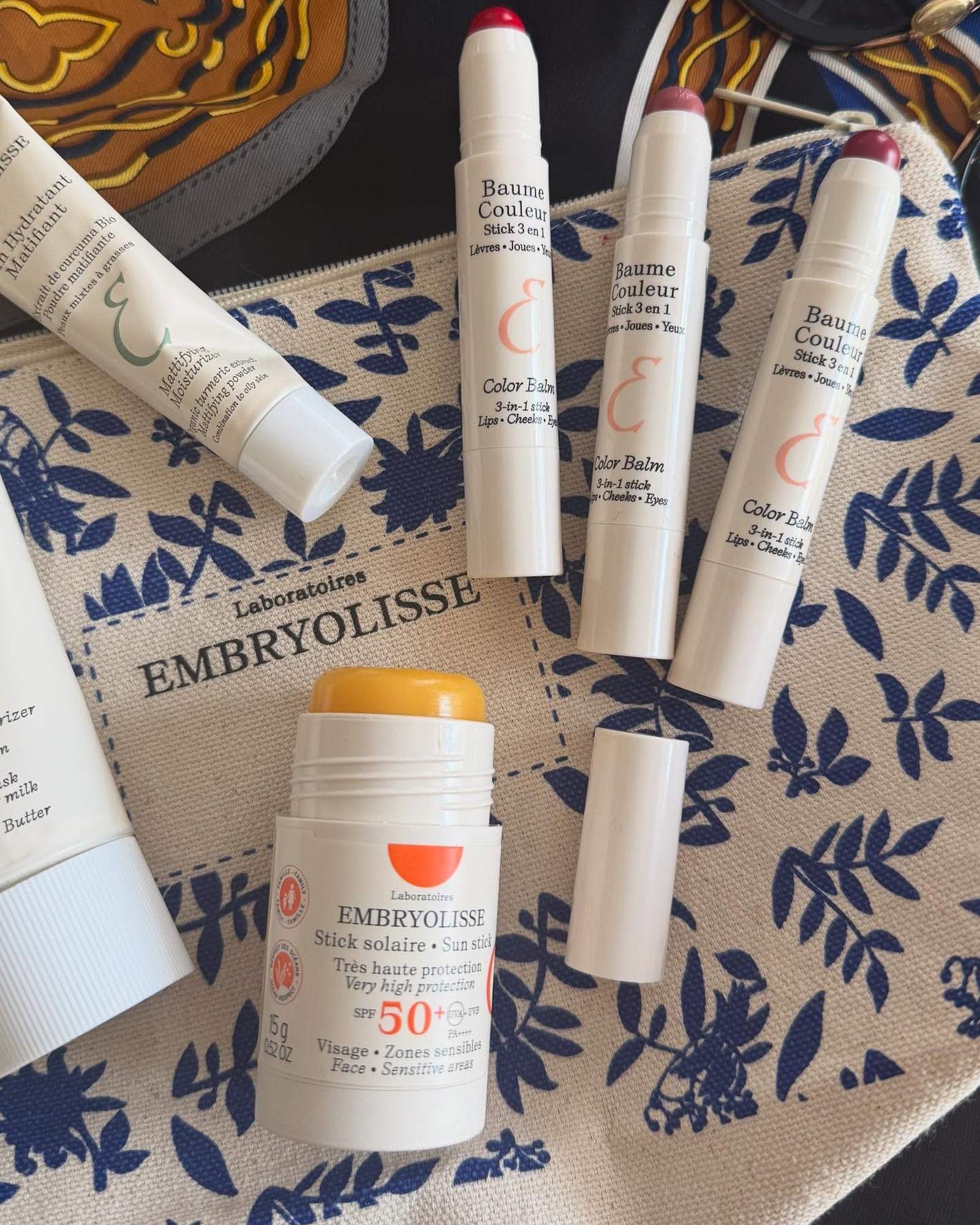
French cleansing milks, oils and foams
Makeup comes off best when oil or milk goes on dry skin first, then a rinse, then foam if you need it. Wet skin dilutes the very thing you need to melt the makeup.
Caudalie's Vinoclean pair covers both textures. The Gentle Cleansing Almond Milk is the soft one, and the Makeup Removing Cleansing Oil is the fast one for long-wear mascara. Avène's Tolerance Extremely Gentle Cleanser Lotion is the milk for skin that stings easily, and Biologique Recherche Lait E.V is the milk if you like a more clinical, skin-care-first brand.
Dior's L'Huile OFF/ON Cleansing Oil, Dior's La Mousse OFF/ON Foaming Cleanser, Chanel La Mousse Camellia Cleansing Cream-to-Foam and Guerlain Abeille Royale Hydrating Cleansing Foam are the indulgent end, for people who like cleansing to feel like a ritual.
I do an oil or a milk first, then a foam only on nights when you have worn sunscreen and makeup. On bare-skin nights a milk alone is plenty.
What I would skip: a foaming cleanser as your only cleanser on dry winter skin. It will leave you tighter than you began.

Abeille Royale Hydrating Cleansing Foam
Guerlain
$70

Lait E.V
Biologique Recherche
$90

Vinoclean Gentle Cleansing Almond Milk
Caudalie
$30

Vinoclean Makeup Removing Cleansing Oil
Caudalie
$30

Tolerance Extremely Gentle Cleanser Lotion
Avène
$28

L'Huile OFF/ON Cleansing Oil
Dior
$65

LA MOUSSE Camellia Cleansing Cream-to-Foam
Chanel
$70

La Mousse OFF/ON Foaming Cleanser
Dior
$65
Embryolisse Lait-Crème, worth owning once
For my money, the original Lait-Crème is worth owning once, even if you end up using it only as a hand cream and a mask. It is unglamorous and it has a hospital pedigree, and that combination is rarer than it sounds. The brand's own line has answers for oilier and more sensitive skin, so the tube you buy does not have to be the one from 1950.
Try it on one dry patch before you use it on your face, and see what you learn. The wax casts at Saint-Louis taught doctors to look closely at skin. The tube teaches the same thing more gently.