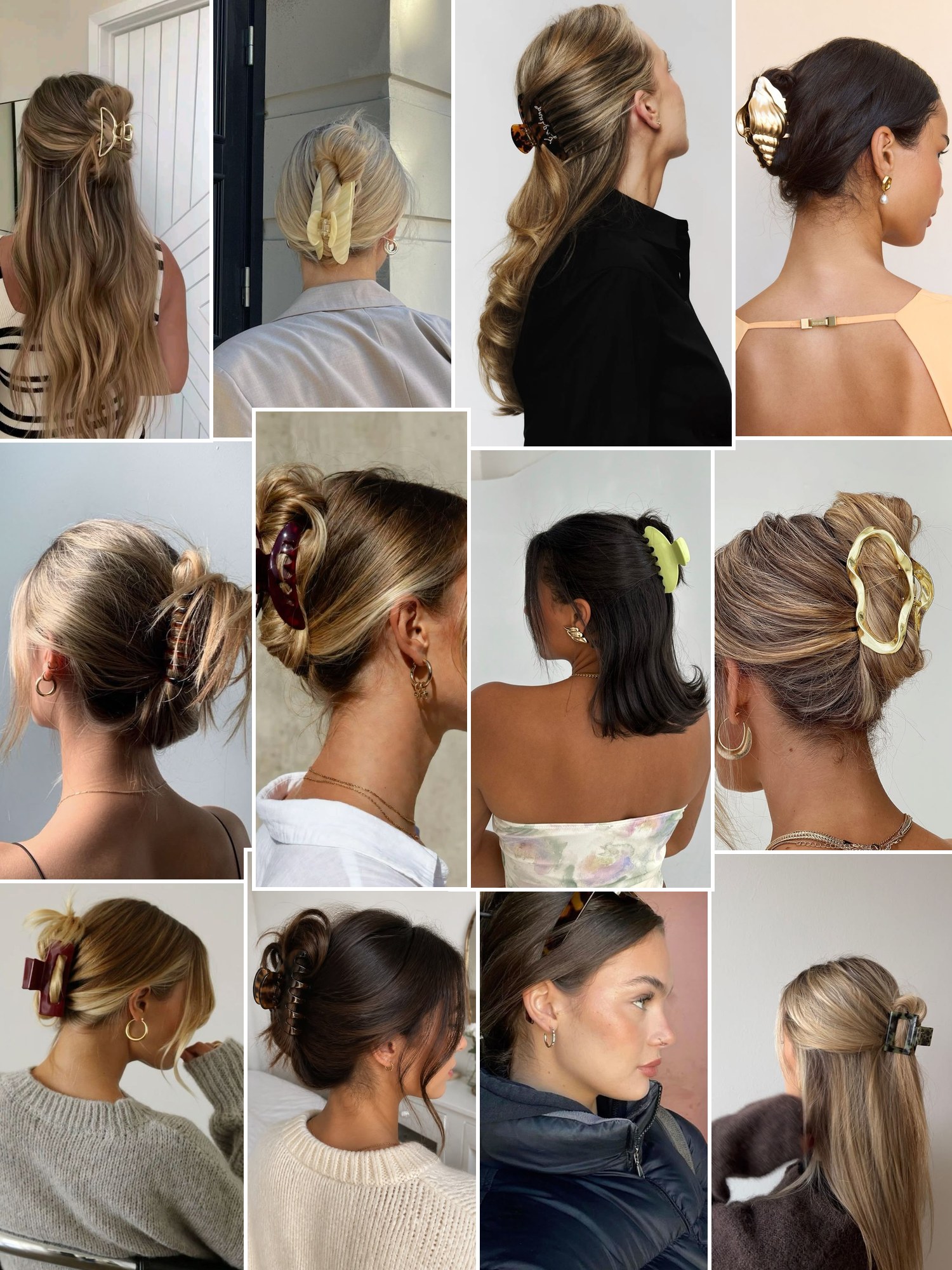
Hair claw brings together a French origin story, tortoiseshell classics, oversized shapes, tiny half-up clips, and playful metal and flower designs. I would choose by the twist I want to make, then let color and ornament do the talking.
Hair claw: The French Workshop Behind the 1990s Updo
A small, useful question
In 1986, in Oyonnax, France, Christian and Sylviane Potut opened CSP Diffusion’s first factory. Their company made hairbands, combs, and yo-yos. The BBC’s account places that chapter after Christian had begun in an old bread oven at his parents’ garden. He kept crossing and uncrossing his fingers, then wondered why he could not join the two tools he already sold, a comb and a clip. Hair claw began with that small, useful question.
I like that the design’s strongest argument is not a grand gesture. Christian Potut described it as made for every type of hair, and by the mid-1990s his family company was selling hundreds of thousands of clips worldwide each month. That is a very persuasive life for a small object: useful first, then open to a little decoration.
The Emi Jay story adds a newer chapter. WWD reported that the brand launched in 2009 and that renewed Y2K interest helped bring attention to claw clips. Founder Julianne Goldmark described her aim as making everyday hair accessories with a twist. I understand the appeal. The hinge does the practical work, while the shell, finish, or little stone can make the clip feel like a choice rather than an emergency.
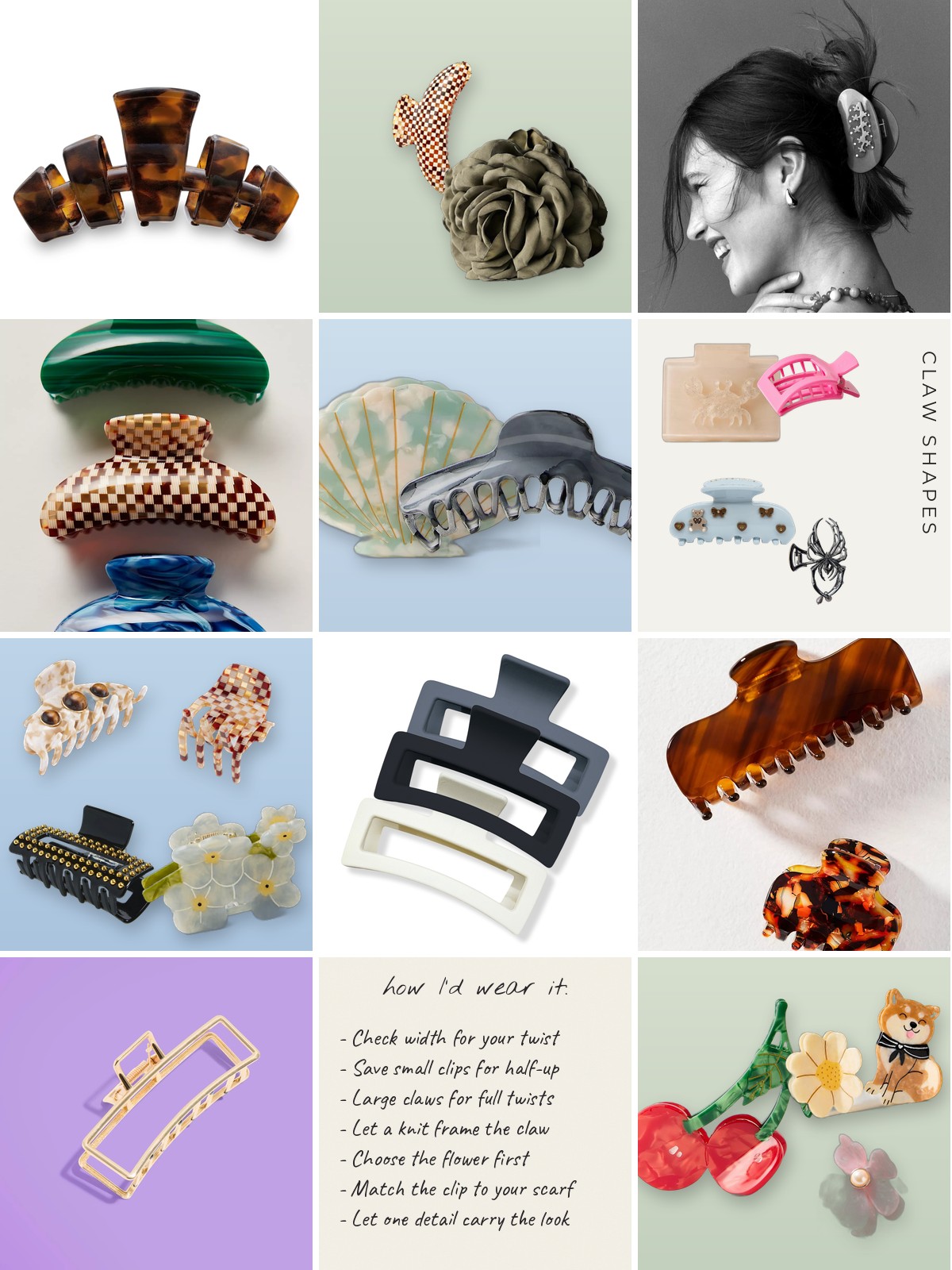
For a quieter start, the TELETIES Medium Classic has a familiar tortoise finish and a nylon-and-aluminum build. Kitsch’s Tortoise Cloud Flat is made with recycled plastic and lies close to the head. The MACHETE Jumbo Heirloom brings Italian acetate and checkerboard pattern into a larger outline; LELET NY’s Tasha Stone adds tiger’s-eye accents. Before choosing, I would compare the clip’s width with the twist I actually plan to make, then decide whether I want it to disappear into tortoise or catch the light.
Tortoiseshell claw clips

Tortoiseshell Hair Claws, Set of 2
By Anthropologie
$26

Medium Classic Claw Clip
TELETIES
$12.99

Tortoise Cloud Flat Claw Clip
Kitsch
$9

Jumbo Heirloom Claw
MACHETE
$60

Tasha Stone Claw Clip
LELET NY
$128

Thin Rectangle Claw Clip for Medium Hair
GIMME beauty
$10

Neutral Classics Mini Claw Clip Set
BY ADINA EDEN
$19.5

Epic Extra Large Tortoise Claw Clip
The Hair Edit
$14.99
Large claws for full twists
Volume changes the sizing question. I would compare the clip’s opening with the twist I actually plan to make, not judge it by a front view alone. The history is practical, too: by the mid-1990s, the Potuts’ family company was selling hundreds of thousands of clips a month around the world. A useful shape can travel a long way.
The MACHETE Grande Heirloom measures 2 by 3.75 inches, with a double-walled Italian-acetate build. Free People’s Large Scallop gives the oversized profile a shell-like edge. Pink Pewter’s Rectangle Oversized pack has three clips, while the Free People Amelie keeps its brown acetate outline rounded and smooth. TELETIES’ Large Hair Claw Clips come as a pair, and Kitsch’s Eco-Friendly Large has a matte finish and plant-based material.
For a full twist, I would check the tooth spread and spring against the thickness of the section I want to gather. I would wear a sculpted large shape with a plain knit or a crisp shirt, letting the clip take the place of another accessory. The Kitsch measurements are compact enough to check on paper before deciding whether its profile suits the hair arrangement.
What I would skip: if I only want to pin back the front pieces, I would leave the oversized shapes aside and look at the smaller section instead. A large silhouette earns its space when the hairstyle itself needs it.

Grande Heirloom Claw Clip
MACHETE
$42

Large Scallop Claw Clip
Free People
$19

Rectangle Oversized Claw Hair Clip, 3 Pack
Pink Pewter
$12

Amelie Acetate Large Claw Clip
Free People
$30

Large Hair Claw Clips, Set of 2
TELETIES
$28

Large Hair Claw Clips, Set of 2
By Anthropologie
$28

Not-So-Ordinary Square Claw Clip
Urban Outfitters
$8

Eco-Friendly Large Claw Clip
Kitsch
$8
Small claws, smaller decisions
Small clips do not need to do a large clip’s job. I would decide whether I want a half-up hold or just a little detail before choosing one. The French invention story began with combining a comb and a clip; by the 1980s and 1990s, the family business was also bringing in fashion and color consultants and working with Swarovski on a diamanté range. Even a tiny version can carry that playful side of the idea.
The eight-piece Mini Scalloped set mixes tortoiseshell, sage, navy, and burgundy. TELETIES’ Tiny Flat set has three low-profile oval clips, and the Speckled Mini set brings warm amber, pale blue, and pink-tan together. Frasier Sterling’s Small Hair Claw set uses heart shapes and pink patterns; Casa Clara’s Pia Mini is a 1.5-inch crab. The MACHETE Mini has a cream, rust, and amber checker, while Emi Jay’s Dream Cloud Teddy brings a blue surface with teddy, bow, and hand-set stone details.
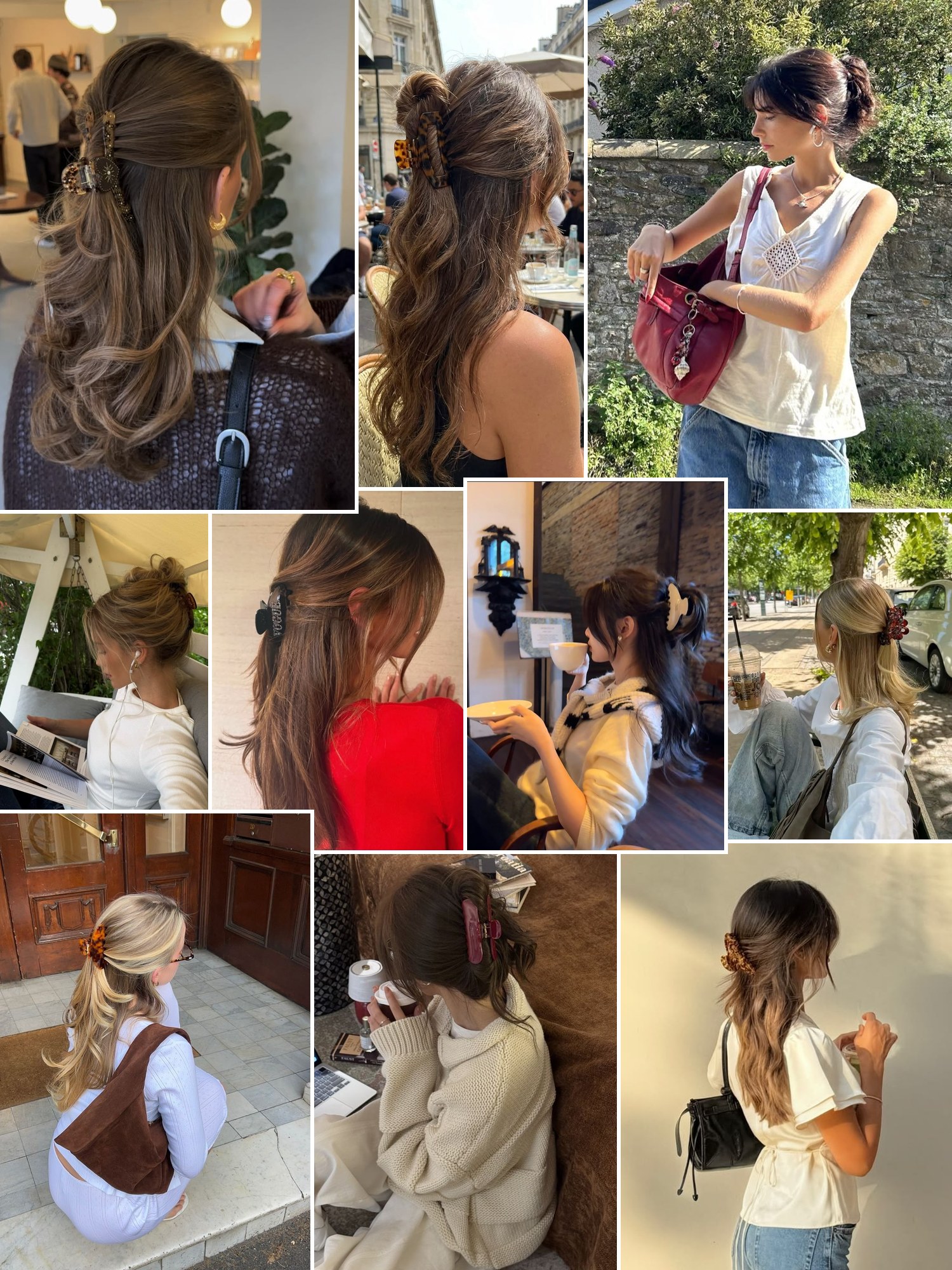
I would choose one or two miniatures for a half-up style, then check that the teeth can meet around the section I plan to gather. A small shape can be the quiet note beside a patterned scarf or the one bright detail against a dark October coat. The pink set suits a softer palette; a checked or speckled surface gives a neutral outfit more texture without asking for a new color story.
What I would skip: I would not expect a tiny clip to hold a full twist. I would reserve that job for the larger opening and let these smaller shapes work as punctuation.

Mini Scalloped Claw Clips, Set of 8
By Anthropologie
$28

Tiny Flat Hair Claw Clips, Set of 3
TELETIES
$16.8

Speckled Mini Hair Clip Set
Anthropologie
$24

Small Hair Claw Clips, Set of 3
Frasier Sterling
$42

Pia Mini Claw Clip
Casa Clara
$16

Small Flat Square Clip
Teleties
$11

Mini Claw Clip
MACHETE
$17

Sweetheart Clip Dream Cloud Teddy
Emi Jay
$36
Metal, enamel, and a little shine
Christian Potut described the production of a claw mould as a long process, saying one mould took around 200 hours to create. The BBC account follows the steps from drawing to resin model, mould, and injected acetate. These metal and enamel versions take the same small mechanism in a more jewelry-like direction.
The GIMME beauty Rectangle Metal has an airy gold-tone frame and high-tension spring. Conair’s four-piece Metal Flower and Heart set uses openwork linework; Kitsch’s Metal Clam Shell pairs ivory enamel with a gold-tone back. Gimme Beauty’s Gold Rush combines gold-coated metal with recycled plastic, while The Hair Edit’s Gold Gilded Wing Butterfly makes the wings the main event. Ettika’s Keep It Simple Gold comes as two streamlined claws, and L. Erickson’s Aveline adds domed gold studs to ivory acetate.
I would put one of the openwork shapes beside a plain neckline and let it supply the ornament, rather than asking several shiny details to compete. At the buying stage, I would check that the spring opens and closes cleanly, and that the metal edges sit smoothly against the hair. The more decorative the silhouette, the more I want its outline to read clearly from the side.
What I would skip: when the rest of the outfit already has a strong metallic accent, I would choose the simpler Ettika pair over another sculptural shape. A little shine is plenty.

Rectangle Metal Claw Clip for Thick Hair
GIMME beauty
$10

Metal Flower and Heart Claw Clips
Conair Accessories
$10

Metal Clam Shell Hair Clip Set
Kitsch
$12

Gold Rush Claw Clip
Gimme Beauty
$9.99

Gold Gilded Wing Butterfly Claw Clip
The Hair Edit
$14.99

Metal Spider Claw Clip
Urban Outfitters
$15

Keep It Simple Gold Claw, Set of 2
Ettika
$45

Aveline Beaded Claw Clip
L. Erickson
$40
Flowers, fruit, and oddballs
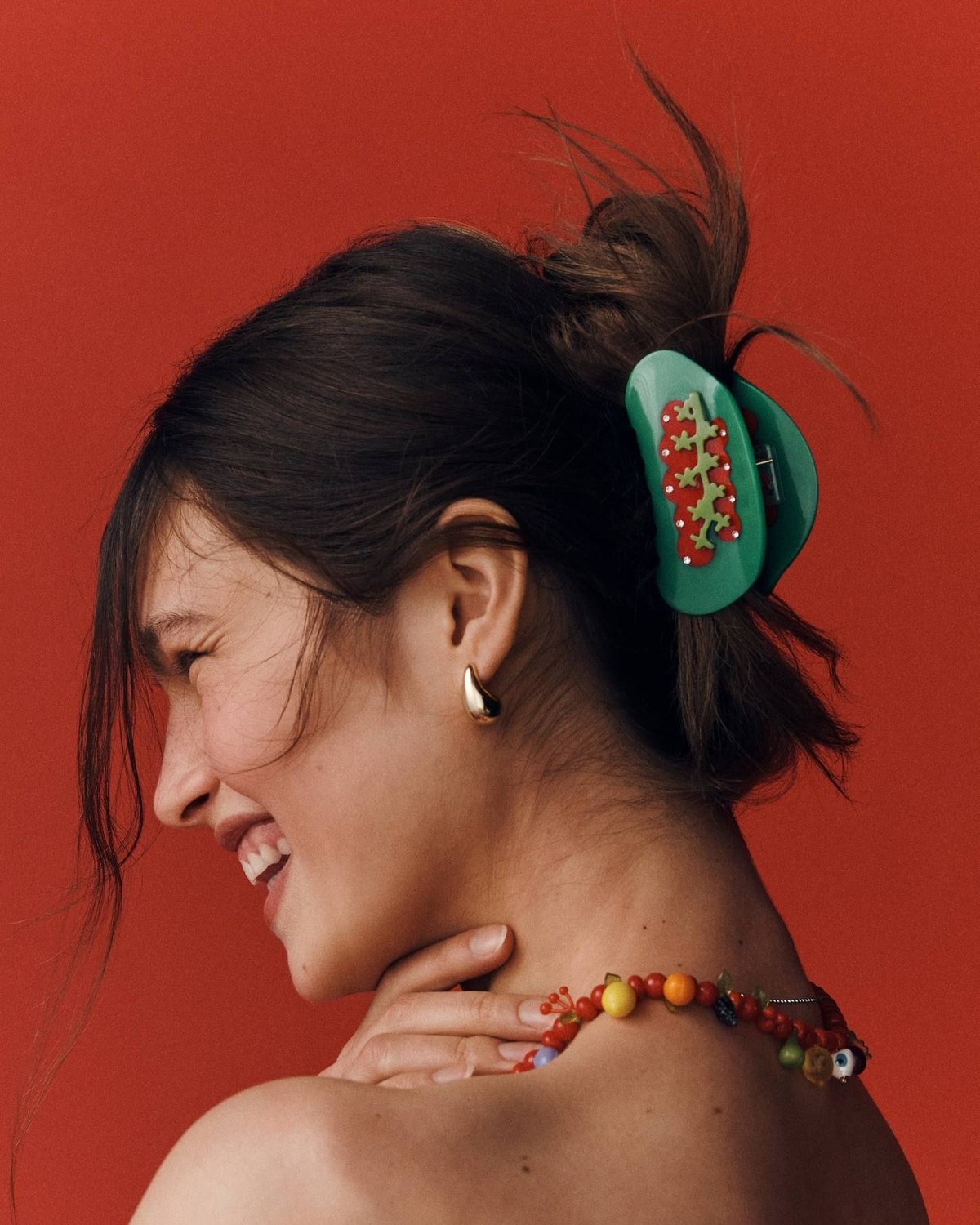
The first claw clips were not limited to tortoiseshell. In the 1980s and 1990s, the Potuts brought in fashion and color consultants for a wide palette and even worked with Swarovski on a diamanté range. I like that as permission to treat the clip as the small, expressive part of an outfit, not just the thing that keeps it together.
Free People’s Belle Rosette is an olive fabric rose with layered petals; its Cherries clip turns glossy red into a little fruit shape. Solar Eclipse’s Hand-Painted clip comes in the Forget Me Not Flower variation, while its Shiba version pairs a dog shape with a pale flower. Lele Sadoughi’s Floral Pearl puts pearl-like detail at the center of a pink rose. Frasier Sterling offers a Lucky Black Cat and a two-piece Fall Icon set in the City Pup variation.
I would pick the motif before getting dressed. A rose works with a quiet sweater and a clean twist; cherries or a dog shape can make a plain outfit feel less serious. With a patterned scarf, I would keep the clip’s color in the scarf’s family and let its outline do the talking. I would also check the closure from the side, since a novelty silhouette should still look intentional when the hair is gathered.
These are for the days when a neutral clip feels like the least interesting answer. One flower or odd little character is enough; I would let it be the only joke in the outfit.

Rosette Flower Claw Clip
Urban Outfitters
$10

Belle Rosette Claw Clip
Free People
$18

Cherries Hair Claw Clip
Free People
$19

Hand-Painted Claw Clip
Solar Eclipse
$28

Hand Painted Autumnal Claw Clip
Solar Eclipse
$28

Floral Pearl Hair Claw
Lele Sadoughi
$38

Halloween Icon Hair Claw Clip
Frasier Sterling
$38

Fall Icon Hair Claw Clips, Set of 2
Frasier Sterling
$38
How I would choose one
I would choose in this order: decide how much hair I want to gather, check the clip’s opening against that section, then decide whether it should blend into tortoise or announce itself in gold, enamel, fruit, or flower form. For most October mornings, I would keep a smaller neutral option in reach for half-up hair and a larger tortoise shape for a full twist.
The French story began with a practical combination, comb and clip, but the object never had to stay strictly utilitarian. I would start with the mechanics, leave room for a little ornament, and let the hair be the least complicated part of the outfit.