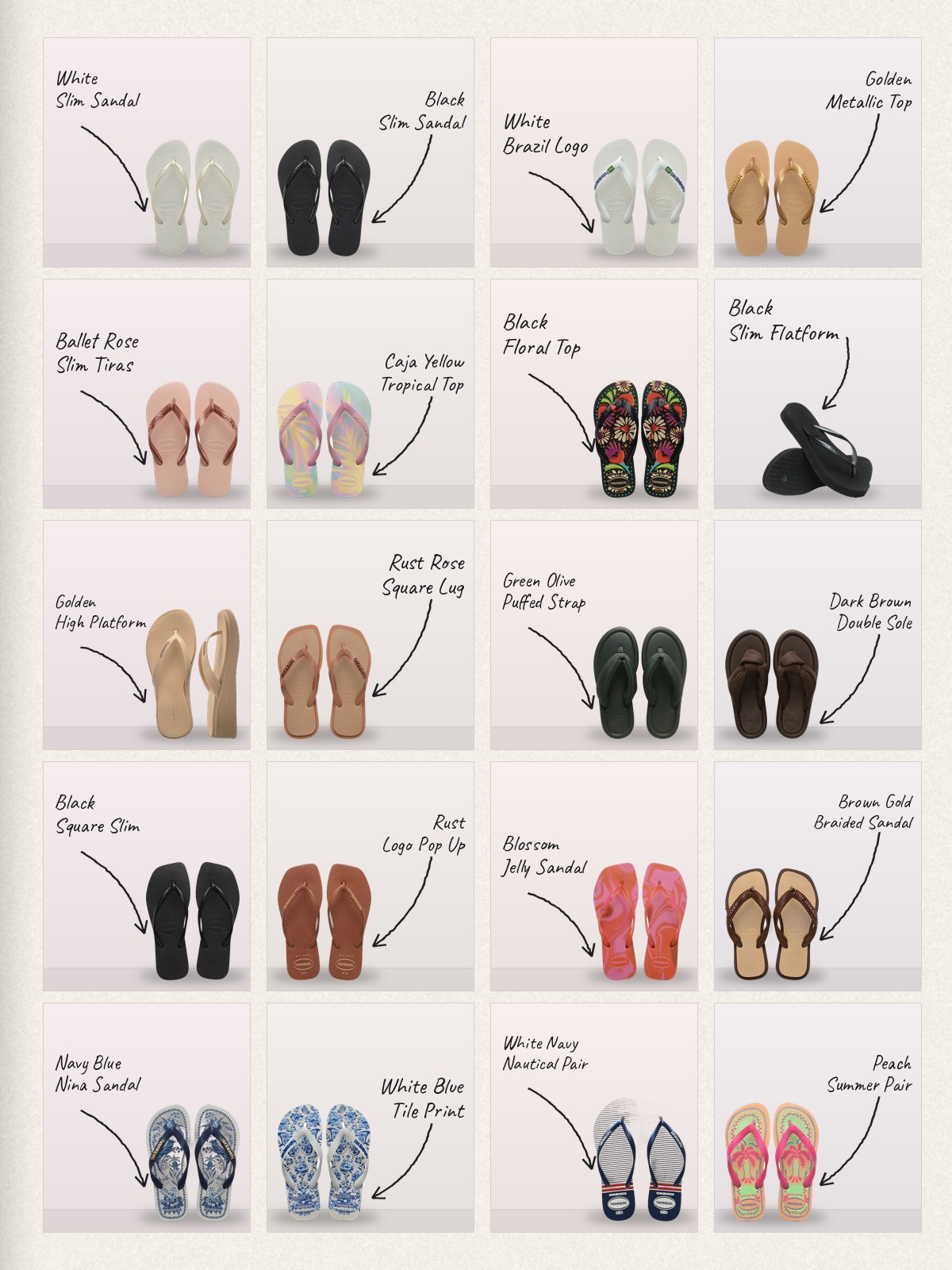
Havaianas moves from slim, classic flip-flops to platforms, square toes, and printed pairs in this 40-style edit. I would pick a silhouette first, then decide how much color I want at the foot.
Havaianas: The Rice-Grain Sandal That Began in Brazil
Havaianas moves from slim, classic flip-flops to platforms, square toes, and printed pairs in this 40-style edit
The rice pattern has a story
In 1962, São Paulo Alpargatas introduced the Havaiana flip-flop in Brazil. Its first design drew on Japanese zori sandals, with cloth straps and woven rice-straw soles, then traded the straw for rubber and kept a rice-grain print underfoot. I love that the visual signature began with a practical material change, not an elaborate ornament.
Alpargatas registered a patent for the rubber thong in 1966. That is the kind of origin story I like: an everyday shape with a very particular surface, one that still gives even a simple flip-flop something to say. That same rice-grain surface is still there in Havaianas Slim today, even as the label widens its vocabulary around the original.
For October, the Slim in White reads quietly with dark straight jeans and a long knit skirt; the Slim in Black would make a cleaner line under relaxed trousers. Ballet Rose is a softer choice beside a gray cardigan and long skirt, while Navy Blue feels almost like a neutral with denim. These are all the same narrow-strap silhouette, so color does more of the styling.
The sand-and-light-gold colorway has a tonal feel, and Rose Gold adds a hint of shine without changing the slim outline. I would use White or Black when the clothes already have a lot going on, then let the metallic color take the lead with a plain column dress. Before choosing, compare where the strap meets the toe post and how narrow that line looks against the foot; the Slim's delicate strap is its whole point.
Havaianas Slim flip flops

Slim Flip Flops in White
Havaianas
$34

Slim Flip Flops in Black
Havaianas
$34

Slim Flip Flops in Ballet Rose
Havaianas
$34

Slim Flip Flops in Navy Blue
Havaianas
$30

Slim Flip Flops in Sand Grey/Light Golden
Havaianas
$34

Slim Flip Flops in Rose Gold
Havaianas
$34

Slim Flip Flops in Rose Gum/Metallic Rose Gum
Havaianas
$34

Slim Flip Flops in Brilliant Blue
Havaianas
$34
Top and classic flip-flops
On a classic flip-flop, strap width and footbed color do most of the work; when either changes, the whole pair shifts. In 1994, a campaign introduced the Top, offered in 13 colors at the time. The Top Logo Metallic in Golden and Canyon Clay pairs a wider sole and straps with a radiant finish, while Top Tiras in Ballet Rose keeps to a soft palette with metallic straps.
The Top Fashion in Caja Yellow has contrasting straps and tropical abstract prints, while Top Begonia in Black brings vivid floral motifs across the sole and straps. Top Bossa in Buttercream puts bright tropical details against a pale base. Top Sao Luis in White takes another route, with cobalt tile-inspired motifs that reference a Brazilian city known for historic tiles.
The Brazil Logo in White has a small flag detail on its matte straps. That one goes back to the 1998 World Cup, when the brand introduced a style with a Brazilian flag on the strap. I would let that little mark do the talking with a plain jean and an unprinted knit, rather than adding another loud pattern.
For a buying check, look at the strap width and how the print meets the edge of the sole, then decide which detail you want noticed first. What I would skip: if I wanted one quiet pair to repeat under several outfits, I would leave the vivid Caja Yellow print for another day and choose Top Logo Metallic in Canyon Clay.

Top Logo Metallic Flip Flops in Golden
Havaianas
$34

Top Logo Metallic Flip Flops in Canyon Clay
Havaianas
$34

Top Tiras Flip Flops in Ballet Rose
Havaianas
$28

Top Fashion Flip Flops in Caja Yellow
Havaianas
$30

Top Begonia Flip Flops in Black
Havaianas
$40

Top Bossa Flip Flops in Buttercream
Havaianas
$40

Top Sao Luis Flip Flops in White
Havaianas
$40

Brazil Logo Flip Flops in White
Havaianas
$32
Platforms, lug soles, and padding
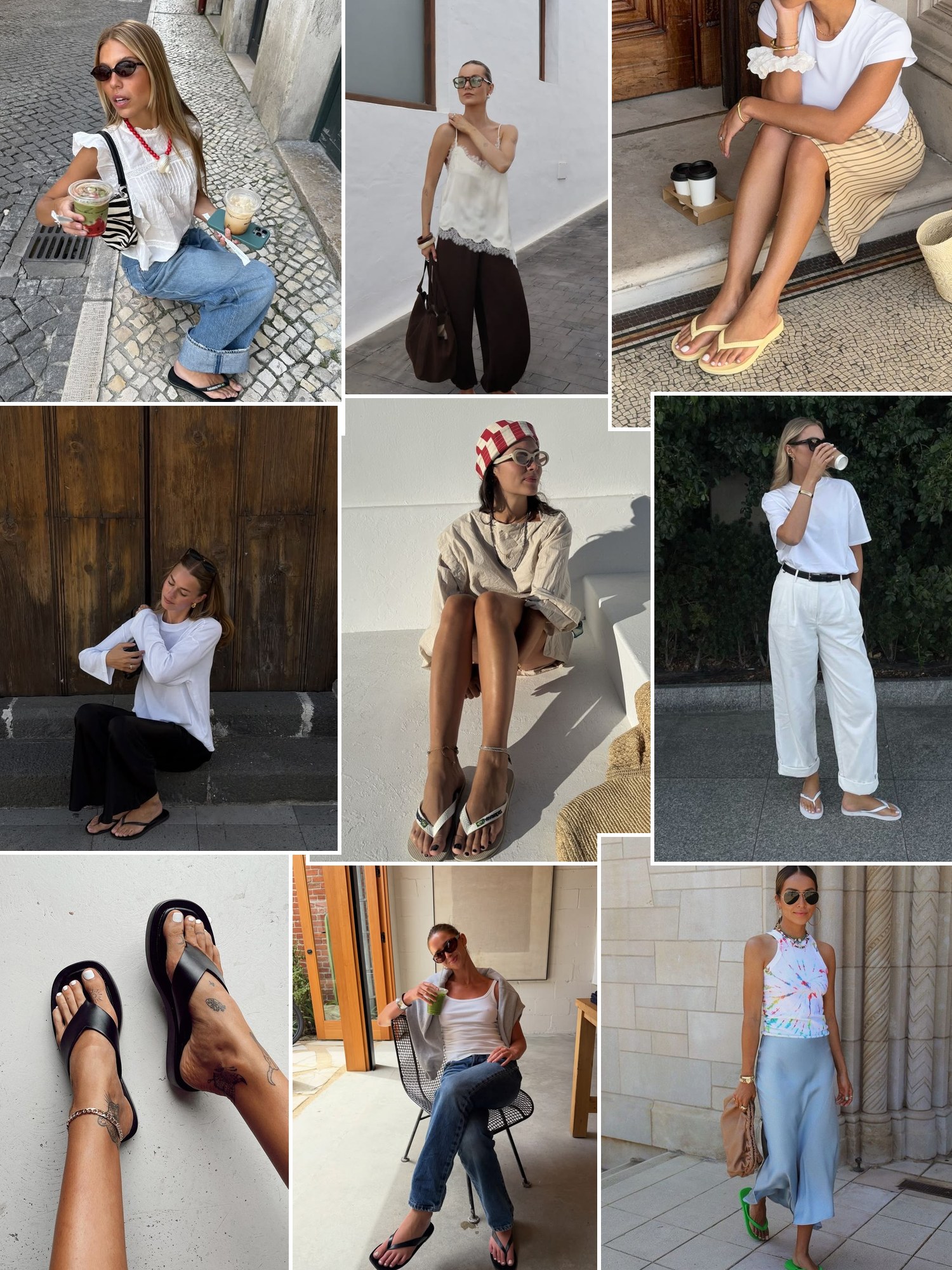
Sole height changes the mood of a thong sandal before the straps do. The Slim arrived in 2006 with a thinner, more delicate strap; Slim Flatform in Black and Beige keeps that narrow shape and adds a subtle lift. I would pair the black version with a full-length trouser, and the beige one with a long skirt when I want the sole to stay visually quiet.
High Platform in Golden makes a bigger statement with a slim strap layout and a high platform sole. Its product description specifies non-slip rubber that adapts to the shape of the foot. Top Square Fusion in Rust/Rose Gold and Canyon Clay/Peach shift the emphasis to a square toe, chunky lug sole, and contrasting outline. The second colorway feels softer; Rust and rose gold have more contrast.
Maxi Puffed in Green Olive and Golden uses polyester-padded straps above an injected sole. Its product description frames the combination as soft and lightweight. Over Puffed in Dark Brown takes a different route, with a layered double sole, a little added height, and padded edges. These are the pairs I would let show below cropped denim or a wide trouser hem.
I would compare the sole height to the hem before choosing, especially if the pants are already long. What I would skip: when I want a sandal to disappear under a straight, full-length trouser, I would pass on the high platform and padded shapes and choose Slim Flatform instead.

Slim Flatform Flip Flops in Black
Havaianas
$42

Slim Flatform Flip Flops in Beige
Havaianas
$42

High Platform Flip Flops in Golden
Havaianas
$64

Top Square Fusion Flip Flops in Rust/Rose Gold
Havaianas
$50

Top Square Fusion Flip Flops in Canyon Clay/Peach
Havaianas
$50

Maxi Puffed Flip Flops in Green Olive
Havaianas
$48

Maxi Puffed Flip Flops in Golden
Havaianas
$48

Over Puffed Flip Flops in Dark Brown
Havaianas
$60
Square toes, from slim to bold
Square toes can make a simple sandal read more tailored; the cleanest version is the one with the least fuss above it. The brand's runway debut came in Jean Paul Gaultier's show in 1999. I like the contrast between a rubber thong and a fashion runway, then the way these newer styles make the sole shape itself the detail.
Slim Square in Black keeps the straps spare, while Canyon Clay adds metallic straps and a non-slip sole. Slim Square Logo Pop Up in Rust and Brilliant Blue brings a pop-up logo to the squared sole. Rose Chiffom pairs a square shape with slim straps and a metallic logo; the Jelly in Blossom adds translucent PVC straps and a colorful print.
Top Square Fusion in Black has a double-tractor sole that adds a few centimeters. The Boho version in Dark Brown/Golden trades that minimal top for braided laminated straps and a contrasting outline around the lug sole. I would wear the black pair with a long tailored trouser, and let the braided version sit beside a simple skirt or a solid-color dress.
Before settling on one, look at the square front against the width of your toes and decide whether you like the corners to extend beyond them. If the strap is metallic or translucent, check that it is the detail you want to repeat with the rest of your outfit.

Slim Square Flip Flops in Black
Havaianas
$38

Slim Square Flip Flops in Canyon Clay
Havaianas
$38

Slim Square Logo Pop Up Flip Flops in Rust
Havaianas
$38

Slim Square Logo Pop Up Flip Flops in Brilliant Blue
Havaianas
$38

Slim Square Logo Metallic Flip Flops in Rose Chiffom
Havaianas
$44

Slim Square Jelly Flip Flops in Blossom
Havaianas
$44

Top Square Fusion Flip Flops in Black
Havaianas
$50

Top Square Fusion Boho Flip Flops in Dark Brown/Golden
Havaianas
$58
Prints, color, and FARM Rio
A print feels most deliberate when there is a thread between the straps and footbed, whether that is color, line, or motif. The brand's history says its distribution now reaches more than 100 countries; I like seeing that reach meet patterns with particular references.
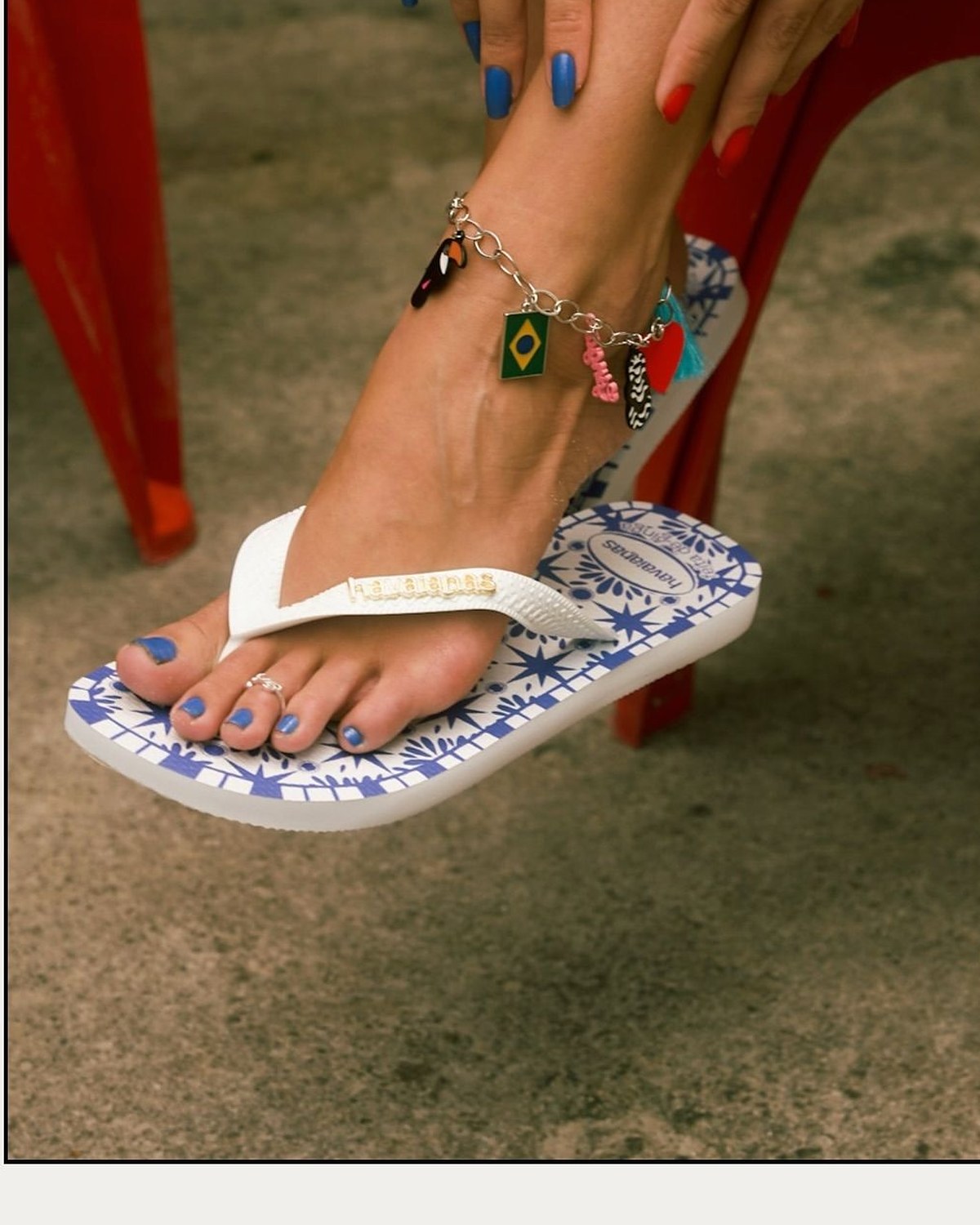
FARM Rio Nina in Navy Blue, Flor de Fita in Black, Porcelain Garden in White, and Sweet Forest in Smoke Green all carry FARM Rio print artwork. Porcelain Garden makes its blue-and-white illustrations the point, while Sweet Forest uses leafy details. I would put either with a plain trouser or an unpatterned dress and let the small repeat at the foot carry the color.
Nautical Slim in White/Navy/Red takes a striped, maritime direction with metallic straps. Slim Tropical in Caja Yellow has a tropical landscape on its non-slip sole, Summer Bliss Slim in Tropical Coral carries warm-weather print, and Top in Peach pairs neon-accented straps with a vivid landscape. There is a version of color here for someone who wants a stripe, a floral, or a full little scene.
I would check whether the print continues across both strap and footbed, then choose clothes that leave room for that pattern. What I would skip: if the outfit already has a strong print, I would leave the floral or landscape styles aside and pick Nautical Slim for a more graphic stripe.

FARM Rio Nina Flip Flops in Navy Blue
Havaianas
$42

FARM Rio Flor de Fita Flip Flops in Black
Havaianas
$42

FARM Rio Porcelain Garden Flip Flops in White
Havaianas
$42

FARM Rio Sweet Forest Flip Flops in Smoke Green
Havaianas
$42

Nautical Slim Flip Flops in White/Navy/Red
Havaianas
$38

Slim Tropical Flip Flops in Caja Yellow
Havaianas
$40

Summer Bliss Slim Flip Flops in Tropical Coral
Havaianas
$38

Top Summer Vibes Flip Flops in Peach
Havaianas
$34
How I would choose
I would choose by proportion before print. Slim in Black or White if I wanted the sandal to recede; Top Logo Metallic if a little color at the strap were enough; a flatform or padded style when the outfit asked for a chunkier base. The printed styles can have their turn when the clothes are plain.
Then I would look for the rice-grain footbed, the detail that links the rubber original to the newer silhouettes without needing a complicated design. In 1962, Alpargatas brought a zori-inspired sandal into rubber; the simplest pairs still make that material change visible. I would pick the color that suits the clothes, and leave the rice pattern to tell the rest of the story.