How to buy a table lamp online without seeing it lit, from new production to vintage and the named designers, with the measurements that actually matter.
How To Buy A Table Lamp Online
Buy the dimensions, not the photograph
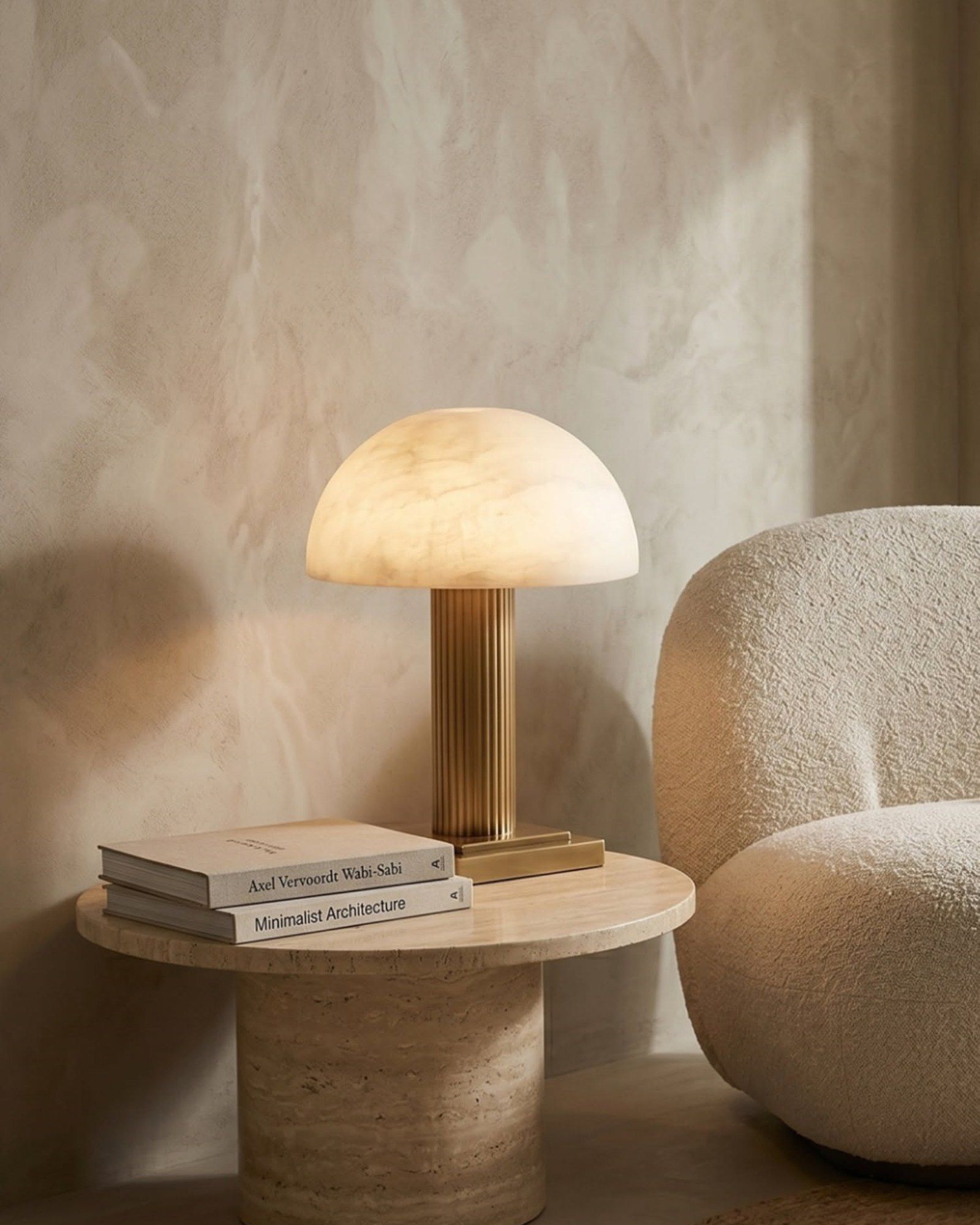
Buying a table lamp online means buying a shape you cannot switch on, so the specification sheet matters more than the styling shot. Three numbers decide whether it works: overall height, shade diameter and the height of the base alone. On a side table beside a sofa, you want the bottom of the shade at roughly seated eye level, which for most sofas puts the whole lamp somewhere between twenty two and twenty seven inches. On a console you can go taller. New production has one real advantage here, which is that the numbers are published and the piece arrives wired for your country. Portable and rechargeable models have quietly become the useful category, because they let you put light where there is no socket. Check the shade material too, since a linen shade throws a warm diffused pool and an opaline glass one throws a brighter, cooler circle. That single choice changes a room more than the base does.
New Production, $320 To $1,850


Vintage means you inherit the wiring
Vintage lamps are where the shapes are, and the price for that is due diligence. A nineteen-sixties Murano glass base is a better object than almost anything made now at the same money, but you are buying a fifty-year-old electrical component. Ask one question before anything else: has it been rewired to current standards, and for which plug. Sellers who have done the work say so plainly. Then ask about the socket, because European fittings and American ones are not interchangeable and a converter is a bodge rather than a fix. Look for chips on glass bases, dents on brass, and hairline cracks in ceramic near the cord entry, which is where the stress goes. Original shades are rare and often the wrong scale for a modern room, so budget for a replacement and treat the base as the thing you are actually buying. Pairs cost more than twice a single, and are worth it on a console.
Vintage Table Lamps, $414 To $2,480

Vintage Duck Table Lamp in Amber and Green Glass and Metal Bronze Dale Tiffany
1stDibs
$414

Vintage Purple Bubble Glass & Brass Table Lamp
1stDibs
$595

Poul Henningsen 'PH 2/1' Glass Table Lamp in Glossy Burgundy for Louis Poulsen
Louis Poulsen, Poul Henningsen
$825

Duffy Red Desk Lamp
Enrico Pellizzoni
$1,200

Ralph Lauren Faceted Crystal Table Lamps, Pair
Ralph Lauren
$1,450

Hollywood Regency Gold and White Table Lamps by Visual Comfort, a Pair
Visual Comfort
$1,695

Medium Medusa Mouthblown Glass Table Lamp by Carlo Nason for Established & Sons
Carlo Nason, Established & Sons
$2,075

Contemporary table lamp, Harmony of the Heavens Large, Viya by Vikram Goyal
Viya by Vikram Goyal
$2,480
What the named designers are actually charging for
Above three thousand dollars you are paying for attribution and for glass or metalwork that is no longer made this way. A signed Murano base, a Wiener Werkstatte fitting, a documented Mazzega piece: the premium is the paper trail plus a level of hand finishing that does not survive at scale. Two things to check before you commit. First, whether the price is for one lamp or the pair, because listings for pairs are routinely written ambiguously and it is the single most common misunderstanding at this level. Second, whether the shade is original, replaced or absent, since a missing original shade on a documented lamp is a real deduction. Ask for photographs of the base underside and of any stamp. And ask what has been restored, because a rewire is expected and welcome while a repainted base is a permanent change to the object. Insurance and shipping are worth pricing before you bid. A signed glass base needs crated freight rather than a courier box, and at this level the crating alone can add several hundred dollars to a piece bought from Europe.
The Named Designers, $3,312 To $13,800

1 of the 2 XL Amber Glass Table Lamps with Silk Lampshades by R. Houben
1stDibs
$3,311.99

Table Lamp Osso by Carlo Nason for Mazzega, Italy 1970s
AVMazzega, Carlo Nason
$3,666.85

1970s table lamps Cream fabric shade on brass metal by Giuliana Gramigna
Giuliana Gramigna
$3,854.05

Pair of Murano Table Lamps. A. Dona signed. Piattelli curated Maestro collection
Alberto Donà, Silvio Piattelli
$4,376.56

Daum French Art Deco Table Lamp, Glass & Wrought Iron, 1920s Design
Daum
$4,500

Secessionist J. Hoffmann&Wiener Werkstätte Silvered Brass Table Lamp Re-Edition
Josef Hoffmann, Wiener Werkstätte, Woka Lamps
$6,860.55

Gjlla Giani for Nucleo Sormani ‘Radar’ Table Lamps
Claudio Sormani
$13,800
Our honest take
We would spend the money on the base and almost nothing on the shade, because a good shade is easy to buy later and a good base is not. We would also stop worrying about matching the lamp to the room and start matching it to the table it sits on, since a base wider than about half the table looks wrong from every angle. On vintage, we would not buy from a listing that does not mention wiring. It is not a detail. And we would be honest that a very tall sculptural lamp is a lovely thing in a photograph and an obstruction in a small flat. If you take one thing away, measure your side table and your seated eye level first, then shop only within that height range and ignore everything outside it. If you want to keep browsing, I also put together Floor Lamp Or Table Lamp and Le Mini Macaron, the Pastel Lamp That Brought Gel Home.