How to buy art for a blank wall: editioned prints, original works at auction prices, and sculpture for a shelf when the wall is not the answer.
How To Buy Art For A Blank Wall
Editions are the honest place to start
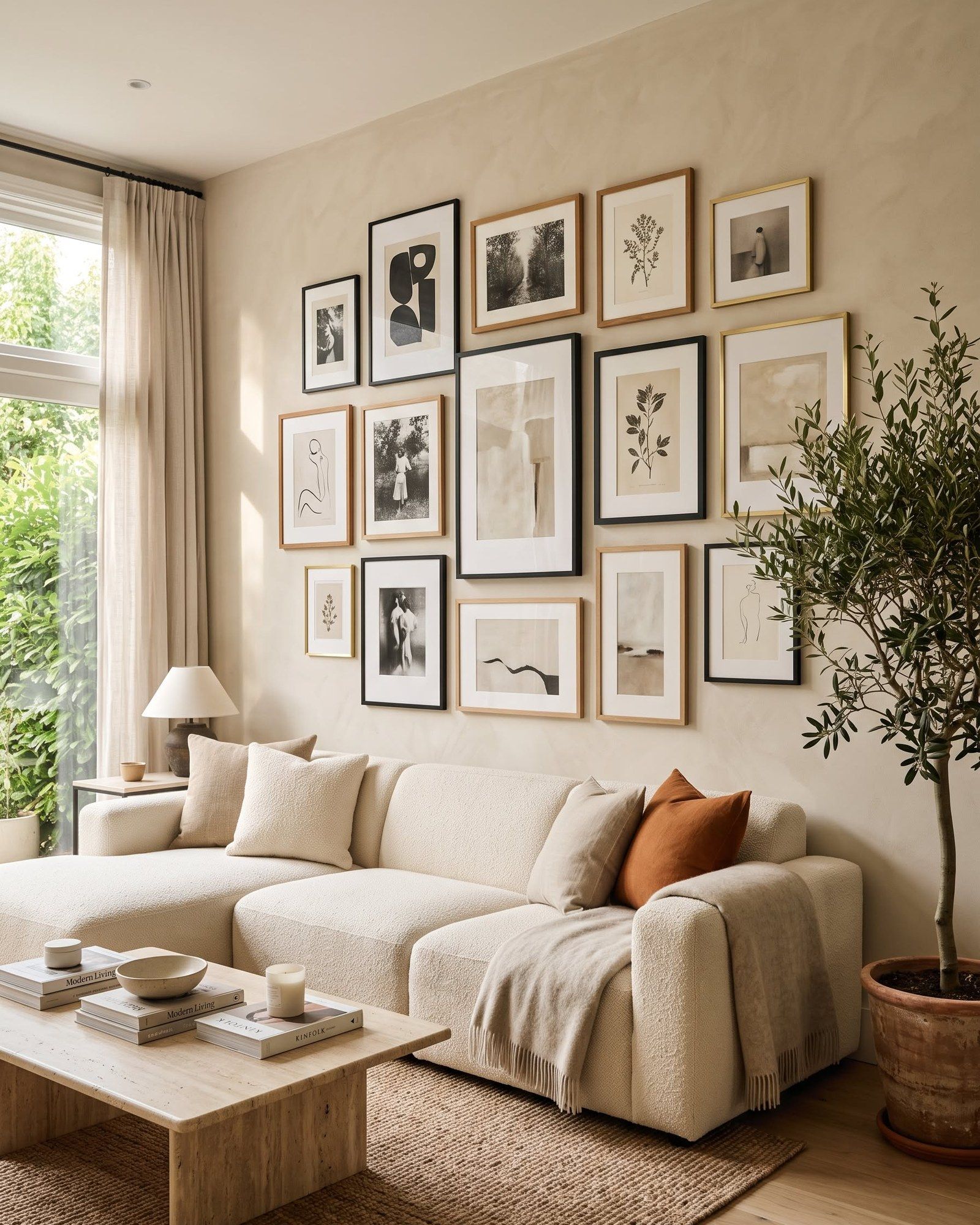
Buying art for a blank wall does not have to start with an original. Editioned photographic prints, framed and ready to hang, sit at around three hundred to four hundred dollars and solve the problem properly, which is more than most decorative alternatives manage. What you are buying is a numbered print from a fixed run, usually framed to a standard size, and the value of that is that it is a real image rather than a mass-produced motif. Two things to check. The edition size, since a run of twenty five is a different object from a run of five hundred, and the frame specification, because a print sold framed at this price is almost always in a standard moulding with acrylic glazing rather than glass. Acrylic is lighter and safer and slightly less crisp. Measure your wall and buy larger than instinct suggests: the most common mistake on a blank wall is a picture that is too small for it.
Editioned Prints, $299 To $399

Exclusive Capri Cafe Medium Framed Photography Print
Sonic Editions
$299

Exclusive Professional Sunbathers Medium Framed Photography Print
Sonic Editions
$299

Jerry Hall Framed Photography Print
Sonic Editions
$399

Halston, Cheryl Tiegs and Cornelia Guest Framed Photography Print
Sonic Editions
$399

Chanel After Fashion Show Photography Print
Sonic Editions
$399

James Dean And Liz Taylor Relaxing On Set Print
Sonic Editions
$399

Exclusive Rainbow Jello Heart Framed Print
Sonic Editions
$399

Bibelot Wearing Hand Up Framed Photography Print
Sonic Editions
$399
Originals cost less than people assume
An original painting on canvas can be had for five hundred to two thousand dollars, and that surprises people who have only priced contemporary galleries. The market for unattributed and lesser-known nineteenth and twentieth-century work is genuinely affordable, and a signed etching by a major name can sit in the same bracket as a decorative print. What you give up is certainty. Read the listing for the words attributed, after, in the manner of and school of, each of which means the attribution is an opinion rather than a fact. Ask about condition in the terms that matter for paintings: craquelure, relining, overpainting and whether the canvas has been cut down. Ask whether the frame is original, since period frames carry real value and are frequently sold separately. And ask for a photograph in raking light, which shows surface damage that a flat catalogue image hides completely. Auction and dealer listings also price framing and shipping separately, so add both before comparing. A stretched canvas travels well and cheaply, while anything already glazed needs specialist packing and can double the delivery cost.
Original Works, $509 To $1,721

Early 20th Century Danish Landscape Oil Painting with Footbridge
1stDibs
$508.63

Vintage Style Ski Photo, Framed Alpine Ski Photograph, Panoramic View, large.
1stDibs
$633.17

Strawberry Thief Loom Woven Tapestry - 2'2" x 1'8"
1stDibs
$700

Set of 12 Original Antique Botanical Prints- Orchids. Curtis. Dated 1837
1stDibs
$850
%2C%201968&link=https%3A%2F%2Fwww.1stdibs.com%2Ffurniture%2Fwall-decorations%2Fprints%2Fpablo-picasso-signed-mid-century-etching-print-pour-roby-lage-de-soleil-1968%2Fid-f_51276642%2F)
Pablo Picasso Signed Mid-Century Etching Print Pour Roby (L’Age de Soleil), 1968
Pablo Picasso
$995

Bees Wing Original Oil Painting on Board, Jockey Racing, 20th Century
1stDibs
$1,250

Original Decorative Painting by Alejandro Rangel Hidalgo – Birds and Botanicals
Alejandro Rangel Hidalgo
$1,500

Queer Contemporary Figurative Painting, Fruit and Flowers, Oil on Canvas, 2026
1stDibs
$1,720.56
When the wall is not the answer, buy a shelf piece
Sometimes a wall does not want a picture. A narrow hall, a wall broken up by doors, a chimney breast already carrying a mirror: in all of those, a sculpture or a strong object on a shelf does the job a painting cannot. The range here runs from a couple of hundred dollars for a small bronze or glass piece to several thousand for a documented one, and the criteria are different from wall art. Weight and footprint first, because a heavy bronze needs a shelf that can hold it and a base wide enough not to be knocked. Then the view from behind, since a shelf piece is seen from more angles than a framed print and many sculptures have one good side only. Ask for photographs from all sides. And place it at or slightly below eye level, because sculpture above eye level reads as trophy rather than art.
Sculpture For A Shelf, $225 To $5,000

Stylized Sitting Bunny Rabbit Sculpture / Paperweight by Baccarat
Baccarat
$225

Vintage Godzilla Action Figure, Plastic, Brown, China, 1980s Design
1stDibs
$457

Stefanina Picker of Pomegranate Sculpture
Patrizia Italiano
$600

Hermes - Natural Concrete - Design Sculpture Paolo Giordano Classic Cement Cast
Paolo Giordano
$816.17

Near Antique Hand Carved Wooden Don Quixote and Sancho Panza Sculpture Bookends
1stDibs
$1,035

Vintage Modernist Brass Owl Sculpture with Lucite Eyes by Ernesto Gonzalez Jerez
Ernesto Gonzales
$1,400

Akari Model 24N Light Sculpture by Isamu Noguchi
Akari, Isamu Noguchi, Ozeki & Co. Ltd. 1
$2,500
%20Roman%20Bull%2C%201858%20Bronze%20sculpture&link=https%3A%2F%2Fwww.1stdibs.com%2Ffurniture%2Fdecorative-objects%2Fsculptures%2Fanimal-sculptures%2Fauguste-clesinger-french-1814-1883-roman-bull-1858-bronze-sculpture%2Fid-f_46940182%2F)
Auguste Clésinger (French, 1814–1883) Roman Bull, 1858 Bronze sculpture
Jean-Baptiste Auguste Clesinger
$5,000
Our honest take
We would buy one large thing rather than three small ones. Gallery walls are harder than they look and a blank wall with a single well-scaled image on it is finished, whereas a blank wall with three small frames on it is a project you have started. We would also spend on framing before we spend on the next print, since a good frame makes a modest image look considered and a bad one undoes a good image entirely. On originals, we would take the attribution language literally and pay accordingly. And we would rather live with an unattributed painting we like than a documented one we do not. If you take one thing away, measure your wall, then buy something whose longest edge is at least half the width of the wall it is going on.