To dermaplane is to shave off peach fuzz and dead skin with a fine blade, a ritual far older than the tools. Here are the devices and razors, the soothing steps right after and the barrier creams and SPF that should follow.
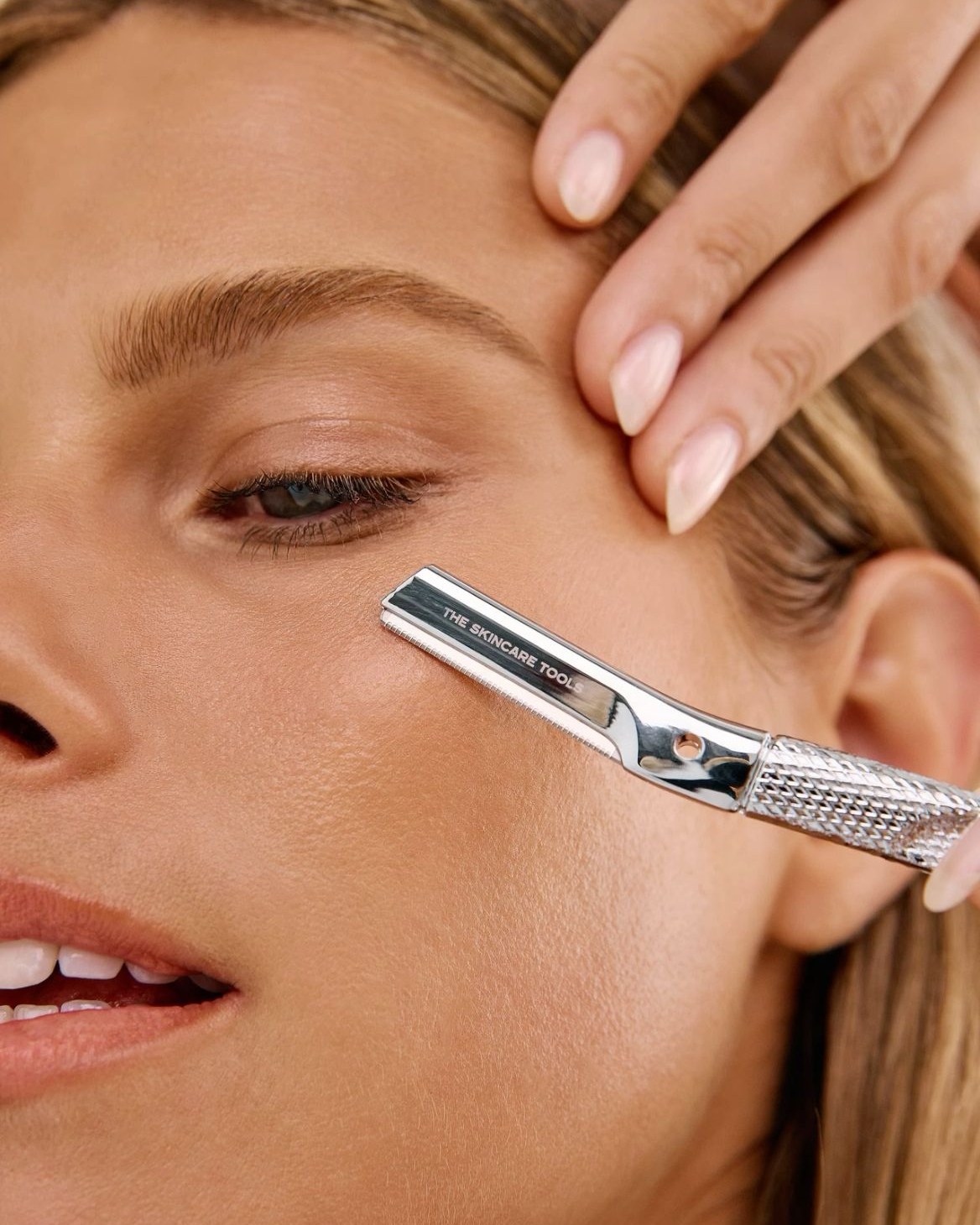
How to Dermaplane at Home Without Wrecking Your Skin
Shaving the face is not new. Japanese art from the 16th century shows women shaving their faces, and Japanese facial razors for removing vellus hair, the peach fuzz, along with dead skin are described as a centuries-old practice. Huda Kattan was one of the first big beauty bloggers, around 2016, to champion shaving the whole face for smoother makeup, and that helped bring it into the mainstream. Dara Levy got there from a different direction. She left a job as a broker at the Chicago Mercantile Exchange, opened a med spa built around dermaplaning, and after about 6,000 treatments in five years she invented a sonic device you could use at home, which became Dermaflash. The sonic device here comes with a prep cleanser, and it is the gentlest way I know to dermaplane at home. Sephora's metal facial razor is the simple manual version, which also shapes brows. The Dermapore+ is Dermaflash's ultrasonic tool for pores, and the ice roller from Walden, made by the Brooklyn brand Quiet Hours, calms skin afterward. If you have active acne, rosacea or very sensitive skin, see a dermatologist before you try it.



Right after
Freshly shaved skin is more exposed, so the second row is about calming it. Tower 28's SOS spray uses hypochlorous acid to minimize visible irritation and redness, and Amy Liu built the brand around her own eczema. The Ordinary's soothing serum supports sensitive, dehydrated skin, and Glow Recipe, started by two former L'Oréal Korea colleagues, makes its prickly pear mucin serum as a vegan take on snail mucin, aimed at redness. Summer Fridays launched in 2018 with its Jet Lag mask, and the Jet Lag mist is the easiest step here, a spritz that hydrates and leaves a glow. Avoid anything with acids, retinol or strong fragrance for at least a day after.
Four soothing steps


Barrier creams, SPF and the skip
The last row rebuilds the skin barrier. Dr. Jart+, whose name stands for Doctor Joins Art, launched first in dermatology clinics in Seoul, and its Ceramidin cream is built around ceramides. Aestura grew out of a Korean pharmaceutical company, and its Atobarrier cream began as a hospital and clinic product for dry, sensitive skin. Tower 28's SOS moisturizer is made for sensitive skin, and the Cicapair treatment color corrects redness with SPF 30. What I would skip is dermaplaning more than every three or four weeks. Skin needs time to renew, and doing it more often only irritates it. Always wear sunscreen the next day.
Barrier creams and an SPF

Ceramidin Skin Barrier Moisturizing Cream
Dr. Jart+
$52

AtoBarrier365 Cream Moisturizer with Ceramides & Niacinamide for Skin Moisture Barrier Repair
Aestura
$32

SOS Daily Skin Barrier Redness Recovery Moisturizer
Tower 28 Beauty
$24

Cicapair Soothing Color Correcting Treatment SPF 30 with Centella Asiatica Extracts
Dr. Jart+
$54
The routine, step by step
Cleanse, dry your face completely, then hold the blade at a 45-degree angle and use short, light strokes down the cheeks and jaw. Stay away from the eyelids, lips and any breakouts. Follow with the soothing mist, a barrier cream and, the next morning, SPF. Once a month is plenty for most people. Swap the blade every time, because a dull edge drags. If you are choosing a tool, I explain what to dermaplane with, from a metal razor to a sonic tool.