How to layer glassware on a table without buying a matching set, starting with the water glass and ending with a decanter.
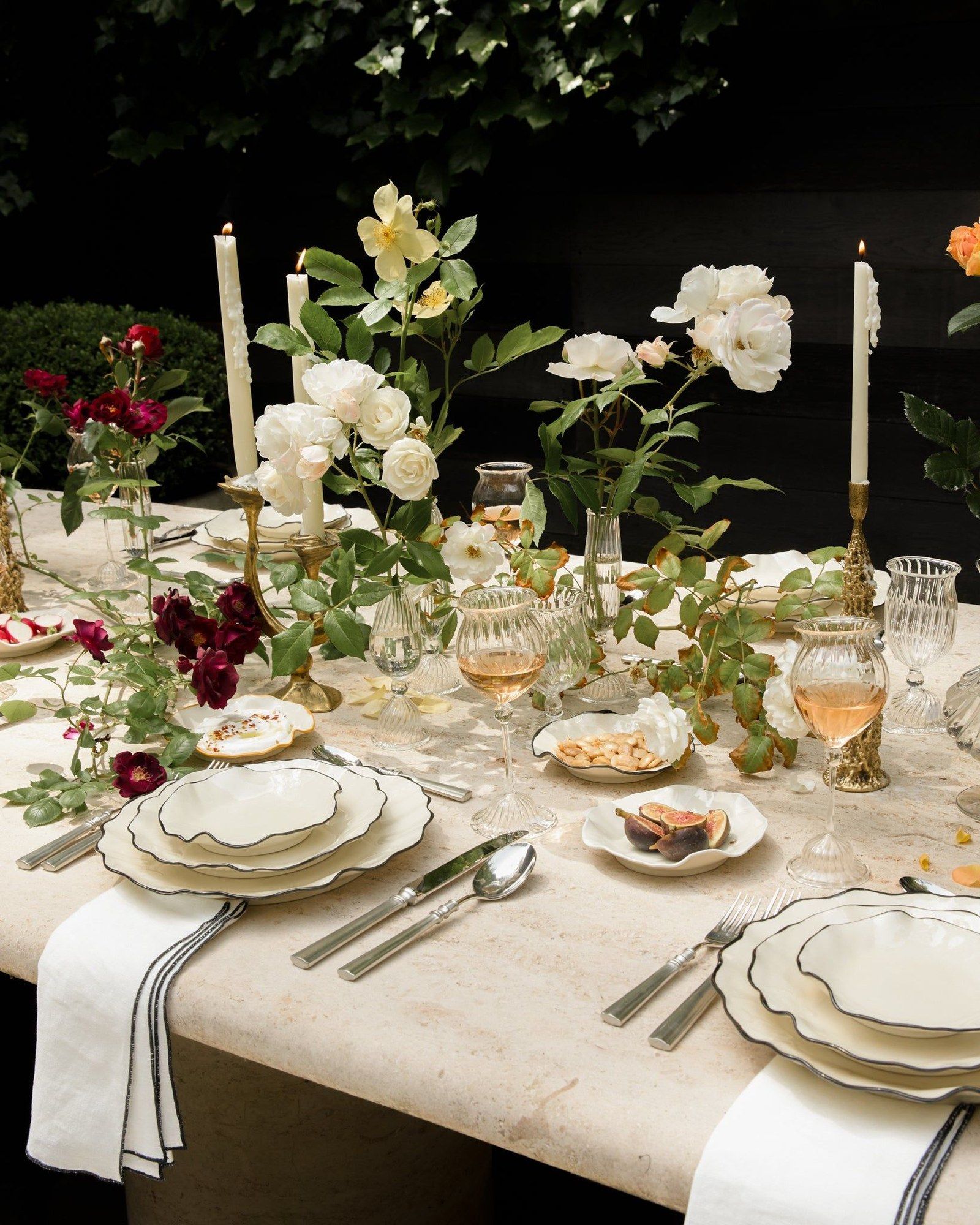
How To Layer Glassware On A Table
Buy the water glass first and buy it in quantity
Layering glassware means owning three heights rather than one matching set, and the height you should buy first is the water glass. It is the one that gets used at every meal, so it should be the sturdiest thing on the table and the piece you own the most of. Buy eight rather than six, because breakage is not a possibility but a schedule. Look for a thick-walled tumbler with a slightly weighted base, and check whether it is dishwasher safe before you commit, since hand-blown glass and gilded rims usually are not. Acrylic has a real place here, and I say that without embarrassment. It is the right answer outdoors and around a pool, and the good versions no longer look like picnic ware. Colour is the easiest way to make an unmatched table look deliberate rather than accidental, so pick one accent colour and let it repeat down the table.
The Water Glass, $48 To $340

Pienza Glass Tumbler
il Buco Vita
$48

Calla Water Glass
Gohar World
$88

Twist Glass Tumbler
Tiffany & Co.
$160

Set-of-Six Sancho Acrylic Water Glass
Mario Luca Giusti
$185

Manhattan Highball
Saint-Louis
$230

Hand-Painted Lily of The Valley Footed Glass Tumbler
Moda Domus
$250

Tommy #2 Water Glass
Saint-Louis
$305

Berries Water Glass
Tiffany & Co.
$340
Wine glasses are where you can mix
Wine, coupes and flutes are the layer where mixing reads as confidence rather than shortage. A table set with two different stems looks collected. A table set with eight identical hotel stems looks hired. The practical points are simple. A universal wine glass with a bowl of around five hundred millilitres handles red and white perfectly well, which means you do not need two sets. Coupes are for champagne if you care about how the table looks, flutes are for champagne if you care about how it tastes, and both positions are defensible. Check the stem thickness, because thin pulled stems are lovely and are the first thing to snap in a dishwasher basket. Crystal has more sparkle and less resilience than glass. If you have a young household or a small kitchen, buy the resilient one and spend the difference on the decanter. One more thing worth checking is the base diameter rather than the bowl, since a narrow-footed stem on an uneven table is the glass that goes over, and it takes the tablecloth with it.
Wine, Coupes And Flutes, $68 To $495

Marseille Wine Glass
Gohar World
$68

Lily of the Valley Fluted Champagne Glass
Moda Domus
$120

Moderne Bordeaux Wine Glass
Tiffany & Co.
$160

Set-of-Two Bow-Detailed Glass Champagne Flutes
Moda Domus
$215

100 points Crystal Champagne Coupe
Lalique
$240

Apollo Champagne Flute
Saint-Louis
$285

Set of two crystal glass champagne coupes
Lobmeyr
$385

Color-block Murano red wine glass
Dolce&Gabbana
$495
One decanter does more than another six glasses
A decanter or a pitcher is the piece that changes a table, and one is enough. It gives you height, it catches the light, and it means water arrives at the table looking like something rather than being poured from a tap. A plain glass carafe at under two hundred dollars does ninety percent of the job. Cut crystal at ten times that is a different sort of purchase and an honest one, since a Saint-Louis or Lalique piece is the thing that eventually gets handed on. Check the neck opening before you buy, because a narrow-necked decanter you cannot get a bottle brush into will cloud and stay clouded. Ask whether the stopper is ground to that specific piece, which good ones are, and understand that a lost stopper is not replaceable. For water, a wide-mouthed pitcher is more useful than a decanter and much easier to wash. Weight is the tell on a good pitcher. A piece that is heavy at the base and light at the lip pours cleanly, while an evenly heavy one dribbles down the outside no matter how carefully you tip it.
The Decanter Or Pitcher, $80 To $2,600

Pallina Acrylic Pitcher
Mario Luca Giusti
$80

Sister Rosetta Acrylic Pitcher
Mario Luca Giusti
$140

Pienza Glass Decanter
il Buco Vita
$165

Wave Glass Pitcher
Sophie Lou Jacobsen
$195

Glass carafe
Gohar World
$230

Twist 1586 Wine Decanter
Saint-Louis
$875

Manhattan Square Decanter
Saint-Louis
$1,110

Owl Decanter
Lalique
$2,600
Our honest take
We would never buy a full matching set again, and we would not pretend that is only an aesthetic position. Sets break unevenly, and the moment two are gone you are back to mixing anyway, only now you are mixing badly. Buy the water glass deep, mix the stems on purpose, add one decanter and stop. We would also resist the etched and heavily cut pieces unless you love them independently of the table, because they are the ones that date and the ones that are painful to hand wash. Acrylic outdoors is not a compromise, it is the correct answer. If you take one thing away, buy eight of one plain water glass you genuinely like, then let every other piece on the table be different on purpose. If you want to keep browsing, I also put together Jane Iredale Started With Five Shades Mixed at a Kitchen Table and Mixing Plate Patterns At Table.