For curtain rod measurement, take the width of the window frame and add roughly four to ten inches on each side. I also explain mounting the rod high, the adjustable rods that stretch to fit, and linen and printed panels.
How To Measure For Curtains: Rods, Widths And Lengths Explained
Measure the rod first
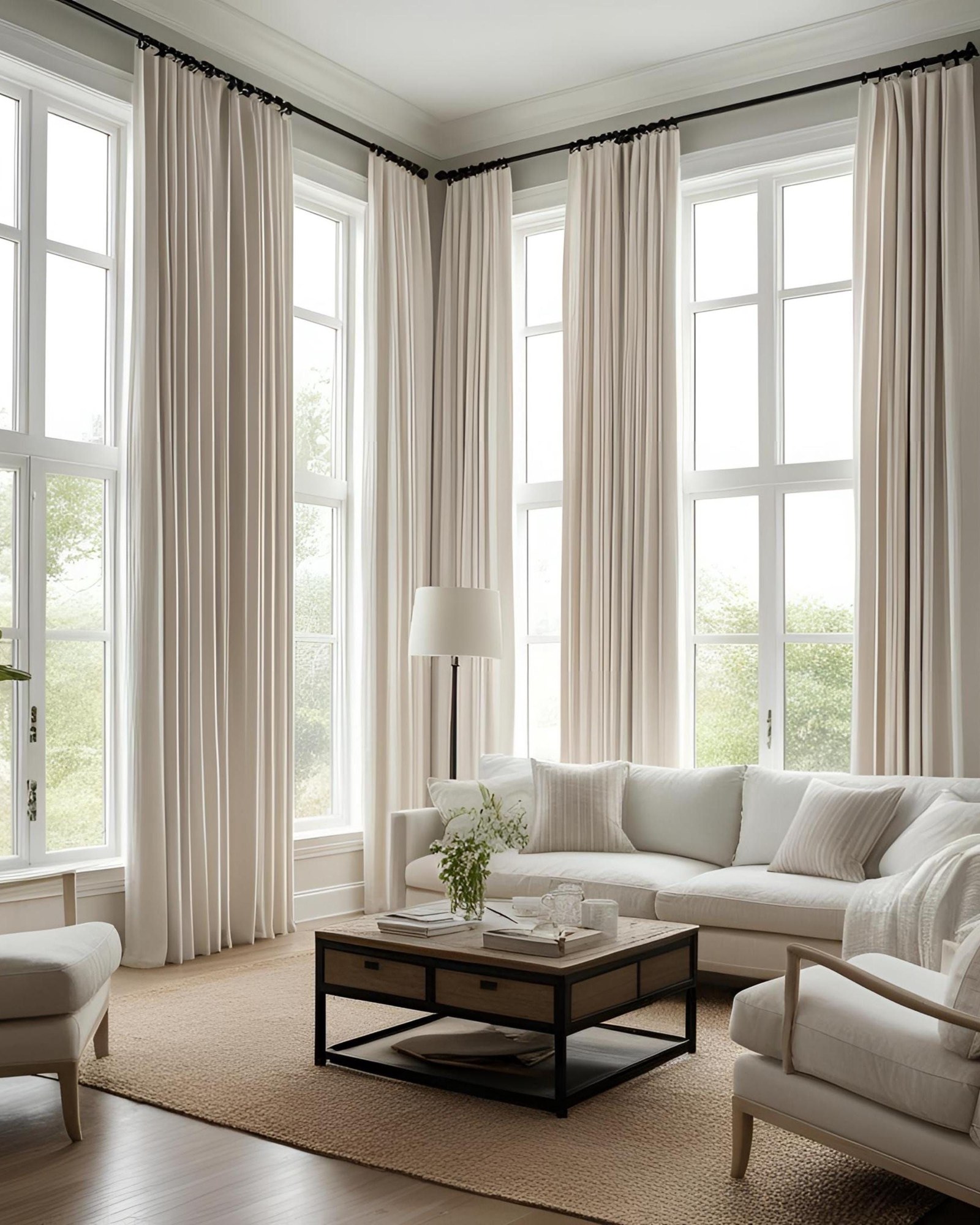
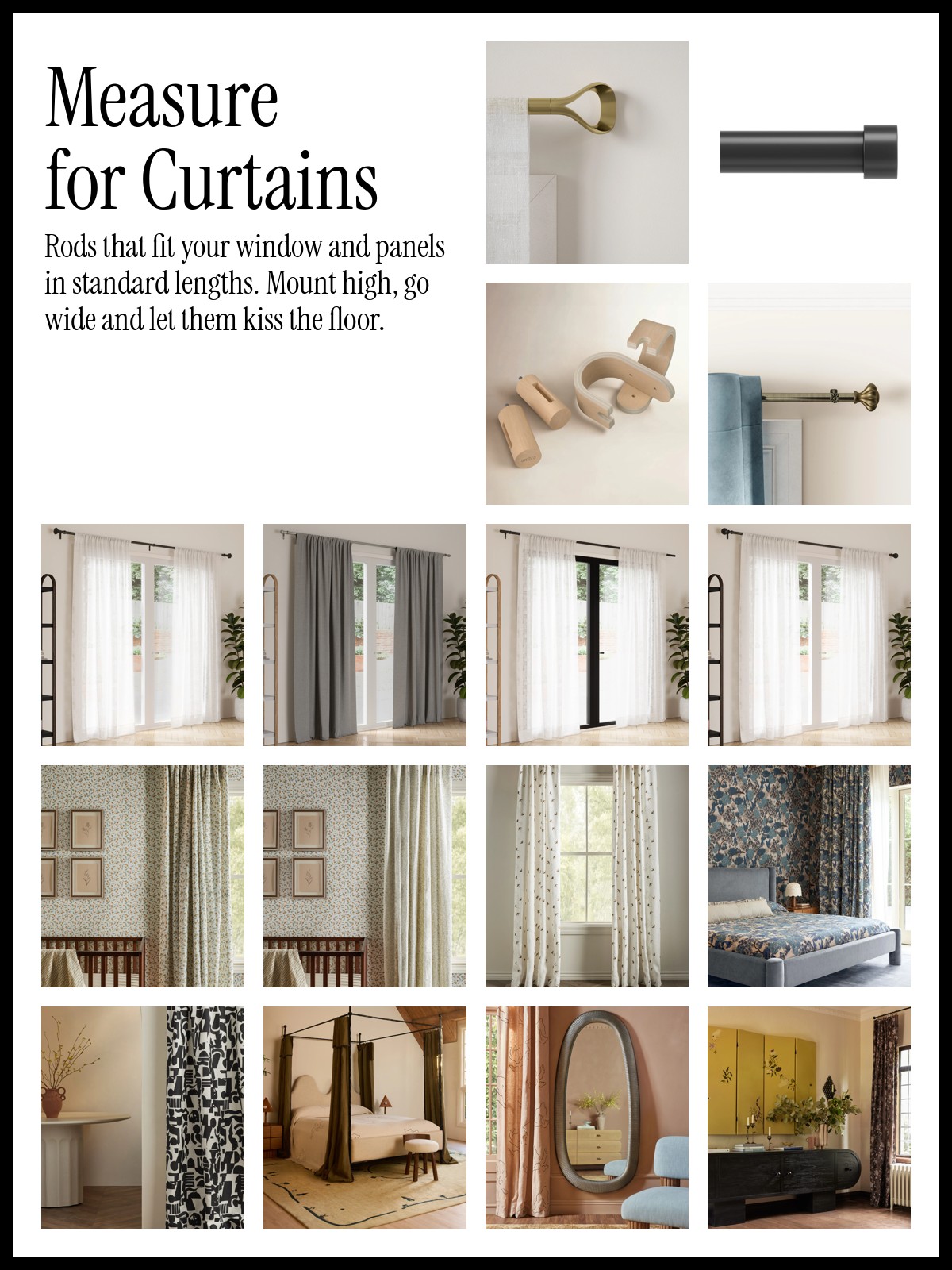
The first rule of how to measure for curtains is that you measure for the rod before you measure for the fabric. Measure the width of the window frame, then add roughly four to ten inches on each side so the panels can stack back off the glass when they are open. Mount the rod high, ideally close to the ceiling or at least halfway between the top of the frame and the ceiling, because height is what makes a window look bigger. Adjustable rods make this forgiving, and Umbra's Loop extends from 42 to 120 inches with invisible brackets and sculptural loop finials. The Cappa in matte black goes from 66 to 120 inches, the Bellwood set is natural wood, and the Darcey is antique brass with fluted urn finials.


Black curtain rods for a crisp frame
Once you know the span, choose a rod with a finish that suits the rest of the hardware in the room. Lulu and Georgia's Astine has a flared finial drawn from architectural forms, and the Cancino adds a pleated finial that reads polished without feeling ornate. The Porta is pared down for modern rooms and also comes in brass and nickel, while the Bowman is a steel rod with ball finials that suits traditional spaces too. All four are adjustable, so measure your required span and confirm it sits inside the range of the rod. For wide windows, look for a center support bracket so the rod does not sag under heavier panels.


Linen panels in standard lengths
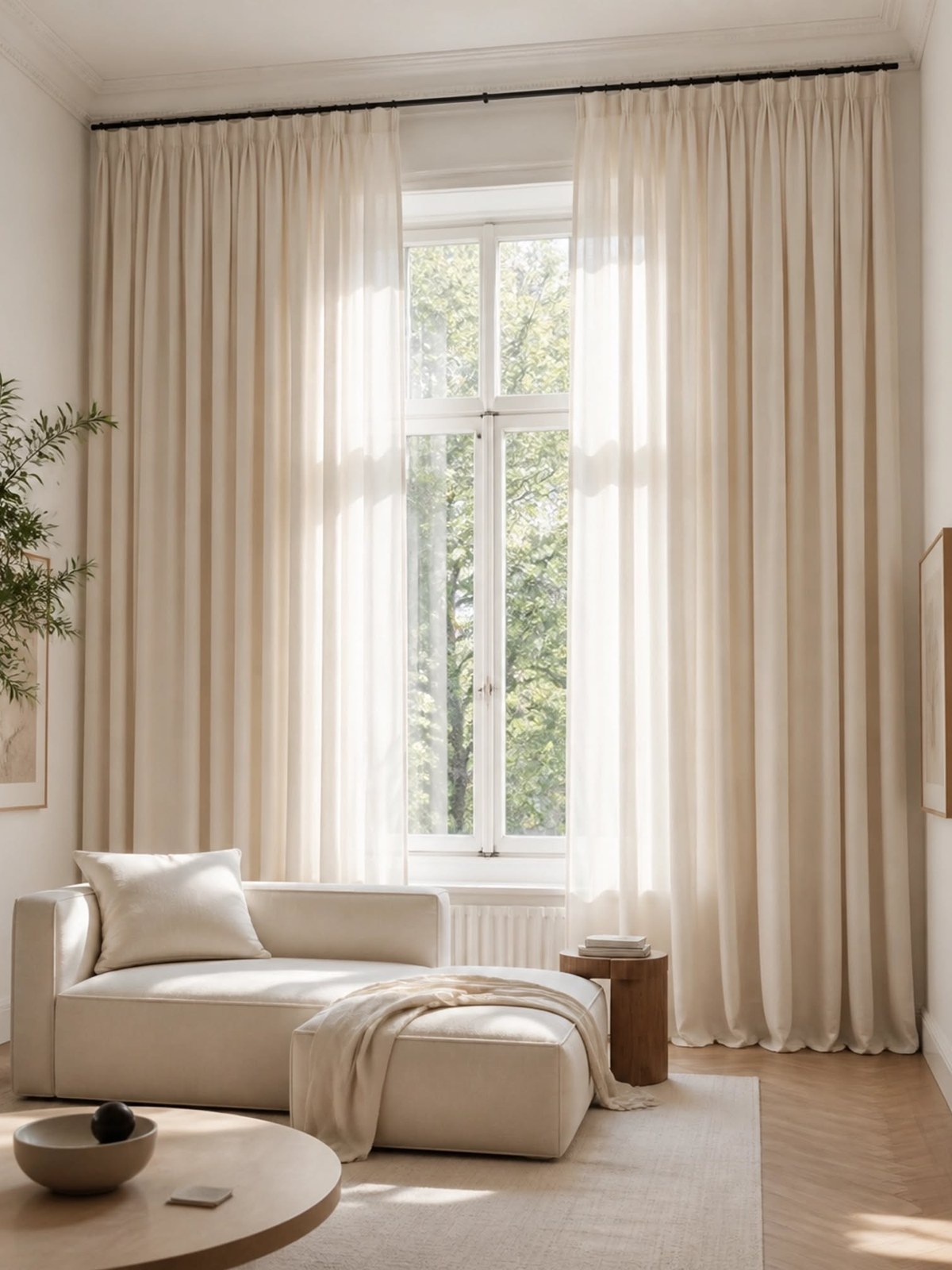
Length is measured from the rod down, and most ready-made panels come in 84, 96, 108 or 120 inches. Measure from where the rings or the top of the panel will sit to the floor, then decide how you want the hem to land. A float stops about half an inch above the floor and is the cleanest look, a kiss just grazes the floor, and a puddle adds several inches of extra fabric for a romantic, undone feel. Rylee + Cru's Kumquats, Dainty Leaves and Sparrow panels bring whimsical prints on linen that suit a nursery or a living room, and Sarah Sherman Samuel's Garden Walk is a detailed botanical on natural linen. If your measurement falls between two standard lengths, go longer and hem up rather than shorter.


Printed and embroidered curtain panels
Width is the measurement people get wrong most often. For a full look, the combined width of your panels should be about one and a half to two and a half times the length of the rod, so a 60 inch rod needs roughly 90 to 150 inches of fabric. Sarah Sherman Samuel's Organic Shapes and Vini jacquard carry soft geometry and hand-drawn botanicals, while the Narsi adds line-drawn embroidered florals. The Rajaa is a light filtering linen with a striped border, so you may want extra fullness to keep it from looking thin. Bold prints show their pattern best at the lower end of that fullness range, where the design is not lost in deep folds.


Our honest take
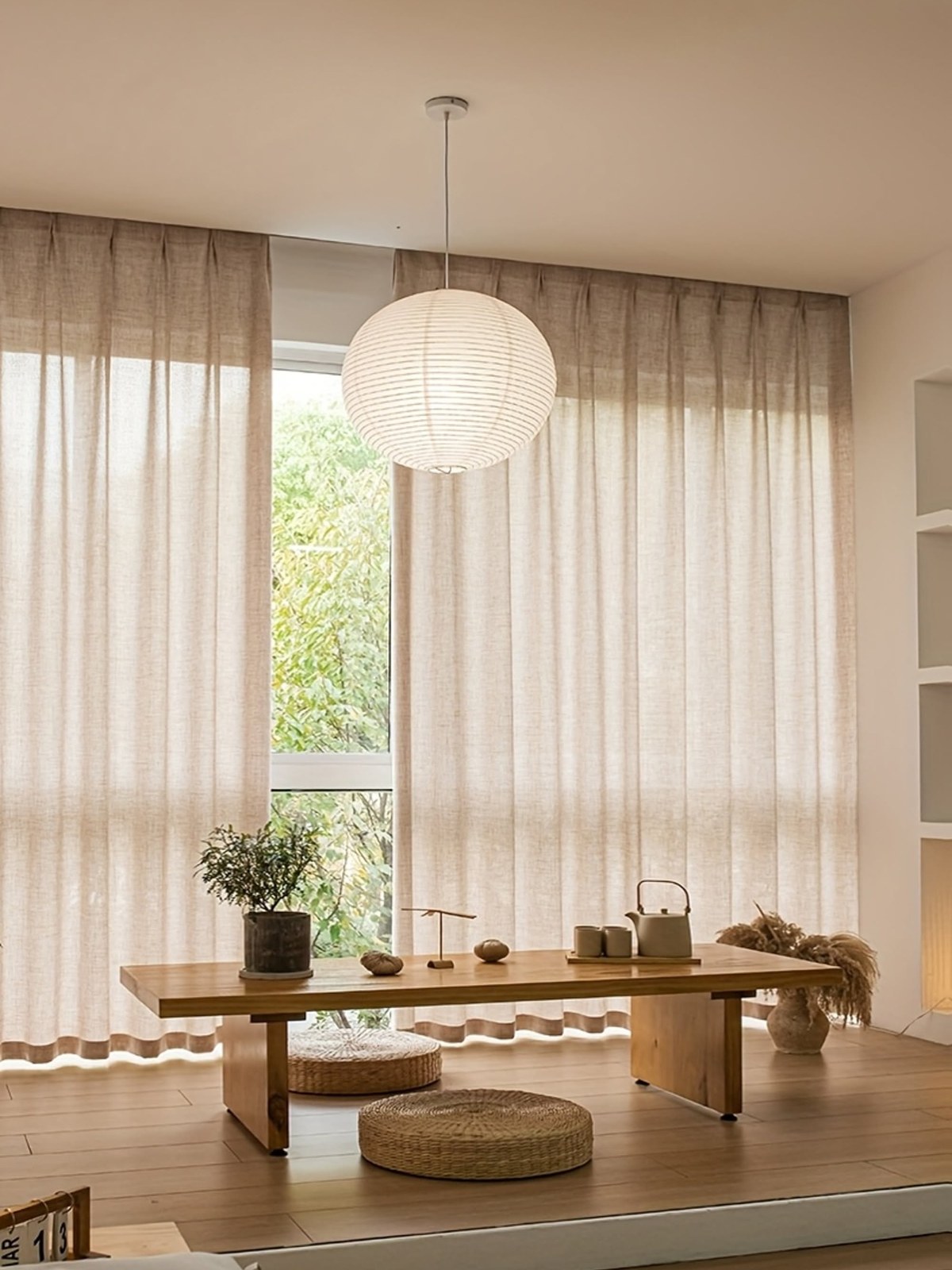
Measuring is easy once you stop thinking about the window and start thinking about the wall. Go high and wide with the rod, choose a length that lets the hem float, kiss or puddle on purpose, and buy enough panels for real fullness. If you take one thing away, measure twice at three points across the window, because older walls and ceilings are rarely level. Write the numbers down before you shop, including the rod span and the drop from rod to floor. A standard length plus a quick hem will look custom for a fraction of the effort. If you want to keep browsing, I also put together Necklace Lengths, Explained.