Japanese menswear labels are setting the agenda in 2026, according to GQ and Lyst, after decades of studying American clothes. I sort them into jackets, sweaters, shirts and trousers, from OrSlow to KAPITAL and FULLCOUNT.
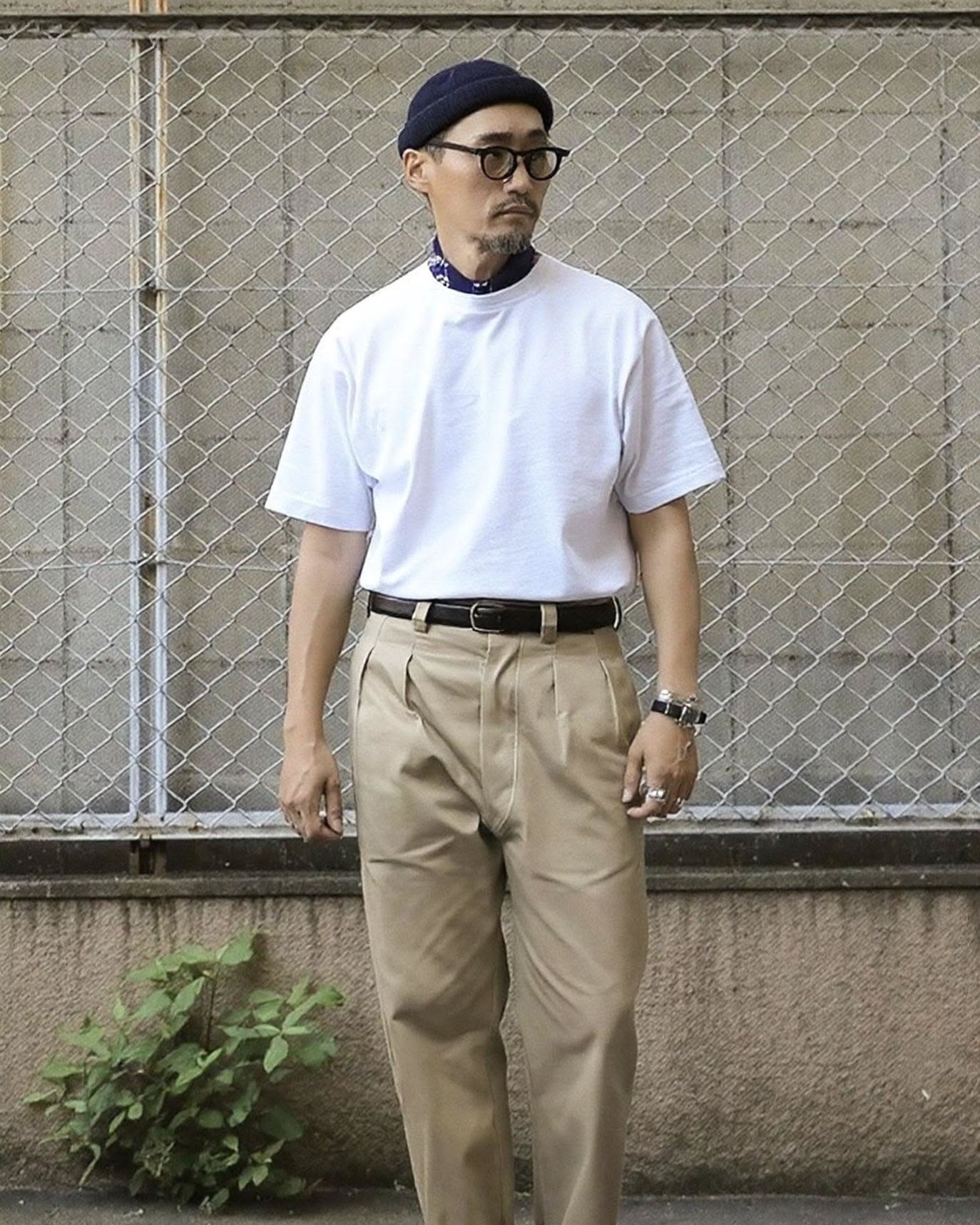
Japanese Menswear: The Labels Shaping Men's Style in 2026
Denim Jackets, Shells and a Parka
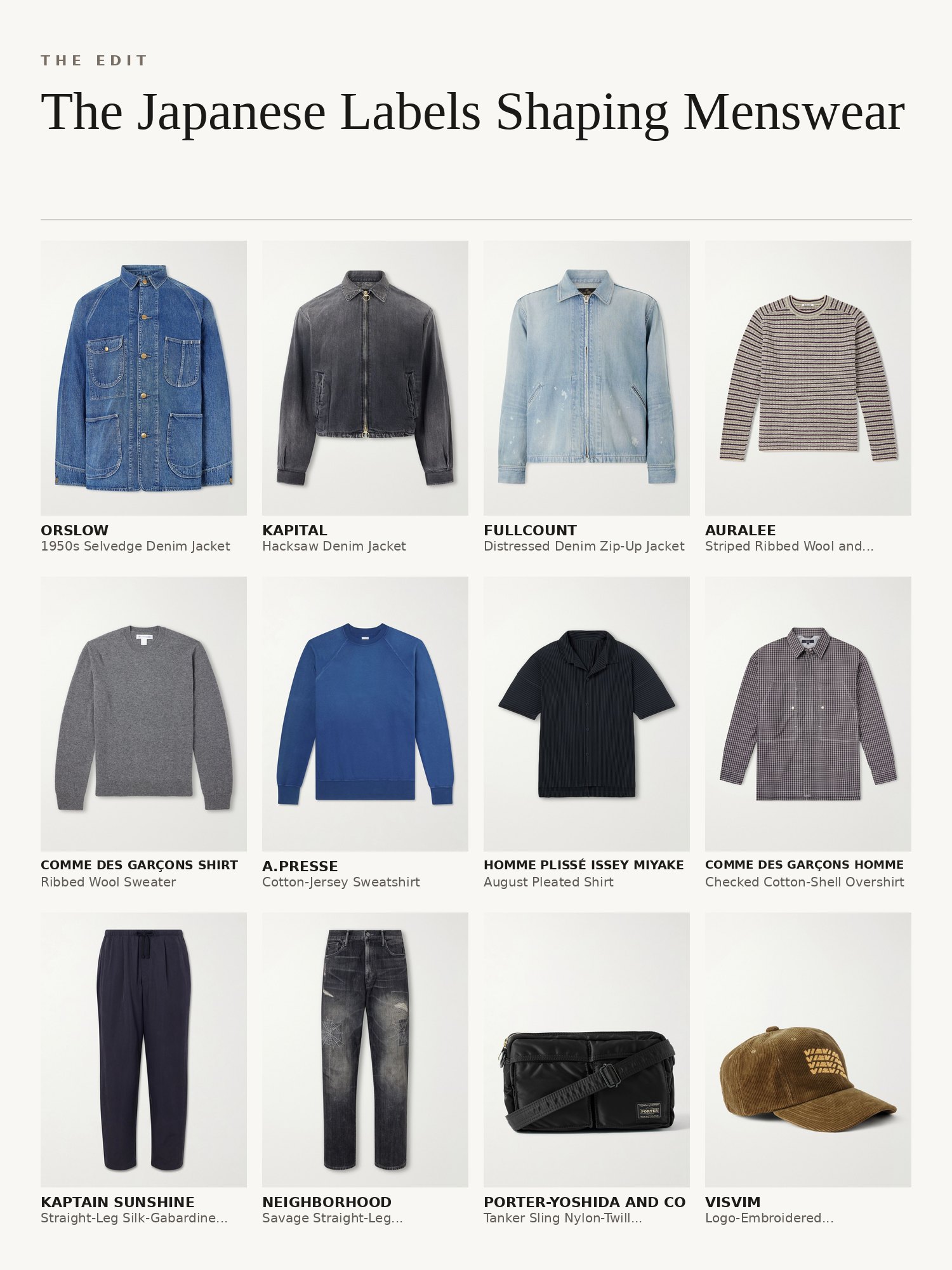
W. David Marx's Ametora: How Japan Saved American Style came out from Basic Books on 1 December 2015, and its argument is that Japan took American Traditional clothing, studied it obsessively and refined it. That book is the best way into this edit. Lyst's January 2026 piece on Japanese menswear brands starts with Auralee and calls that cohort the incubator for the next wave of menswear influence. GQ's May piece names A.Presse, Auralee, Kaptain Sunshine and Ssstein alongside heavy hitters like Kapital and OrSlow, and says they rebuild canonical American styles as something new. Even Ralph Lauren is looking east, since Vogue reports its first PoloFest runs in Shibuya on 23 to 25 October because of Japan's Polo collecting culture. I would start with a jacket. FULLCOUNT was founded in Osaka in 1993 by Mikiharu Tsujita and is known for denim woven from rare Zimbabwe cotton on vintage shuttle looms in Okayama. Its distressed denim zip-up is a good place to see that. The OrSlow 1950s selvedge jacket is the cleaner version, and Beams Plus's Digger is the one with some wear built in. What I would skip is the Kaptain Sunshine padded shell parka for a mild fall day, since it is a real cold-weather coat.

1950s Selvedge Denim Jacket
OrSlow
$450

Hacksaw Denim Jacket
KAPITAL
$825

Distressed Denim Zip-Up Jacket
FULLCOUNT
$810

Digger Distressed Denim Jacket
Beams Plus
$780

x Levi's Plush and Leather-Trimmed Denim Jacket
Sacai
$795

Multi-Zip Logo-Detailed Hooded Shell Jacket
Human Made
$485

Padded Shell Parka
Kaptain Sunshine
$750

Garment-Dyed Cotton-Moleskin Blouson Jacket
Auralee
$725
Sweaters, Sweatshirts and Sweatpants
This is where Japanese labels are at their most useful, because a sweatshirt is a very easy thing to get wrong. Auralee launched in Tokyo in 2015 under designer Ryota Iwai, who built the label around original fabric development, and it won the Fashion Prize of Tokyo in 2018. The striped ribbed wool and cashmere-blend sweater in purple is what that fabric-first approach looks like. A.PRESSE was founded in 2021 by Kazuma Shigematsu, who reworks specific vintage silhouettes without any loud logos, and the blue cotton-jersey sweatshirt is exactly that. Visvim's black Court sweatshirt comes from Hiroki Nakamura, a former Burton Snowboards designer who started the label in Tokyo in 2000. OrSlow's gray French terry is the plain one. Comme des Garçons Shirt's ribbed wool sweater in gray carries the line Rei Kawakubo started in 1988. A neat trick is to wear a sweatshirt under a plain denim jacket and keep the trousers a size roomy. What I would skip is the Kapital oversized intarsia sweater under a close-fitting coat, because the volume will fight the coat. Let it be the outer layer.

Striped Ribbed Wool and Cashmere-Blend Sweater
Auralee
$490

Ribbed Wool Sweater
COMME DES GARÇONS SHIRT
$280

Oversized Intarsia Wool Sweater
KAPITAL
$680

French Terry-Cotton Sweatshirt
OrSlow
$270

Cotton-Jersey Sweatshirt
A.PRESSE
$410

Court Cotton-Jersey Sweatshirt
visvim
$570

Straight-Leg Logo-Detailed Cotton-Twill Drawstring Sweatpants
Neighborhood
$205

Cotton-Fleece Hoodie
Remi Relief
$190
Shirts and T-Shirts, From Plain to Loud
A big grid, so let me pick a few. Homme Plissé is Issey Miyake's pleated line for men, launched in 2013, and its technique is to cut and sew the garment first and then pleat it between paper with heat. The August pleated shirt in green is the one. Comme des Garçons Shirt began in 1988 as shirting made in Paris, so the plain white poplin is the most faithful product in the group. Kapital's Glen embroidered check comes from Kojima, Okayama, a town known as Japan's Denim Capital. For tees, Graphpaper's set of two in black reflects a label whose idea is a redefinition of basics. WTAPS, started in 1996 by Tetsu Nishiyama, takes its name from a military term, a double tap, and the Sign-YD tee in white is a quiet version of that. Auralee's brown Luster jersey tee and Kaptain Sunshine's Suvin Supima white are the two I would buy first. Wear a tee under any open shirt on this list. What I would skip is the Remi Relief Make Art, Not War tee under a jacket, because the slogan is the whole outfit.

August Pleated Shirt
Homme Plissé Issey Miyake
$525

Checked Cotton-Shell Overshirt
COMME DES GARÇONS HOMME
$945

Cotton-Poplin Shirt
COMME DES GARÇONS SHIRT
$400

Glen Embroidered Checked Linen and Cotton-Blend Shirt
KAPITAL
$795

Cotton-Twill Shirt
A.PRESSE
$600

Camp-Collar Checked Cotton-Flannel Shirt
Human Made
$305

Checked Cotton and TENCEL™ Lyocell-Blend Flannel Shirt
OrSlow
$240

Cotton-Satin Shirt
ssstein
$390

Distressed Denim Shirt
FULLCOUNT
$345

Mesh Shirt
Homme Plissé Issey Miyake
$575

Striped Cotton-Poplin Shirt
COMME DES GARÇONS SHIRT
$495

Set of Three Sublig Jumbo III Cotton and Nylon-Blend Jersey T-Shirts
visvim
$740

Make Art, Not War Printed Cotton-Jersey T-Shirt
Remi Relief
$95

Seamless Cotton-Jersey T-Shirt
Auralee
$130

Suvin Supima Cotton-Jersey T-Shirt
Kaptain Sunshine
$150

Sign-YD Cotton-Jersey T-Shirt
WTAPS
$130

Logo-Appliquéd Cotton-Jersey T-Shirt
Neighborhood
$125

Striped Cotton-Jersey T-Shirt
Beams Plus
$95

Set of Two Cotton-Jersey T-Shirt
Graphpaper
$265

Chusen-Dyed Cotton-Jersey T-Shirt
Sacai
$420

Jumbo Border Striped Wool and Cotton-Blend T-Shirt
visvim
$540

Checked Layered Cotton T-Shirt
COMME DES GARÇONS HOMME
$445

Davidson County Printed Cotton-Jersey T-Shirt
Remi Relief
$125

Luster Cotton-Jersey T-Shirt
Auralee
$235
Trousers and Jeans, Straight to Wide
Japanese denim is the reason a lot of people started noticing. Okayama is where much of it comes from. FULLCOUNT's double-knee wide-leg jeans in blue, from the Osaka label that Standard & Strange calls an original member of the Osaka Five, are the work-clothes option. Graphpaper's black selvage straight-leg jean is the neat one, from a label that began as a Tokyo select shop in 2015. ssstein's gray straight-leg jean carries the clean, elongated lines Tokyo Weekender credits to its founder Kiichiro Asakawa. Visvim's Social Sculpture wide-leg in navy and Sacai's belted wide-leg are the bigger shapes. Away from denim, Kaptain Sunshine's navy silk-gabardine drawstring trousers sit between pajamas and tailoring, and OrSlow's beige cotton-twill is the easy one. Auralee's brown moleskin is the pair I would reach for most. A fitting test is that the hem should break once over a sneaker and stop. What I would skip is the Neighborhood Savage distressed embroidered jean for a smart dinner, since it is built for the opposite.

Straight-Leg Garment-Dyed Cotton-Moleskin Trousers
Auralee
$525

Straight-Leg Embroidered Pleated Trousers
Homme Plissé Issey Miyake
$675

Wide-Leg Cotton Trousers
COMME DES GARÇONS HOMME
$590

Straight-Leg Cotton-Twill Trousers
OrSlow
$270

Straight-Leg Silk-Gabardine Drawstring Trousers
Kaptain Sunshine
$830

Double-Knee Wide-Leg Jeans
FULLCOUNT
$360

Savage Straight-Leg Distressed Embroidered Jeans
Neighborhood
$705

Selvage Straight-Leg Jeans
Graphpaper
$385

Tapered Distressed Jeans
A.PRESSE
$790

Straight-Leg Jeans
ssstein
$465

Social Sculpture Wide-Leg Jeans
visvim
$795

Belted Wide-Leg Jeans
Sacai
$610
Bags, Belts and Things for Your Head
Small things are where a collector's eye shows. Porter-Yoshida and Co has its roots in Yoshida & Co., founded in Tokyo in 1935 by Kichizo Yoshida, and the PORTER brand dates to 1962. The company motto is Heart and Soul into Every Stitch, and the Tanker sling messenger in black nylon twill is the bag I would buy first. Homme Plissé's slim pleated belt bag is the lighter, odder choice. Kapital's Atlas woven buckle belt in brown suits the brand's love of patchwork and sashiko, and Neighborhood's 3cm calf hair belt in black is for someone who likes a bit of texture at the waist. Neighborhood began in Harajuku in 1994, born from Shinsuke Takizawa's interest in motorcycles. The Auralee and Eyevan D-frame sunglasses in black acetate are a collaboration, and a good one to wear with a plain sweatshirt. For caps, visvim's brown corduroy is the quiet one and OrSlow's gray Aran wool beanie covers the cold months. What I would skip is the Beams Plus madras patchwork baseball cap in winter, because it is a warm-weather print.

Slim Pleated Belt Bag
Homme Plissé Issey Miyake
$395

Tanker Sling Nylon-Twill Messenger Bag
Porter-Yoshida and Co
$455

Logo-Embroidered Cotton-Corduroy Cap
visvim
$470

Atlas Woven Buckle Belt
KAPITAL
$380

3cm Calf Hair Belt
Neighborhood
$215

x Eyevan D-Frame Acetate Sunglasses
Auralee
$575

Madras Patchwork Cotton Baseball Cap
Beams Plus
$105

Aran Wool Beanie
OrSlow
$190
Wear Japan Without Wearing a Costume
The thing I like about all of these labels is that none of them are trying to be American or Japanese. They are trying to get a shirt, a jean or a sweatshirt right, and that is the Ametora story that Marx told in 2015. If you are building this look from scratch, buy a denim jacket first, either the OrSlow selvedge or the FULLCOUNT zip-up. Add one good sweatshirt in a plain color, then a pair of jeans you can wear all week. Next, a plain white tee, and then a checked or poplin shirt to wear open over it. Bags and belts come last. Keep the loud piece to one item, for instance a pleated Homme Plissé shirt, and let the rest be quiet. Then wear it all a bit loose, which is how most of these clothes are cut. The point of Japanese menswear is attention to small things, and you will see it in the stitching, the washes and the pleating. Start with one piece and let the collection grow around it.
More Tees, Jackets and Shirts From Japan
Once you have the basics of Japanese menswear down, the next step is the details, and this shelf is full of them. Start with the tees: the Auralee striped wool-jersey tee, the visvim jumbo cotton-jersey tee and the KAPITAL printed tee are three different ways to wear one. For jackets, the KAPITAL Cactus striped kasuri jacket and the OrSlow corduroy-trimmed cotton-drill jacket are the ones I would try. The Auralee Finx poplin shirt is the quiet option, and the Homme Plissé Issey Miyake pleated shirt and trousers are for when you want some shape. OrSlow's wool sweater, the A.PRESSE vintage zip-up hoodie, the Neighborhood distressed jeans and the visvim cap round out the rest. What I would skip: the Neighborhood bead-embellished jeans with a loud tee, since one bold piece is enough. If you want to keep browsing, I also put together RUTI Pants.

Striped Wool-Jersey T-Shirt
Auralee
$335

Jumbo Cotton-Jersey T-Shirt
visvim
$330

Printed Cotton-Jersey T-Shirt
KAPITAL
$380

Cactus Striped Cotton-Kasuri Jacket
KAPITAL
$540

Corduroy-Trimmed Cotton-Drill Jacket
OrSlow
$370

Finx Cotton-Poplin Shirt
Auralee
$490

Edge Pleated Shirt
Homme Plissé Issey Miyake
$535

Wool Sweater
OrSlow
$310

Vintage Cotton-Jersey Zip-Up Hoodie
A.PRESSE
$600

Pleated Tapered-Leg Trousers
Homme Plissé Issey Miyake
$475

Savage Straight -Leg Bead-Embellished Distressed Jeans
Neighborhood
$700

Excelsior Wool and Silk-Blend Twill Cap
visvim
$490