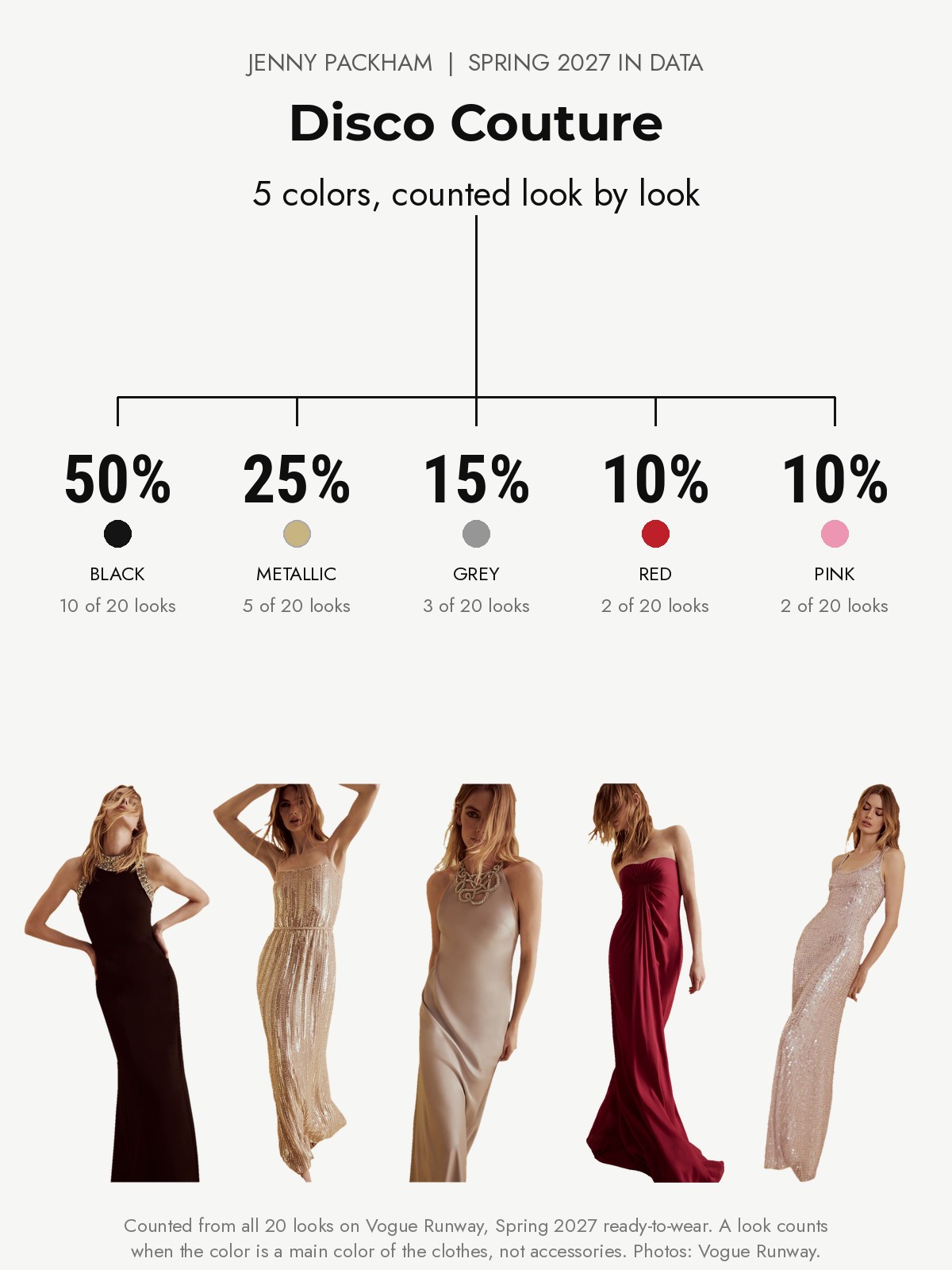
Jenny Packham followed her icy resort story with volume two of Disco Couture, designing gowns for the moment the room loosens up and the dancing starts. Sequins or beading covered about half the looks.
Jenny Packham Spring 2027: Disco Couture
After the entrance
Jenny Packham knows how to make an entrance. Days before this show, the Princess of Wales walked the black carpet at a London premiere in one of her purple chiffon gowns. For spring, though, Packham was thinking about what comes after, as the party relaxes and the woman wearing the gown begins dancing.
This was volume two of what she calls "Disco Couture." The resort story began with icy screen sirens like Michelle Pfeiffer, Sharon Stone, and Ellen Barkin. Spring took the story to the dance floor, with Lauren Hutton, Lynda Carter, Debbie Harry, and Farrah Fawcett as the muses.
I love that framing, and it tells you why sequins or beading covered about half the looks. Those gowns are where I begin.


Clothes built to move
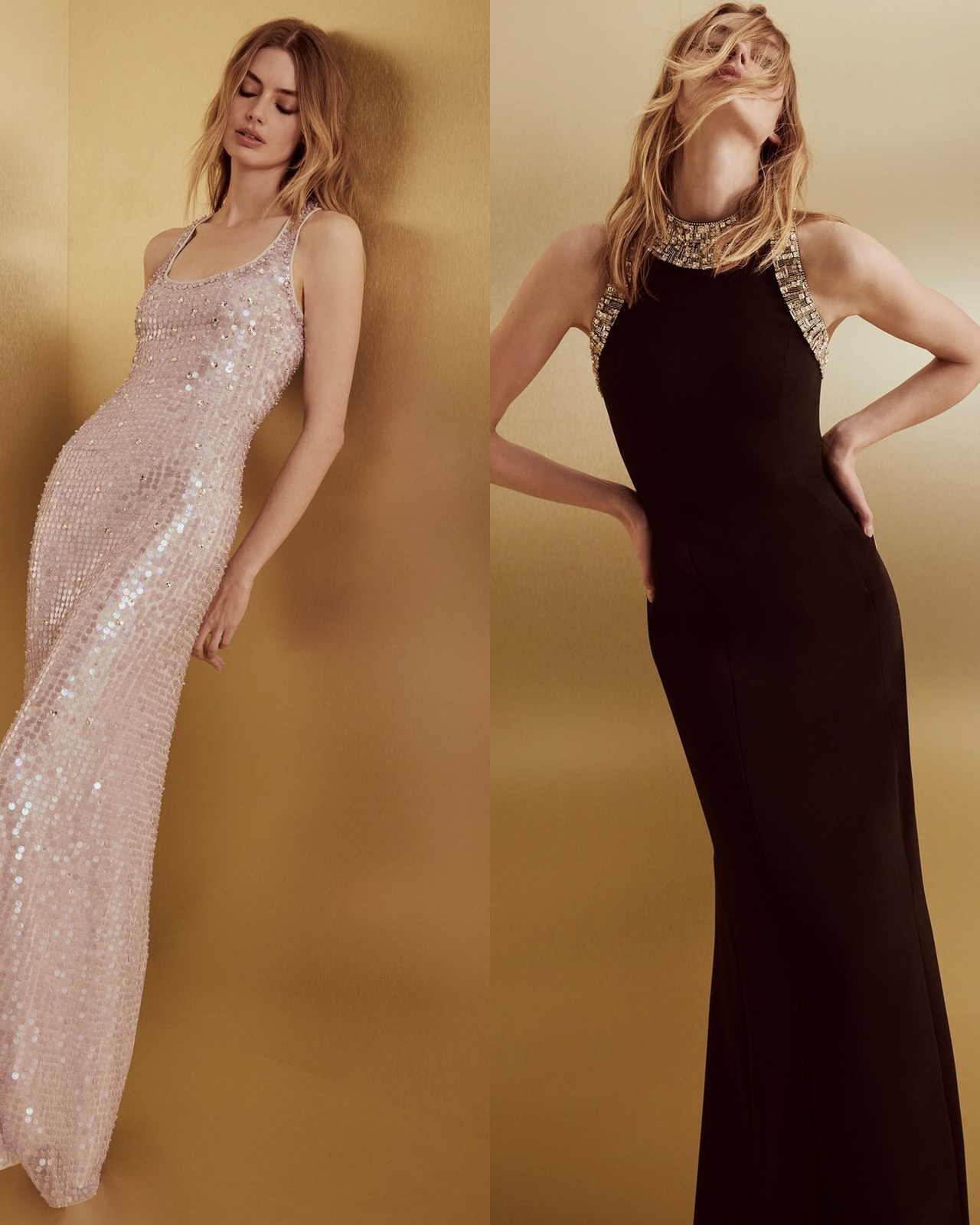
Everything here was designed for motion. Pleats opened and closed around the body and fringe shivered. One metallic pleated gown flared out like a fan, and a champagne slip poured down the body under a sheath of embellishment at the neckline.
Packham said the construction has to let fabric move beautifully while keeping a strong, assured silhouette. I think that is why her capes work so well: a cape gives a gown a second kind of movement, and a dancer knows what that is worth. Her goal, she told us, is for the dress to boost the woman inside it instead of swallowing her.
That is a good rule for gowns, and a hard one to follow.


Black, silver, and crystals
Color followed an imagined long night. It opened warm in peach-pink and champagne gold, went to midnight blue and black for the dark clubs, and ended in glacier silver for the strange light when morning catches up with you. Black was in about half the looks, and I think the night is best told in it.
Halter necks appeared in about one in five looks, and Swarovski crystals and intricate embellishment amped up everything. One black dress had sculptural gold cuffs inspired by Alexander Calder, and Packham said she likes the fluidity and imperfection in his work.
I find that the most interesting detail, because jewelry becomes part of the architecture of the dress. For me, a crystal gown should look like it has been danced in.


Who the dress is for
The part I keep replaying is Packham's point about her clients. Her longtime customers now share the room with a younger, internationally recognized group of women who bring their own energy and outlook on glamour. She said the attitude comes from the woman.
I agree with that completely. A handful of looks were strapless, and one was a jumpsuit, so there was room for every attitude on the floor. The collection ran to twenty looks, and not one of them felt like it was waiting to be photographed.
If I were going, I would choose a black gown with some shimmer and a cape, and I would dance in it.