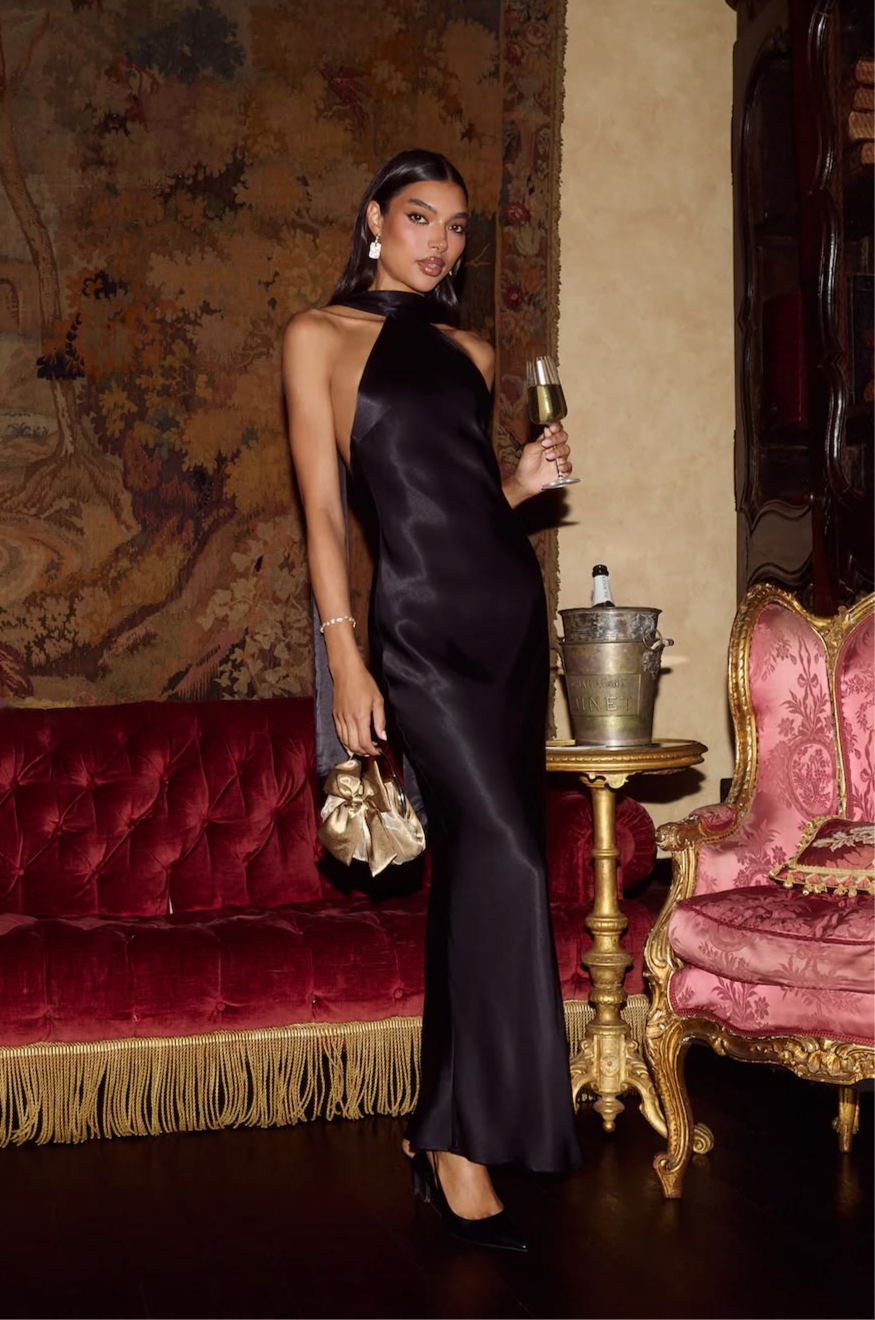
Kilt brings together tartan wraps, pleated minis, and the socks and loafers I would build around them for fall. I like the old garment’s practical history as much as the crisp hardware and proportions in this edit.
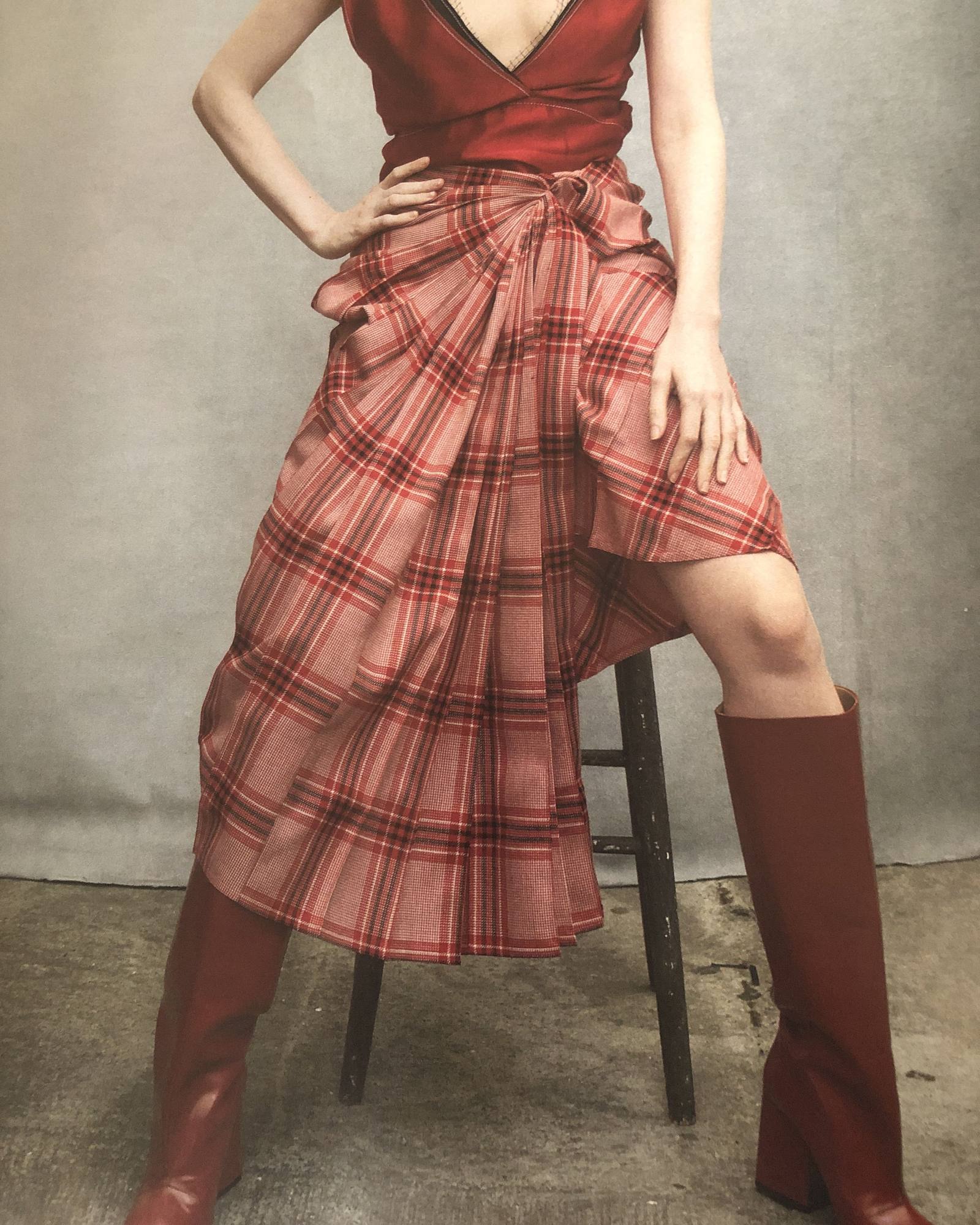
Kilt: Scotland’s Great Wrap Meets the Fall Plaid Rush
The wrap that kept its shape
In Edinburgh in 1822, novelist Sir Walter Scott arranged a tartan pageant for King George IV, whose visit helped cast the pattern as regal dress. In a September 2026 WWD shop story, Stacia Datskovska spotted a different kind of procession: “Last but not least, we witnessed a full-scale plaid invasion on the fall 2026 runways of fashion houses such as Chloé, Dries Van Noten, and, unsurprisingly, Burberry.” That sentence is a nice bridge from ceremonial tartan to a skirt I might actually wear on a Tuesday.
The Kilt in this edit borrows from the féileadh-mór, a full-length Highland wrap whose upper length could fall over a shoulder or head. It began as workaday cloth, used for cover from weather and, when needed, as a blanket. The later skirt-size form grew from the lower half of the wrap, while the little version with stitched box pleats appeared around 1792. That practical origin is what gives a tartan mini its best tension: a strong pattern with an unfussy shape.
The edit starts with pieces that show how many ways the wrap can read. Anna Sui’s Capri Plaid is pastel with floral lace trim, while Celtic & Co.’s Midi Celt pairs heathered tartan with leather straps. The Teal Ochre Celt adds buckle hardware and a small pin, then Burberry’s Odessa Check sharpens its sandy check with crisp pleats and twin B buckles.
I’d keep the rest quiet around Vivienne Westwood’s virgin-wool tartan, and use Barbour’s Carville mini for a darker, finer-scale check. Free People’s London Calling sits lower on the hip and closes with snaps. My buying check is simple: compare the hem to tights or boots you already reach for, then make sure an overlap or buckle doesn’t get lost beneath a long coat. The point is a skirt, not a costume.
Plaid kilt-style skirts

Capri Plaid Kilt Skirt
Anna Sui
$530

Midi Celt Kilt Plaid Skirt
Celtic & Co.
$265

British Wool Celt Kilt
Celtic & Co.
$171.5

Odessa Check Wool Mouliné Kilt
Burberry
$1,695

Zoe Pleated Check Wool Mini Kilt
Burberry
$1,250

Carville Tartan Mini Skirt
Barbour
$160

Tartan Virgin Wool Kilt
Vivienne Westwood
$606

London Calling Mini Kilt
Free People
$128
Wrap skirts with hardware
Hardware is most useful when it helps a wrap stay visually clean. The later small-form skirt developed from the lower half of the great Highland wrap, essentially one width of cloth worn below the belt. I like that as a styling clue: choose the waist treatment first, and let the plaid be the decoration.
Weekend Max Mara’s Prisma is charcoal with frayed pleats and paired side buckles. Simone Rocha’s Tailored Clip has dark Glen plaid, box pleats, and a little lanyard clasp. PINKO’s Griselina uses red-and-black tweed and two roller buckles; its black-and-red mini takes the same language shorter. Woolrich adds a raw edge to its charcoal checked midi, while Barbour’s Marena and Gillian move between olive and red tartans with twin gold-tone fasteners. Burberry’s brown-check midi finishes the lineup with hand-ironed pleats and adjustable B buckles.
For a clean line, I would tuck in a thin sweater and leave a coat open so the side closure can be seen. Check the overlap at the hip, then see whether the straps adjust enough to sit where you want them; sit as well as stand if you can. What I would skip: a buckle that lands directly under a coat button or bag strap. That extra crossing makes a busy print feel busier. A simple knit, opaque tights, and one metal tone give the hardware room.

Prisma Plaid Pleated Midi Skirt
Weekend Max Mara
$785

Tailored Clip Kilt Glen Plaid Stretch Wool Midi Skirt
Simone Rocha
$1,150

Griselina Calf-Length Wrap Skirt With Check Pattern
PINKO
$239

Wrap Mini Skirt With Check Pattern
PINKO
$167

Checked Frayed-Edge Midi Skirt
Woolrich
$325

Marena Pleated Tartan Midi Skirt
Barbour
$435

Gillian Tartan Pleated Mini Skirt
Barbour
$259

Check Wool Midi Kilt
Burberry
$2,095
Pleated minis with a point of view
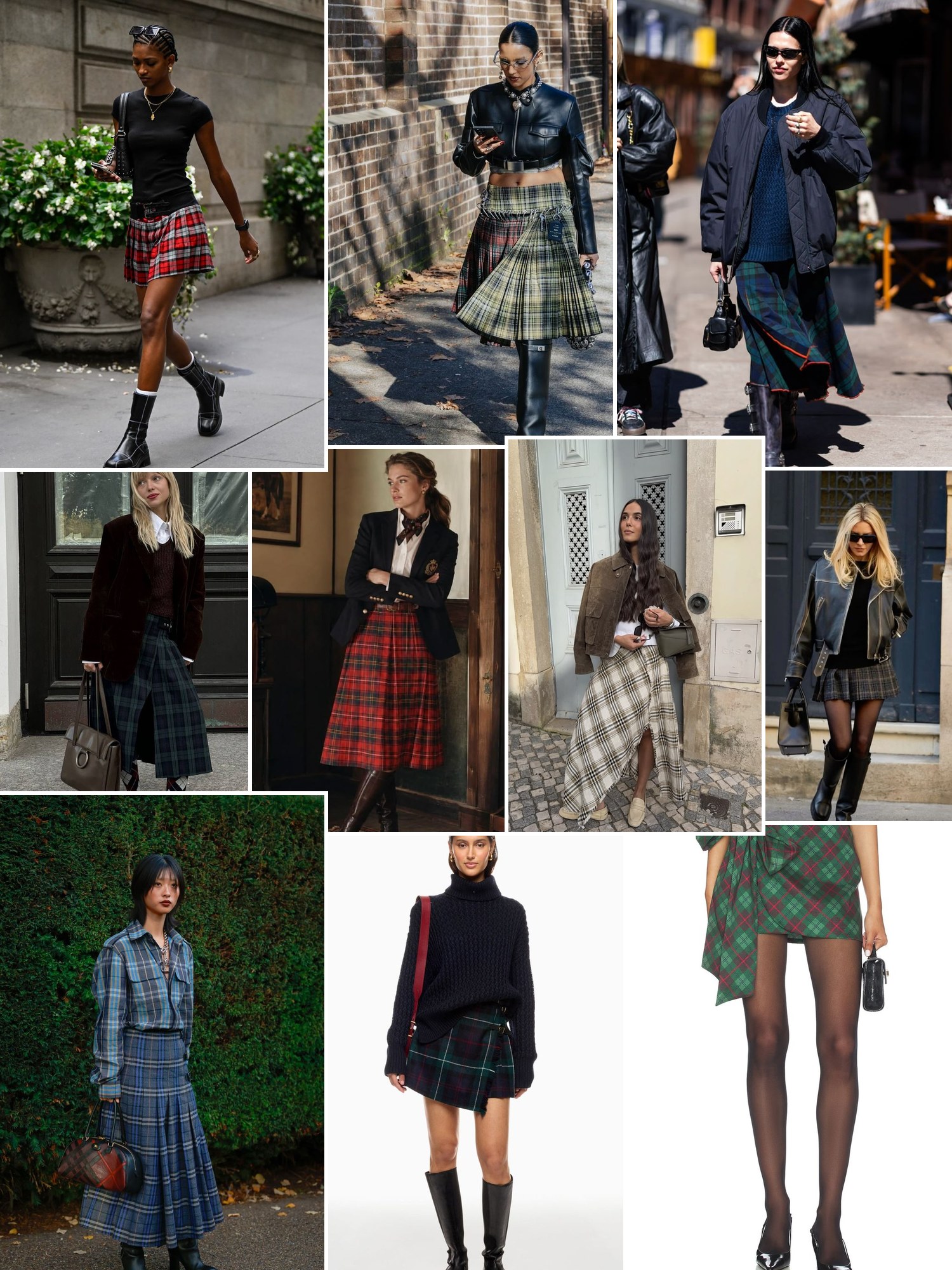
Plaid scale is the first decision: smaller checks look composed, while wide repeats feel more casual against a close pleat. The construction has a political past too. Highland dress was banned in 1746; during the following 36 years, military wearers developed a more tailored cut while civilians were forbidden from wearing it. That history makes a pretty mini feel less like a novelty and more like a silhouette with an odd, complicated past.
ASTR the Label’s Abigayle has a taupe check and button-flap pockets. All in Favor’s red flannel and Williams Athletic Club’s cool-gray Nikki are closer to classic pleated minis; Vince Camuto’s black-and-beige Glen Plaid brings a subtle flare. Miss Circle’s Oaklyn and Edikted’s Lockette are skorts with concealed shorts, the second in a mixed plaid, while English Factory’s green-blue check makes the palette louder. Good American’s charcoal version softens the silhouette with an adjustable drawcord.
I’d style the sharper checks with a ribbed crewneck and longer wool coat; with bright green plaid, I would keep everything else solid. Check whether the waistband lies flat under a tucked layer and whether the hidden shorts sit smoothly at the leg opening. What I would skip: a tiny top with a tiny hem when the plan is to wear the outfit through a long day. One roomy layer gives the pleats somewhere to land.

Abigayle Plaid Pleated Miniskirt
ASTR the Label
$89

Pleated Plaid Flannel Miniskirt
All in Favor
$55

Nikki Plaid Pleated Miniskirt
Williams Athletic Club
$195

Glen Plaid Pleated Stretch Miniskirt
Vince Camuto
$71.4

Oaklyn Plaid Pleated Mini Skort
Miss Circle
$99

Lockette Plaid Pleated Mini Skort
Edikted
$84

Pleated Plaid Mini Skort
English Factory
$95

The Pleated Plaid Miniskirt
Good American
$138
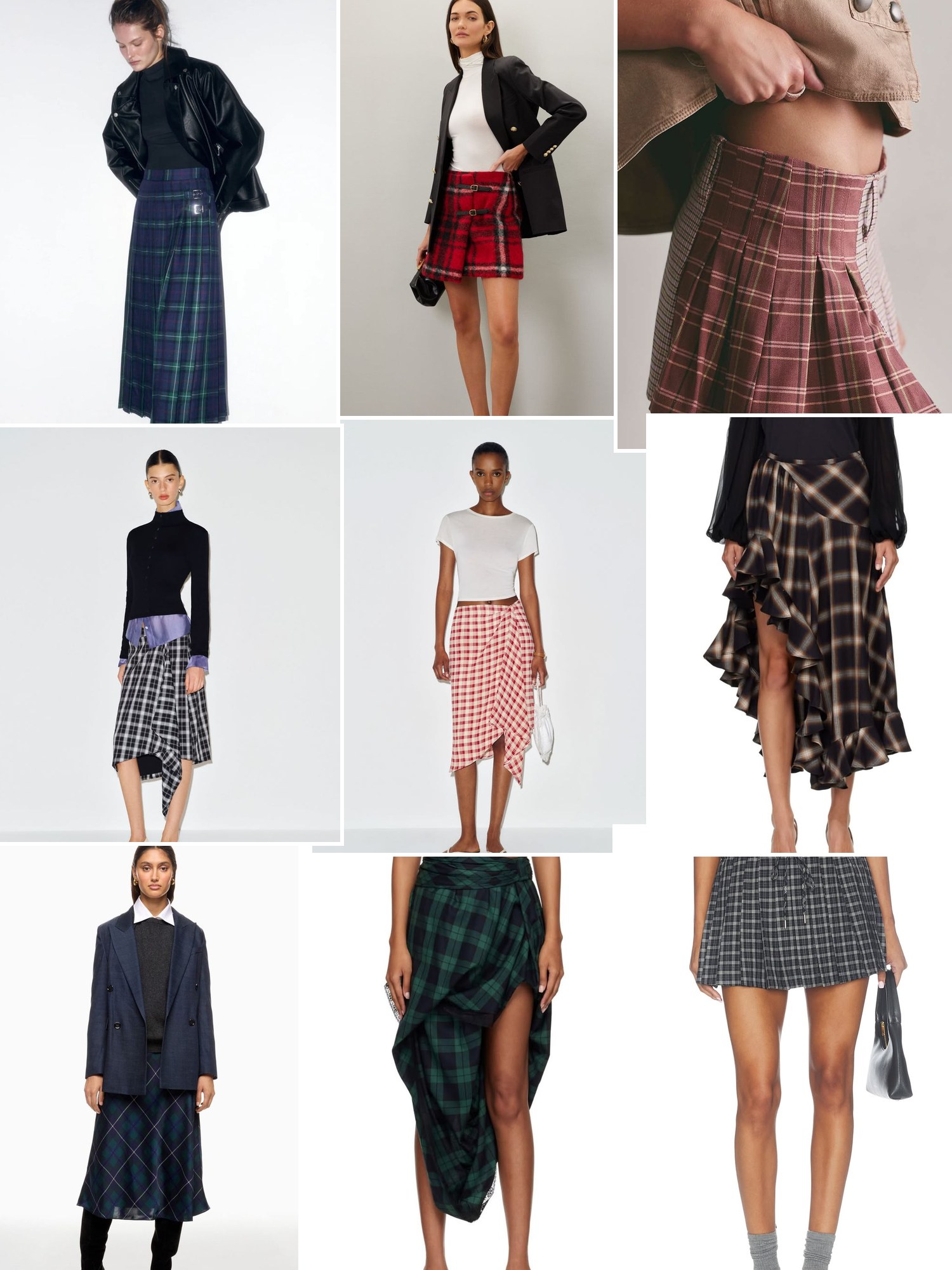
Long plaid skirts, lighter lines
With a midi, the hem needs a little counterweight: a slit, scarf panel, angled overlay, or clean waist keeps a long check from reading as one solid block. The pieces here separate themselves by silhouette rather than color story alone.
Avec Les Filles’ Merlot Navy skirt has a scarf panel, decorative buckle, and asymmetrical hem. The Ragged Priest’s Artifact keeps to gray-brown checks with defined pleats; MM6 brings red tartan and crisp folds in a wool blend. Derek Lam’s Alexander adds a mustard, black, and gray angled overlay, while Akris punto’s Shelley lowers its waist with a tiered line. City Blues gives amber checks an easy A-line, Favorite Daughter’s Meyer adds pockets and a front slit, and Vince Camuto’s black tartan knit stays close to a pencil shape.
I would balance the print with a fine knit, then let one detail carry the outfit: the scarf panel or the slit, not a pile of accessories and a statement jacket at once. The darker merlot-and-navy option makes sense beside espresso boots, while red tartan has a clear partner in black tights. Before buying, compare skirt length with your usual coat and check where the slit or overlay sits as you move. What I would skip: stacking a second loud plaid on top. I want the hem to have room to swing, not a fight at every seam.

Plaid Scarf Midi Skirt
Avec Les Filles
$128

Artifact Check-Pattern Midi Pleated Skirt
The Ragged Priest
$230

Tartan-Check Pleated Midi Skirt
MM6 Maison Margiela
$1,283

Alexander Asymmetric Plaid Cotton-Blend Midi Skirt
Derek Lam
$495

Shelley Plaid Techno Wool-Blend Midi Skirt
Akris punto
$895

Plaid A-Line Midi Skirt
CITY BLUES
$49.5

The Meyer Plaid Midi Skirt
Favorite Daughter
$248

Plaid Midi Skirt
Vince Camuto
$99
Knee socks and loafers
A piece of hardware with a useful job often becomes part of the look. The apron pin adds weight to the outer layer; its precise origin date is unknown, though one popular story links it to Queen Victoria at Balmoral. I like the distinction between a documented function and a satisfying bit of folklore.
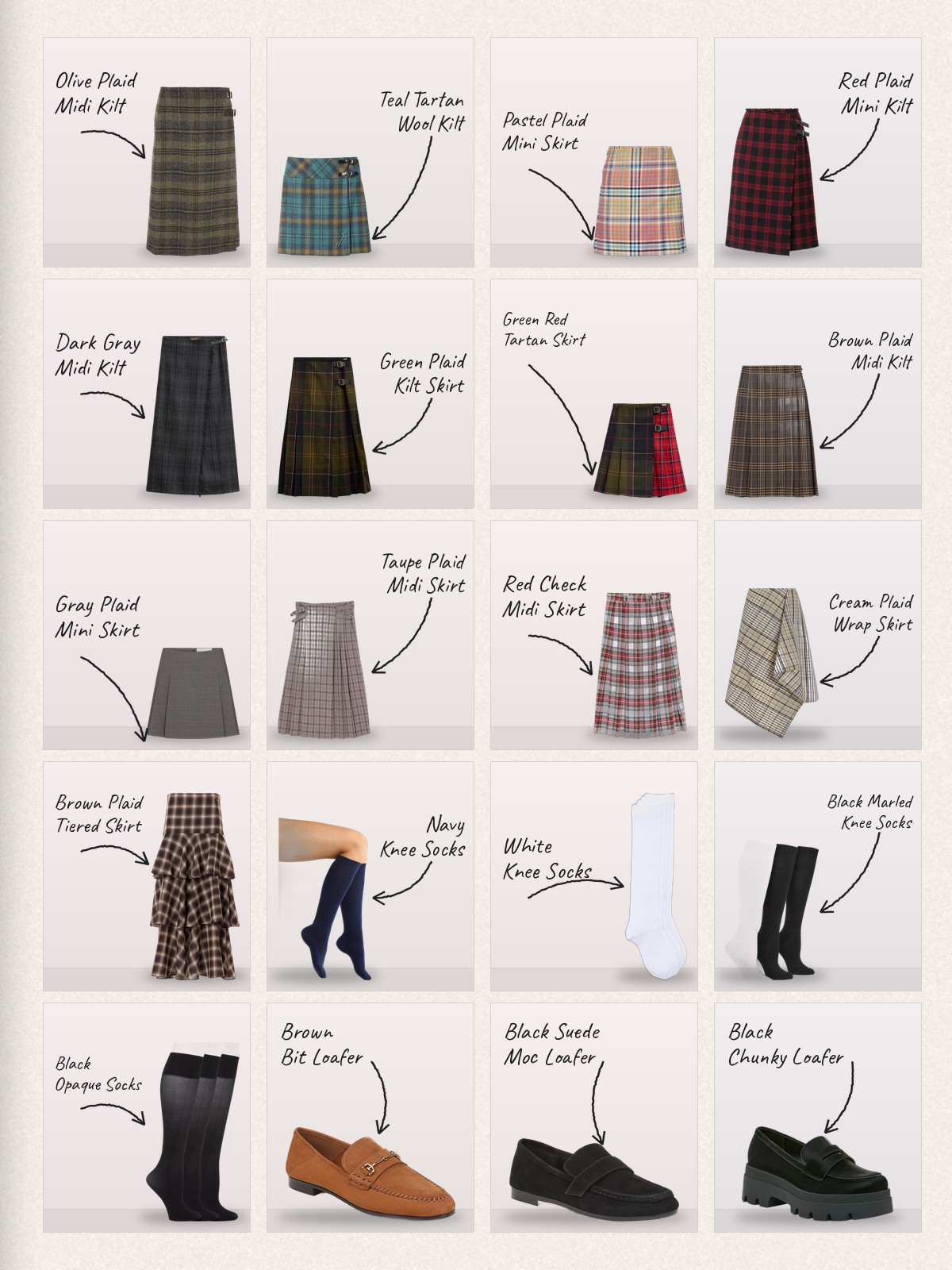
Navy merino knee highs are the quiet bridge to a tan loafer. White flat-knit socks give more contrast, while Steve Madden’s marled three-pack and Hue’s opaque black pair set different levels of texture. Sam Edelman’s Loraine bit loafer has honey-bourbon leather and polished hardware. G.H. BASS’s Esther Weejuns is a flat, swingy tassel loafer; Steve Madden’s Ronney comes in black suede, while Jessica Simpson’s Ujella adds platform height and a lug sole.
I would wear a mini with opaque black or white socks depending on how much contrast I want; with a midi, navy is a quieter line. For socks, check the listed shoe-size range and fiber mix; for loafers, compare vamp height and sole under the hem. If you want a longer line, I’d avoid having the cuff meet the skirt exactly. A narrow band of space makes the breaks look deliberate.

Knee High Merino Wool Blend Socks
Nordstrom
$19

Assorted 2-Pack Everyday Flat Knit Knee High Socks
Nordstrom
$18

Marled Women's Knee Socks, 3 Pack
Steve Madden
$16.99

Soft Opaque Women's Knee Socks, 3 Pack
Hue
$16.99

Loraine Bit Loafer
Sam Edelman
$89.9

Esther Kiltie Weejuns Loafer
G.H.BASS
$195

Ronney Loafer
Steve Madden
$69.99

Ujella Platform Penny Loafer
Jessica Simpson
$59.99
Choose the hem before the tartan
I would decide where the skirt should land: above the knee with tights, or at midi length under a longer coat. Then pick a closure you can understand at a glance, from twin straps to a quiet zip, and keep the top half simple enough that the plaid stays the main event. I’d finish with socks and a loafer in one tone already present in the check, not a third accent color.
I would check the wrap overlap before settling on a print, since the strongest options here depend on a clear front line. If the outfit needs a pin, let it be the small kind of history that holds a layer down, rather than turning the whole look into dress-up. Edinburgh’s tartan parade had a king; mine can make the train.