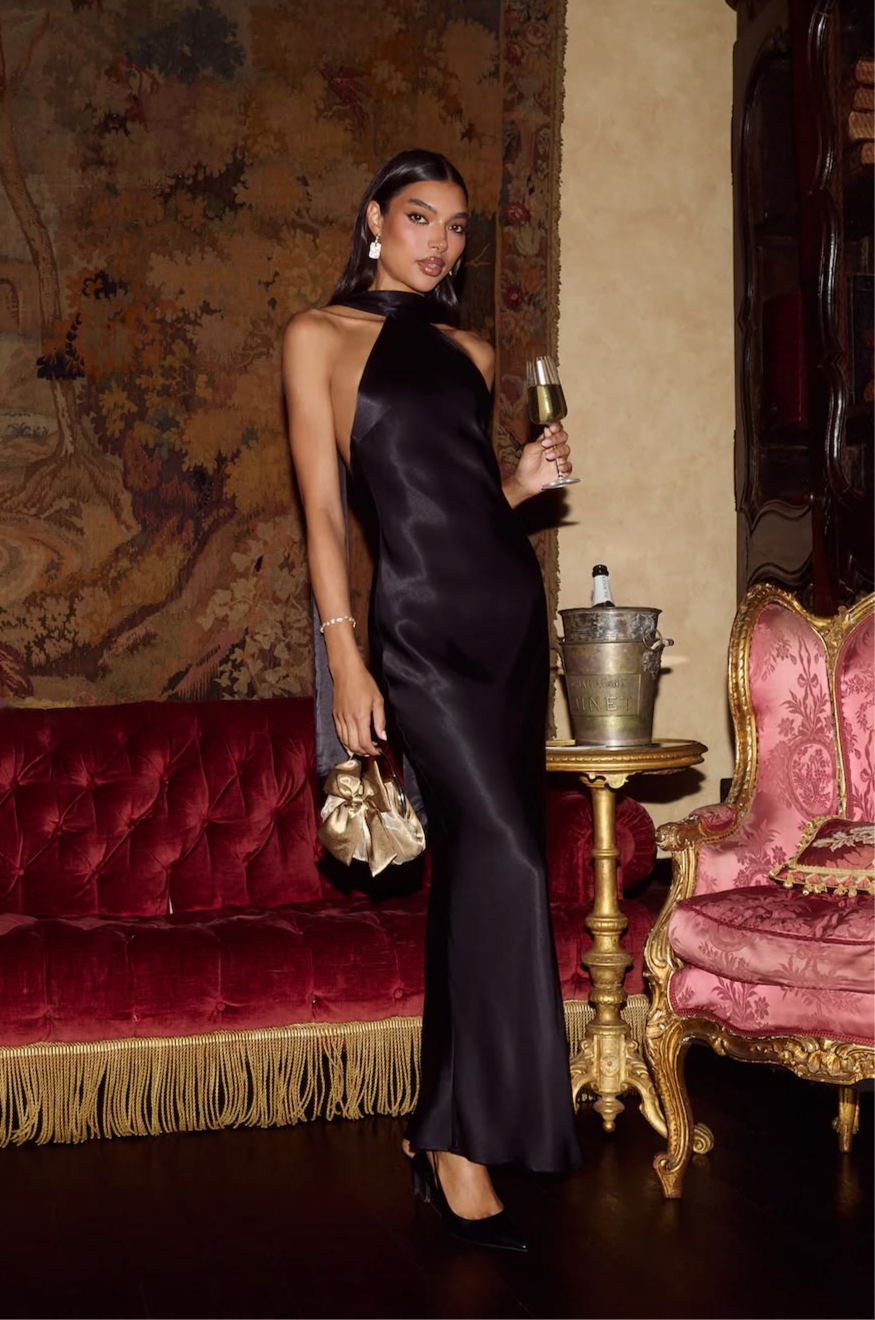
Lace cami looks back to corset-cover history while moving through satin tops, sheer lace, bodysuits, slips, and bralettes. I’d build the outfit around one lace detail, then give it room under a soft jacket or cardigan.

Lace cami: From Corset Cover to Fall Layer
The underlayer comes forward
At Arthur Ashe Stadium during the 2026 US Open Women’s Final, WWD’s Stacia Datskovska was watching the change in weather through the clothes in the stands. Her September 22 fall guide suggested adding layers slowly and leaving room for “a silky blouse or a lace-trimmed cami.” I like that sentence because it frames the camisole as an active part of an outfit, not a leftover underlayer. A lace cami is a useful starting point when I want the outfit to feel intentional without introducing another complicated shape.
The camisole began as an undergarment: it was shorter than a chemise and developed to cover the corset when clothing changed. The Museum at FIT notes that, by the late nineteenth century, some camisoles and drawers were joined as combinations, in step with the slimmer Edwardian line. Its circa-1900 example is recorded in cotton eyelet lace and silk ribbon. The detail has a long memory, even when the rest of the outfit is quite current.
For this edit, I keep the satin row deliberately varied. Kimchi Blue’s Candace brings black satin, buttons down the front and an adjustable tie-back; Out From Under’s Jackie adds jacquard satin, a sheer lace inset and a small back keyhole. Another Girl’s blue-check Check It comes with scalloped lace at the neckline and a slanted high-low hem, while ASTR’s orange Dawn shifts the trim to the hem with a palm motif.
Personal Code’s Reia gives black satin a ruffled edge; Miss Me’s champagne Ciao puts sheer floral lace at the bust. I’d choose between neckline, side, or hem detail before choosing a color, then give the satin air under a roomy jacket or cardigan. Check the strap adjustment and the hem against the waistband you plan to wear, so the small detail stays visible rather than bunching into it.

Lace-trim satin camis

Candace Lace Trim Satin Cami
Kimchi Blue
$39

Jackie Jacquard Satin Lace Trim Cami
Out From Under
$39.5

Check It Asymmetric Lace Trim Satin Cami
Another Girl
$99

Dawn Lace Trim Satin Cami
ASTR The Label
$79.99

Reia Satin Lace Contrast Cami Top
Personal Code
$59

Ciao Lace Cami
Miss Me
$54

Lace Trim Satin Camisole
Open Edit
$37.95

Elisan Lace Satin Camisole
Bardot
$139
All-Over Lace Camis
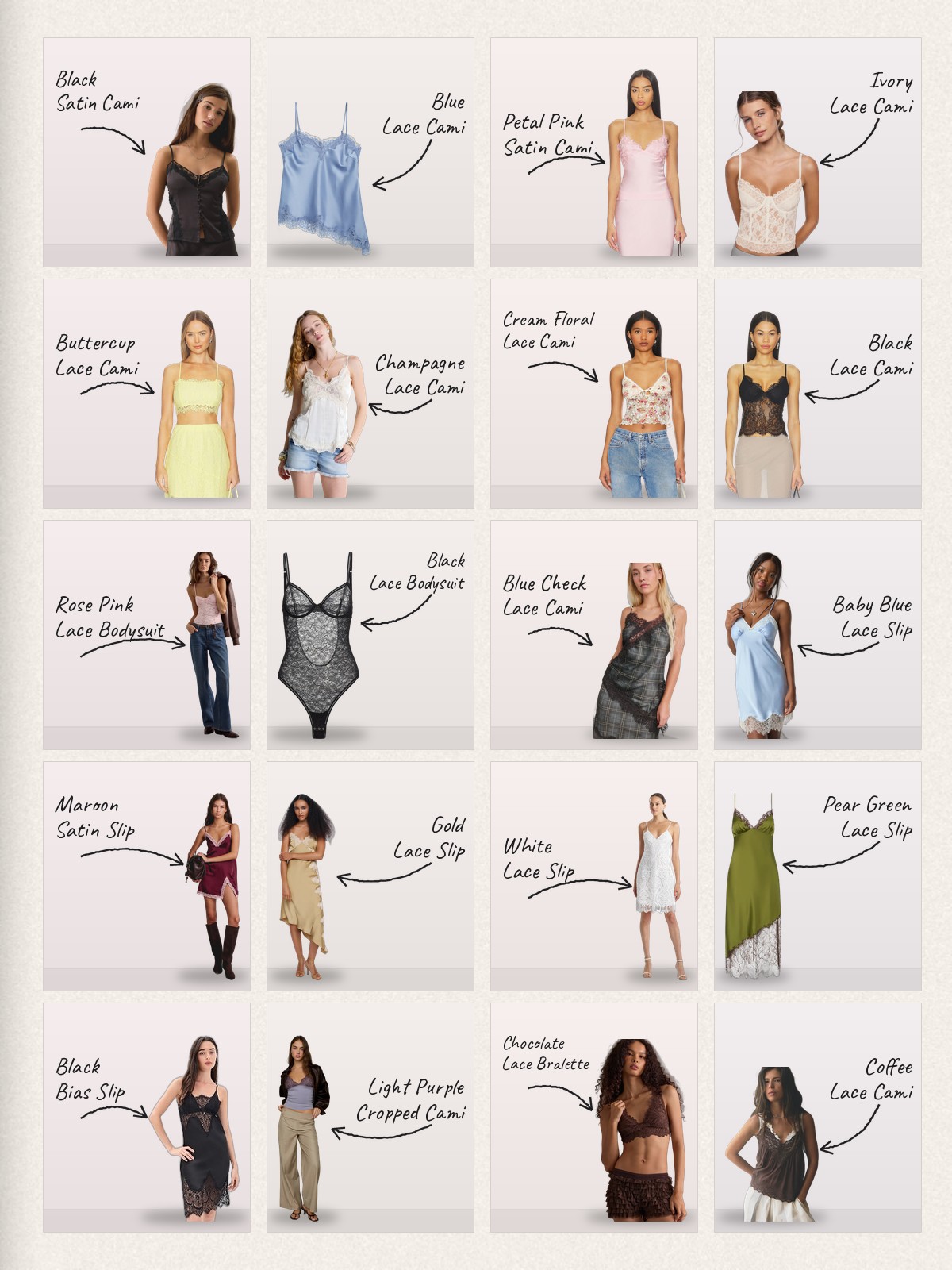
Before color, I’d look at where the lining ends and how much of the lace is visible under the layer above it. Historically, the camisole was a sleeveless garment shorter than a chemise, and it developed to cover a corset when clothing changed. That history makes the amount of coverage worth checking, not assuming. I would look for product notes on bust lining and strap adjustment, then compare the neckline to the jacket or shirt I’d actually put over it.
Intimately’s Frill Seeker in Blue Hills has a lined bust, adjustable back strap and handkerchief hem; I’d let that scalloped edge peek under a cropped jacket. Loved You First in bronze brown is mesh-lined, while LyreBird’s ivory Fitted style has underwire structure. Sofie from CAMI NYC has a square neckline and zip back, and SPELL’s Labyrinth adds flutter sleeves. Fia’s front tie and lettuce edge are a quieter option when the rest of the outfit has its own pattern.
Rosel by L’AGENCE brings a built-in bra and adjustable straps; Eleanor by EDIKTED uses black edging against white sheer lace. For either, I would read the material and lining details, then check that the straps sit inside the neckline rather than taking over. What I would skip: another lace layer when the jacket already has a strong texture, unless the motifs intentionally differ.


Lace Bodysuits With a Backstory
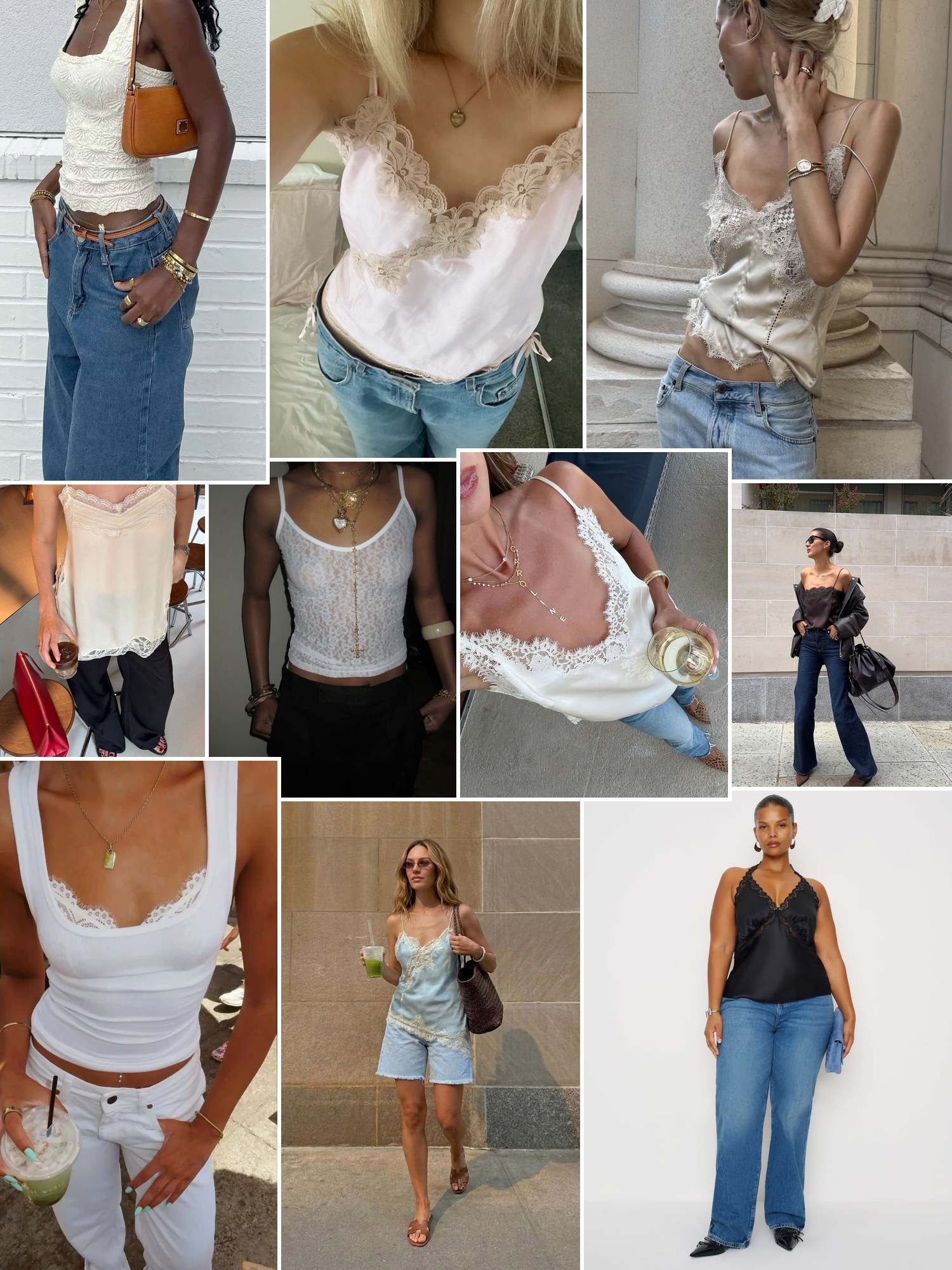
The advantage of a bodysuit is the clean tuck, but the back cut and fastening decide which layer can sit over it. Cornell’s exhibit dates a Gossard-labeled ivory lace camisole to circa 1905 to 1919 and describes three bands of machine filet lace with hook-and-eye closures at the back. That old example makes the construction part of the story; these current styles play with it through open backs, mesh and underwire.
Moonlit Meadow in Clean Ivory puts its square neckline against a dramatic low back, with a lined snap gusset. Smooth Talking in Rose Icing combines floral lace and ribbed panels with underwire cups; Countess keeps a square front and turns the back into a satin-bow keyhole. KILO BRAVA’s powder-blue style uses corset-inspired panels and picot edges, while Hanky Panky’s Marshmallow option pairs a scoop neck with a cutout back.
EDIKTED’s sheer black bodysuit stays simple at the V-neck; Fleur du Mal and Wolford both keep sheer lace and underwire in view. I’d pair the more open backs with a jacket that can come off easily, then check the gusset fasteners and where the back closure lands under a waistband. What I would skip: a lace bodysuit under a lace top if both necklines compete for attention.

Moonlit Meadow Lace Bodysuit
Intimately
$78

Smooth Talking Bodysuit
Intimately
$78

Countess Open-Back Sheer Lace Bodysuit
Out From Under
$55.5

Lace Cami Bodysuit
EDIKTED
$41.6

Lace Underwire Bodysuit
KILO BRAVA
$82

Underwire Thong Bodysuit
Hanky Panky
$62.5

Le Stretch Multifit Lace Thong Bodysuit
Fleur du Mal
$88

Lace Underwire Bodysuit
Wolford
$200
Slip Dresses With Lace Edges
With a slip, I’d look at the lace placement and the hem together, then choose the jacket length around them. The Museum at FIT draws a useful distinction: some decorative corsets and petticoats were worn as part of eighteenth-century dress, while many nineteenth-century undergarments stayed within intimate settings. This edit sits right on that boundary, with trim that is made to show.
River Ruffle’s black chiffon brings scalloped lace to the scoop neck and tiers the hem; the baby-blue Aria keeps its eyelash lace at the V-neck. Kimchi Blue’s maroon Fall For You adds a ruched bust, while the gold satin midi has a bias-cut drape and side zipper. Natori’s white floral style is listed at 37 inches with adjustable straps.
Pear STAUD uses stretch silk satin and an asymmetric sheer lace panel; Fleur du Mal’s black midi is all-over lace, and Norma Kamali’s bias-cut satin is unlined and low-stretch. For October, I’d keep the outer layer simple and let one edge show. Before deciding, check lining, closure, and length in the product notes, especially if I want to add tights. What I would skip: a second prominent lace border when a tiered hem is already doing the work.

River Ruffle Lace Trim Slip Dress
Out From Under
$39

Aria Lace Trim Slip Dress
Wild Lovers
$44.99

Fall For You Lace Trim Satin Slip Mini Dress
Kimchi Blue
$49

Satin Lace Slip Dress
By Anthropologie
$178

Suzani Lace Slip Dress
Natori
$195

Lara Lace-Trim Silk Slip Dress
STAUD
$595

Le Stretch Lace Slip Dress
Fleur Du Mal
$98

Bias Slip Dress with Lace
Norma Kamali
$280
Bralettes and Layering Camis
A base layer has to answer to the neckline above it, so I would choose the outer top before settling on color. The Museum at FIT notes that some eighteenth-century corsets and petticoats appeared as part of dress, while many nineteenth-century undergarments remained intimate. I like that push and pull here: a bralette can stay private under a knit, or become a deliberate trim under an open shirt.
Camilla’s black triangle bra has lined cups, picot trim and a tiny satin bow; the light-purple Date Night cami gives its lace a V-neck. Petal Party uses microfiber lining at the cups, while Fiona’s adjustable racerback brings lace to a cotton-blend cami. Commando’s beige Double Take is sheer and unlined with hook-and-eye closure; Fleur’t’s thyme-rib bralette adds an underbust band.
SKIMS’s slate pin-dot scoop shape keeps the lace in the stretch fabric, and Eberjey’s black triangle style has adjustable straps and a hook-and-eye back. I’d match the strap route to the neckline first, then check that the closure and band don’t land where a waistband or open shirt will catch them. What I would skip: choosing the bralette before the shirt, if its straps will cross the neckline’s clean line.


Choose the layer, then the lace
I’d start with the amount of lace I want to see: satin with a narrow edge for a quiet layer, all-over lace when I want the top to do more, or a slip if I want the detail to continue past the waist. Then I’d decide whether a lined bust, adjustable straps, back closure, or snap gusset matters most, and check those details before color.
WWD’s US Open note stays with me: leave a little room under the outer layer, and let the underlayer show on purpose. That is how I’d take the camisole’s old role as an undergarment and give it a place in the October outfit.