Louis Vuitton bags are easiest to choose once you know the shapes, so this edit groups them by style, from the Neverfull and OnTheGo totes to the Speedy, Alma, Noe, Capucines and Twist. It ends with the hobos, pochettes, Petite Malle, Vernis and the archive shapes that resale keeps alive.
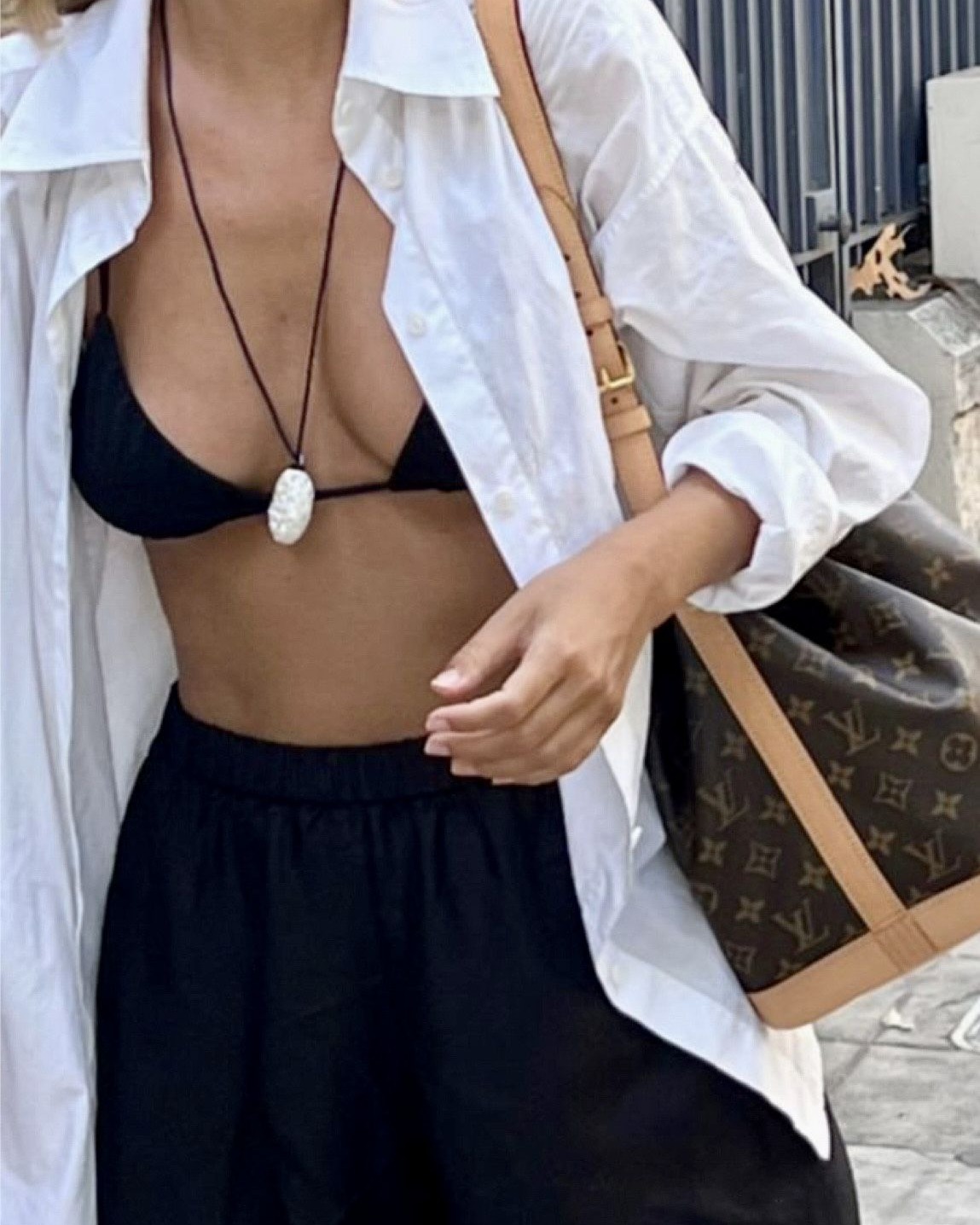
Louis Vuitton Handbags, From Monogram Classics to Minis
Louis Vuitton bags trace back to 1854, when the house began as a trunkmaker, and its early canvas codes still make me want to play with pattern. Damier arrived in 1888 and Monogram canvas in 1896, created by Georges Vuitton in tribute to his father, but it was only in the late 1950s, when Claude-Louis Vuitton developed a softer coated canvas, that Monogram could bend into a handbag.
So rather than sorting this edit by pattern, I have grouped it by style. Each shape below has its own history and its own job, from the Neverfull tote to the Petite Malle, and once you know what each one was made for, choosing gets much easier. Every bag here is pre-owned, which is where most of the archive shapes now live.
The Neverfull, the Open Tote
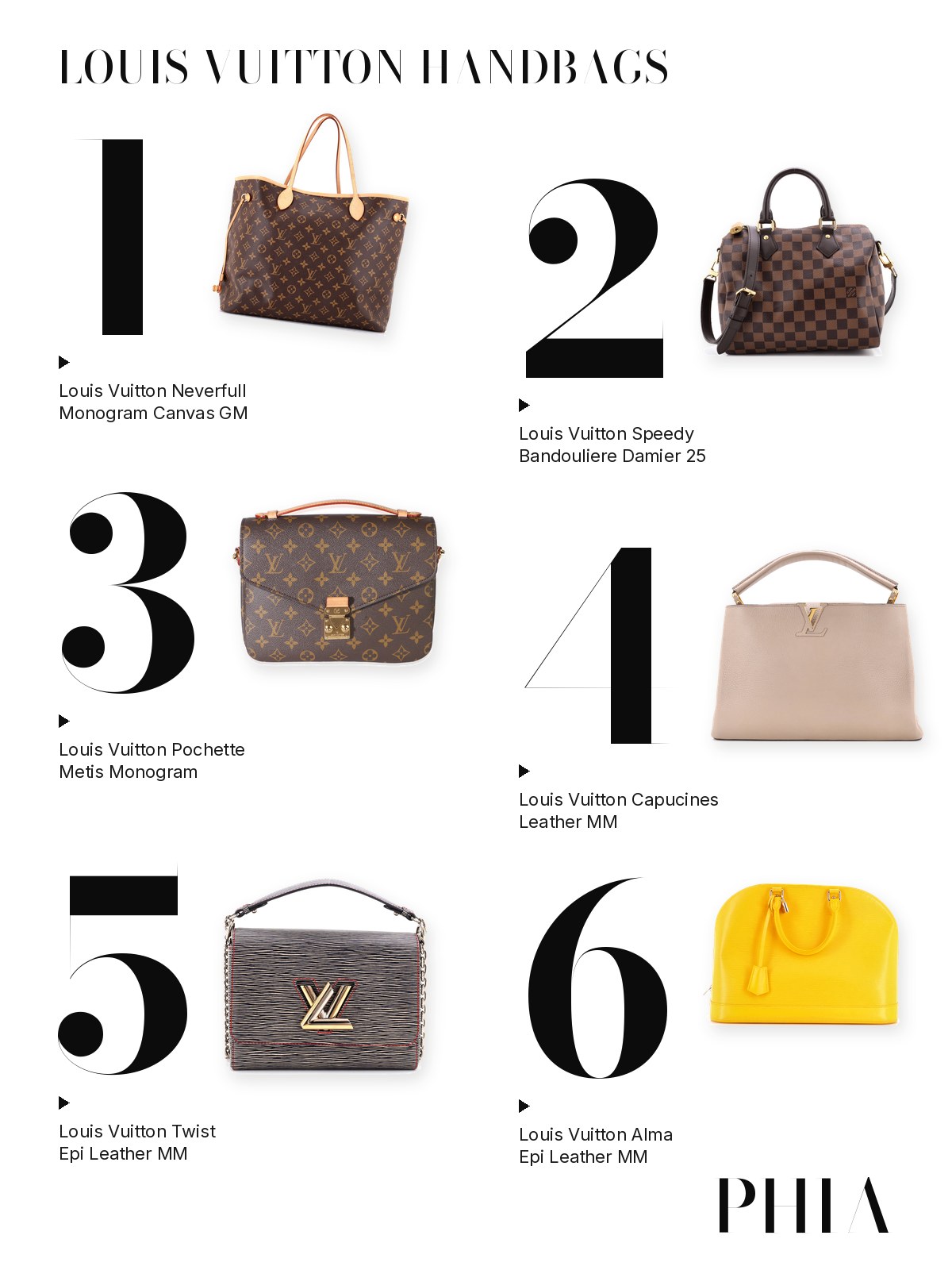
Sotheby's says the Neverfull was introduced in 2007 and became a classic almost at once, and it is widely thought to have been created to compete with Goyard. It is an open tote with side laces that cinch it in, and it has only ever come in three sizes, PM, MM and GM. That is the whole appeal: it holds a laptop, a sweater and lunch without looking like a work bag.
Here you get the plain Monogram GM, the Giant Monogram in kaki, the raffia By The Pool and the Since 1854 jacquard, the red Epi MM and the Damier MM, plus Empreinte leather versions for anyone who wants the shape without the canvas. What I would skip is the GM if you are petite; the MM sits better on the shoulder.
Neverfull

Louis Vuitton Neverfull NM Tote Monogram Canvas GM
Louis Vuitton
$2,080

Louis Vuitton Neverfull NM Tote By The Pool Monogram Raffia MM
Louis Vuitton
$3,550

Louis Vuitton Neverfull Tote Monogram Idylle MM
Louis Vuitton
$1,460

Louis Vuitton Kaki Monogram Giant Neverfull MM
Louis Vuitton
$1,650

Louis Vuitton Neverfull NM Tote Limited Edition Since 1854 Monogram Jacquard MM
Louis Vuitton
$1,865

Louis Vuitton Rose Indien Monogram Articles de Voyage Ikat Neverfull MM
Louis Vuitton
$1,750

Louis Vuitton Black Multicolor Monogram Canvas Game On Neverfull MM
Louis Vuitton
$1,950

Louis Vuitton Neverfull NM Tote Wild at Heart Monogram Empreinte Giant MM
Louis Vuitton
$3,220

Louis Vuitton Neverfull NM Tote Bicolor Monogram Empreinte Giant MM
Louis Vuitton
$2,970

Louis Vuitton Neverfull NM Tote Damier MM
Louis Vuitton
$2,040

Louis Vuitton Neverfull Tote Epi Leather MM
Louis Vuitton
$2,345

Louis Vuitton Neverfull Inside Out Monogram Canvas and Leather MM
Louis Vuitton
$4,095
The OnTheGo, the Structured Tote
The OnTheGo was first introduced for Louis Vuitton's Spring/Summer 2019 collection, and Sotheby's says it draws much of its inspiration from the Sac Plat. Where the Neverfull slouches, this one stands up on its own, with two sets of handles so you can carry it by hand or on the shoulder. The GM came first, the MM followed in February 2020 and the smaller PM after that.
I like the Reverse Monogram GM, the Giant Monogram in kaki beige and the black Epi MM, which is the quietest version I have seen. The Hamptons tufted jacquard and the denim jacquard are for people who want the shape to be the talking point. What I would skip is the GM as an everyday bag if you commute on foot, because it gets heavy when full.
OnTheGo

Louis Vuitton Monogram Reverse Canvas Onthego GM
Louis Vuitton
$2,200

Louis Vuitton OnTheGo Tote Trianon Grey Monogram Canvas MM
Louis Vuitton
$4,375

Louis Vuitton OnTheGo Tote Monogram Jacquard Denim MM
Louis Vuitton
$3,385

Louis Vuitton OnTheGo Tote Limited Edition Since 1854 Monogram Jacquard GM
Louis Vuitton
$2,845

Louis Vuitton Kaki Beige Giant Monogram Canvas Onthego GM
Louis Vuitton
$2,550

Louis Vuitton Blue Beige Jacquard Embroidered Tufted Monogram Hamptons Onthego G
Louis Vuitton
$2,450

Louis Vuitton OnTheGo Tote Bicolor Monogram Empreinte Giant GM
Louis Vuitton
$3,235

Louis Vuitton OnTheGo Tote Monogram Giant Raffia MM
Louis Vuitton
$3,400

Louis Vuitton OnTheGo Tote Stardust Monogram Empreinte Leather PM
Louis Vuitton
$3,525

Louis Vuitton OnTheGo Tote Monogram Empreinte Giant MM
Louis Vuitton
$3,470

Louis Vuitton OnTheGo Tote Epi Leather MM
Louis Vuitton
$2,665

Louis Vuitton OnTheGo Tote Reverse Monogram Giant PM
Louis Vuitton
$3,380
The Speedy, the First Monogram Handbag
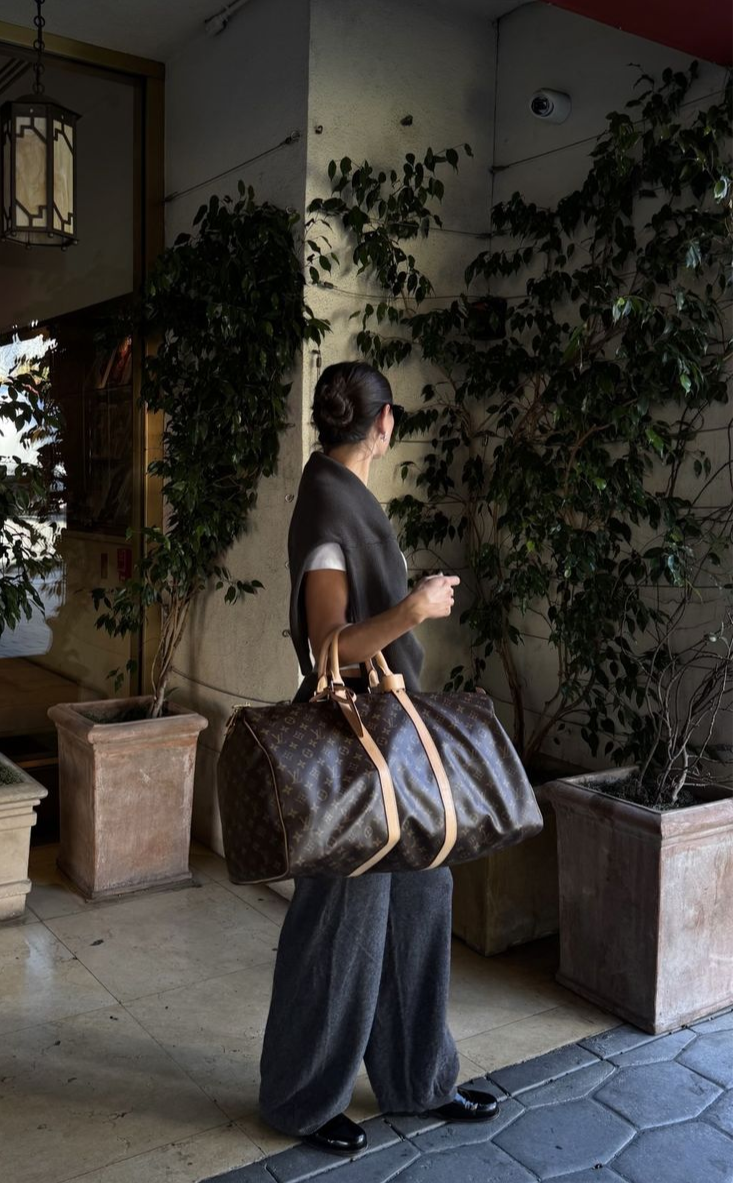
The Speedy was introduced in 1930 as the Express, a scaled-down Keepall, and Farfetch says Audrey Hepburn personally requested a further miniaturized version, which became the Speedy 25. It is a zip-top barrel with two rolled handles, made in classic sizes of 25, 30, 35 and 40 centimeters, and since 2011 there has also been a Bandouliere version with a shoulder strap.
The Monogram 25 is where I would start, the Damier Bandouliere 25 adds the strap, and the Stephen Sprouse graffiti Speedy 30 is the collector's piece. The Soft Empreinte 30 is the grown-up leather take. What I would skip is the Mini HL or the Nano if you carry more than a phone and a card holder; they are charm-sized.
Speedy

Louis Vuitton Speedy Handbag Monogram Canvas 25
Louis Vuitton
$1,645

Louis Vuitton Speedy Bandouliere Bag Damier 25
Louis Vuitton
$2,065

Louis Vuitton Neo Speedy Bag Denim
Louis Vuitton
$2,485

Louis Vuitton x Stephen Sprouse Khaki Graffiti Speedy 30
Louis Vuitton
$4,050

Louis Vuitton Speedy Mini HL Handbag Monogram Canvas
Louis Vuitton
$950

Louis Vuitton Speedy Bandouliere NM Bag Monogram Canvas Nano
Louis Vuitton
$2,730

Louis Vuitton Speedy Soft Bandouliere Bag Monogram Empreinte Leather 30
Louis Vuitton
$4,230

Louis Vuitton Speedy Bandouliere Bag Damier Pop 25
Louis Vuitton
$3,635
The Alma, the Domed Top-Handle
The Alma's shape goes back to the Squire, which Sotheby's says Gabrielle Chanel agreed to let the house produce in 1934, but its official birth date, under the name of the Place de l'Alma in Paris, was 1992. It is the structured dome with a zip around the top and two rolled handles, the most ladylike shape the house makes.
In 2010 Louis Vuitton launched the miniature Alma BB with a removable strap, and the ladder now runs from Nano and BB up through PM, MM and GM. The Monogram BB is the classic, the Damier PM is the easy everyday size, and the Electric Epi PM and ostrich BB show how well it takes leather. What I would skip is a pale Alma for daily use, because the rigid sides show every scuff.
Alma

Louis Vuitton Moon Alma Bag Monogram Canvas
Louis Vuitton
$2,080

Louis Vuitton Alma Handbag Epi Leather MM
Louis Vuitton
$900

Louis Vuitton Aurore Monogram Shine Canvas Alma PM
Louis Vuitton
$1,850

Louis Vuitton Alma Handbag Ostrich BB
Louis Vuitton
$2,965

Louis Vuitton Alma Handbag Electric Epi Leather PM
Louis Vuitton
$855

Louis Vuitton Alma Handbag Monogram Canvas BB
Louis Vuitton
$2,280

Louis Vuitton Alma Handbag Damier PM
Louis Vuitton
$1,905

Louis Vuitton Alma Handbag Monogram Canvas Nano
Louis Vuitton
$2,490
The Noe and NeoNoe, the Bucket Bags
Gaston-Louis Vuitton designed the Noe, and Sotheby's says the request for it came directly from a champagne producer who needed a bag strong enough for his bottles. The name is French for Noah. It is a soft drawstring bucket, and in 2017 Louis Vuitton introduced the NeoNoe, which is more structured and easier to get into. The Noe later came in Petit, BB and Nano sizes.
Here the Epi leather Noe and NeoNoe are the quiet versions, the Empreinte NeoNoes have the Monogram pressed into leather, and the Damier BB and By The Pool Nano are the fun ones. What I would skip is the full-size Noe if you hate digging for keys, which is exactly what the NeoNoe fixes.
Noe and NeoNoe

Louis Vuitton NeoNoe Handbag Limited Edition Jungle Monogram Giant
Louis Vuitton
$2,060

Louis Vuitton NeoNoe Handbag Bicolor Monogram Empreinte Giant MM
Louis Vuitton
$3,070

Louis Vuitton Noe Handbag Epi Leather Large
Louis Vuitton
$765

Louis Vuitton NeoNoe Handbag Epi Leather MM
Louis Vuitton
$1,655

Louis Vuitton Arizona Monogram Empreinte NeoNoe MM
Louis Vuitton
$2,650

Louis Vuitton Monogram Canvas Nano Noe NV
Louis Vuitton
$1,750

Louis Vuitton Noe Handbag Monogram Canvas Nano
Louis Vuitton
$1,590

Louis Vuitton Noe NM Handbag By The Pool Monogram Watercolor Giant Nano
Louis Vuitton
$2,145

Louis Vuitton Noe NM Handbag Limited Edition Damierlicious Giant Nano
Louis Vuitton
$2,095

Louis Vuitton NeoNoe Handbag Monogram Canvas with Leather MM
Louis Vuitton
$2,130

Louis Vuitton Noe Handbag Damier BB
Louis Vuitton
$1,750

Louis Vuitton Noe Handbag Monogram Canvas Mini
Louis Vuitton
$1,250
The Capucines, the Leather Flap Bag
Vogue France dates the Capucines to 2013, and the bag takes its name from the address of Louis Vuitton's first store on Rue Neuve-des-Capucines in Paris. It is a structured leather top-handle with a front flap carrying the LV initials, made for people who would rather not wear Monogram at all.
The MM is the classic, the Souple GM in rust is the slouchier version, and the Mini Capushell with mother of pearl is closer to jewellery than a bag. What I would skip is the larger sizes if you want a crossbody; the strap works best on the MM and below.
Capucines


The Twist, the Turning Lock
The Twist was first shown at Louis Vuitton's Cruise 2015 runway, and PurseBlog describes it as Nicolas Ghesquiere's reinterpretation of an archive clutch, the Epi Trapeze. Its signature is the LV lock that turns to close the flap, and it comes as the Twist Mini, PM, MM and a tote.
Epi leather is the classic finish, and the braided handle, chunky chain and raffia versions show how much the house plays with it. The One Handle PM in tan Taurillon is the one I would carry to dinner. What I would skip is the Twist if you need a bag that opens one-handed; the lock is part of the charm and also slower.
Twist

Louis Vuitton Braided Handle Twist Bag Epi Leather MM
Louis Vuitton
$2,060

Louis Vuitton Black Calfskin Raffia Twist Shoulder Bag MM
Louis Vuitton
$2,650

Louis Vuitton Chunky Chain Twist Bag Epi Leather MM
Louis Vuitton
$3,825

Louis Vuitton Twist Handbag Epi Leather MM
Louis Vuitton
$1,595

Louis Vuitton Twist Handbag Epi Leather with Iridescent Hardware PM
Louis Vuitton
$2,060

Louis Vuitton Twist Handbag Epi Leather Mini
Louis Vuitton
$2,560

Louis Vuitton Twist Tote Epi Leather
Louis Vuitton
$1,775

Louis Vuitton Twist One Handle Bag Taurillon Leather PM
Louis Vuitton
$3,125
Hobos and Shoulder Bags, the Soft Shapes
Softer shoulder bags are where Louis Vuitton relaxes. Mahina is perforated Monogram leather rather than printed canvas, and the Bella, Carmel, Hina and XL hobos show how soft it goes. The Loop, which Luxe Digital dates to 2022, is a half-moon baguette in the spirit of the old Looping, launched in 2002 and retired soon after, and the Croissant.
The Coussin, whose name is French for cushion, is puffy embossed lambskin, and the Artsy, Graceful and Very Hobo are the everyday versions. What I would skip is a soft hobo for a laptop; these are day bags, not commuters.
Hobos and shoulder bags

Louis Vuitton Looping Handbag Monogram Canvas GM
Louis Vuitton
$1,130

Louis Vuitton Loop Handbag Monogram Canvas
Louis Vuitton
$2,725

Louis Vuitton Coussin Bag Monogram Embossed Lambskin MM
Louis Vuitton
$4,185

Louis Vuitton Olive Monogram Embossed Lambskin Coussin MM
Louis Vuitton
$3,850

Louis Vuitton Galet Monogram Mahina Bella Hobo
Louis Vuitton
$3,450

Louis Vuitton Loop Handbag Monogram Jacquard Denim
Louis Vuitton
$4,670

Louis Vuitton Very Hobo Monogram Leather
Louis Vuitton
$1,915

Louis Vuitton Creme Monogram Mahina Carmel Hobo
Louis Vuitton
$4,250

Louis Vuitton XL Hobo Mahina Leather
Louis Vuitton
$1,200

Louis Vuitton Croissant Handbag Monogram Canvas PM
Louis Vuitton
$1,790

Louis Vuitton Cruiser Hobo Limited Edition Blurry Monogram Canvas PM
Louis Vuitton
$1,990

Louis Vuitton Dauphine Hobo Reverse Monogram Canvas PM
Louis Vuitton
$3,120

Graceful Handbag Monogram Canvas PM, Brown
Louis Vuitton
$2,325

Artsy Handbag Monogram Empreinte Leather MM, Purple
Louis Vuitton
$2,235

Louis Vuitton Loop Hobo Reverse Monogram Canvas
Louis Vuitton
$3,220

Louis Vuitton Hina Handbag Mahina Leather PM
Louis Vuitton
$3,130
Pochettes and Small Crossbodies
The small bags are the easiest way into the house. The Pochette Accessoires was first released in 1992 as a rectangular zipped pouch with a removable strap, and the Pochette Metis, introduced in 2012 as one of Marc Jacobs's last designs for the house, added a proper flap and a crossbody strap. The Micro Metis followed in 2022, and Sotheby's calls the Felicie Pochette the entry point to the house's crossbodies.
Here you get the classic Monogram Metis, the Damier mini Pochette Accessoires, the Jeff Koons and Takashi Murakami collaborations, the Mini Dauphine and the New Wave Multi Pochette. The Trunks & Bags Pochette Mini, the Damier Azur Pochette Accessoires, the Empreinte Micro Metis and a red Epi Pochette add more small shapes in lighter and brighter finishes. What I would skip is a pochette as your only bag on a busy day; they hold a phone, cards and a lipstick, and that is all.
Pochettes and small crossbodies

Louis Vuitton Pochette Accessoires Damier Mini
Louis Vuitton
$905

Louis Vuitton Rose Poudre Monogram Empreinte Felicie Pochette
Louis Vuitton
$1,050

Louis Vuitton Pink Brown Taurillon Mini Dauphine
Louis Vuitton
$1,850

Louis Vuitton Micro Metis Monogram Canvas
Louis Vuitton
$2,080

Louis Vuitton New Wave Multi Pochette Quilted Leather
Louis Vuitton
$2,290

Louis Vuitton x Jeff Koons Monet Canvas Pochette Metis
Louis Vuitton
$2,800

Louis Vuitton x Takashi Murakami Chain Pochette Accessoires NM Monogram Multicolor
Louis Vuitton
$2,440

Louis Vuitton Metis Phone Pouch on Chain Monogram Canvas
Louis Vuitton
$1,245

Louis Vuitton Favorite Handbag Monogram Canvas MM
Louis Vuitton
$1,405

Louis Vuitton Felicie Strap & Go Handbag Monogram Canvas
Louis Vuitton
$2,345

Louis Vuitton Pochette Metis Monogram Canvas
Louis Vuitton
$2,885

Louis Vuitton Pochette Accessoires NM Monogram Canvas
Louis Vuitton
$1,485

Louis Vuitton Trunks & Bags Pochette Mini Handbag
What Goes Around Comes Around
$695

Louis Vuitton Damier Azur Shoulder Bag V2
What Goes Around Comes Around
$1,315

Louis Vuitton Empreinte Micro Metis Bag
What Goes Around Comes Around
$1,895

Louis Vuitton V2 Pochette Shoulder Bag
What Goes Around Comes Around
$675
The Petite Malle and Trunk Bags
Nicolas Ghesquiere succeeded Marc Jacobs in 2014 and designed the Petite Malle, a small hard case modeled on the house's trunks, which Sotheby's calls the standout crossbody accessory of Fall/Winter 2014. It is the most literal link back to the trunkmaking history, with metal corners and a clasp.
The Damier and Monogram versions are the classics, the Souple is the softer take and the Trunkie carries the same idea into a canvas top-handle. What I would skip is the hard Petite Malle if you like to cram a bag full; the shell does not stretch.


Monogram Vernis, the Patent Leather
Monogram Vernis was introduced in 1998 by Marc Jacobs, and it is patent leather embossed with the Monogram rather than printed canvas. The Cannes, Wynwood and Spring Street here are all Vernis, the latter two trimmed with canvas and Epi, and the red Alma BB shows the finish on a classic shape.
It reads glossy and a little Y2K, which is exactly why I like it with denim. What I would skip is pale Vernis bought pre-owned, because light patent can yellow and pick up colour transfer; the black and red ones age better.
Monogram Vernis

Cannes Handbag Monogram Vernis, Black
Louis Vuitton
$1,445

Wynwood Handbag Monogram Vernis with Monogram Canvas and Epi Leather, Black
Louis Vuitton
$1,835

Spring Street NM Handbag Monogram Vernis with Monogram Canvas and Epi Leather, Red
Louis Vuitton
$1,260

Louis Vuitton Alma Handbag Monogram Vernis BB
Louis Vuitton
$1,405
Other House Shapes Worth Knowing
Beyond the famous names, Louis Vuitton has decades of shapes that resale keeps alive. Epi leather, which the house launched in 1985, shows up on the Brea, and Damier, first created in 1888 and reintroduced in 1996 as Damier Ebene, is on the Westminster and the Riverside.
The Papillon is the barrel bag, the Cartouchiere the small cartridge crossbody, and the Pallas, Montaigne, Popincourt, Rivoli and Locky are the quieter top-handles. The Trouville in Monogram Multicolor and the Palm Springs backpack are the playful ones. What I would skip is chasing a discontinued shape for its name alone; buy the one whose proportions you would carry every week.
Other house shapes

Louis Vuitton Pallas Chain Shoulder Bag Monogram Canvas and Calfskin
Louis Vuitton
$1,455

Louis Vuitton Palm Springs Backpack Monogram Canvas MM
Louis Vuitton
$2,320

Louis Vuitton Sesame Monogram Canvas Pallas MM
Louis Vuitton
$1,500

Louis Vuitton Montaigne Handbag Monogram Empreinte Leather GM
Louis Vuitton
$2,640

LV Riverside Handbag Damier with Leather, Brown
Louis Vuitton
$1,915

Popincourt NM Handbag Monogram Canvas with Leather MM, Black
Louis Vuitton
$1,540

Carryall Handbag Monogram Canvas, Brown
Louis Vuitton
$1,255

Cartouchiere Handbag Monogram Canvas GM, Brown
Louis Vuitton
$1,340

Rivoli Handbag Monogram Canvas MM, Brown
Louis Vuitton
$1,745

Totally Handbag Monogram Canvas MM, Brown
Louis Vuitton
$1,465

Westminster Handbag Damier GM, Brown
Louis Vuitton
$1,240

Brea Handbag Electric Epi Leather GM, Black
Louis Vuitton
$980

New Wave Chain Tote Quilted Leather, Black
Louis Vuitton
$1,515

Trouville Handbag Monogram Multicolor, White
Louis Vuitton
$2,235

Papillon Handbag Monogram Canvas 26, Brown
Louis Vuitton
$995

Locky Handbag Monogram Canvas with Leather BB, Brown
Louis Vuitton
$1,710
Choose by Shape First
Choosing between Louis Vuitton bags is, for me, a question of shape before pattern. A Neverfull or OnTheGo makes the bag the largest block of colour in an outfit, a Speedy or Alma keeps everything neat, and a pochette or Petite Malle lets the bag be a small, deliberate accent.
The last four are the extra pre-owned finds I could not leave out: the Sprouse Roses Neverfull for anyone who loves the graffiti story, the Babylone tote, and the Damier Azur Galliera and Ebene Bloomsbury for Damier at a mid scale. Once the shape is settled, pick the finish you would want to see most days, whether that is Monogram, Damier, Epi, Empreinte or Vernis. One good bag carried often beats three that sit in the cupboard.

Louis Vuitton Neverfull MM Tote Bag, Monogram Sprouse Roses
Shopbop Archive
$2,250

Louis Vuitton Monogram Babylone Tote Bag
What Goes Around Comes Around
$1,650

Louis Vuitton Damier Azur Galliera Bag
What Goes Around Comes Around
$2,150

Louis Vuitton Damier Ebene Bloomsbury Bag
What Goes Around Comes Around
$1,595