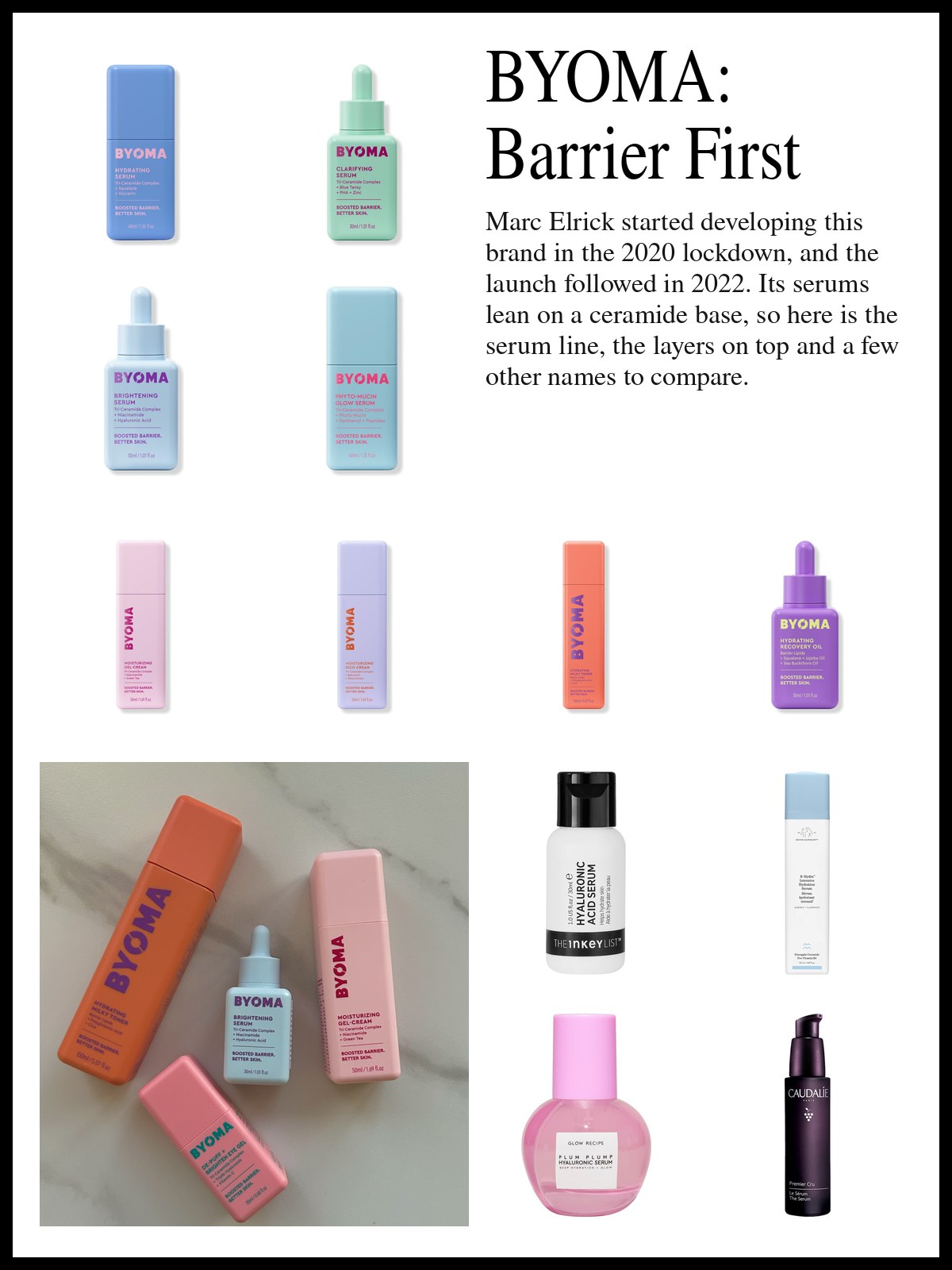
The BYOMA hydrating serum is the place to start with a brand built around ceramides and a barrier-first routine. This edit covers the whole BYOMA serum line, the creams, toner and mist that layer over it, and hydrating serums from other brands to compare.
Marc Elrick's Lockdown Project: The BYOMA Hydrating Serum and Its Shelf
Marc Elrick says he began developing BYOMA in 2020, during the first COVID lockdown, and the brand launched in 2022 through his Future Beauty Labs incubator. I like starting there, because the brand's focus on ceramides and the skin barrier makes sense for a project born at home. The BYOMA hydrating serum is where that idea starts, so it is where I would begin too.
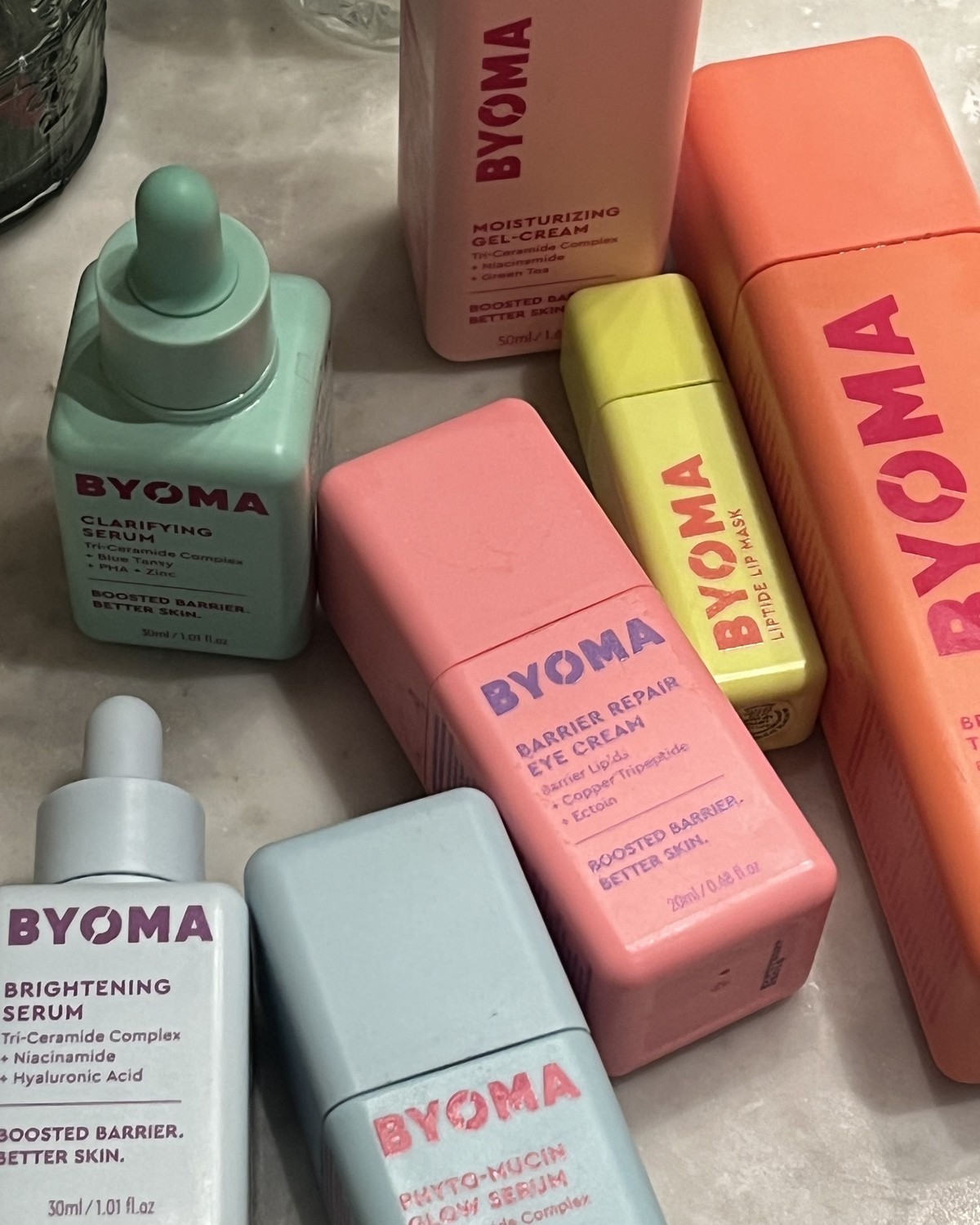
The formula is built on what the brand calls its Tri-Ceramide Complex, made from ceramides, cholesterol and fatty acids, and the Hydrating Serum pairs that with squalane and glycerin. It is listed as oil-free, alcohol-free, fragrance-free, vegan and cruelty free. Serums like this are best pressed in with your palms rather than rubbed.
The Clarifying Serum uses the same Tri-Ceramide base, so it is the one to compare first if you want the same base with a different focus. The Brightening Serum for Dark Spots + Texture is the one for people chasing an even look, and I would pair it with daily sunscreen. Phyto Mucin Glow Serum is the one named for glow, and the Longevit-8 Peptide Serum is the one to pick if peptides are your interest.
Use one serum at a time, on slightly damp skin, and give it a full week before deciding how it feels. If you are new to ceramide serums, that patience matters more than the choice of bottle, because a barrier-focused routine is meant to feel calm and gradual, not dramatic.


Creams, a toner and a mist to layer on top
A serum is only half of a routine, and BYOMA makes it easy to build the rest without leaving the shelf. Everything in the second grid shares that barrier-first thinking, which keeps the layers from fighting one another.
The Moisturizing Gel Cream is the lighter pick for warm days, while the Moisturizing Rich Cream is the one I would reach for in winter. I have a simple test for choosing between them: if your skin feels tight by midafternoon, go richer. The Hydrating Milky Toner goes on first, right after cleansing, and gives you a soft base for whatever serum comes next.
The Hydrating Recovery Oil is the last step at night, pressed over cream to keep everything in. The Balancing Ultra-Fine Face Mist is the one I keep in a bag for a dry office or a flight, and it is a quick way to freshen up between steps. Then the Barrier Repair Eye Cream, small but useful for anyone whose skin feels thin around the eyes.
You do not need all six. One cream and one extra is plenty, and a toner and mist are lovely additions if you like a longer ritual. Begin with the cream that matches your climate, then add a piece only when you notice a gap. I would also keep the mist and the toner for the days that call for them, so the routine never feels like a chore.
BYOMA moisturizers, toners and mists to layer over it


Other hydrating serums to hold up beside it
Comparing serums is my favorite kind of homework, so the third grid is a lineup of hydrating serums from other names. Most lean on hyaluronic acid, which is a water-loving ingredient, and a few bring niacinamide as well.
The INKEY List's Hyaluronic Acid Hydrating Face Serum is the most straightforward, with the ingredient right in the name. Drunk Elephant's B-Hydra Intensive Hydration Serum also has hyaluronic acid, and it is the one that pairs the ingredient with a richer hydration claim in its name. Glow Recipe's Plum Plump Hyaluronic Acid Hydrating Serum is the plum one, with hyaluronic acid named right in the title. Caudalie's Premier Cru Serum pairs niacinamide with hyaluronic acid and leans toward the anti-aging end of the shelf. Merit's Great Skin Instant Glow Serum pairs the same two ingredients for a quick glow.
The Ordinary's Alpha Arbutin 2% + Hyaluronic Acid is the outlier here, aimed at hyperpigmentation, and I would use it with sunscreen every morning.
What I would skip: stacking three hydrating serums in one morning, or adding a new one alongside a new cream. Hydration is not a competition, and too many steps just make it hard to tell what is helping. Choose one, live with it for two weeks, and then decide whether a second one earns a place. If you already own a bottle you like, finish it before you buy another, and use these as a way to learn what texture suits your skin: watery, gel or slightly creamy.
Hydrating serums from other brands
%20Hydrating%20Face%20Serum&link=https%3A%2F%2Fwww.sephora.com%2Fproduct%2Fhyaluronic-acid-hydrating-face-serum-P443845%3FskuId%3D2211464%26phia%3D6)
Hyaluronic Acid (HA) Hydrating Face Serum
The INKEY List
$13

B-Hydra Intensive Hydration Serum with Hyaluronic Acid
Drunk Elephant
$56

Plum Plump Hyaluronic Acid Hydrating Serum
Glow Recipe
$38

Premier Cru Anti-Aging Serum with Niacinamide and Hyaluronic Acid
Caudalie
$129

Great Skin Instant Glow Serum with Niacinamide and Hyaluronic Acid
Merit
$42

Alpha Arbutin 2% + Hyaluronic Acid for Hyperpigmentation
The Ordinary
$11.5

Vital Skin-Strengthening Hyaluronic Acid Super Serum
Kiehl's
$150

High Potency Hyaluronic Intensive Hydrating Serum
Perricone MD
$135
How I would layer the lot
My favorite routine with this shelf is short. Cleanse, press in a serum on damp skin, seal it with a cream, and finish with sunscreen in the morning. At night, swap the sunscreen for a few drops of oil if your skin runs dry.
The test that tells me it is working is boring in the best way: skin that feels comfortable at the end of the day, with no tightness around the mouth or nose. I check in the mirror after lunch, and again before bed. Skin that looks smooth and feels soft at both points is telling you the layers are balanced, and skin that feels slick or heavy is telling you to use less. Add only one new product at a time, so you can always trace a change back to its cause. If anything stings or itches, stop and simplify, and see a doctor if it does not settle.