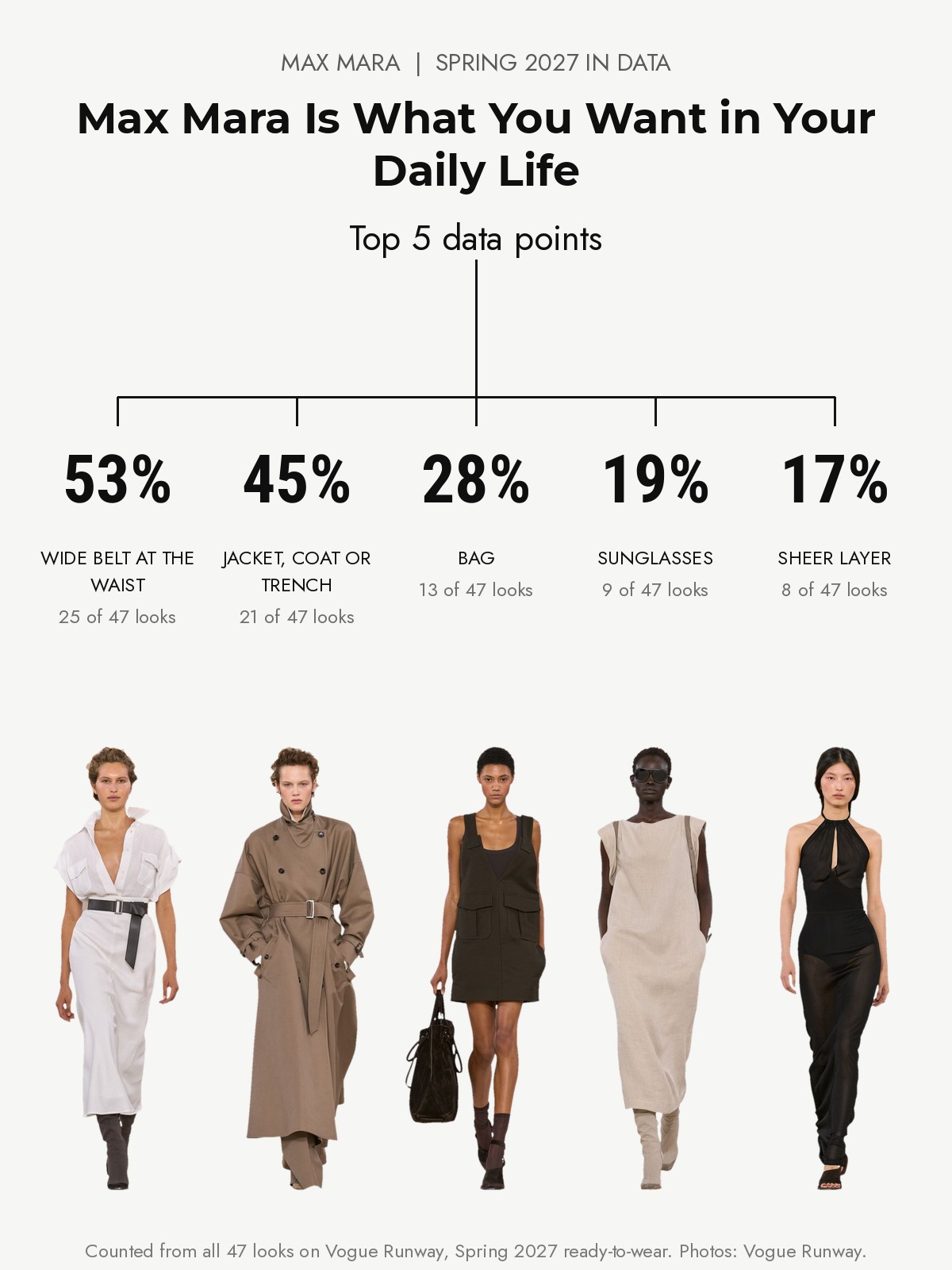
Ian Griffiths built Max Mara's spring collection on the utility wardrobe, with storm-flap trenches, hunting gilets and wide belts on more than half the looks. It is a show about clothes you actually use.
Max Mara Spring 2027: What You Want in Your Daily Life
An argument about luxury
Ian Griffiths opened with a statement I wish more designers would make. He said the word luxury is used very lazily, and that if luxury means something you do not need that costs a lot, then Max Mara is not luxury at all, because it is what you want in your daily life.
His concept for the season is a luxury built on utility, taken from the icons of the utility wardrobe: the utility vest, the cargo vest, the trench and the safari jacket. He is not dressing anyone for sailing, shooting or camping. The vests and pockets are there to say you are ready for anything, and that you are also comfortable.


Clothes you could survive a storm in
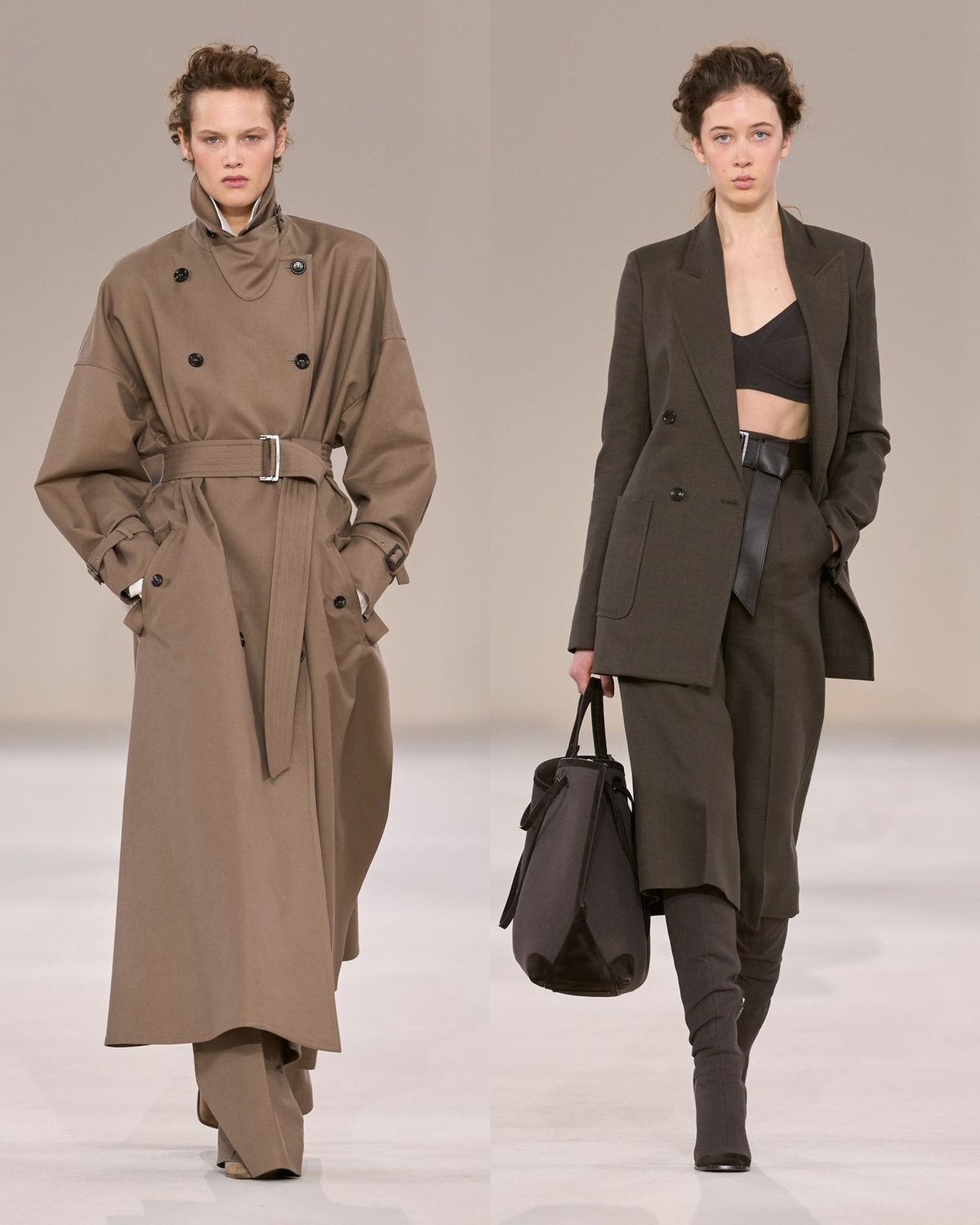
The first looks sound almost absurd, and I mean that kindly. There is a cigar-brown wrap skirt held at the thigh by leather straps sturdy enough to cinch with mittens on, a rose-toned silk-linen jacket with matching shorts under an open-backed hunter's gilet with pockets big enough for a brace of grouse, and a floor-length nut-brown trench with storm flaps that you could camp in.
None of it is meant to go outdoors. I find that funny and a bit brilliant, because the practical details become the decoration. A pocket with a bellows is more interesting than a bow.


The belt does all the styling
Skirts and pants sit high on the waist, fixed by wide belts that sweep down to the floor, and more than half the looks use one. I think that is the smartest decision in the show, because the belt is what makes a tailored jacket, a trench and a shirtdress feel like they belong to the same woman.
It gives you a waist without a corset and a point of view without a logo. If you are going to borrow one idea, borrow that one, and wear it over something plain. The bags are big, soft and roomy, which fits the whole imaginary-schooner logic.


Sheer, then bias-cut
The part that surprised me is the sheer organza. Jumpsuits and flight jackets are cut in it, so the utility idea turns sensual, a bit Hepburn and Bacall, and it sits well against all that camel and olive.
The last section moves into bias-cut evening knits, some of which are a dress and separates at the same time. I like that the practicality follows you into the evening, because most eveningwear forgets that anyone has to sit down. This is a show about clothes you want to use, and it is quietly convincing.