Buying better stopped being a slogan and became a measurable habit, with repair counts and material targets now published by names like Patagonia. This edit gathers menswear with a clear story, from John Smedley's 1784 mill to AGOLDE's low-impact denim and organic cotton jackets. Read on for the pieces I would keep for a decade.
Menswear Made With a Lighter Footprint
Light Jackets and Summer Suit Jackets
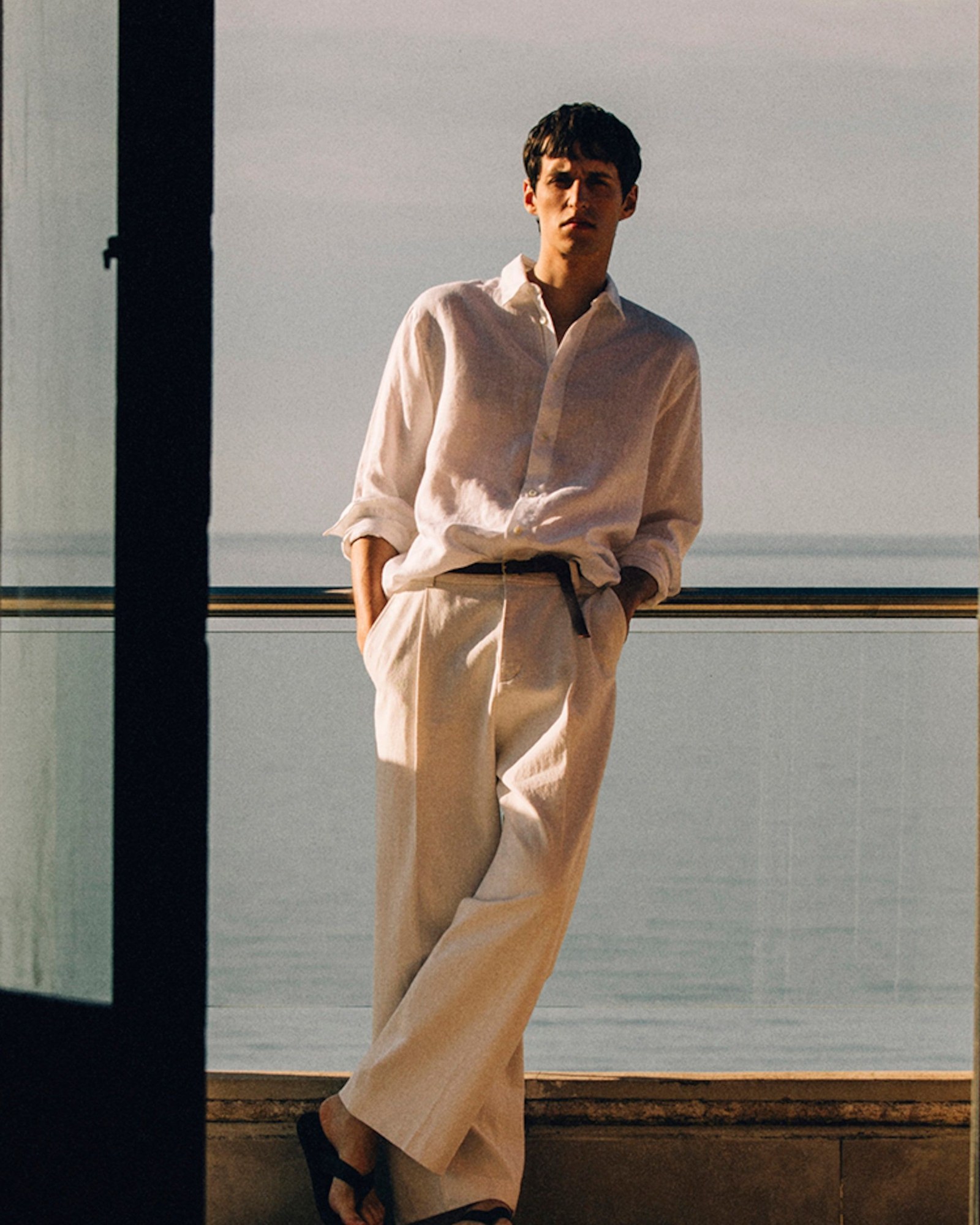
On Black Friday, 25 November 2011, Patagonia ran a full-page ad in the New York Times with the headline Don't Buy This Jacket, above a photo of its R2 fleece. It was tied to the company's Common Threads Initiative and asked shoppers to buy less and repair what they own. Fifteen years on, the idea has turned into numbers. Source Fashion's coverage of Patagonia's first Work in Progress report, from November 2025, says the company repaired 174,799 products, that 84 percent of its fabrics and trims were preferred materials, and that new products are made without intentionally added PFAS. That is the standard I want from menswear now: say what you did, then show the receipts. Start with jackets. Our Legacy, the Stockholm label founded in 2005, makes a slightly padded organic cotton-twill jacket in black that works as a light coat through October. MANAAKI, created by Kat Tua to reconnect with her Maori heritage, is named for a word that means to cherish and sustain for future generations, and the Pita garment-dyed organic denim jacket in green is the clearest expression of it. Wear it over a gray tee and navy trousers. What I would skip is the Portuguese Flannel seersucker suit jacket for a winter office, because it is a warm-weather piece and it shows.
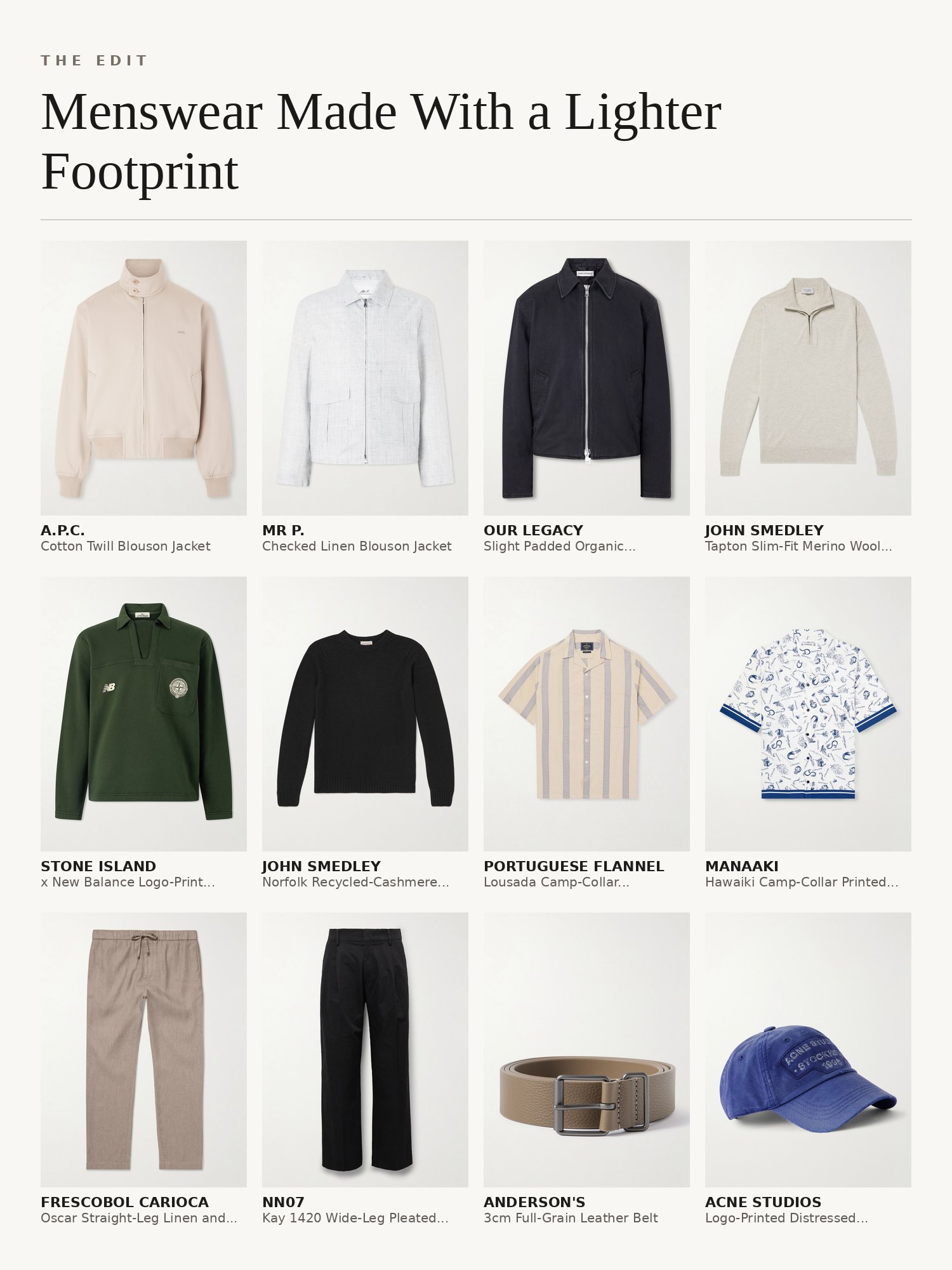

Cotton Twill Blouson Jacket
A.P.C.
$695

Checked Linen Blouson Jacket
Mr P.
$570

Slight Padded Organic Cotton-Twill Jacket
Our Legacy
$890

Pita Garment-Dyed Organic Denim Jacket
MANAAKI
$440

Olando Logo-Print Cotton-Poplin Jacket
Acne Studios
$850

Stone Island Denim Jacket
Stone Island
$850

Atlantico Organic Cotton-Seersucker Suit Jacket
Portuguese Flannel
$265

Shinji Shawl-Collar Linen Suit Jacket
A Kind Of Guise
$825
Merino Knits, Hoodies and Sweatpants
John Smedley is the oldest name in this edit by a wide margin. It was established in 1784 at Lea Mills in Derbyshire, where it still operates, it is family-run, and every garment is marked Made in Great Britain. The Tapton half-zip in gray merino is the pullover I would buy first, and the Norfolk, a recycled-cashmere and merino blend in black, is the one that makes the point about materials without saying a word. Our Legacy's Ultra Ribbed zip-up in black is the more modern version. For sweats, the Mr P. tapered merino and cashmere-blend sweatpants are a smart trick, because they look like trousers when you stand up and feel like pajamas when you sit down. Mr P. is Mr Porter's own label, launched on 7 November 2017 around a short list of core pieces released in five small drops rather than big seasons. The AMI PARIS embossed hoodie in beige is the easy weekend layer. My test for a knit is to pinch the cuff and see how fast it springs back. What I would skip is the Stone Island and New Balance polo sweater under a coat with a tight sleeve, because it is built to be seen.

Tapton Slim-Fit Merino Wool Half-Zip Sweater
John Smedley
$480

Ultra Ribbed Merino Wool Zip-Up Sweater
Our Legacy
$810

x New Balance Logo-Print Cotton-Jersey Polo Sweater
Stone Island
$520

Norfolk Recycled-Cashmere and Merino Wool-Blend Sweater
John Smedley
$545

Logo-Embossed Cotton-Jersey Hoodie
AMI PARIS
$490

Layered Logo-Embroidered Cotton-Jersey Sweatshirt
Acne Studios
$580

Tapered Merino Wool and Cashmere-Blend Sweatpants
Mr P.
$355

x Basso Giro Alpino Logo-Detailed Cotton-Jersey Hoodie
A Kind Of Guise
$190
Camp-Collar Shirts, Polos and T-Shirts
Here is where a lighter footprint is easiest to practice, because shirts get worn every week. Portuguese Flannel is a four-generation family business with mills in and around Guimarães, and its Lousada embroidered stripe in beige and the blue Prana stripe both have the loose camp collar that looks good open. Hartford, imagined by Yves Chareton in 1979 and later returned to Paris, began with vintage-style shirts cut from old stocks of oxford and chambray fabric, a nice little piece of reuse in its own history. The Palmito printed shirt in navy keeps that idea going. AMI, founded in Paris in 2011 by Alexandre Mattiussi after a decade at Dior, Givenchy and Marc Jacobs, makes the gray merino polo, which is a cleaner choice than a cotton one in cool weather. For tees, the LEMAIRE cotton jersey in beige is the plain one I would own two of, and the Stone Island organic cotton jersey in gray is a quiet way to wear the compass. What I would skip is the Acne Studios Exford distressed tee under a blazer, because the oversize cut was made to hang loose and a jacket will bunch it.

Lousada Camp-Collar Embroidered Striped Cotton Shirt
Portuguese Flannel
$175

Every Checked Tencel® Twill Shirt
Our Legacy
$500

Hawaiki Camp-Collar Printed Lyocell-Twill Shirt
MANAAKI
$300

Palmito Camp-Collar Printed Shirt
Hartford
$265

Grandad-Collar Pinstriped Linen Shirt
Mr P.
$210

Prana Camp-Collar Striped Cotton Shirt
Portuguese Flannel
$160

Alban 1088 Recycled Grain de Poudre Overshirt
NN07
$455

Logo-Embroidered Checked Flannel Shirt
Acne Studios
$750

New Palmito Printed Woven Shirt
Hartford
$265

Milano Cotton Polo Shirt
Mr P.
$285

Alfie 60019 Striped Organic Cotton Polo Shirt
NN07
$265

Logo-Embroidered Merino Wool Polo Shirt
AMI PARIS
$490

Honeycomb-Knit Organic Cotton Polo Shirt
Mr P.
$270

Exford U Oversized Logo-Print Distressed Cotton-Jersey T-Shirt
Acne Studios
$410

Ribbed Cotton Henley T-Shirt
LEMAIRE
$395

x Basso Giro Alpino Logo-Print Cotton-Jersey T-Shirt
A Kind Of Guise
$150

x New Balance Logo-Print Cotton-Jersey T-Shirt
Stone Island
$250

Viggo Ribbed Stretch Organic Cotton and TENCEL™ Lyocell-Blend Tank Top
AGOLDE
$105

Logo-Appliquéd Cotton-Jersey T-Shirt
AMI PARIS
$320

Printed Cotton-Jersey T-Shirt
Our Legacy
$300

Logo-Printed Cotton-Jersey T-Shirt
MANAAKI
$120

Cotton Jersey T-Shirt
LEMAIRE
$365

x Basso Logo-Printed Cotton-Jersey T-Shirt
A Kind Of Guise
$110

Logo-Detailed Organic Cotton-Jersey T-Shirt
Stone Island
$280
Easy Trousers and Plenty of Jeans
AGOLDE is the denim label I would point to for this theme. It says it develops product in vertically owned facilities and uses laser technology, ozone machines and high-efficiency washes to cut its environmental impact. The 90's straight-leg in blue is the one I would start with, and the Deka is the straight alternative. Our Legacy's Vast distressed jean in white is my pick for summer. MANAAKI makes the Pita straight jeans in green, garment-dyed, so they will fade differently on everyone. LEMAIRE's twisted barrel-leg organic jeans in navy come from Christophe Lemaire's Paris house, founded in 1991. For trousers, Frescobol Carioca takes its name from the beach game created on Rio's beaches in 1945, and the Oscar drawstring in linen and cotton is exactly the vacation trouser you will wear at home all August. Mr P.'s James linen drawstring is the neutral version. A fast test for jeans: lift your foot to the chair and see if the hem rides up past the ankle. What I would skip is the Acne Studios glittered jean for any day that involves a client, because sparkle does not read as quiet.

Oscar Straight-Leg Linen and Cotton-Blend Drawstring Trousers
Frescobol Carioca
$315

James Straight-Leg Linen Drawstring Trousers
Mr P.
$285

STONE ISLAND GHOST Straight-Leg Logo-Appliquéd Cotton Cargo Trousers
Stone Island
$795

Kay 1420 Wide-Leg Pleated Organic Cotton-Blend Twill Trousers
NN07
$295

Banasa Straight-Leg Cotton-Blend Trousers
A Kind Of Guise
$380

90's Straight-Leg Jeans
AGOLDE
$230

1981 Wide-Leg Trompe L'oeil Printed Organic Jeans
Acne Studios
$950

Twisted Barrel-Leg Organic Jeans
LEMAIRE
$770

Vast Straight-Leg Distressed Jeans
Our Legacy
$680

Pita Straight-Leg Garment-Dyed Jeans
MANAAKI
$395

Deka Straight-Leg Jeans
AGOLDE
$230

Wide-Leg Glittered Jeans
Acne Studios
$950
Belts, Caps, Sunglasses and a Cardholder
Small things last the longest, which is why I like buying them well. Anderson's makes belts only, in Parma, and the company is family owned and run by Riccardo Valenti. Carlo Valenti named the firm after the Savile Row tailor Anderson and Sheppard, which tells you he loved English clothes. The 3cm full-grain leather belt in taupe is the one that will outlast the trousers it holds up. Mr P.'s 3.5cm woven leather belt in brown and LEMAIRE's 3cm braided leather belt both do the casual version. Bottega Veneta introduced its Intrecciato weave in 1975, and the Diamonds Dover cardholder in black is a tiny way to own it. For sunglasses, Jacques Marie Mage designs in Los Angeles, handcrafts in Japan and Italy, and keeps each design to batches of no more than 500 pairs, so the Rimbaud in black is a frame you will see rarely. A.P.C. and Acne Studios do the baseball caps. What I would skip is the Our Legacy snake-embellished belt with a heavy heritage jacket, because it is a decorative belt and will fight with it.

3cm Full-Grain Leather Belt
Anderson's
$170

Charlie Logo-Embroidered Cotton-Blend Canvas Baseball Cap
A.P.C.
$145

Logo-Printed Distressed Cotton-Twill Baseball Cap
Acne Studios
$310

Abstract Snake Embellished Leather Belt
Our Legacy
$720

3cm Braided Leather Belt
LEMAIRE
$750

Rimbaud Square-Frame Acetate Sunglasses
Jacques Marie Mage
$960

Diamonds Dover Intrecciato Leather Cardholder
Bottega Veneta
$550

3.5cm Woven Leather Belt
Mr P.
$270
Buy Less and Keep It Going
The most useful thing Patagonia's 2011 ad did was make buying less sound like a style decision. I think about it every time I build an outfit. The pieces in this edit reward that thinking. A John Smedley sweater from a mill that has been running since 1784, an Anderson's belt from a family firm in Parma, and an organic cotton jacket from Our Legacy are all clothes you can keep and repair, which is a lot more useful than a promise on a swing tag. If you are building the idea from scratch, start with the belt and the half-zip, since they go with everything. Then add one straight jean, one camp-collar shirt, and one light jacket for spring and autumn. Wear each piece until it needs a repair, and then repair it. The cleanest wardrobe is the one you stop shopping for, and that is a better goal than any badge.
More Shirts, Tees and Jackets for the Long Run
The idea behind this edit is to buy fewer things and keep them going, so this shelf is about the pieces that make that easy to do. I would begin with the Mr P. Western denim shirt and the Mr P. pointelle-knit cotton shirt, then add one of the Acne Studios jersey tees underneath. For layers, the A Kind Of Guise canvas jacket and the double-breasted checked suit jacket cover casual and smart, and the AMI PARIS merino sweater works with either. The Our Legacy brushed sweatshirt and TENCEL lyocell trousers make an easy pair, and the Stone Island Denim jeans and Anderson's polished leather belt finish things. What I would skip: the AMI PARIS polo under the suit jacket, since a shirt with a collar and a knit sits better there.

Western Denim Shirt
Mr P.
$270

Pointelle-Knit Cotton Shirt
Mr P.
$355

Logo-Print Cotton-Jersey T-Shirt
Acne Studios
$510

Fansas Logo-Print Crinkled-Jersey T-Shirt
Acne Studios
$450

Alvaro Printed Cotton-Blend Canvas Jacket
A Kind Of Guise
$460

Double-Breasted Checked Virgin Suit Jacket
A Kind Of Guise
$825

ADC Logo-Embroidered Merino Wool Sweater
AMI PARIS
$440

Logo-Embroidered Cotton-Piqué Polo Shirt
AMI PARIS
$250

Double Lock Brushed Cotton-Jersey Sweatshirt
Our Legacy
$500

Straight-Leg TENCEL™ Lyocell Trousers
Our Legacy
$550

STONE ISLAND DENIM Denim Straight-Leg Jeans
Stone Island
$455

4cm Polished Leather Belt
Anderson's
$495