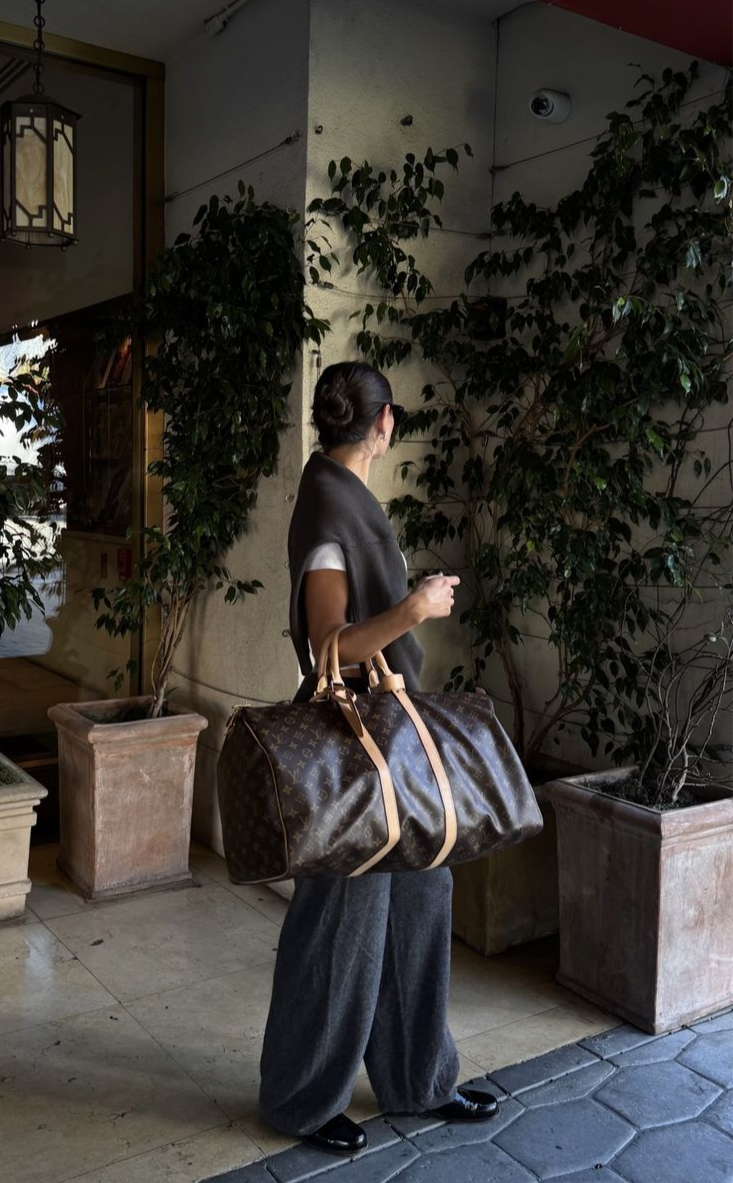
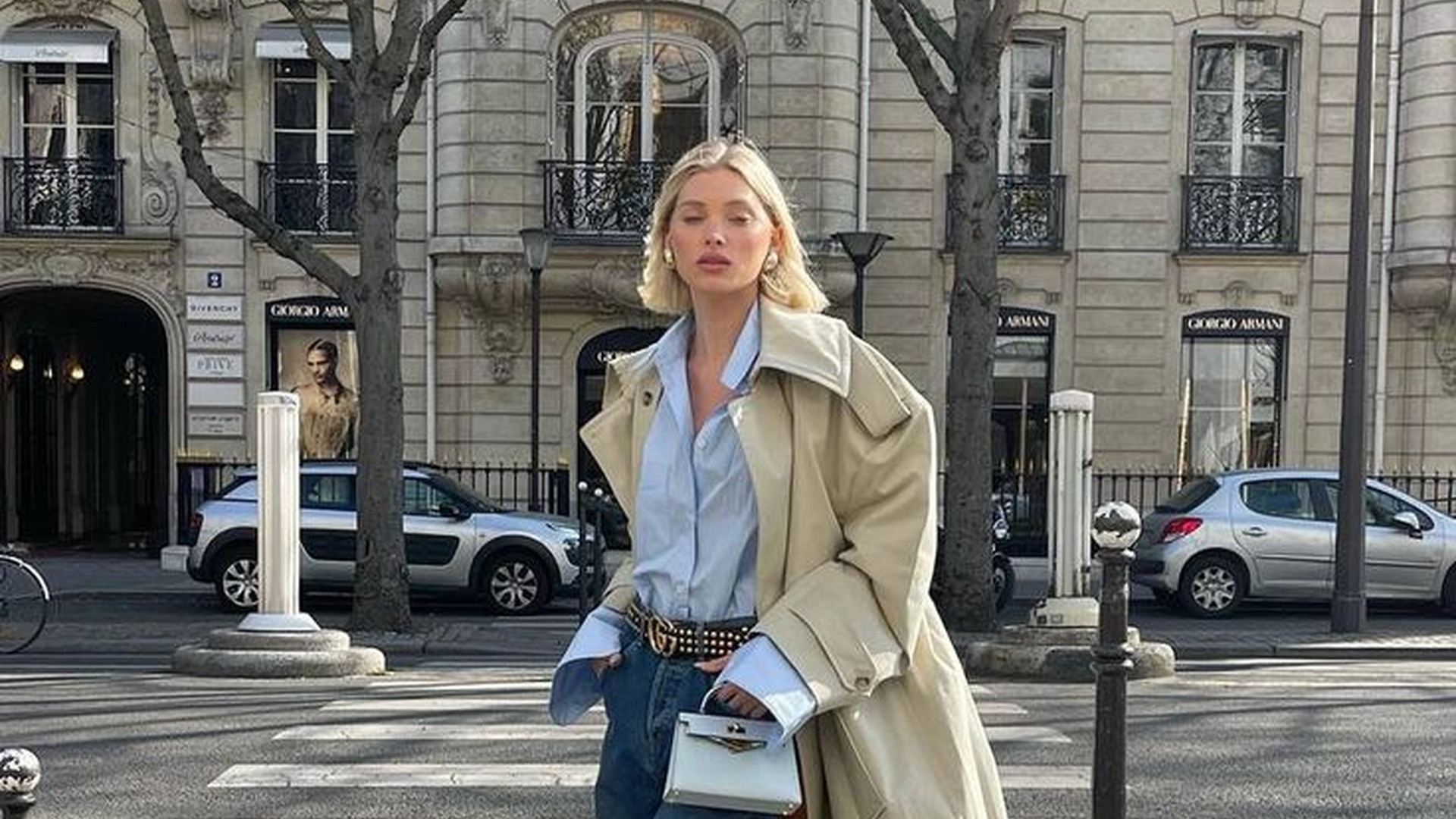
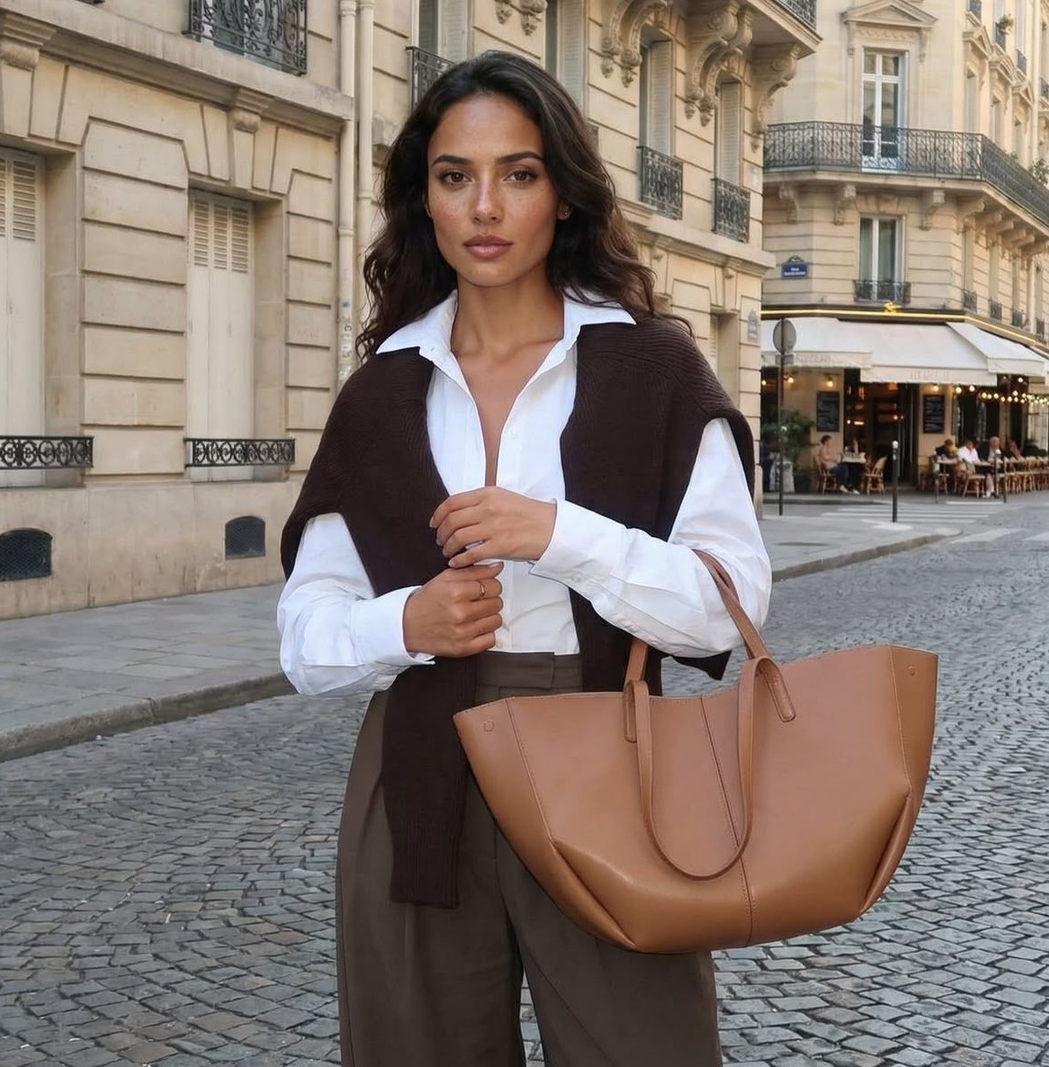
Minimalism spent the last decade meaning restraint to the point of blankness, all beige and no opinion. What replaced it keeps the discipline and adds material interest, which is a much harder thing to execute. This edit tracks the version of plain dressing that actually has a point of view.

Minimalism Grew A Personality
Outerwear
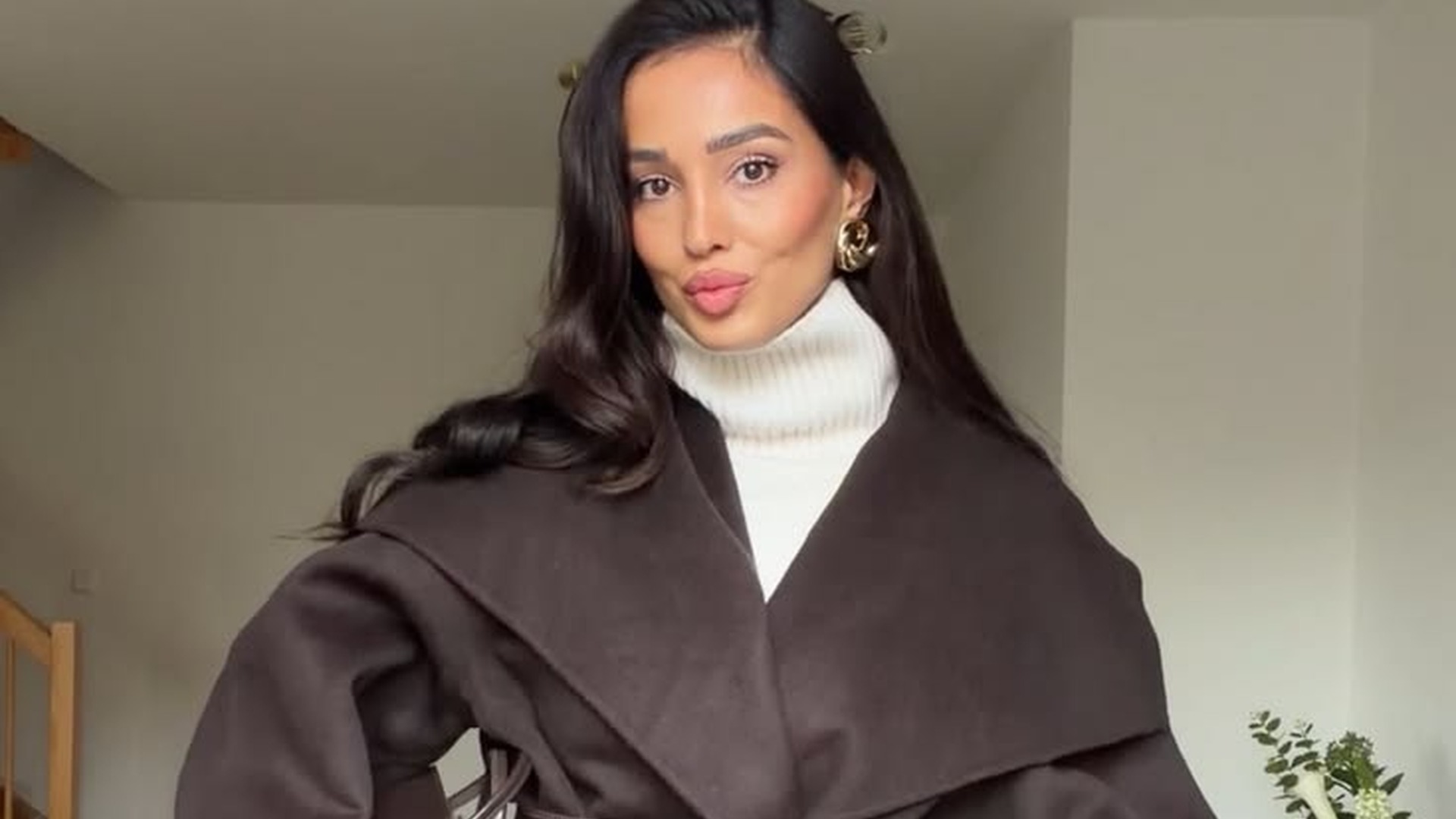
The new minimalism shows up first in outerwear, and it is not soft. Nylon, denim and belted bomber shapes give a plain coat a defined line, which is the difference between minimal and unfinished. Structure is the new substitute for detail.

Nylon Logo Jacket
Acne Studios
$900

'80s Denim Belted Bomber Jacket in Over A Cup
Levi's
$149.95

Tedgirl Faux Fur Coat
Max Mara
$4,460

Faux Fur Mid Length Coat
Herno
$414

Chelsea Jacket
Free People
$168

Ryder Suede Jacket
ALLSAINTS
$649

Cara Leather Jacket
REISS
$770

Shiloh HIGHLUXE™ Denim Jacket
DL1961
$319

Funnel Neck Maxi Trench Jacket
Avec Les Filles
$188

Leather Dorothy Brown Jacket
Susanna Chow
$995

Petra Leather Jacket
REISS
$895

Women's Funnel Neck Bomber Jacket
Mint Velvet
$280

Cass Cropped Tailored Jacket
A.L.C.
$695

Sculptural Suede Jacket
RÓHE
$1,940

The Last Chapter Wool-Blend Jacket
TWP
$695

Nantes Cinched Waist Parka
Moncler
$2,185

Kay Hooded Down Shearling Coat
Mackage
$1,390

Dorothy Leather & Shearling Trim Midi Coat
Susanna Chow
$995

Cashmere Belmont Trench Cape
Burberry
$4,050

Kim Oversized Leather Jacket
Sandro
$1,130

Reece Cropped Leather Trench Coat
Theory
$995

Suzanne Leather Jacket
By Malene Birger
$1,680

Courtney Double Breasted Jacket
Proenza Schouler White Label
$850

Wool & Cashmere Bomber Jacket
Polo Ralph Lauren
$598
More Outerwear
The second run adds weight. Shearling, moto cuts and oversized denim are where the look picks up the eighties reference that has been building all year, and the shoulder is noticeably squarer than it was. Minimalism with a silhouette is a different proposition entirely.

Soul Shearling Moto Jacket
HiSO
$1,570

Nara Oversized Denim Jacket
DL1961
$369

Wool & Cashmere Long Line Coat
LISA YANG
$1,805

Joanne Sweater Coat
Alice and Olivia
$695

Wkdanemone Boxy Faux Fur Jacket
Weekend Max Mara
$775

Petra Oversized Leather Jacket
REISS
$895

Coulson Funnel Neck Jacket
AGOLDE
$498

Rya Exaggerated Cape Wool Blend Wrap Coat
TOCCIN
$995

Shay Stand Collar Jacket
DIANE von FURSTENBERG
$698

Caspian High Low Double Breasted Jacket
STEVE MADDEN
$139

Dessa Faux Leather Funnel Collar Jacket
FRENCH CONNECTION
$198

Jude Bouclette Overcoat
Apparis
$326.25

Cable Wool & Cashmere Puffer Jacket
Polo Ralph Lauren
$698

Glenplaid Streamer One Button Blazer
Michael Kors Collection
$2,990

Malia Shearling Shawl Collar Coat
Gerard Darel
$2,325

Clay Leather Jacket
ALLSAINTS
$789

The Hooded Polar Opposite Jacket
MOTHER
$428

Shearling Coat
Maximilian
$3,995

Belma Faux Leather Moto Jacket
Isabel Marant Etoile
$990

High Collar Cotton Canvas Blouson Jacket
Courreges
$2,250

Trophy Club Stand Collar Blazer
Lioness
$110

Hudson Leather Jacket
A.L.C.
$600

Msteffige Wool Coat
Max Mara Studio
$1,965

Drawing Conclusions Cotton Jacket
TWP
$1,495
Still more Outerwear
More coats, more formality. Peacoats, flared cuffs and tie necks pull the category toward tailoring rather than toward sportswear, which is the direction the whole trend is moving. A plain coat with a real collar does an enormous amount of work.

Azira Tie Neck Flared Cuff Jacket
Cinq à Sept
$395

Oversized Peacoat
GANNI
$380

Leather Funnel Neck Jacket
Acne Studios
$2,900

Ignis Puffer Belted Faux Leather Down Vest
L'AGENCE
$975

rb Miramar Mallow Trucker Jacket
rag & bone
$348

Curly Faux Fur Coat
Herno
$975

High-Neck Gathered Jacket
NOCTURNE
$147.6

Dorothy Leather & Shearling Trim Midi Coat
Susanna Chow
$1,495

Alyssa Faux Leather Funnel Neck Bomber Jacket
TOCCIN
$495

Venita Faux Leather Slim Fit Collarless Blazer
Alice and Olivia
$550

Faux Leather Funnel Collar Bomber Jacket
BLANKNYC
$149

Zorina Wool & Cashmere Cardigan with Shearling Collar
SIMKHAI
$645

Deedee Jacket
STEVE MADDEN
$124

The Dean Plaid Blazer
Favorite Daughter
$448

Stella Faux Shearling Jacket
A.L.C.
$595

Calligraph Wool Long Coat
Issey Miyake
$2,855

Mercer Regalia Wool Long Sleeve Blazer
rag & bone
$648

Arlene Waxed Jacket
Barbour
$294

Cropped Faux Fur Peacoat
Michael Kors
$249.5

Hourglass Shaped Wool Blend Blazer
RÓHE
$1,290

The Faux Suede Long Coat
Joe's Jeans
$368

Merinillo Alba Short Shearling Jacket
ARMA
$2,565

Yara Cape Jacket
SIMKHAI
$595

Amélie Cotton Twill Jacket
A.L.C.
$550
Even more Outerwear
A last set, including the animal prints and reversible parkas. This is where a genuinely minimal wardrobe allows itself one loud thing, and print is the easiest way to do it. Restraint everywhere else earns it.

Cotton-Blend Animal Print Flare Hem Trucker Jacket
Liverpool Los Angeles
$139

Faux Fur Reversible Parka Jacket
EMME
$395

Eliza Canvas Bomber Jacket
rag & bone
$548

Drogo Herringbone Tweed Jacket
Isabel Marant Etoile
$885

Leather Funnel Neck Jacket
Maje
$965

Cropped Cape Jacket
Avec Les Filles
$158

Allyson Cotton Denim Stand Collar Jacket
STEVE MADDEN
$129

The Double Take Cotton Blazer
TWP
$1,195

Priscilla Zip Front Leather Jacket
Kobi Halperin
$998

Clay Suede Jacket
ALLSAINTS
$719

Kyoto Car Coat
LESET
$550

Reinvented Leather Jacket
RÓHE
$1,130

Penny Lane Faux Fur Jacket
BLANKNYC
$228

Silky Shearling Fur Coat
TOTEME
$4,160

Mlsmacro Faux Fur Jacket
Marella
$545

The Zip Bubble Jacket
Joe's Jeans
$243.6

Wool Remi Funnel Neck Jacket
Brandon Maxwell
$2,980

Empire Longline Coat
JLUXLABEL
$200

Carrie Fringe Robe Coat
SIMKHAI
$895

Double Faced Wool Blend Jacket
RÓHE
$1,245
Bags
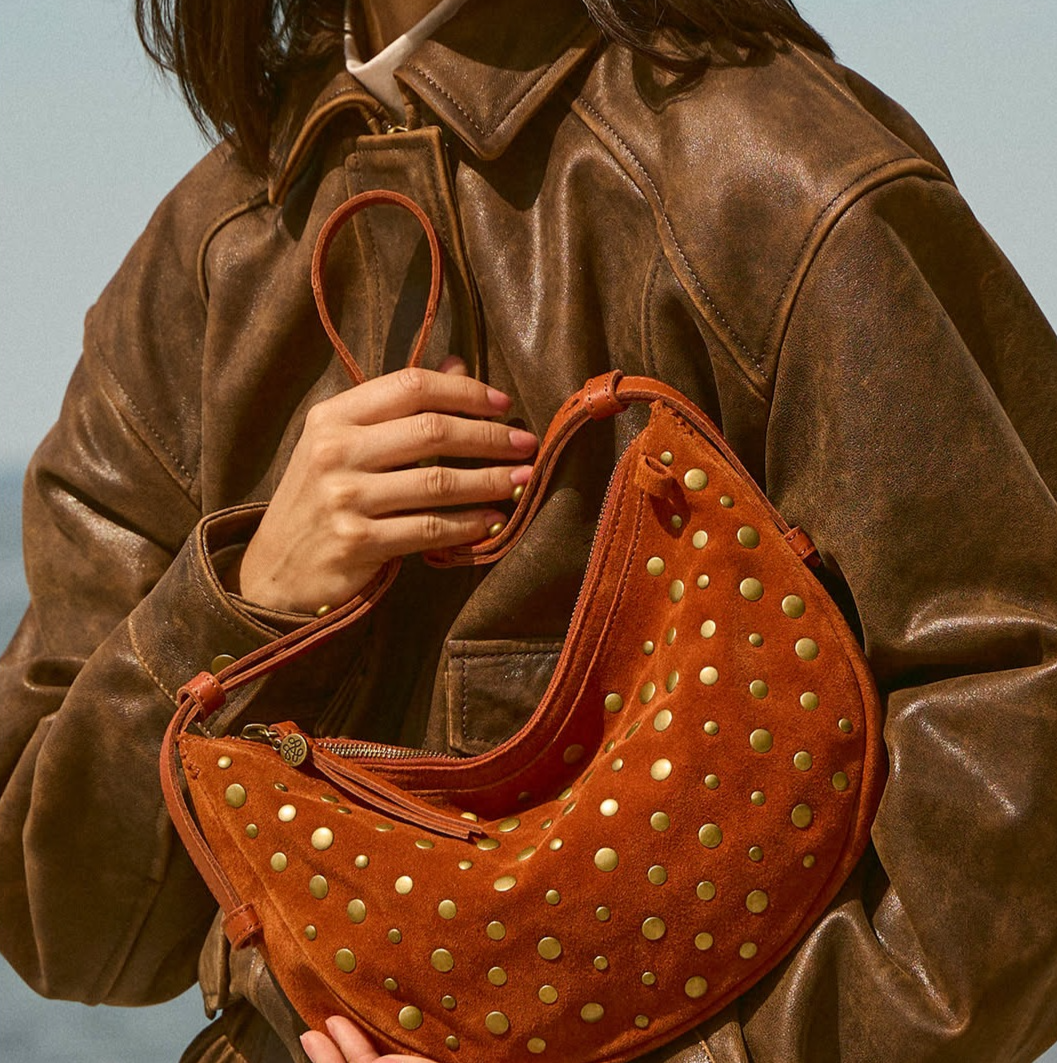
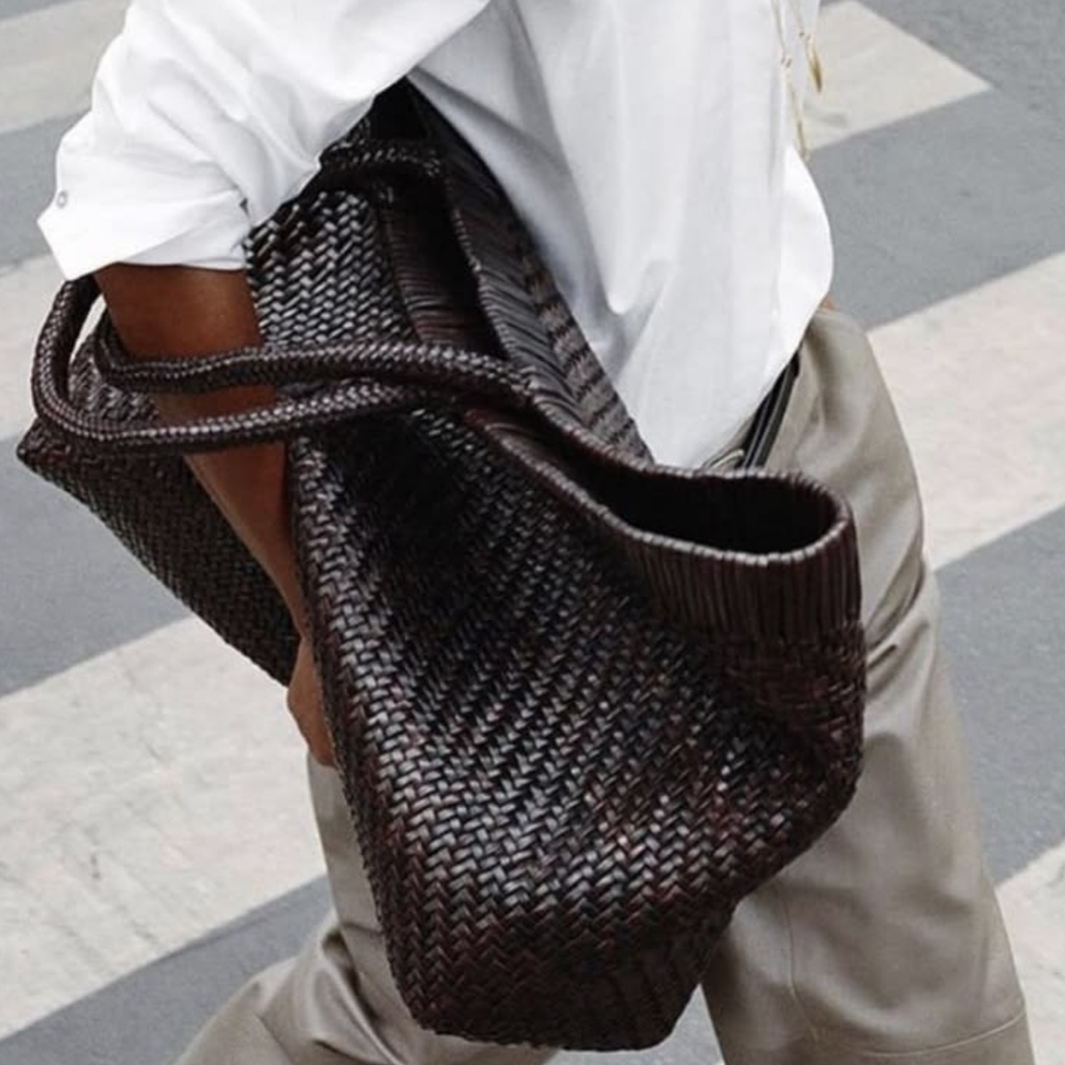
Bags are the clearest signal that minimalism changed. Calf hair, croc embossing and hard clutch shapes have replaced the unadorned leather tote that defined the last era, and the change is entirely about surface rather than shape. Same silhouettes, much more texture.

Polo Play Calf Hair Tote Bag
Polo Ralph Lauren
$598

Mini T Lock Leather Clutch
TOTEME
$760

Zella Small Leopard Print Calf Hair Clutch
Loeffler Randall
$325

Cassandre Large Envelope Pouch in Nubuck
SAINT LAURENT
$1,200

Uptown Pouch in Crocodile-Embossed Shiny Leather
SAINT LAURENT
$800

Cinch M Shiny Embossed Leather Shoulder Bag
Jimmy Choo
$2,195

Cassandre Large Envelope Pouch in Lambskin
SAINT LAURENT
$1,100

CY Embossed Leather Bag
STAUD
$495

T Lock Mini Calf Hair Clutch
TOTEME
$860

Pushlock Suede Clutch
Liffner
$495

Intrecciato 10 Leather Tote
Bottega Veneta
$5,400

T-Lock Convertible Clutch
TOTEME
$990

Seamed Faux Leather Clutch
Freja
$268

CY Convertible Leather Bag
STAUD
$495

Zella Small Suede Clutch
Loeffler Randall
$325

Medium Pushlock Leather Pouch
Liffner
$625

Elmhurst Medium Calf Hair Box Satchel
rag & bone
$398

Ziger Calf Hair Top Handle Clutch
Veronica Beard
$550

Lee Radziwill Snake Embossed Leather Crossbody Bag
Tory Burch
$695

Rodeo Mini Handbag
Balenciaga
$2,990

Cassandre Large Envelope Pouch in Shiny Leather
SAINT LAURENT
$1,200

Mini Pushlock Calf Hair Clutch
Liffner
$425

Medium Belted Leather Tote
Liffner
$795

Zella Small Embossed Leather Clutch
Loeffler Randall
$325
More Bags
More bags, and bigger names. Structured handbags and pushlock hardware are where the category has landed after a decade of soft, collapsing shapes. The bag holds its own form again, which quietly changes how an outfit reads.

Rodeo Handbag Medium
Balenciaga
$4,790

Croc Embossed Leather Pushlock Pouch
Liffner
$625

Andiamo Intrecciato Top Handle Bag
Bottega Veneta
$3,700

Velvet Envelope Clutch
Altuzarra
$595

Mini Cloud Clutch
Mansur Gavriel
$595

Prism Convertible Leather Shoulder Bag
Veronica Beard
$350

Mini Calf Hair Tote
Strathberry
$685

T-Lock Leather Crossbody Bag
TOTEME
$790

Elena Medium Leather Shoulder Bag
Reformation
$348

Paris Pouch
SAINT LAURENT
$990

Cuff Leather Clutch
STAUD
$495

Ziger Prism Calf Hair Shoulder Bag
Veronica Beard
$375

Maude Small Embossed Leather Carryall Handbag
STAUD
$495

Polo Play Calf Hair Tote Bag
Polo Ralph Lauren
$698

Uptown Pouch in Patent Leather
SAINT LAURENT
$800

Kazia Nano Crossbody Bag in Cheetah
Cult Gaia
$498

La Passeggiata Medium Top Handle Bag
THE ATTICO
$2,050

Bead Belt Leather Structured Shoulder Bag
St. Agni
$489

Suede Clutch
Veronica Beard
$575

Saffiano Leather Envelope Clutch
Prada
$800
Shoes
Shoes have gone pointed and polished. Slingbacks, pumps and pointed-toe flats came back the moment the chunky sneaker stopped being interesting, and the print versions are how the trend avoids feeling austere. A sharp toe is doing a lot for very little.

Women's Siena Zebra Slingback Pumps
SCHUTZ
$198

Women's Macki Leather Pointed Toe Slingbacks - Exclusive
AQUA
$138

Women's Mikki Suede Stiletto Ankle Boots
SCHUTZ
$228

Women's Calista Leather Slingback Pumps
Reformation
$298

Women's Bianka Woven Leather Slingback Pumps
Sam Edelman
$150

Women's Ruche Patent Leather Slingback Pumps
Stuart Weitzman
$495

Women's Newbury Calf Hair Chelsea Boots
rag & bone
$578

Women's Vera Zip Knee High Boots
Stuart Weitzman
$850

Women's Arabesq-F Calf Hair Bow Ballet Flats
Jeffrey Campbell
$170

Women's Calf Hair Kitten Heel Pumps
TOTEME
$880

Anita Fold Over Suede Booties
Cinq à Sept
$625

Women's Paloma Patent Leather Kitten Heel Pumps
rag & bone
$398

Women's Emory Pointed Toe Leather Ballet Flats
Sam Edelman
$140

Women's Printed Calfhair Ballerinas
Prada
$1,270

Women's Wally Sock Ankle Boots
STAUD
$495

Women's Bryant Calf Hair Penny Loafers
Stuart Weitzman
$575

Women's Arc Slingback Pumps
Jil Sander
$1,290

Women's Date Mule Pumps - Exclusive
JUDE
$590

Women's Atlas V Zebra Calf Hair Pumps
Gentle Souls by Kenneth Cole
$179

Women's Lola Croc Embossed Leather Loafers
Favorite Daughter
$275

Women's Printed Leather Slingback Pumps
Prada
$1,490

Women's Fabric Slingback Pumps
Prada
$1,320

Women's Faux Fur Trim Ankle Boots
Stella McCartney
$1,125

Holli suede slingback pumps
Amina Muaddi
$860
More Shoes
The rest of the footwear stays flat. Ballet flats and croc-embossed leather are the most-worn shoes in this entire aesthetic and the least discussed, which is usually a sign that something has genuinely stuck. Not new, just permanent now.

Women's Blaine Flats
Reformation
$268

Women's Kaylee Croc Embossed Leather Loafers
Reformation
$278

Women's Pinch Leather Loafers
Givenchy
$1,090

Women's Margot Flats
Jimmy Choo
$650

Women's Babouche Kitten Heel Pumps
Le Monde Béryl
$595

Women's Slash Leather Loafer Pumps
Proenza Schouler
$890

Women's Narcisa Calf Hair Mule Flats
Veronica Beard
$395

Women's Avery Leather Ballet Flats - Exclusive
Aqua
$138

Women's Wally Leather Sock Ankle Boots
STAUD
$495

Women's Spencer Leather Penny Loafers
Stuart Weitzman
$575

Women's Inez Leather Mules
Reformation
$298

Mamadrague leather ballet flats
Christian Louboutin
$845
Tops
Tops are deliberately plain and that is the discipline. Button-ups with an interesting collar and simple knit tops are the base the rest of the look is built on, and getting them slightly wrong ruins everything above. The least glamorous grid, the most consequential.

Ginny Top
525 America
$89

Cutaway Collared Button Up Shirt
Theory
$325

Monsieur Tie-Waist Shirt
Issey Miyake
$1,055

Pio Shoulder Pad Top
ba&sh
$125

Polo Bear High-Pile Fleece Funnel Neck Top
Polo Ralph Lauren
$398

Leather Knit Trim Long Sleeve Top
Victoria Beckham
$1,990

Animal Print Perfect Sweater Tee
Sanctuary
$89

Glossy Enver Satin Draped Top
Fabiana Filippi
$1,225

Lizette Long Sleeve Top
WAYF
$75

Semara Pleated Top
By Malene Birger
$330

Silk Foulard Top
RÓHE
$965

Lennon Top
Line & Dot
$99

Carter Leopard Print Top
Area Stars
$125

Lennon Top
Line & Dot
$99

Shoulder Pad Long Sleeve Crewneck Top
Norma Kamali
$175

Adie Wool Stretch Shirt
REISS
$350
Dresses
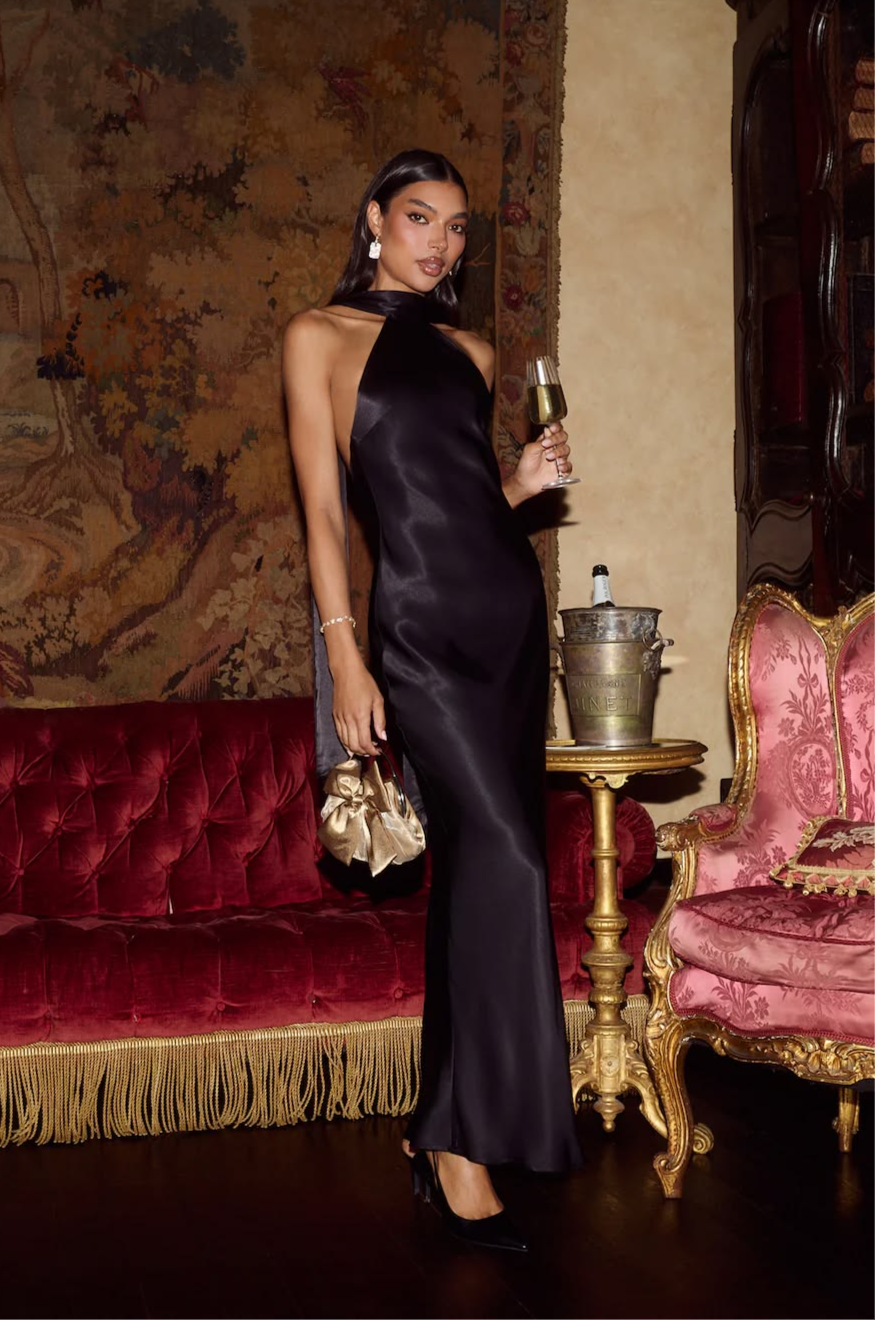
Dresses are minimal in a specifically formal register. Georgette and cape detailing keep the silhouette clean while giving it movement, which is how plain evening dressing avoids reading as plain. Cut, not decoration.

Georgette Cape Gown
Lauren Ralph Lauren
$265

Cape Georgette Cocktail Dress
Lauren Ralph Lauren
$195

Chaney Rope Fringe Dress
Altuzarra
$1,795

Valerie Long Sleeve Collared Button Front Dress
TOCCIN
$625

Sienna Printed Belted Shirtdress
REISS
$468

Long Cape Dress
DES_PHEMMES
$610

Jordan Fringe Trim Cape Dress
SIMKHAI
$695

Silk & Wool Linear Shift Dress with Open Back
Jil Sander
$4,890
Accessories
Accessories reduce to eyewear. A single strong sunglass frame is doing all the finishing work here, and there is a reason the same few shapes keep reappearing. One good frame beats a drawerful.

Pilot Sunglasses, 55mm
CELINE
$430

Triomphe Mini Oval Sunglasses, 54mm
CELINE
$450

Women's Mia Leopard Print Calf Hair Belt
rag & bone
$168

Triomphe Mini Oval Sunglasses, 54mm
CELINE
$450

DiorPacificS3I Rectangle Sunglasses, 52mm
DIOR
$460

PR B15S Round Sunglasses, 51mm
Prada
$578

SL 596 aviator sunglasses
Saint Laurent
$520

Logo rectangular sunglasses
Miu Miu
$406
Trousers
Trousers stay wide, pleated and dry. Satin bias cuts and pleated wool are the two ends of the category and both reject the stretchy, tapered trouser that dominated for years. Fabric behaviour is the whole difference.

Jeiel Satin Bias Pants
Lucy Paris
$88

Wide Leg Pleated Wool Trousers
Theory
$395

Dean Cotton Balloon Pants
Brandon Maxwell
$1,200

Sculptural Tailored Trousers
ROHE
$1,105

Calligraph Draped Waist Pants
Issey Miyake
$1,620

Jeanie Strapless Top & Jeiel Satin Pants
Lucy Paris
$78

Animal Print Ruffle Tie Long Sleeve Top & Balloon Pants - Exclusive
AQUA
$78

Sbiru virgin wool wide-leg pants
Loulou de Saison
$330
Knitwear
Knitwear is small but doing something specific. Turtleneck capes and argyle cardigans introduce pattern into a wardrobe that officially does not have any, which is the trick that keeps this look from going flat. A cardigan is where minimalists cheat.


Jewelry
Jewelry is reduced to the neck. Sculptural chokers and heavy links are the single decorative note in an otherwise plain outfit, and one piece is the correct number. More than that and the discipline collapses.


Also in the edit
The rest is where the aesthetic gets tested: shirts, capes, leather pieces that resist tidy grouping. Minimal wardrobes always have a corner like this. It tends to be where the good things are.

Izel Cape Gown
SIMKHAI
$995

Women's Indy Leather Knee High Boots
Loeffler Randall
$695

We The Free Good Luck Leopard Barrel Leg Jeans in Brown Sugar
Free People
$128

Mini Toy Shopping in Crocodile-Embossed Leather
SAINT LAURENT
$1,290

Delora Long Sleeve Midi Dress
Alice and Olivia
$395

Split Neck Belted Dress
T Tahari
$148

Wool Cape Sweater
RÓHE
$870

Jett Flock High Rise Barrel Jeans in Leppo Brown
ALLSAINTS
$289

Lowen Cashmere & Silk Double Breasted Cardigan
Brandon Maxwell
$2,400

Davis Silk Blend Blouse
Kobi Halperin
$498

Enika Wool & Cashmere Cropped Cardigan
FFORME
$1,095

Aris Wool Tailored Wide Leg Trousers
FFORME
$995

Miu Regarde Oval Sunglasses, 54mm
Miu Miu
$518

Bateman Suede Jacket
Veronica Beard
$1,898

Una Angelic Crystal Tennis Necklace, 14.875-16.125"
Swarovski
$320

Women's Vick Buckle Ballet Flats
SCHUTZ
$178

Long Mixed Material Lace Skirt
Sandro
$365

The Favorite Pull On Skirt
Favorite Daughter
$228

Asymmetric Wool Skirt
Victoria Beckham
$990

Lettering Oval Sunglasses, 51mm
Fendi
$290
Our honest take
The honest read is that this is minimalism for people who found actual minimalism boring, and that is a legitimate reason to change. The risk is obvious: add enough texture, hardware and print and you are just dressing normally while calling it a philosophy. The version that works keeps the shapes plain and puts every bit of the interest into the material.