Liposomal NAD+ is a delivery claim wrapped around a fragile molecule, so I read the labels, the founders and the research before choosing twelve products. The edit runs from Quicksilver Scientific liquids to plain capsules to the nicotinamide riboside formulas that come with human trials.
Reading the Label on Liposomal NAD+ Like a Skeptic
NAD+ entered the supplement conversation through a piece of milk chemistry. In 2004 the biochemist Charles Brenner reported that nicotinamide riboside, a natural form of vitamin B3 found in milk, could be turned into NAD+ in people, and a whole aisle grew out of that finding. Liposomal NAD+ is the next chapter, and it is the one I trust least on paper, so I read before I picked. The idea is simple: wrap the molecule in a bubble of phospholipid, the same family of fats that builds cell membranes, and hope it survives the trip. The loudest version of that idea belongs to Quicksilver Scientific. Its founder, Christopher Shade, is a PhD chemist. He was dealing with mercury toxicity, needed a way to get glutathione absorbed, found the liposomes on the market low and variable in quality, and made his own. That origin is why I start with a lab founder rather than a marketing team. Around him I gathered plain capsules, capsules sold as liposomal, and the nicotinamide riboside formulas that come with trials attached. Any NAD+ supplement deserves a skeptical read, and these get two: the brand pitch, and the independent evidence, which is thinner than the labels suggest. Ask your doctor before starting any of them.


Capsules and the fine print
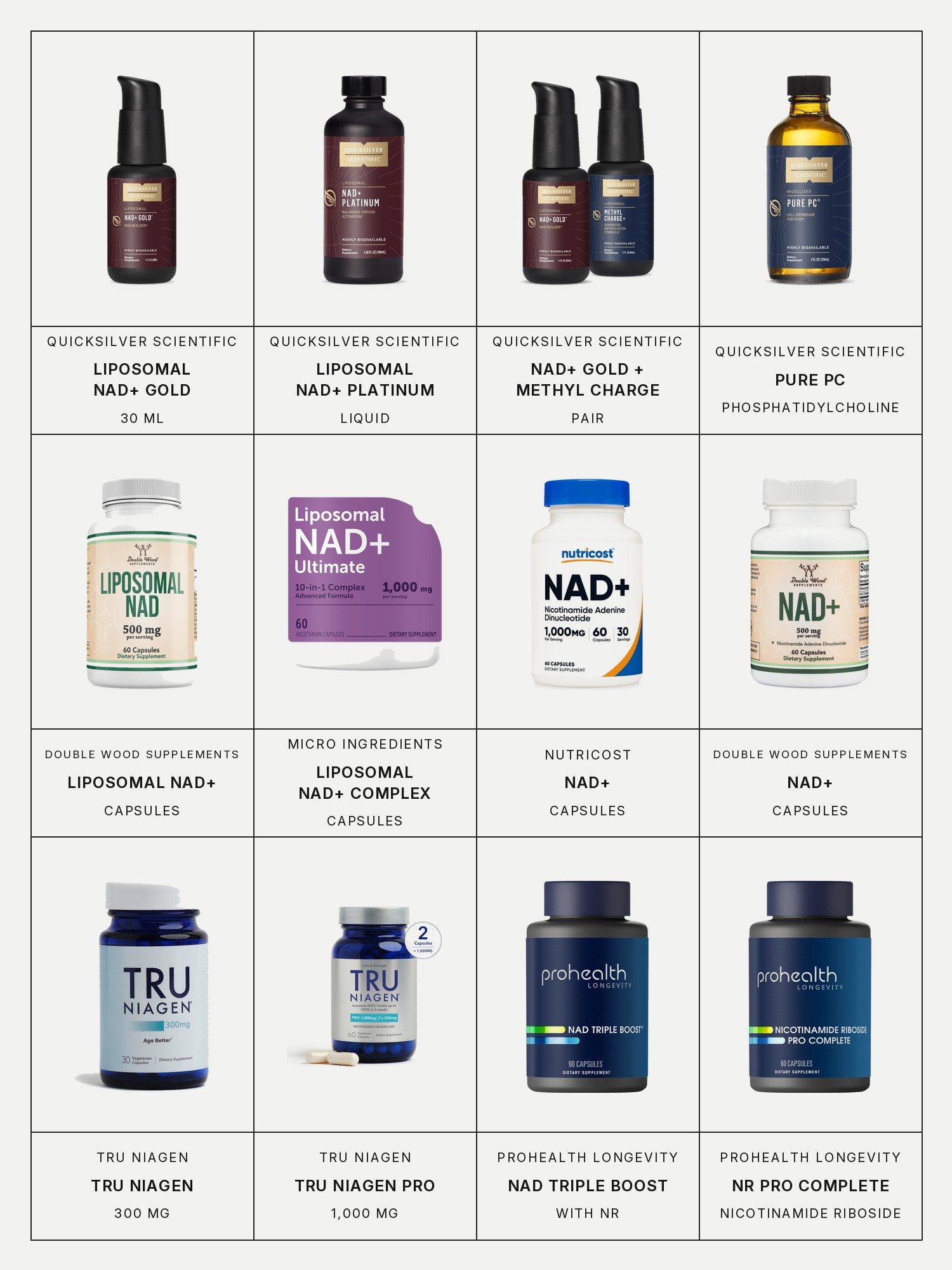
Grid two is capsules, and it is where labels get strange. Double Wood Supplements was started in 2013 by twin brothers Reese and Evan Wood around single ingredients and published certificates of analysis, which suits a reader who wants to see the number. It appears twice here, one capsule sold as liposomal and one plain, each listing 500 mg of NAD+ per serving. Micro Ingredients goes the other way, a ten-in-one complex with 250 mg of a liposomal blend, said to provide 100 mg of NAD+, beside grape seed, green tea, turmeric, resveratrol and astaxanthin. Nutricost's plain NAD+ capsules list 1,000 mg per serving, 60 servings a bottle. Here is the awkward part. The site AboutNAD says there are no peer-reviewed human studies showing oral liposomal versions raise NAD+ in the body, and that a lab tested 12 products sold as liposomal and found no detectable NAD+ in eight softgels. That lab belongs to Niagen Bioscience, which makes Tru Niagen, in grid three, so weigh the source. One independent review calls it the only published assay data on the category, and none of it names these four capsules.


The precursor with a paper trail
Grid three is where I would put my attention if a paper trail matters to you. Nicotinamide riboside is the precursor with the most published human work I could find, including a randomized trial in 140 overweight adults given 100, 300 or 1,000 mg of Niagen, the ingredient inside Tru Niagen, for eight weeks. It measured whole blood NAD+ and reported rises of 22, 51 and 142 percent at two weeks. That is a lab number, not a verdict on how anyone feels, and a 2023 review in Science Advances noted that NR trials have shown very few clinically relevant effects. Tru Niagen grew out of that research and comes in 300 mg and a 1,000 mg Pro. ProHealth Longevity, founded in 1988 by Rich Carson after his own ME/CFS diagnosis, pairs NR with other ingredients: Triple Boost, and a Pro Complete that adds TMG and trans-resveratrol. What I would skip is judging a bottle by the milligram count on the front. A bigger number says how much is in the capsule, not what a study measured, so read the dose against the trial before you compare labels.


What a label can actually prove
I keep coming back to Shade's glutathione problem. A founder needed something to reach his cells, built a delivery system to do it, and the category later stretched that logic to a large molecule where, in the sources I read, no published human study shows liposomes doing the job. Choose for what a label can prove: a stated amount, a certificate of analysis, a trial you can open. If any of these tempt you, bring the bottle to your doctor and ask what they make of it. I went deeper on a related idea in Cymbiotika Glutathione: What The Label Lists.