A sapphire ring can be a single blue center, a diamond halo, or a slim band made for a stack. I would choose by setting first, then decide how much color I want on my hand.
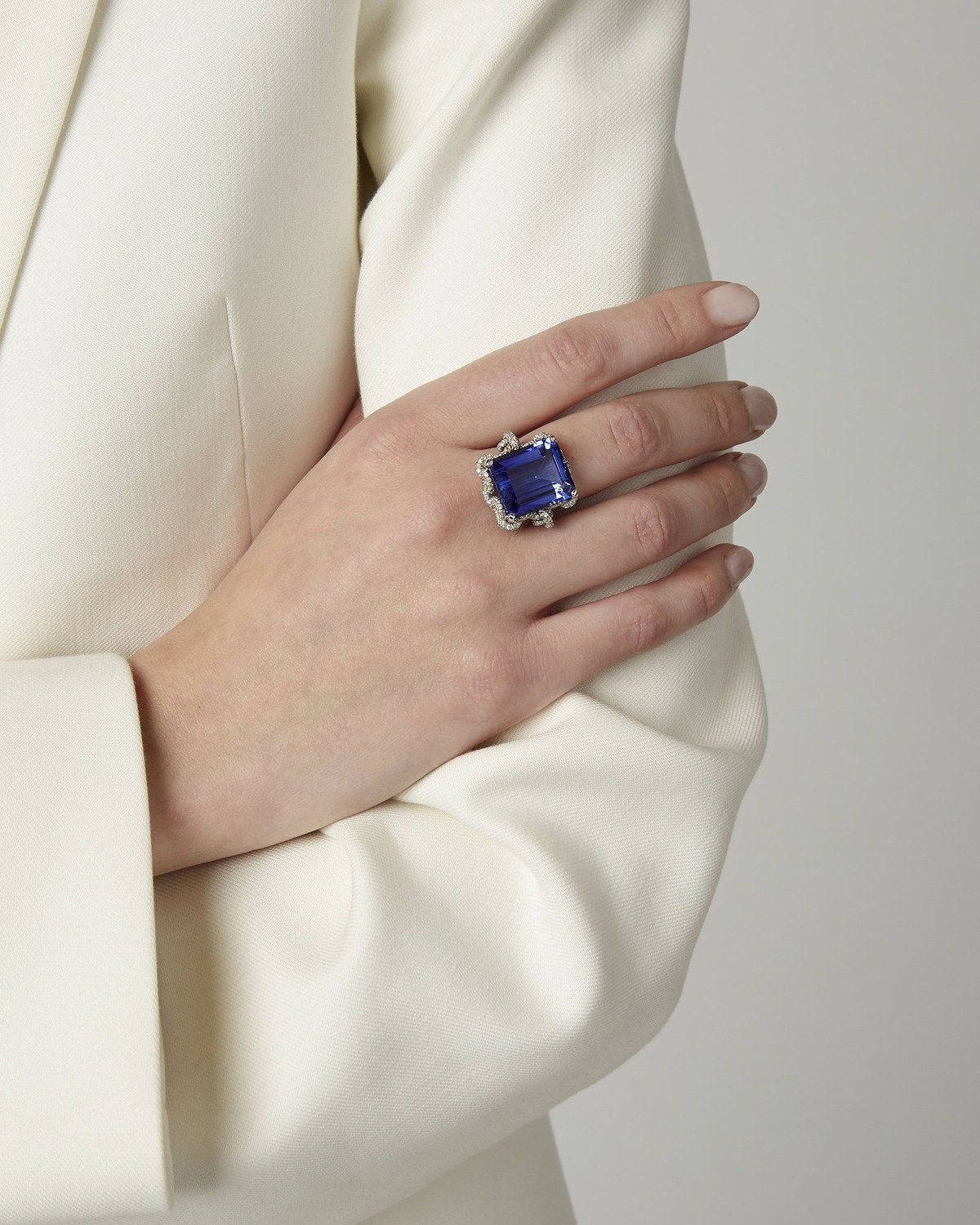
Sapphire Ring: A Royal Halo, a Quiet Solitaire
Blue sapphire solitaire and single-stone rings
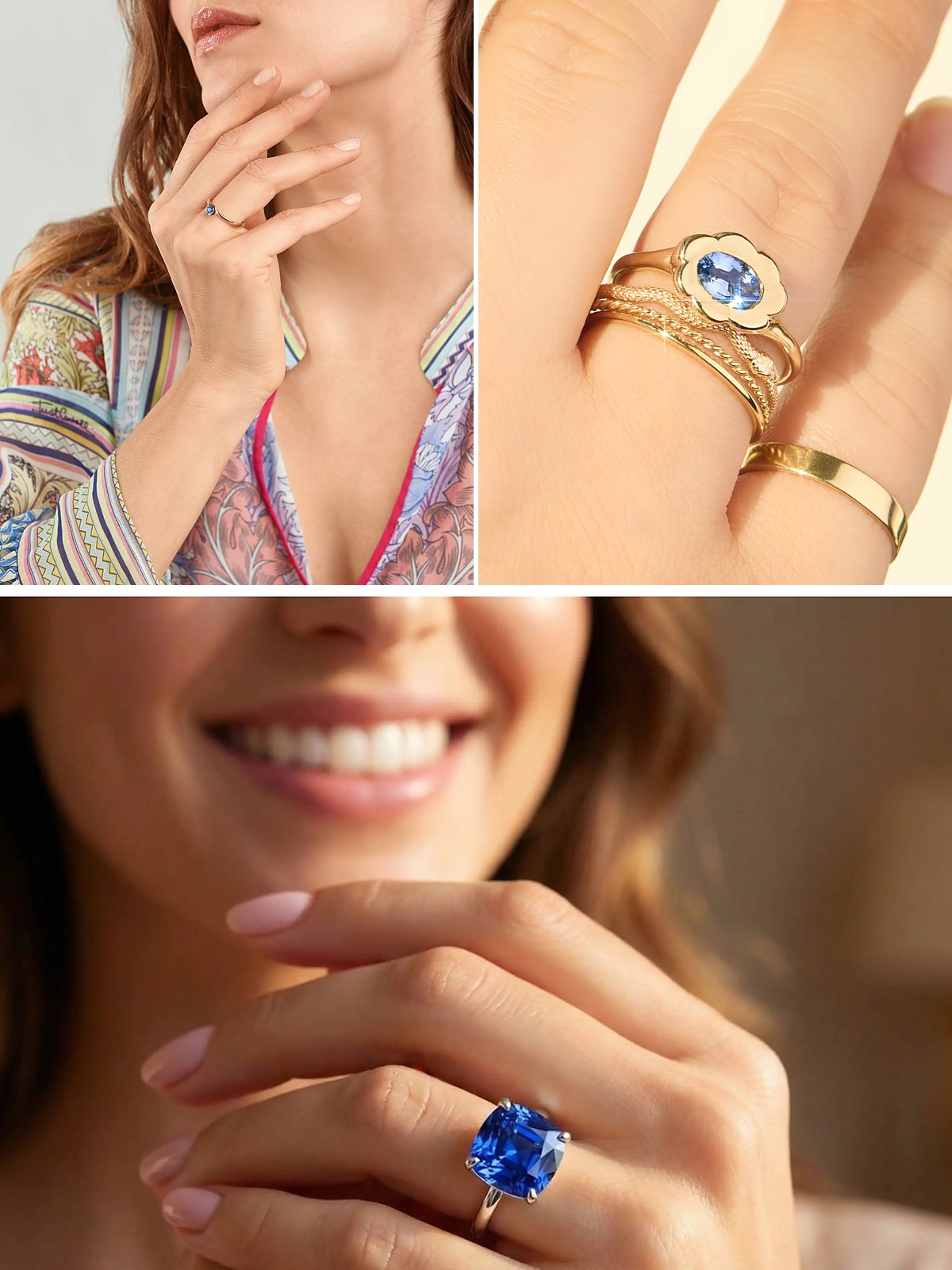
In 1981, Britain’s Prince Charles gave Lady Diana Spencer a blue sapphire engagement ring, bringing the stone into a very public royal story. A sapphire ring need not repeat Diana’s halo. I like the clarity of one blue center, especially when the setting gives it room to be itself.
The name reaches further back than the modern engagement story. GIA traces sapphire to the Greek word sappheiros, probably a reference to lapis lazuli. That blue association is strong, but the mood here comes from shape and metal: cushion, round, pear, white gold, yellow gold, rose gold. A solitaire can be a whole point of view without a line of diamonds around it.
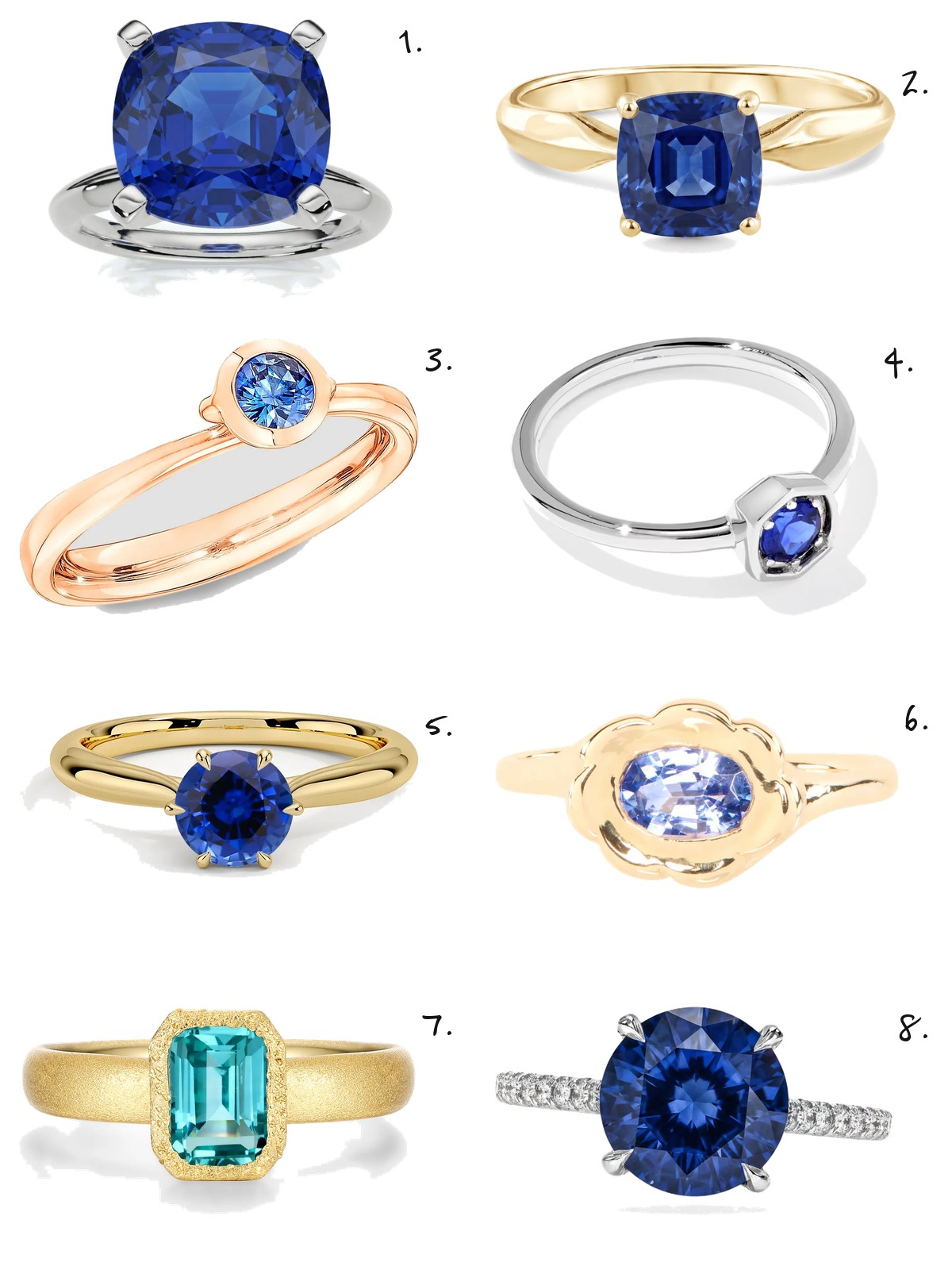
The 5ct Cushion from Bliss Diamond is a substantial lab-grown blue stone in white gold, while the 2ct cushion version shifts to yellow gold and four prongs. Tamara Comolli’s Bouton keeps the stone compact, with twisted rose gold around a brilliant-cut sapphire. Kendra Scott’s Davie puts a hexagonal blue stone on a slim white-gold band, and Brilliant Earth’s Catalina lifts a round sapphire with six prongs above a low-profile yellow-gold band. Paula Elaine Barnett’s pear-shaped Twisty Croissant adds a floral turn; Lafonn’s cushion is set in sterling silver bonded with gold. I would check the center’s height and how the band sits beside another ring before settling on a size.
Blue sapphire solitaire and single-stone rings

5ct Cushion Blue Sapphire Solitaire Ring 14k Gold Lab Grown 10mm
Bliss Diamond
$991

Certified 2ct Cushion Blue Sapphire Solitaire Engagement Ring 14k Gold Lab Grown
Bliss Diamond
$920

Bouton 18K Rose Gold & Blue Sapphire Ring
Tamara Comolli
$2,500

0.36 ct Lab Grown Gemstone Davie 14k White Gold Band Ring
Kendra Scott
$750

Sapphire Catalina Solitaire Ring in 14K Yellow Gold
Brilliant Earth
$2,540

Twisty Croissant Blue Sapphire Floral Ring
Paula Elaine Barnett
$2,080

Fancy Lab Grown Sapphire Solitaire Ring
Lafonn
$235

Round Lab Blue Sapphire & Diamond Solitaire Ring 14K
ALLUREZ
$3,663
Sapphire and diamond halo rings
A halo changes the outline before it changes anything else. Garrard says the diamond cluster around Diana’s sapphire inspired its 1735 collection, where round or oval colored centers sit inside single or double halos. That is a useful way to read this group: the border can sharpen a stone or soften it.
The Ceylon Limited Edition frames a 3-carat blue center in white gold with a diamond halo; the Scalloped Halo takes a smaller Ceylon sapphire into yellow gold. The cocktail ring gives the round center a sculptural yellow-gold frame. ALLUREZ’s emerald-cut sapphire sits inside a rectangular diamond border, while Julianna B.’s square lab-created stone has marquise accents. Brilliant Earth’s Sunburst sends fourteen diamonds around a round sapphire, and the platinum 1735 setting brings the cluster shape back to its royal reference.
I would wear the rectangular halo with a plain band and keep the rest of the hand quiet. At a fitting, I would check the setting from the side and see whether a wedding band can sit flush beside it. What I would skip: the flower cluster if I wanted a very spare silhouette; its petal shape is the point, so I would let it have the whole hand.
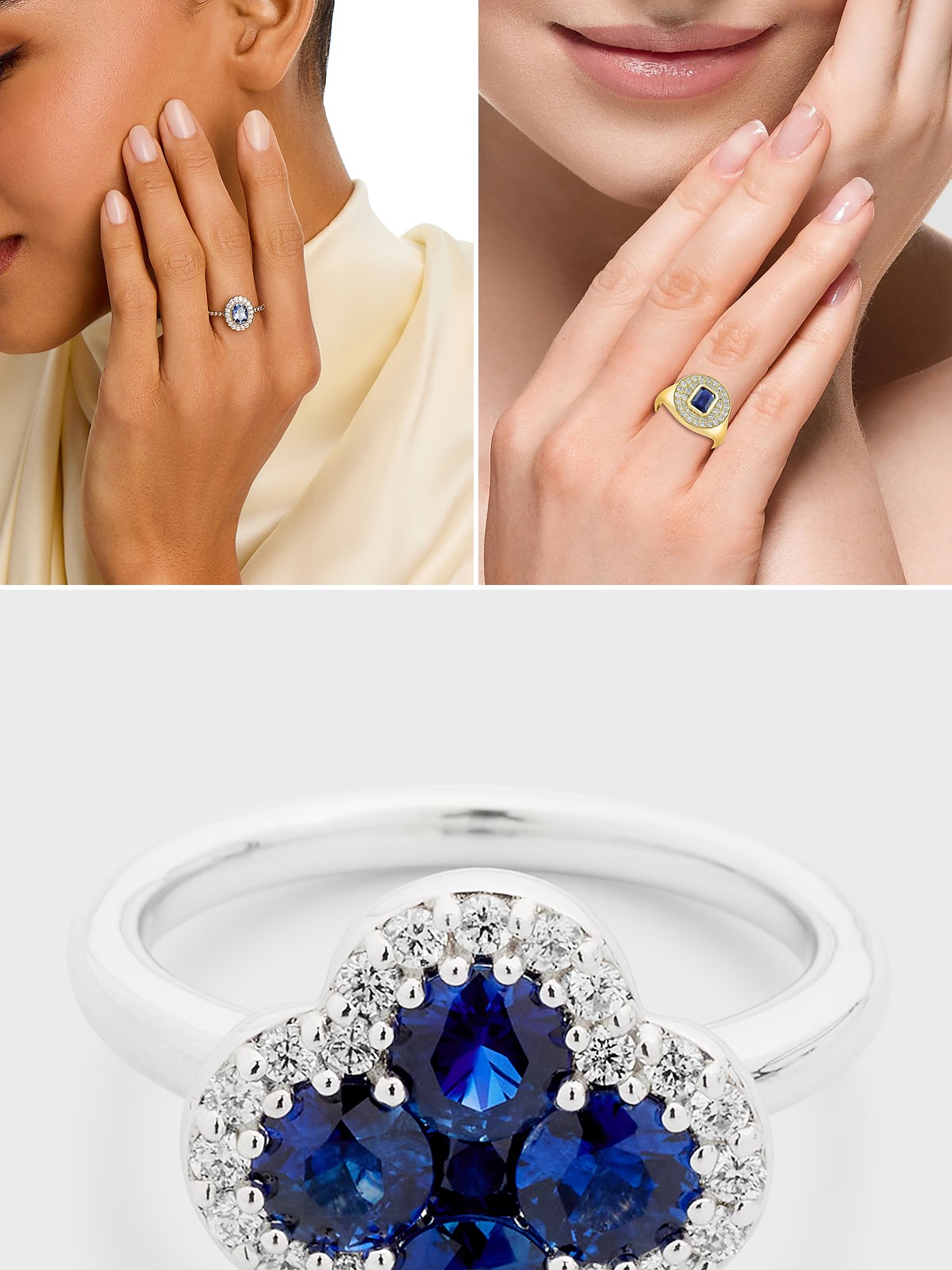
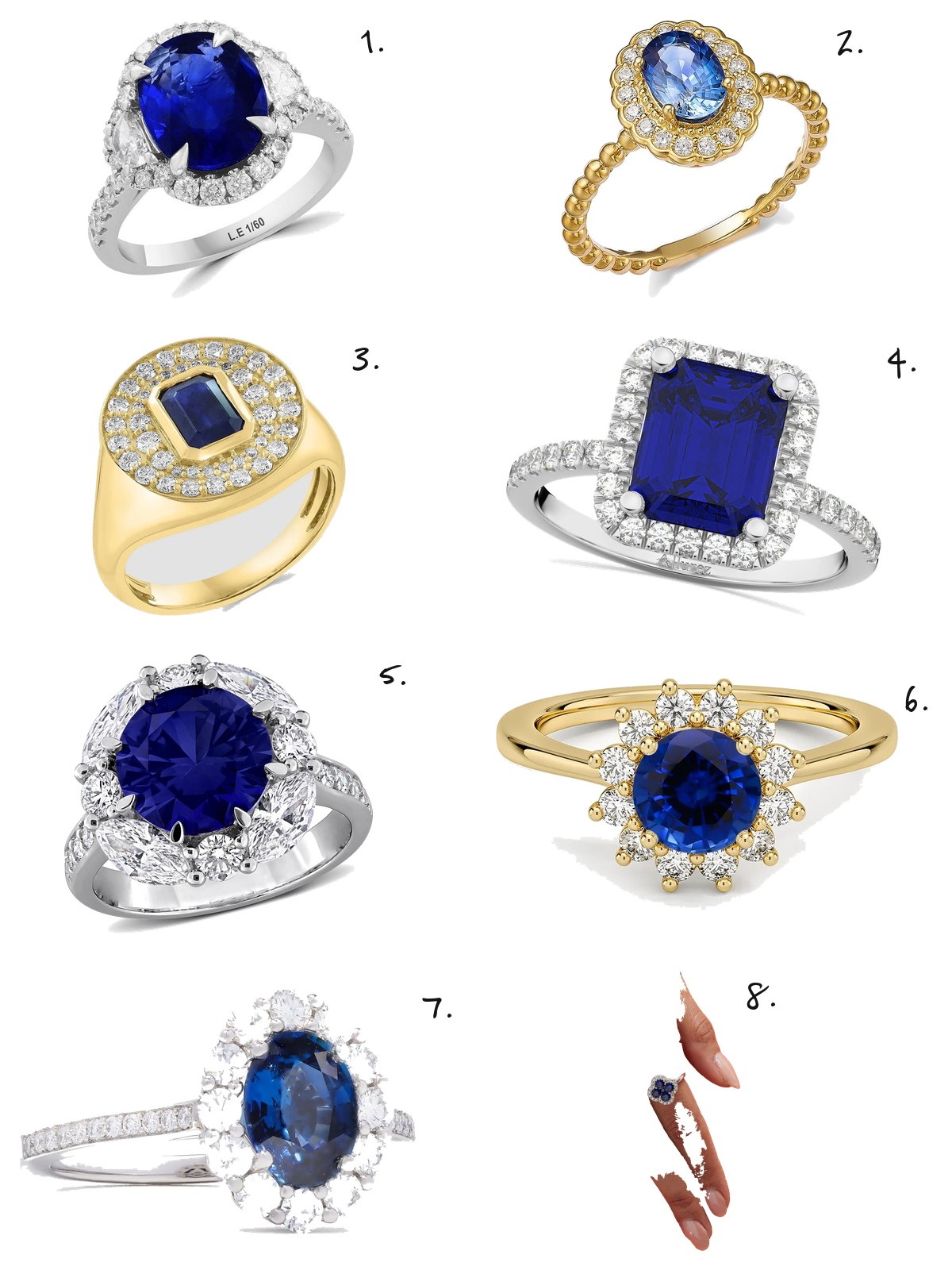

Certified Ceylon Sapphire & Diamond Limited Edition Ring in 14K White Gold
Bloomingdale's Fine Collection
$19,600

Diamond & Ceylon Sapphire Scalloped Halo Ring in 14K Yellow Gold
Bloomingdale's Fine Collection
$4,200

14K Yellow Gold, Sapphire & 0.65 TCW Diamond Cocktail Ring
Saks Fifth Avenue Collection
$2,835

Blue Sapphire & Diamond Engagement Ring 14k
ALLUREZ
$6,327

Lab-Created Sapphire & Diamond Halo Ring
Julianna B.
$995

Sapphire Sunburst Halo Diamond Ring (1/4 ct. tw.) in 14K Yellow Gold
Brilliant Earth
$4,090

1735 Platinum, Sapphire and Diamond Ring
Garrard
$15,000

18K Blue Sapphire and Diamond Flower Ring, Size 6.75, 2.31tcw
Diamonds at Neiman Marcus
$6,400
Sapphire stack rings and bands
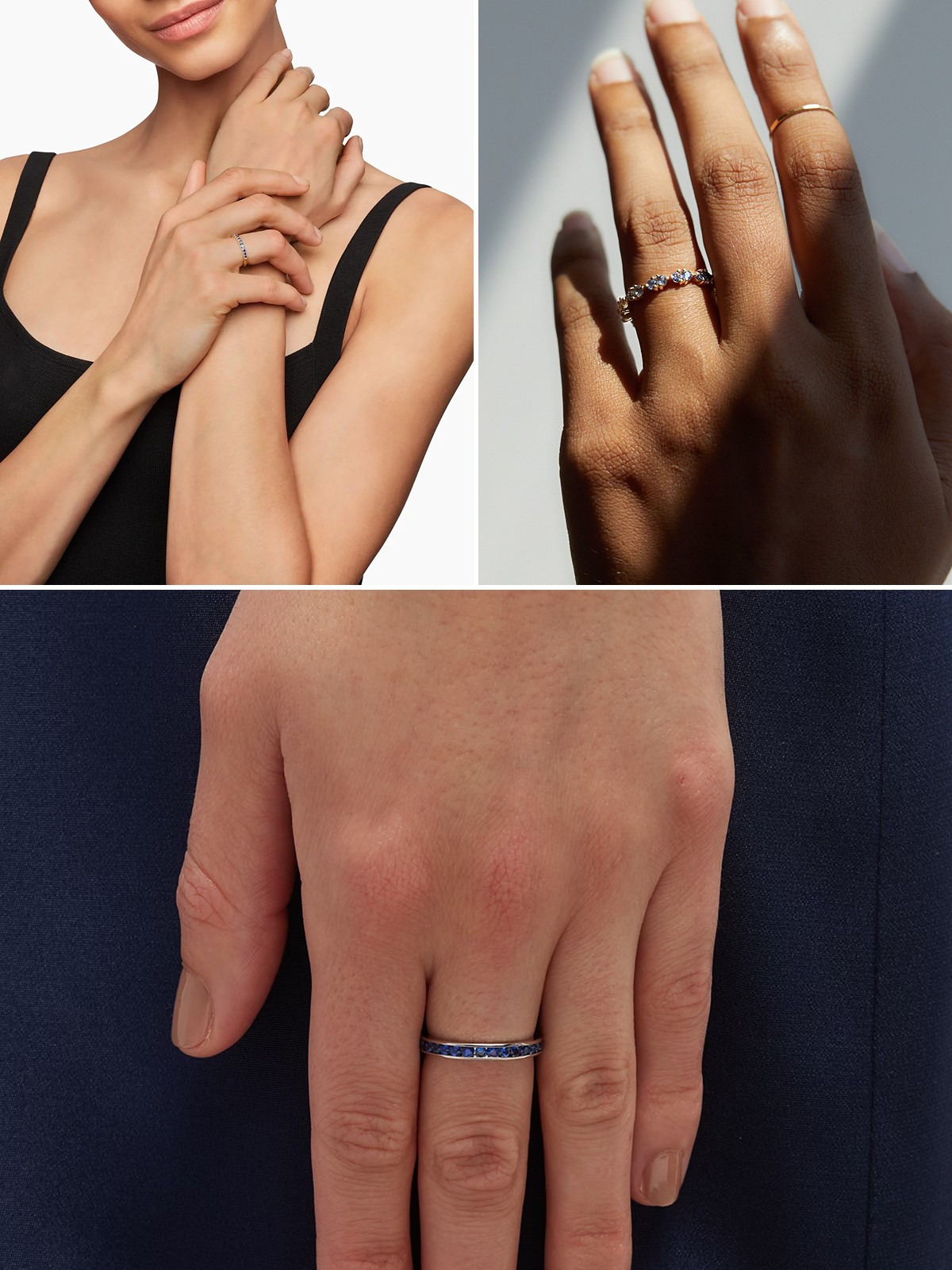
A stack needs a plan for its top edge, not just a shared color. The V&A holds a Western European ring dated 1300 to 1400, with a hexagonal bezel made to fit a large polished stone. I like that reminder: a slim band can still have a clear shape.
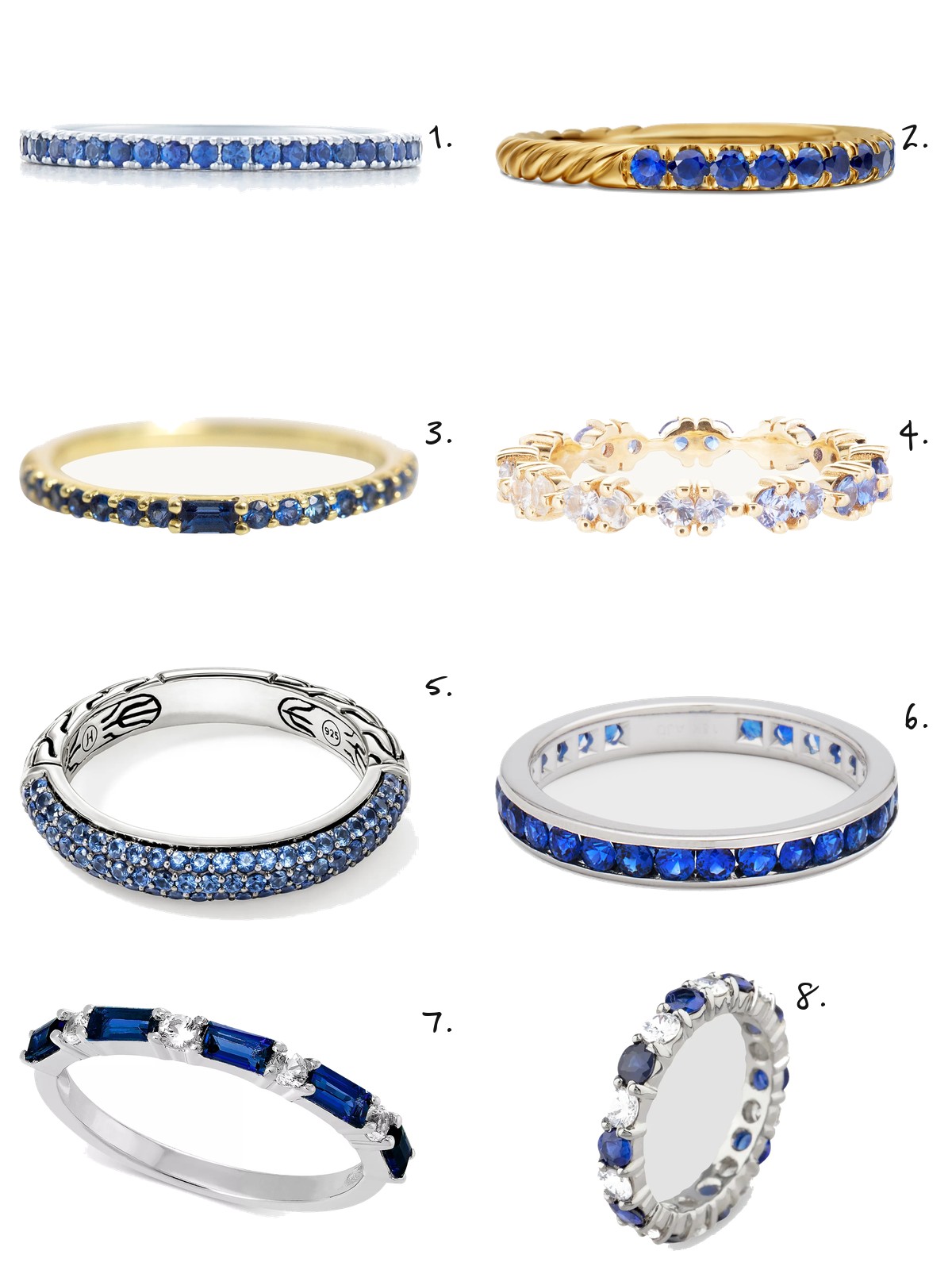
Kwiat’s petite sapphire sits on a narrow white-gold band, while David Yurman’s Cable Collectibles ring brings yellow-gold cable texture around a pavé row. ILA’s Manava is a fine 14K yellow-gold line with scattered blue stones. Wwake’s gradient sapphire eternity band makes a full circle in recycled 14K gold; John Hardy’s reclaimed-silver band is wider at 3.5 millimeters. The two linked bands that pair blue and white sapphires add a second color without changing the metal.
I would stack one narrow band against a simple solitaire, then stop before every surface is competing. Check the band width and whether the setting catches on its neighbor, especially with an eternity style. What I would skip: a full-circle band if I want to keep changing the order of my stack. A single blue line is often enough.

Blue Sapphire Stackable Ring
Kwiat
$1,400

Cable Collectibles® Stack Ring
David Yurman
$1,650

Manava Ring, Sapphire
ILA
$1,179.75

Pathway Eternity Ring (Gradient Blue Sapphire)
Wwake
$2,720

JH Essential Pavé Band Ring in Sterling Silver & Gemstones, 3.5mm
John Hardy
$1,295

18K White Gold Blue Sapphire Eternity Ring, Size 7, 1.50 TCW
Diamonds at Neiman Marcus
$2,700

Lab-Grown Blue Sapphire & White Sapphire Stack Ring in Sterling Silver
Macy's
$78.75

14K White Gold, 1.10 TCW Lab-Grown Blue Sapphire & 1.10 TCW Cubic Zirconia Eternity Band
Fantasia by DeSerio
$1,395
Sapphire rings in silver and gold
Metal makes the blue read differently, and the finish matters as much as the stone. GIA rates sapphire-bearing corundum at 9 on the Mohs scale and notes its toughness, but treatment can change the care instructions. Warm, soapy water is generally safe; fracture-filled, cavity-filled, or dyed material should be cleaned with a damp cloth only.
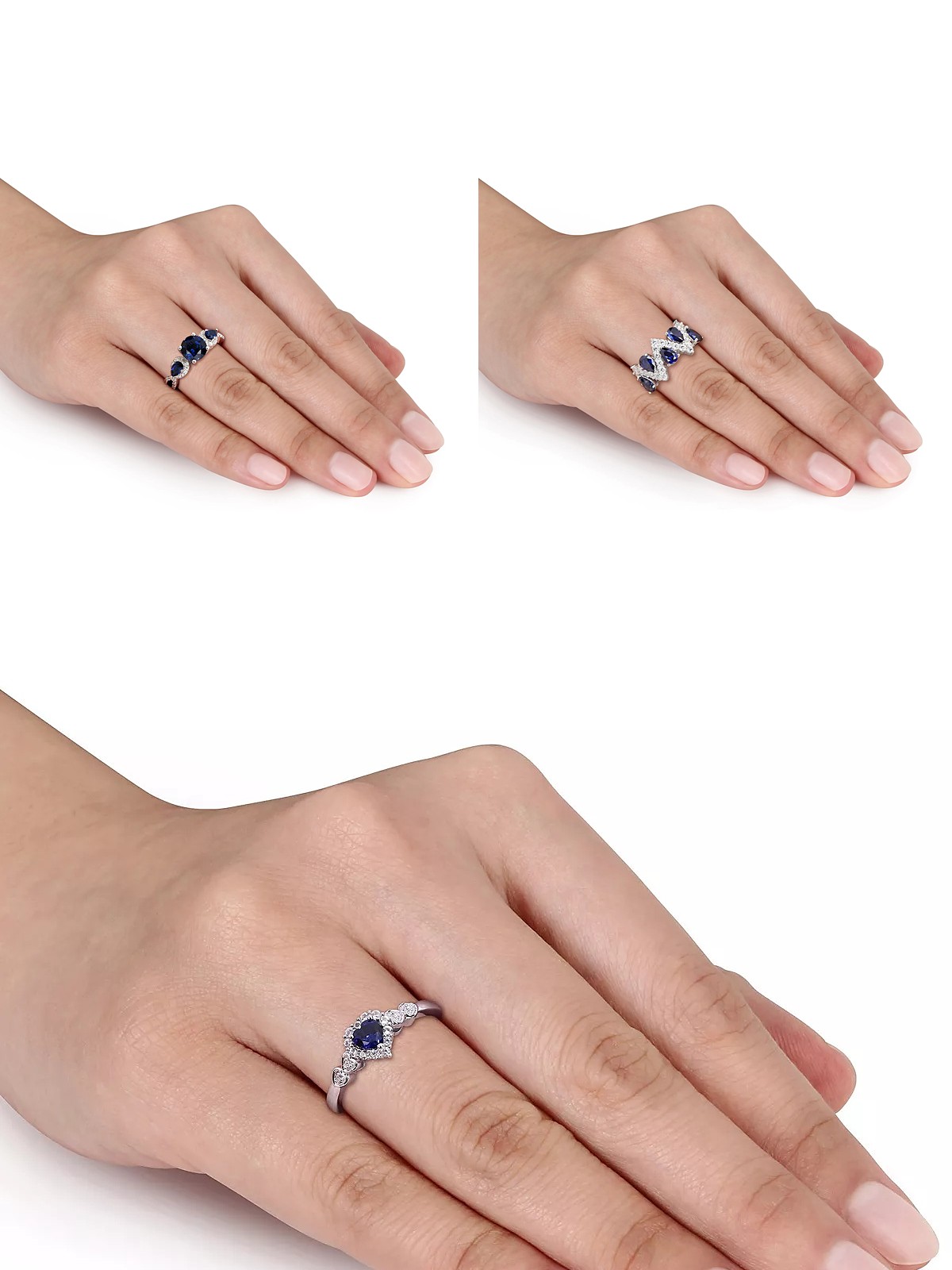
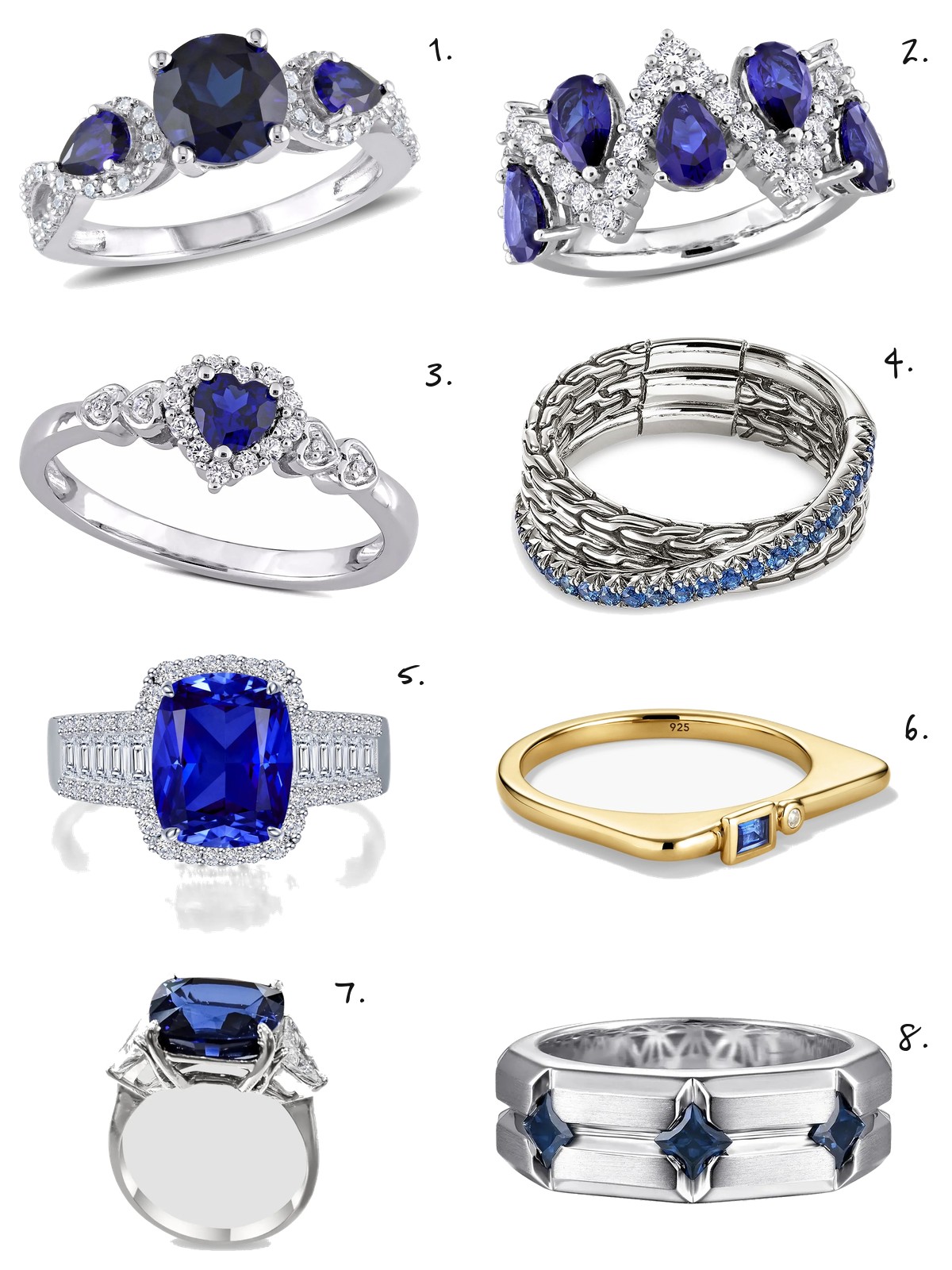
The three-stone Julianna B. ring sets a lab-created blue sapphire in sterling silver with diamond accents; another Julianna B. style clusters five pear-cut sapphires above a silver band. The heart ring pairs blue and white lab-grown sapphires, while John Hardy’s crossover puts blue pavé across sculpted silver. Mejuri’s Puzzle is different again: a baguette-cut lab-grown sapphire in 18K gold vermeil over recycled sterling silver. Lafonn uses platinum-bonded silver with simulated diamonds, and Gabriel & Co. makes a wide silver band with three starburst-set blue sapphires.
I would ask about treatment before deciding how to care for any stone. What I would skip: the simulated-diamond halo if I specifically wanted diamond accents. The ring can still be the right shape, but the material distinction is worth making before choosing.

Gemstone & Diamond 3-Stone Ring
Julianna B.
$176

Lab-Created Blue Sapphire & Diamond Ring
Julianna B.
$325

Lab-Grown Blue Sapphire & White Sapphire Heart Ring in Sterling Silver
Macy's
$96.25

Essentials Blue Sapphire Pavé Crossover Ring
John Hardy
$795

Fancy Lab Created Sapphire & Simulated Diamond Halo Ring
Lafonn
$350

Puzzle Stacking Ring
Mejuri
$148

Midnight Reverie 14K White Gold, 10.00 TCW Lab-Grown Blue Sapphire & Cubic Zirconia 3-Stone Ring
Fantasia by DeSerio
$1,700

Geo Sterling Silver & Sapphire Wide Band Ring
Gabriel & Co
$1,400
Choose the setting, then the stone
For a sapphire ring, I would start by deciding how much space I want it to take up. A solitaire keeps the eye on one center; a halo builds a clear outline; a band lets the blue become part of a stack. Then I would compare the metal and setting height, and check the listed stone details rather than assuming every sapphire is cut or grown the same way.
For my own first pick, I would choose the low-profile round solitaire, then add a narrow sapphire band only if the two sit comfortably together. Diana’s famous ring made the halo part of the story, but a blue center can begin with one stone and a very simple line.