This shoe boots for women edit compares warm snow boots, practical rain boots, and lighter ankle silhouettes. I would begin with the weather, then choose a shape that fits the way I get around.
shoe boots for women: a boot for every kind of weather
A boot for every kind of weather
Boot History, Kept Close
Around 1804, ankle boots became fashionable women's wear, and in 1837 London shoemaker J. Sparkes Hall patented an elastic-sided version, according to the V&A. I like that early blend of useful fastening and defined outline as a starting point for shoe boots for women: the right pair has a job, but still changes the proportions of an outfit.
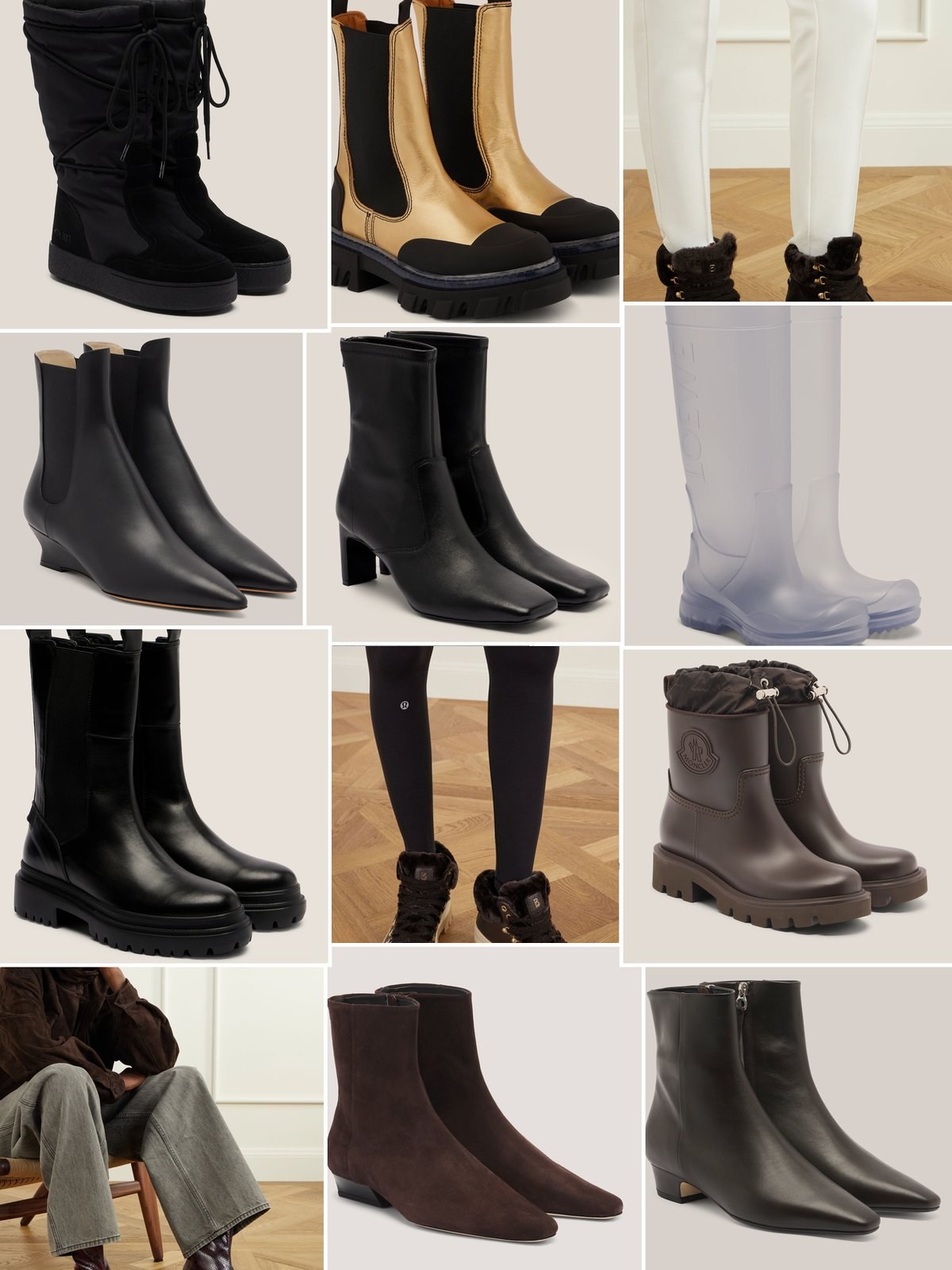
Moon Boot's own history begins in 1969, when Giancarlo Zanatta founded Tecnica Group from his father's shoe factory. The Ltrack Legacy snow boot keeps this conversation in the cold-weather lane, while Ganni's Metallic leather Chelsea boots offer a brighter ankle shape. BOGNER's Turin 10 suede and wool trimmed ankle boots bring a softer upper, and Le Monde Beryl's Camille Chelsea boots make the cleanest elastic-side reference.
I would begin with the day, not the outfit: choose the snow boot if the plan includes cold ground, the rain boot if wet streets are the problem, and an ankle shape when the weather is ordinary. For shoe boots for women, the easy proportion check is where a trouser hem meets the top of the boot. A cropped straight leg gives the boot room, while a long wide hem can hide the detail that made you choose it. At home, check that the ankle flexes without pinching and that socks still fit comfortably.


Weather Has a Vote
Rain and snow are different jobs, even when both belong in a winter wardrobe. A.Emery's Torres leather ankle boots keep to a simple ankle height; Loewe's Storm rain boots answer a different forecast. Bogner's Chesa Alpina leather Chelsea boots bring an elastic-side shape, while Stella McCartney's Elyse snow boots are the most winter-coded direction in this group. The material and opening matter as much as the height once the sidewalks get messy. With shoe boots for women, this set helps separate the weather you actually face from the weather forecast in your head.
Pair the Storm with a hem that will not drag through puddles, and give the Chelsea shape a tapered trouser or a straight jean. For snow boots, leave room for a thicker sock and a little movement at the toes. A practical test is to stand in your usual winter sock and check the boot's heel grip before you plan a full day on your feet.
What I would skip is wearing a heavy snow boot under a long, puddling hem, especially on a wet commute. Keep the trouser clear of the sole so both the boot and the fabric can do their jobs.


A Softer Change of Pace
On drier days, ankle boots make an easy transition from daytime layers to evening clothes. Moncler's Kickstream rain boots keep a practical profile on standby; Aeyde's Amina sneak-effect leather ankle boots borrow a sportier line, Staud's Wally suede ankle boots have a soft surface, and Aeyde's Yasmin leather ankle boots return to a clean ankle silhouette. These are four ways to wear shoe boots for women when a full snow boot would feel like too much. The Wally can pick up the texture of a knit, while Yasmin's leather keeps the line quieter. That contrast helps decide how much detail the shoe should add.
Wear the Amina with a fuller trouser to balance its sneaker-like name, or let the Wally sit beside a narrow skirt and a substantial sock. Check the heel and toe room while standing, then walk a few steps to see whether the ankle opening moves with you. The best styling test is often whether the shoe supports the hem without asking you to adjust it all afternoon.
What I would skip is choosing suede for a day that is likely to stay wet. If the forecast is uncertain, the rain boot is the calmer choice, and the softer ankle styles can wait for a dry stretch.


Choose by the Day
There is no single silhouette that covers every day, which is why I would sort shoe boots for women by conditions first and mood second. Start with the rain or snow you expect, then compare the ankle opening, sole, and shape against trousers you already reach for.
The Chelsea boots give a familiar pull-on outline, while the snow boots and rain boots have clearer weather roles. I would choose one practical pair for the days that demand it, then keep a lighter ankle boot for the rest. The right boot should help the day go smoothly and set the outfit's pace without taking it over.