Round, drum or nesting: the shape of a side table decides whether it works next to your sofa. Start with the arm height, then pick the outline.
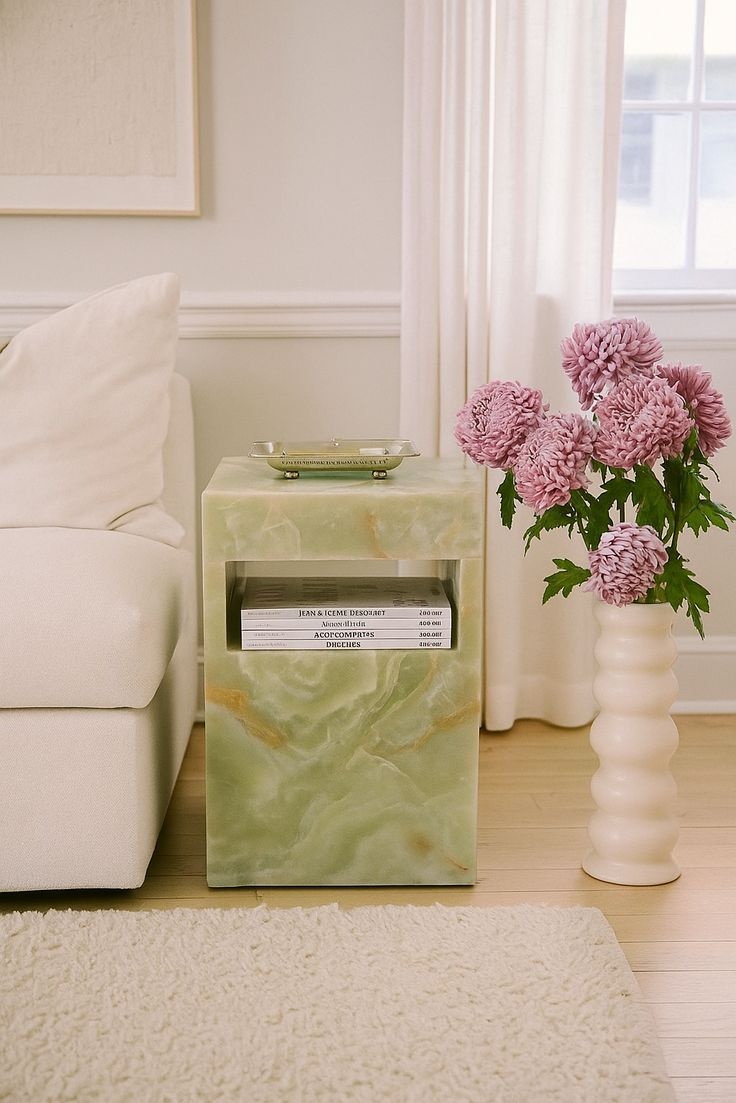
Side Table Shapes That Fit A Sofa
Start with the arm, not the table
A side table has one job, which is to hold a drink and a phone within reach of the person sitting down. That makes the sofa arm the reference point, not the room. Measure from the floor to the top of the arm and stay within about two inches either side of that number. Most sofa arms land near 22 inches, which is why the 20 to 24 inch band covers the majority of living rooms even though end tables are sold anywhere from 18 to 28 inches. If you are between two heights, take the shorter one. Reaching slightly down for a glass is natural. Reaching up and over an arm that is lower than the table is how drinks get knocked. For an armless sofa or a low slung modern frame, use the seat height plus a few inches instead, and expect to shop shorter than you assumed.
Round side tables

Yamiko Round Marble Top Side End Table White And Charcoal
Wayfair
$274.99

Tempo Marble Side Table
TOV Furniture
$289

Aamnah Round Living Room Side Table
Wayfair
$153.99

Richard Marble Side Table
TOV Furniture
$335

Estie Round Wood Slatted End Table With Open Shelf
Wayfair
$189.99

Tempo Marble Side Table
TOV Furniture
$289

Fluted Round End Table with Storage
Wayfair
$149.99
Then pick the outline
Shape is the difference between a table that fits and a table that catches your shin. A round side table has no corners to walk into, which is why it works in a tight gap beside a chair or at the end of a walkway. It also gives you less usable surface than its diameter suggests, since anything set near the edge feels precarious. A drum or pedestal table has a solid base, which reads heavier and gives you a full top with nothing to kick, and it is the most stable choice on a rug. A C table slides its base under the sofa so the top hovers over the seat, which is the best answer for a laptop or a plate. Nesting tables are the flexible option: one stays put, the other gets pulled out when there are more people than surfaces, then disappears again.
Drum and pedestal side tables

Delta Concrete Side Table
TOV Furniture
$299

Gravesend Marble Top and Drum Base End Table
Wayfair
$264.99

28" Large Geometric Pedestal Side Table for Poolside, Balcony, Living Room, Travertine
Wayfair
$127.99

24" Round Pedestal Base End Table
Wayfair
$69.99

Aviel Drum End Table with Storage
Wayfair
$497.6

Abbie Coconut Shell Drum End Table
Wayfair
$204.99

Demson Round Bone Inlay Drum End Table
Wayfair
$599

Taryn 20" Drum End Table
Wayfair
$459
Fitting it to the plan of the room
Look at the floor before the finish. A three legged table on a thick rug will rock, and a slim pedestal on a hard floor slides when you lean on it. Between a sofa and a wall, depth matters more than width, so a small round table beats a square one every time. In front of a window, a low open frame keeps the light. Beside a chair that people get out of often, avoid a sharp corner at knee height. Material follows use in the same way. Stone and sintered tops take a wet glass without a mark and are heavy to move for vacuuming. Wood shows rings unless it is properly sealed, and shows them beautifully after a few years. Woven and rattan tops are the lightest to shift and the worst place to set a dripping glass. If the table will hold a lamp, check the top is wide enough for the lamp base plus a drink, which is usually about 14 inches.
Nesting tables, when one table is not enough


Our honest take
If you take one thing away, write down your sofa arm height and refuse to shop outside the four inch window around it. That one constraint eliminates most of the market and nearly all the regret. After that, shape is a practical choice about circulation rather than a decorative one, and round wins more often than people expect simply because nobody bruises a knee on it. We would put a C table in any room where people eat or work on the sofa, because it solves a problem no other shape solves. And we would resist buying a matching pair for both ends of a sofa. Two tables of the same height in different shapes look considered and let each end do a different job, which is closer to how the room actually gets used. If you want to keep browsing, I also put together Finding a Sofa for Small Living Room Layouts and Sectional Sofa Haven.