Silicone shows up in beauty two completely different ways: as the flexible material behind face scrubbers, scalp massagers and reusable eye patches, and as an ingredient family that some shampoos and primers are formulated without. Dimethicone and cyclopentasiloxane are the two most common cosmetic silicones, and the EU has restricted certain cyclic versions for environmental rather than skin-safety reasons. Here is how the tools and the silicone free formulas actually differ, and which brands genuinely back up the claim.
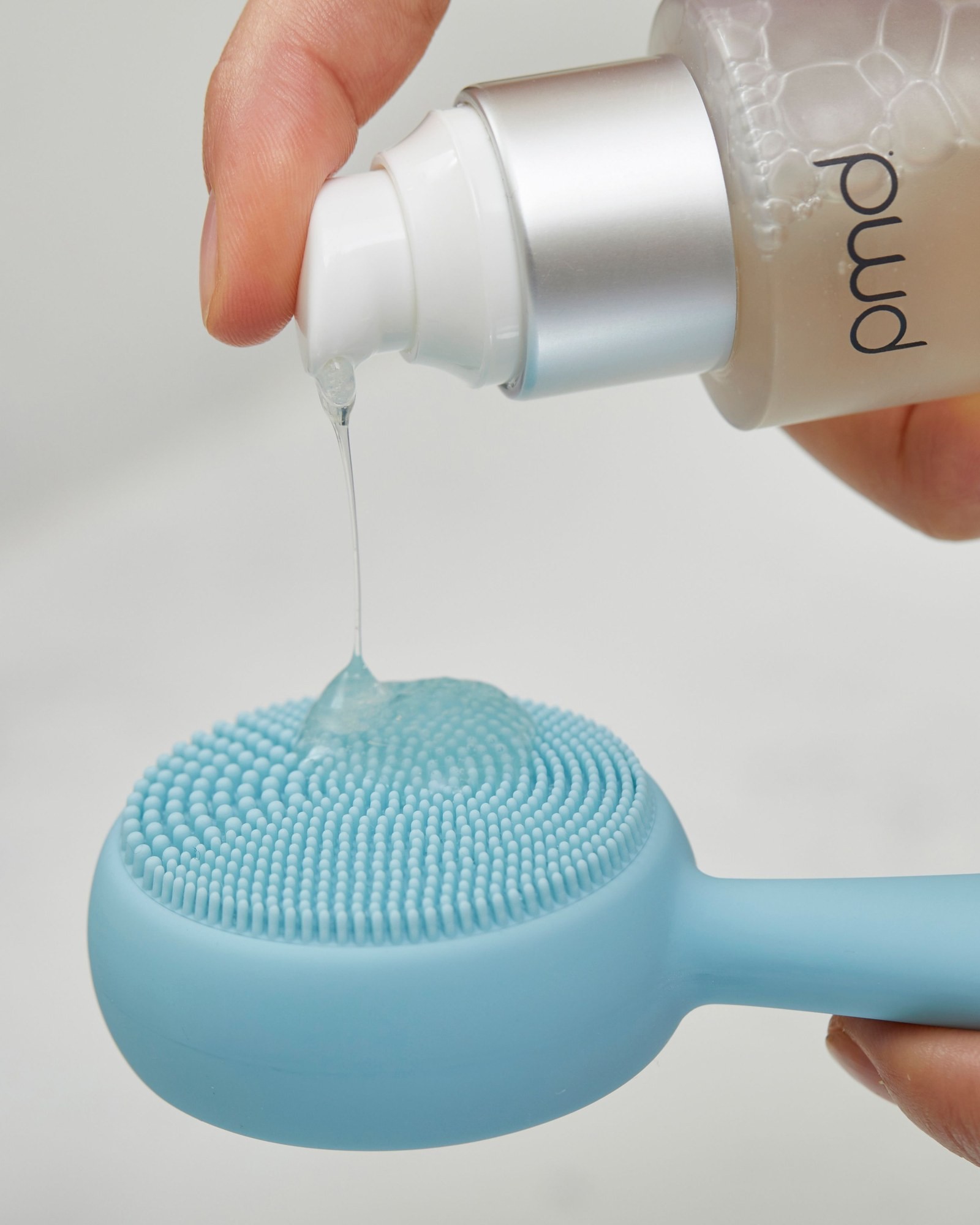
Silicone Beauty Tools And Silicone-Free Formulas To Know
Silicone tools for face, neck and hands
In 1904 an English chemist named Frederic Kipping reported the first silicone polymers and described them as sticky messes with no particular use. He also named them. He thought their formula looked like a ketone, so he called them silicones, and the name stuck even though the resemblance turned out to be wrong. It is a good origin story for a material that now lives in almost everything, from bathroom tools to hair care.
That is my point about silicone in beauty. It means two entirely different things, and the internet mixes them up. One is a flexible, washable material used for tools. The other is an ingredient family in bottles, and some shampoos and primers are proudly made without it. I would like you to keep the two questions apart, because the tool has nothing to do with the formula.
The trick is to begin with the tools, where silicone is simply a good material. The first grid covers the face, neck and hands. Sud Scrub's Silicone Face Scrubber and Japonesque's two-pack are the basics, and Japonesque's own page calls its version hypoallergenic and germ-repellent, while recommending a dermatologist check first for sensitive skin. Foreo's Luna 4 makes a rechargeable device out of the same material, and e.l.f.'s Halo Glow sponge swaps foam for a silicone shape. Reusable patches are the interesting new corner: Experiment's Avant Guard sheet mask and Dieux's Forever Eye Mask are made of 100 percent silicone, meant to be washed and used again. Nurse Jamie's neck wrap and Skin Gym's hand patches carry the idea further down the body.
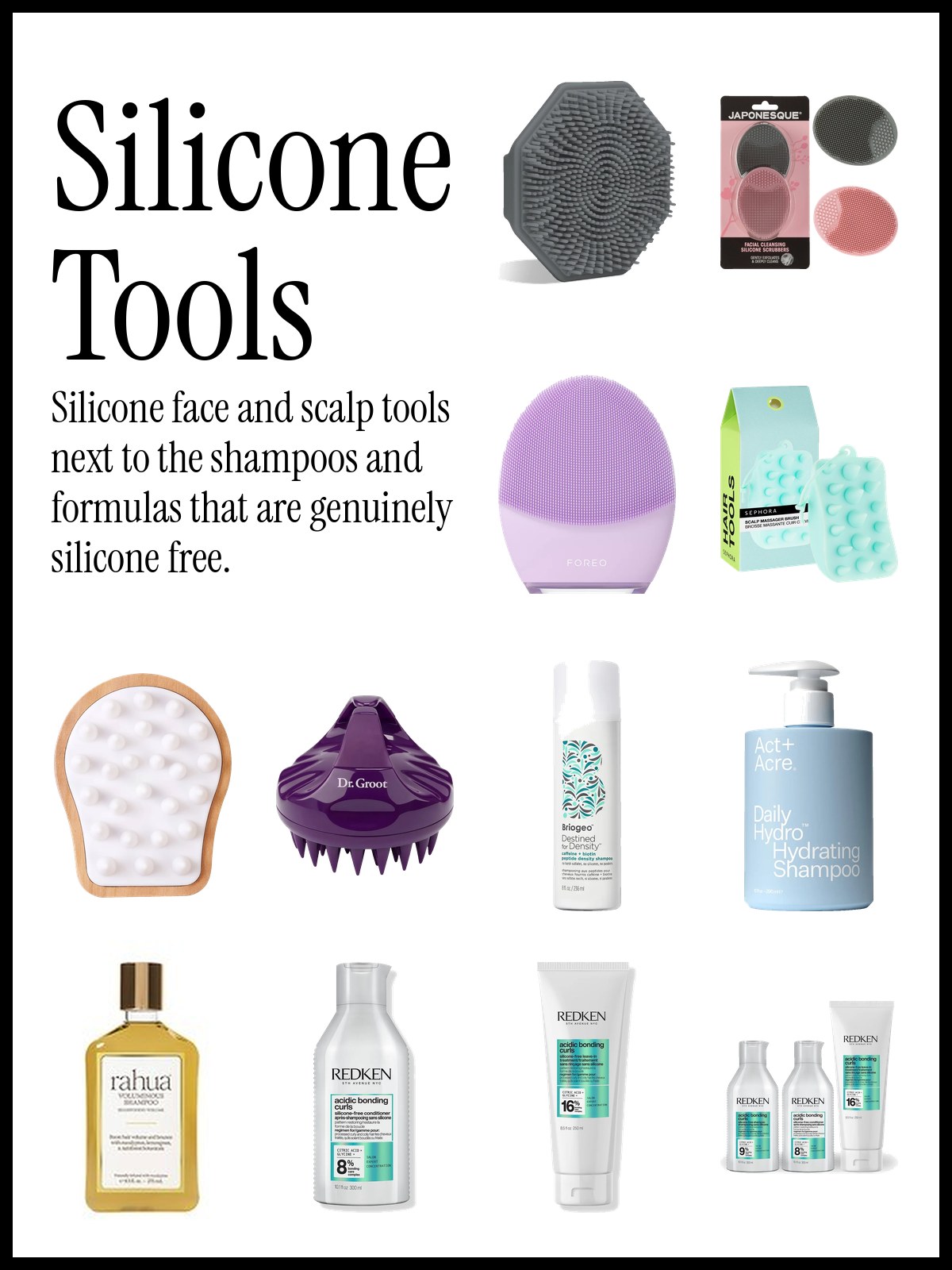
Silicone tools for face, neck and hands

Silicone Face Scrubber
Sud Scrub
$19.99

Facial Cleansing Silicone Scrubber, 2 Pack
Japonesque
$6.69

Luna 4 Facial Cleansing & Firming Device For Sensitive Skin
Foreo
$199

Halo Glow Angled Silicone Face Sponge
e.l.f.
$7

Avant Guard Reusable 100% Silicone Sheet Mask
Experiment
$19

Forever Eye Mask Reusable 100% Silicone Patches
Dieux
$25

Neck & Decollete Wrap Skin Perfecting Silicone Treatment
Nurse Jamie
$28

Reusable Hand Silicone Wrinkle Patches
Skin Gym
$22
Silicone for scalp, body and nails
Try this before buying a scalp tool: run your fingertips over your scalp in the shower and notice where it feels tight or itchy. That is where the tool should go, and it tells you how firm you want the bristles.
The same material is at its best in the shower, since silicone does not soak up water and dries fast. Sephora Collection's Silicone Scalp Massager and EcoTools' Shower Scalp Massager are the familiar shapes, and up&up's Silicone Head Scrubber does the same job in a simpler form. The Dr. Groot Scalp Massager Brush has silicone bristles, according to its product page, so it belongs to this family even though it looks more like a handheld brush. Lower down, Sud Scrub's Silicone Body Scrubber and Nurse Jamie's Exfoliband Silicone Loofah stand in for the sponge that never quite dries. Earth Therapeutics puts silicone and bamboo together in one soft body brush, which I would give to someone who likes a bathroom that looks calm.
Olive & June's Silicone Painting Mat is the smallest and most specific tool here. It gives nail polish somewhere to rest that will not stain the counter, and I would keep it in the polish drawer.
What I would skip: a scalp tool with stiff bristles on skin that is already sore or flaking. Start gentler, and go slower.

Silicone Scalp Massager
Sephora Collection
$13

Shower Scalp Massager
EcoTools
$7.59

Silicone Head Scrubber
up&up
$4.99

Scalp Massager Brush
Dr. Groot
$10

Silicone Body Scrubber
Sud Scrub
$29.99

Exfoliband Silicone Loofah
Nurse Jamie
$18

Silicone and Bamboo Soft Body Brush
Earth Therapeutics
$7.99

Silicone Painting Mat
Olive & June
$14
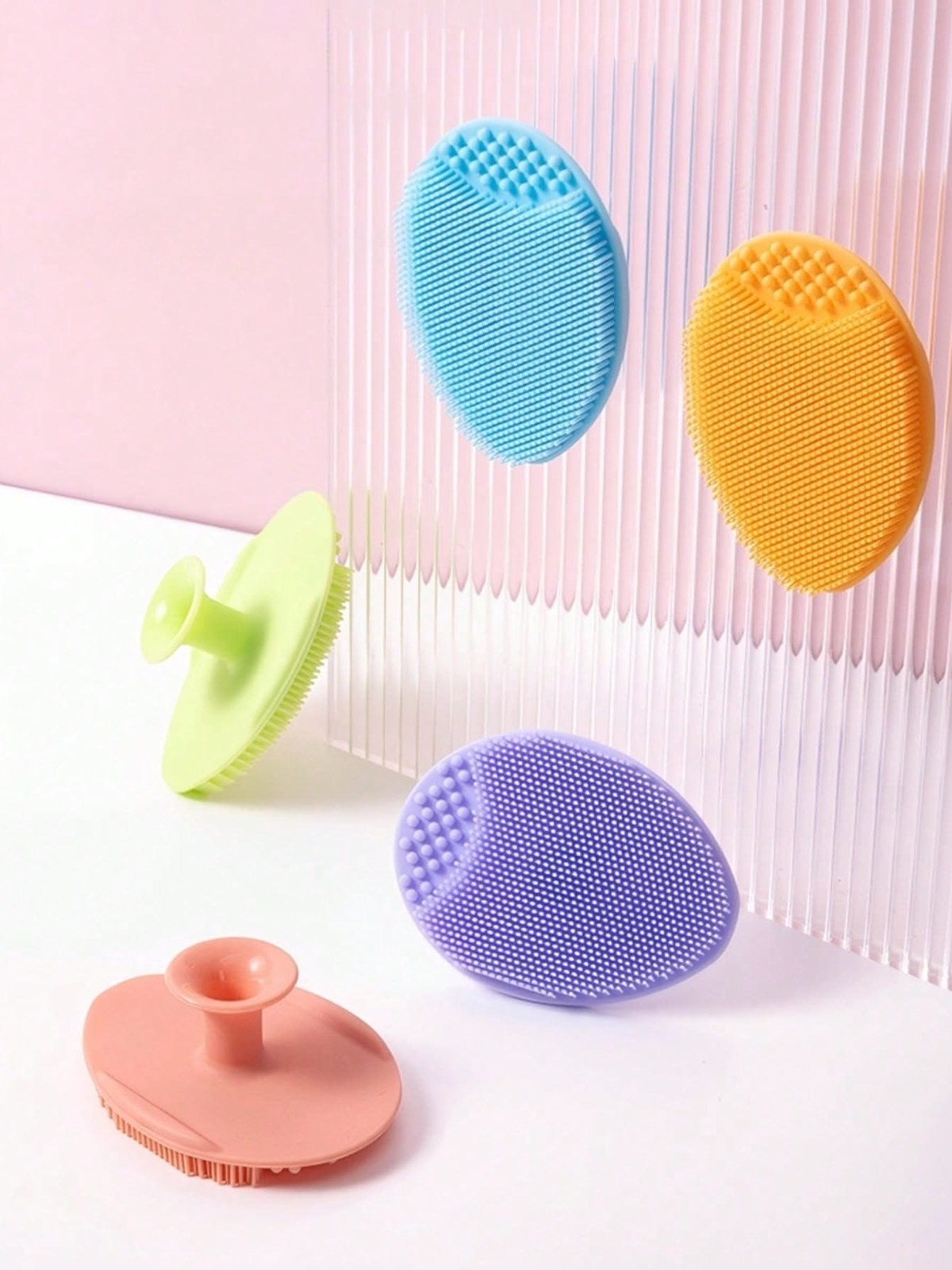
Silicone-free shampoos
A habit worth borrowing: read the brand's own page, not just the front label. A silicone free claim is only worth trusting when the brand states it plainly, and several of the shampoos here do.
Briogeo's shampoo page describes the line as silicone free, and its Destined For Density Peptide Shampoo carries the same callout. Act+Acre says on its own FAQ that its products are fully free of sulfates, silicones and parabens, and that covers the Daily Hydro Hydrating Shampoo. Rahua's page for the Voluminous Shampoo says outright that Rahua is paraben-free, sulfate-free, silicone-free and phthalate-free. Virtue's Curl FAQ says the Curl Shampoo is silicone free, part of what it calls the Big Six chemicals it avoids. Nexxus names it in the product itself, Keraphix Shampoo, Silicone-Free.
Native is a subtler case. Its page for the Moisturizing Shampoo states it is free of silicones, so check the label on the Cucumber & Mint Volume Shampoo before assuming the same. I could not confirm a silicone claim for Leonor Greyl's Shampooing Reviviscence, so I leave that decision to the label.
Crown Affair's The Hydrating Shampoo needs its own note. The brand says it leaves out cyclic silicones specifically, which is a lighter promise than silicone free entirely.
What I would skip: switching to a silicone free shampoo the week before an event. Give your hair a few washes to show what it thinks.

Destined For Density Peptide Shampoo for Thicker, Fuller Hair
Briogeo
$32

Daily Hydro Hydrating Shampoo for Dry, Damaged Hair
Act+Acre
$38

Voluminous Shampoo
Rahua
$36

The Hydrating Shampoo
Crown Affair
$42

Keraphix Shampoo, Silicone-Free
Nexxus
$33.99

Cucumber & Mint Volume Shampoo
Native
$12.39

Curl Shampoo
Virtue
$44

Shampooing Reviviscence
Leonor Greyl
$82.5
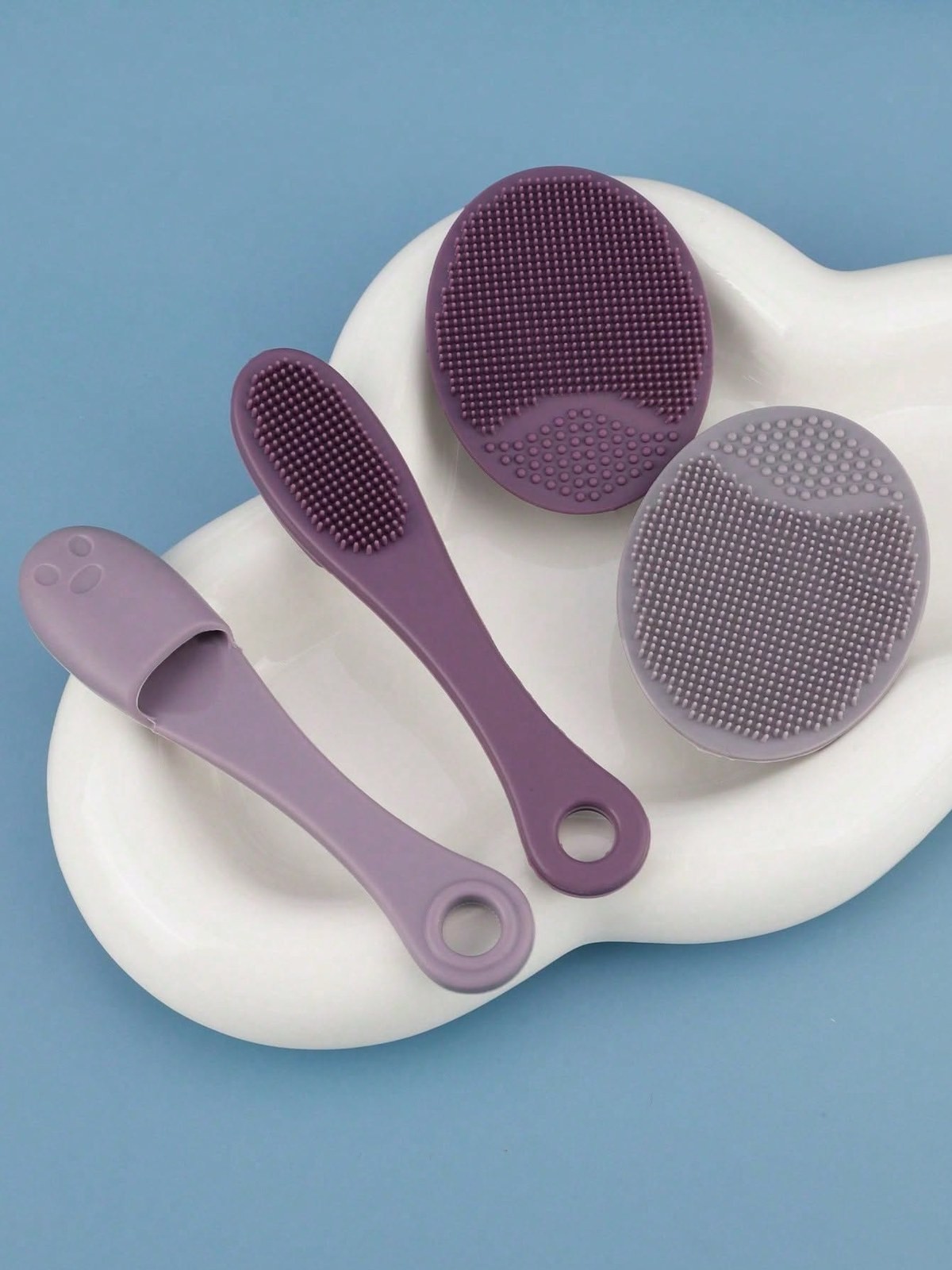
More silicone-free formulas, from curls to complexion
A tip for reading any of these labels: look for the claim in the product name itself. If a brand puts silicone free in the title, it has made the promise where you can see it.
Redken does exactly that with its Acidic Bonding Curls line. The Silicone-Free Conditioner, the Silicone-Free Leave-In Treatment and the Silicone-Free Trio are the whole family for curls, and the trio is the easy way to try all three. Huda Beauty names the claim in the Easy Blur Silicone-Free Smoothing & Pore-Minimizing Primer, and Luna Daily does the same with The Repair Treatment, Silicone Free. Those claims come from the product names, no detective work needed.
The rest of the grid is honest about staying quiet. Anablue's Hair Serum, Saie's Slip Tint and Nécessaire's Body Lotion make no silicone claim either way, and that is a useful reminder that plenty of good formulas do not center the ingredient at all. Plenty of people use silicone and love it. Plenty avoid it. Both are fine.
A pairing I like: the Redken conditioner and leave-in together on damp curls, and the Huda Beauty primer only on days you want makeup to sit smoothly.
What I would skip: swapping every product in your bathroom at once. Change one, and see how your hair or skin responds.

Acidic Bonding Curls Silicone-Free Conditioner
Redken
$37

Acidic Bonding Curls Silicone-Free Leave-In Treatment
Redken
$46

Acidic Bonding Curls Silicone-Free Trio
Redken
$116

Hair Serum
Anablue
$28

Easy Blur Silicone-Free Smoothing & Pore-Minimizing Primer
Huda Beauty
$30

Slip Tint Tinted Moisturizer
Saie
$38

The Repair Treatment, Silicone Free
Luna Daily
$56

The Body Lotion | Multi-Peptide
Nécessaire
$52
Choosing between a tool and a formula
I think the calmest way to shop this category is to ask two separate questions. A silicone scrubber or scalp massager is about grip, feel and hygiene, so choose the Dr. Groot brush or a Sephora Collection scalp tool on comfort, not on chemistry. A silicone free shampoo or primer is a label question, and it is worth checking whether the brand says it plainly, as Rahua, Virtue and Act+Acre do.
The EU's restrictions on D4, D5 and D6 concern environmental persistence, not proven skin harm, so there is no need to treat every silicone in a formula as a villain. Kipping called his first silicones sticky messes with no particular use. A century later, you can choose whether to put them in your hair, and the only real mess is the confusion. If you want to keep browsing, I also put together Fenty Beauty Foundation.