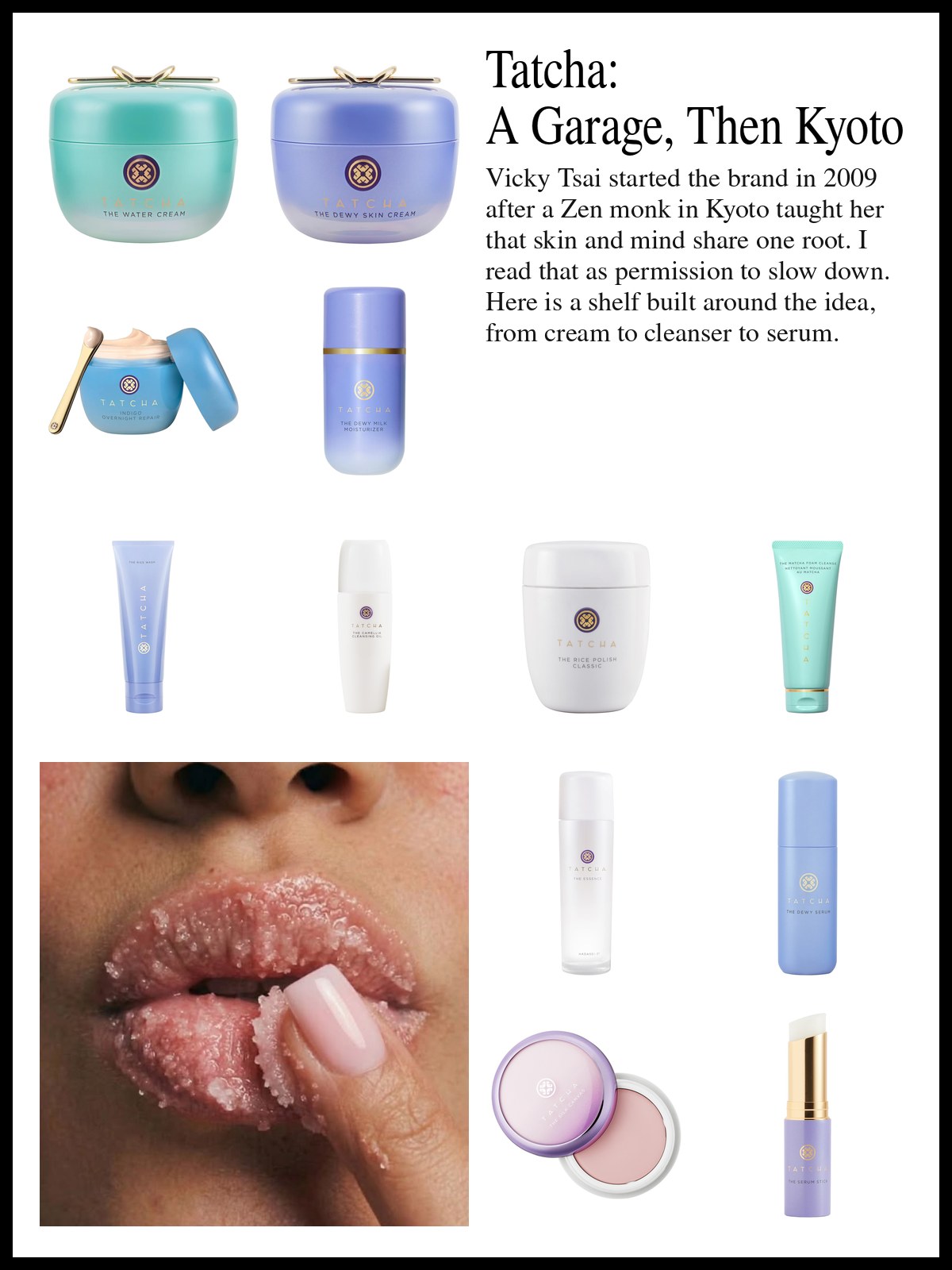
Tatcha began in 2009 in a San Francisco garage, with a founder who had left Wall Street and a philosophy she picked up in Kyoto. Here is how I would build a shelf from the brand, starting with the moisturizers, then the cleansers and rice powder, then the essences, serums and primers.
Tatcha and the Kyoto Lesson: Skin and Mind, Same Root
Tatcha has one of the better founder stories in beauty, and it holds up because it is specific. Vicky Tsai started the brand in 2009 from a San Francisco garage, after leaving Wall Street and selling her engagement ring to fund it. The philosophy came from a trip to Kyoto, where a Zen monk taught her the phrase hinou-dokon, which means skin and mind, same root. It is an easy idea to nod along to and a hard one to practice, but it explains why the products feel more like a ritual than a task.
The signature ingredients come together in Hadasei-3, a complex of double-fermented Akita rice, Uji green tea and Okinawa algae. You will see it named across the range, and the moisturizers are where it is easiest to compare.
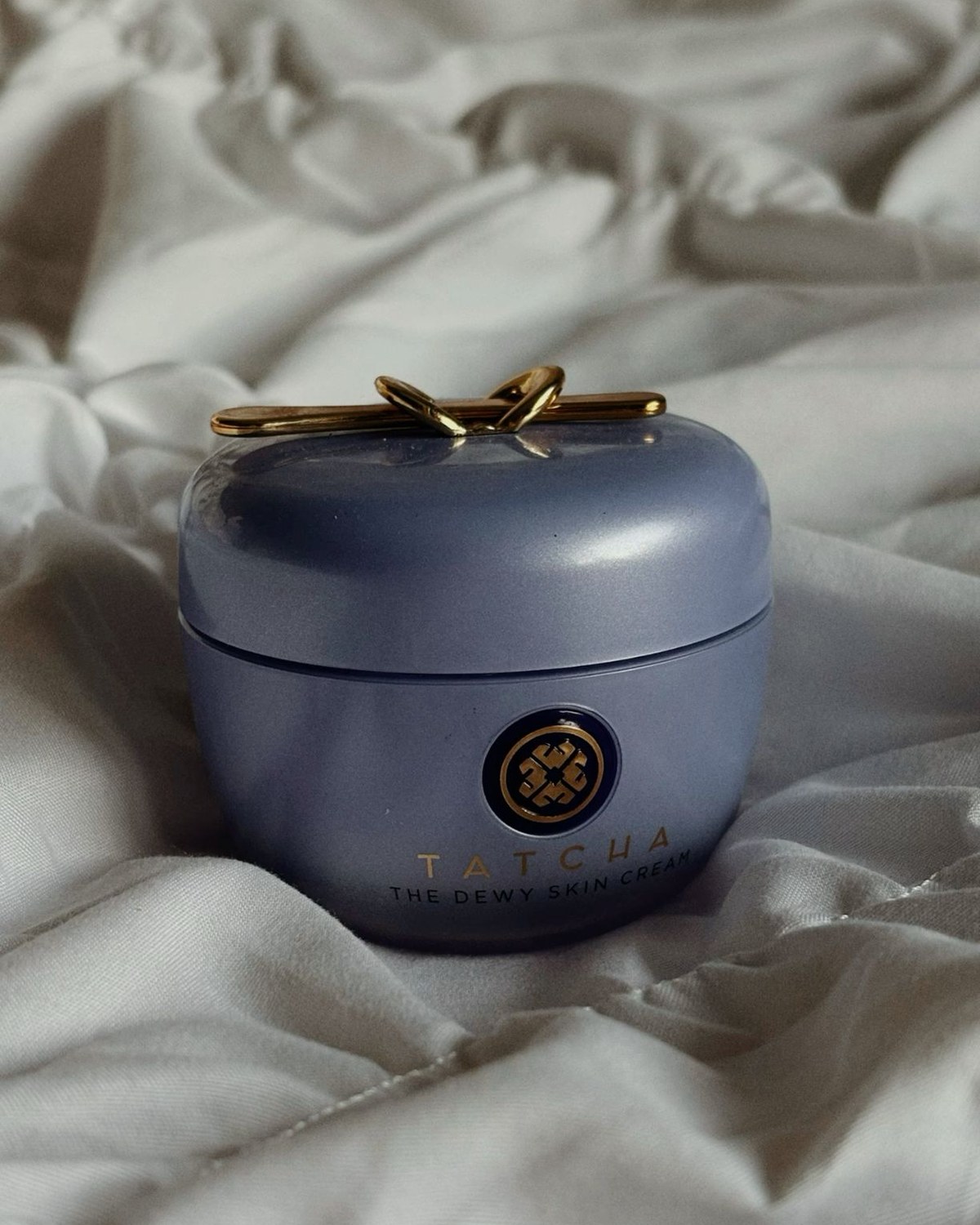
The Water Cream is the oil-free, gel-like one for warm weather or oilier skin, and The Dewy Skin Cream is its richer sibling, thick and plush for dry faces. The Dewy Milk is lighter than both, more lotion than cream. Indigo Overnight Repair is the barrier cream I reach for on nights when skin looks pink and tired, and I dab a little extra on my cheeks. The Longevity cream is the firmer, more elegant one, and The Silk Cream is a rich gel for those who want plumpness without heaviness.
Start with the texture that matches your season. You can always move up, and I would rather you swap a cream in October than fight a heavy one all summer.
Tatcha moisturizers

The Water Cream Oil-Free Pore Minimizing Refillable Moisturizer
Tatcha
$74

The Dewy Skin Cream Hydrating & Firming Refillable Moisturizer
Tatcha
$74

Indigo Overnight Repair Redness Reducing Barrier Cream Moisturizer
Tatcha
$94

The Dewy Milk Lightweight Plumping and Hydrating Moisturizer
Tatcha
$64

The Longevity Youth Restoring Cream Moisturizer for Elasticity & Brightness
Tatcha
$84

The Silk Cream Anti-aging & Firming Rich Gel Moisturizer
Tatcha
$125
Rice, camellia and a proper cleanse
The brand's cleansers are where I would start if I could only buy one Tatcha thing. A good cleanse is quiet work, and this grid has five ways to do it.
The Rice Wash is a soft, milky cleanser that leaves skin comfortable, and it is the one I hand to friends who tell me they hate cleansers. The Camellia Oil 2-in-1 Makeup Remover & Cleanser takes off makeup and cleanses in the same step. The Indigo Cleansing Balm does the same job as a balm, richer and slower, which suits a night when you want to give your face a few unhurried minutes.
The Matcha Foam is a prebiotic gel cleanser for oil-prone skin, fresher and more foaming. The Rice Polish Foaming Enzyme Powder is the interesting one: a powder that you wet in your palms and work into a fine foam. It is a gentle way to exfoliate, more polish than scrub, and I use it twice a week rather than daily. It also travels well, since a powder cannot leak in a wash bag.
The trick with the powder is to keep the pressure light and the water lukewarm. Scrub hard and you will find out just how much a face can complain. Rinse thoroughly, pat dry, and move directly to your essence while skin is still slightly damp.
Tatcha cleansers and rice polish


Essences, serums and the silky finish
Serums and essences are where Tatcha becomes a routine rather than a purchase, and this grid works best if you think in layers.
The Essence is the first step after cleansing, and the one I would keep if I had to cut the shelf in half, a watery treatment that preps skin for what comes next. The Dewy Serum is a resurfacing and plumping treatment for days when skin looks dull. The Longevity Skin Strength + Resilience Serum is aimed at visible firming and smoothing, so it belongs at the end of a more advanced routine. The Serum Stick is a portable balm for touching up around the eyes or the corners of the mouth, which makes it easy to carry.
Then the finish. The Silk Canvas Protective Primer is a balm-like primer that smooths the surface before makeup, and The Liquid Silk Canvas Featherweight Protective Primer is its lighter, fluid version. I use the balm when my skin looks uneven and the liquid on the days when I want almost nothing at all.
What I would skip: applying everything on the same morning. Choose an essence and one serum, and add a primer only when you are wearing makeup. A face that feels coated by nine in the morning has had too many layers, and the pilling under your sunscreen is usually the giveaway. If anything stings or itches, stop using it, and see a doctor if it persists.
Tatcha serums, essences, eye and lip

The Essence Skincare Boosting Treatment
Tatcha
$110

The Dewy Serum Resurfacing and Plumping Treatment
Tatcha
$89

The Silk Canvas Protective Primer
Tatcha
$55

The Serum Stick Line-Smoothing Treatment & Touch Up Balm
Tatcha
$49

The Liquid Silk Canvas: Featherweight Protective Primer
Tatcha
$55

The Longevity Skin Strength + Resilience Serum for Visible Firming and Smoothing
Tatcha
$80
How I would use the whole shelf
If I were starting fresh, I would buy a cleanser and a moisturizer first, then add an essence after a month. A serum can wait until you know what your skin needs, and the primers can wait even longer.
Use the powder twice a week, the balm on makeup nights, and the cream that matches the weather. Keep sunscreen as the last step each morning. What I like about the Kyoto idea is that it asks you to slow down, and the routine gets better when you give it a minute of attention.
I keep a small habit that helps: I press the cream in with my palms instead of rubbing, and I breathe out once before I reach for the next step. It sounds precious, and it is the reason I still enjoy my evening routine after years of doing it. Consistency beats novelty here, so pick a version you can repeat. If you want to keep browsing, I also put together Tatcha Dewy Milk Moisturizer.