Tatcha The Rice Wash is the brand's softer-feeling take on an old Japanese rice water ritual. Here are the Tatcha cleansers, the steps the brand suggests after them, and five gentle cream and milk cleansers from other brands.
Tatcha The Rice Wash and the Kyoto Manual That Started the Brand

Victoria Tsai founded Tatcha in 2009, and the origin story is one I never tire of. A meeting with a modern-day geisha in Kyoto inspired her to build a skincare line around geisha beauty rituals, and on that same 2009 trip she found the Miyakofuzoku Kewaiden, a roughly 200-year-old, three-volume beauty manual. The brand began with one product, the Aburatorigami Japanese Blotting Papers, and the skincare collection followed in 2012.
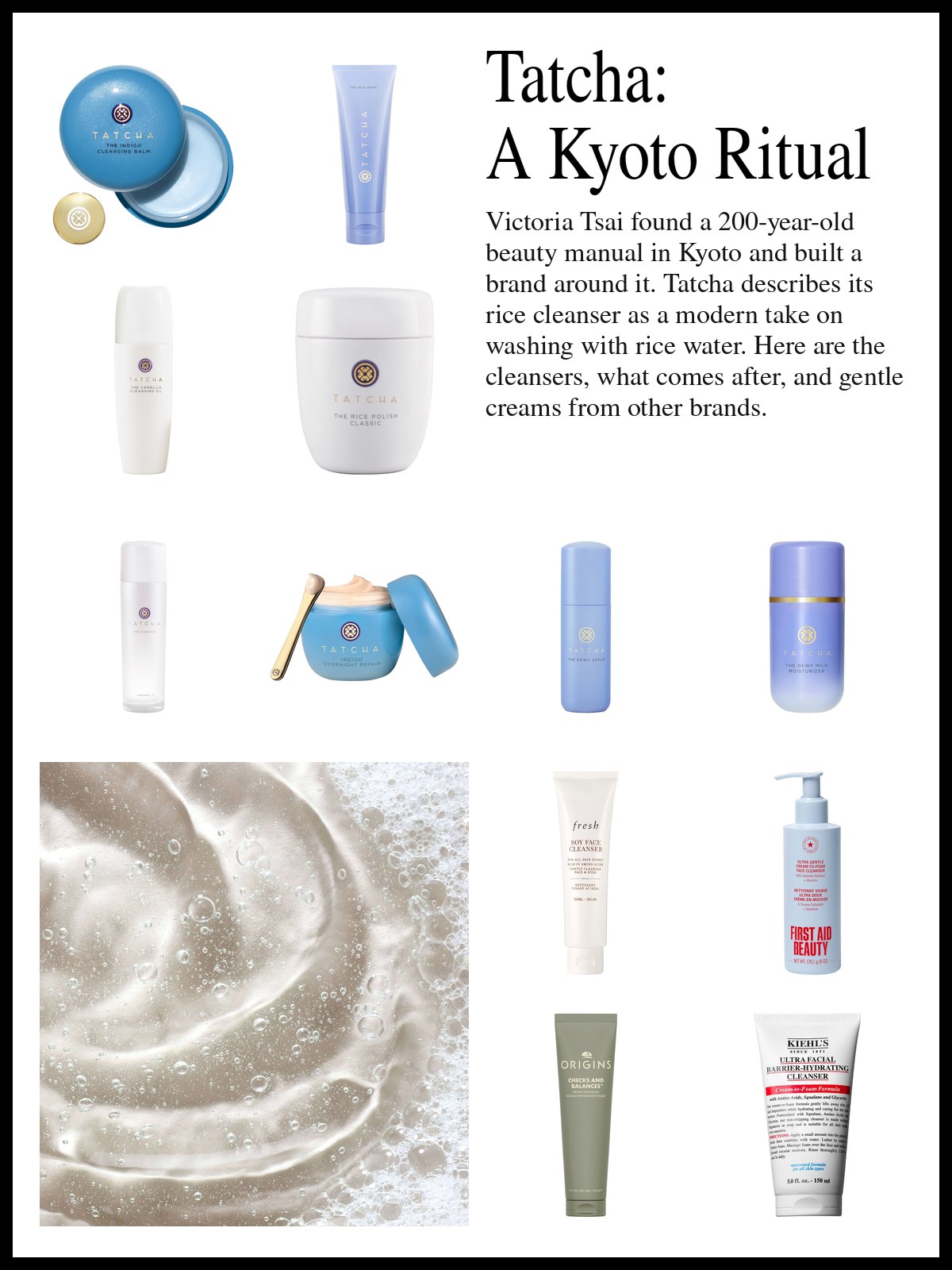
That background explains why Tatcha The Rice Wash is such a natural centerpiece. Tatcha describes it as inspired by the old Japanese ritual of cleansing with rice water, and it lists Japanese rice powder, hyaluronic acid with red algae, and a pH-neutral amino acid base as highlights. Retail copy says the rice powder gently cleanses and leaves skin soft to the touch. In my own words: it is a cleanser for people who want their face to feel softer-feeling after washing, not squeaky.
The rest of the cleanser shelf covers every mood. The Indigo Cleansing Balm and The Camellia Cleansing Oil are the first step for evenings when you have worn sunscreen or makeup. The Rice Polish Foaming Enzyme Powder is the one to use when you feel like a change of texture, a powder that you turn into a light foam with water. The Matcha Foam Cleanser is the foaming one, for mornings and for anyone who likes a cleanser that feels like it did something.
As with anything new, patch test first on the inside of your jaw or your forearm, and wait a day.


What I put on after cleansing
Cleansing is only the first half of the routine. Tatcha has a clear idea of what comes next, and the steps are light, layered and unfussy.
The Essence is the hydrating first layer, pressed in with clean palms rather than a cotton pad. It is a quick step, and it sets up the serum and cream that follow. The Dewy Serum is the next layer, and The Dewy Milk Moisturizer is the lighter of the two creams, a good one for daytime or for oilier skin. Indigo Overnight Repair Cream is the richer night cream, which I would keep for cold weather or for skin that feels dry by bedtime.
Luminous Dewy Skin Mist is the last piece, a mist you spray over makeup or bare skin in the afternoon to give a soft, fresh finish. Close your eyes when you spray it and hold it at arm's length. I keep it on my desk for the flat, tired skin that shows up around three in the afternoon, and it takes five seconds.
My suggestion is to add one product at a time. If you try the whole shelf in a single week and your skin reacts, you will not know which one caused it. Introduce each for a few days, patch test, and keep the rest of your routine steady. Patience is the whole trick here.


Gentle cleansers from elsewhere
Not everyone wants a Japanese ritual every night, and some people get on better with a simple cream or milk cleanser. These five are ones I would point a friend toward.
fresh's Soy Hydrating Gentle Face Cleanser is a gentle face cleanser that I would pick for mornings, when I want the wash to be quick and quiet. First Aid Beauty's Pure Skin Cream-to-Foam Face Cleanser starts as a cream and turns into a light foam, a nice bridge for people who like the feel of suds but not the tight feeling afterward. Origins' Checks and Balances Frothy Face Wash is a bouncier, frothier option for people who like a fresh-feeling wash. Kiehl's Ultra Facial Barrier-Hydrating Cleanser is a no-nonsense pick for the bathroom shelf, made for skin that feels dry. Clinique's All About Clean Liquid Facial Soap is the classic gentle liquid soap.
What I would skip: rushing through the rinse, which leaves residue that can make skin feel dull, and a washcloth scrubbed hard across your face, and very hot water. Hot water and rough rubbing make skin feel tight and can make any good cleanser feel harsher than it is. Switching between three or four cleansers in a single week is another habit I would drop, since you will not learn what any of them does. If you have persistent redness, stinging or a rash, see a dermatologist before adding anything new.


Building a calm evening routine
A calm evening routine needs very little. Wash, press in a layer of hydration, and finish with a moisturizer. The rest is optional.
Wet your face with lukewarm water, work the cleanser in for about a minute with your fingertips, and rinse thoroughly. Pat dry, don't rub. If you wore sunscreen or makeup, start with a balm or an oil, then follow with The Rice Wash or another gentle cleanser.
Keep a note on your phone of what you used and how your skin felt the next morning. Give any new cleanser two weeks before you decide. Skin takes time to settle, and the small signs, like less tightness after rinsing, are easier to spot than dramatic changes. Keep the routine steady, and if a product you loved suddenly feels different, put it aside for a week and come back to it. Patch test before you add something new, and stop if anything stings.