A daily moisturizer is the least glamorous product in most routines, and also the one doing the most structural work. For years the story was more steps and more actives, but skin does not actually reward that kind of novelty. This edit sorts a set of daily moisturizers by texture and by how each one supports the skin barrier, so the choice comes down to something you will actually use every day.

The Case for Moisturizer Daily
The step nobody skips
Ten-step routines were a phase, and what survived is treating a moisturizer daily as a fixed habit rather than a mood decision. The point is barrier repair, not a finish, so the payoff shows up over weeks rather than in the mirror that morning. Apply it every day regardless of how your skin looks, since consistency is what actually rebuilds the surface. That single habit has replaced the instinct to collect five different creams for five different moods. Nobody needs to broadcast a single daily cream, and that quiet consistency is exactly why the habit holds.
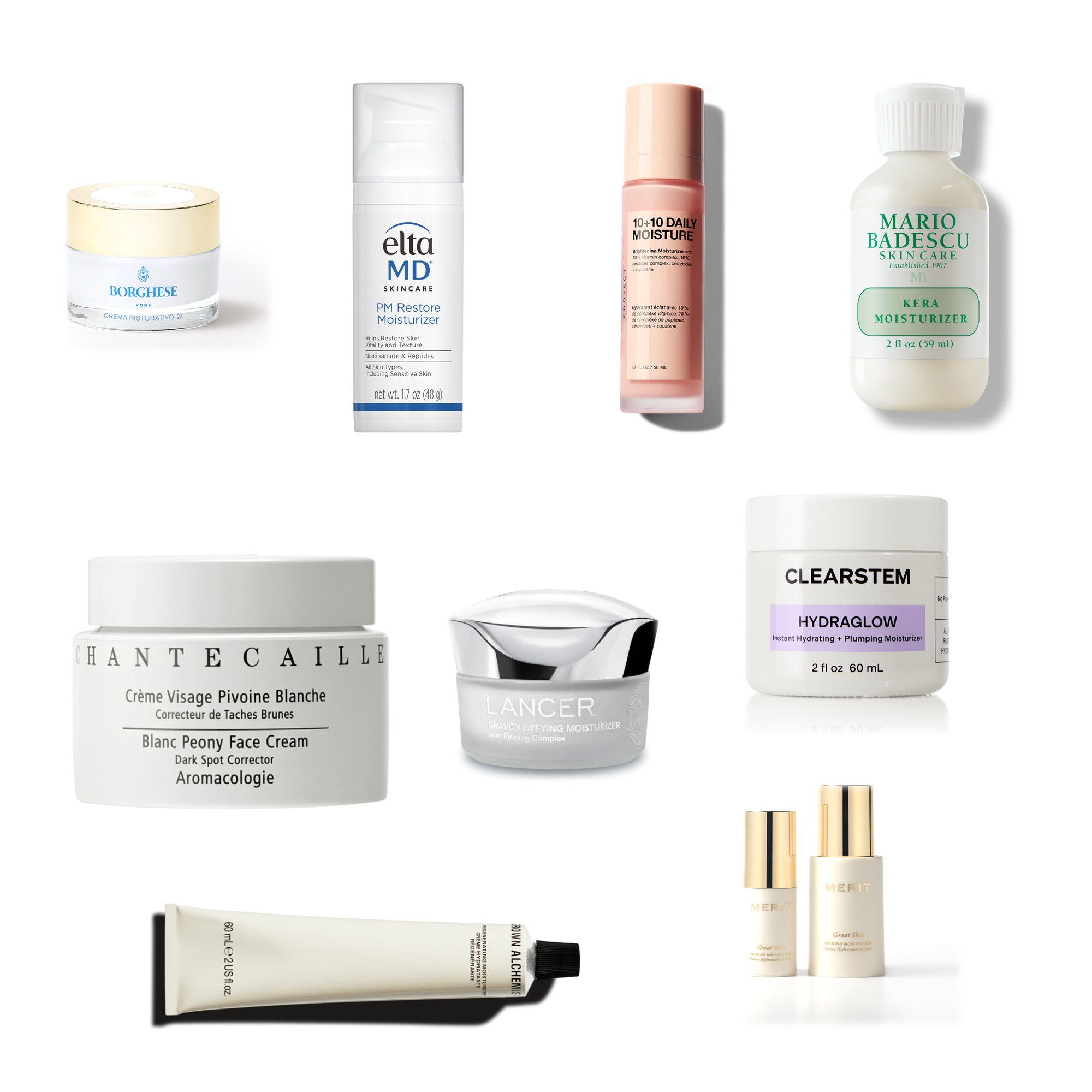


Texture decides everything
The difference between a moisturizer you keep using and one that dies in a drawer almost always comes down to texture, not the ingredient list on the label. Testing that means paying attention to the first thirty seconds after you smooth it on, since a formula that disappears fast gets reached for again and a heavy one that sits on top gets skipped. In warmer months or on oilier days, a lighter texture is easier to layer under makeup or sunscreen, while cooler air and drier patches call for something with more cushion. I like to keep two textures in rotation and switch based on how my face feels that morning rather than sticking to one all year. The texture you land on says more about your climate and skin that week than about any single formula being objectively better.


The barrier is the actual product
Everything in this group works on the same layer of skin, the stratum corneum, which is roughly as thick as a sheet of paper and holds water in while keeping irritants out. A moisturizer supports it three ways, by adding water, by smoothing the surface, and by slowing how fast that water evaporates, and most formulas do a bit of all three. Ceramides and fatty acids are simply the lipids that layer is already made of, added back in when a formula includes them. Once you know that, the ingredient lists get a lot less mysterious and the marketing gets a lot less persuasive. There is no secret fourth mechanism waiting to be discovered.


When to apply matters
Applying to slightly damp skin traps water that is already sitting on the surface, and it noticeably improves hydration compared with applying to completely dry skin. That window is short, maybe the first minute after washing, which is why the moisturizer belongs right next to the sink. Skin loses water faster overnight, so a heavier texture earns its place at night in a way it does not in the morning. Sunscreen goes on top of a moisturizer, never underneath, and needs a couple of minutes to settle first. Order and timing are free, and most people still get both slightly wrong.


Before You Shop
There is no version of this where a moisturizer is the most interesting product in your routine, and that is rather the point. Pick the texture you will actually reach for and then stop shopping around. Consistency beats a longer ingredient list every time. Skincare content rewards novelty, and skin rewards repetition, and those two facts have been quietly at war for years. Let repetition win.