Our guide to cottagecore outfits covers prairie dresses, puff sleeves and smocking, cardigans, Mary Janes and the small country details that finish the look. I would take the ruffles seriously and the bread slightly less so.
The Cottagecore Outfits Edit: Five Lessons for Dressing Like You Bake Your Own Bread
Confessions of a woman who owns too many gathered skirts
I can tell within approximately four seconds whether a dress has a secret sleeve puff, a hidden smocked panel or a petticoat's worth of fabric in the skirt. I check the cuffs, the neckline and the hem, usually in that order. I have no shame about this.
But somewhere between the linen-and-lace corner of the internet, the full farmhouse fantasy and the person who bakes sourdough in a silk gown, cottagecore outfits have gotten a little loud. We are told to look like we live in a meadow and also to look like we have a 9 a.m. meeting. We are told to be soft and also sharp. Both cannot happen in one pinafore. If you want to keep going, The Old Hollywood Outfits Edit: Five Lessons in Dressing Like the Studio Is Paying is the one I would read next.
Which brings me to Marie Antoinette. In 1783 the queen commissioned the architect Richard Mique to build the Hameau de la Reine, a lakeside village of rustic little houses in the Trianon gardens at Versailles, part of what the palace itself calls the late eighteenth-century taste for a return to nature. So the wish to dress for a cottage nobody actually lives in is not new. It is just much easier to shop for now.
Some of what I found made me want to buy a bonnet. Some of it made me want to lie down in a field. And some of it made me realize that the cottage core outfits that work are the ones with a plan. So, here are five lessons on how to wear the look without looking like you are headed to a themed party. I went deeper on a related idea in The Dark Academia Edit: Five Lessons for Dressing Like You Own Too Many Books.
1. A prairie dress needs one modern thing.
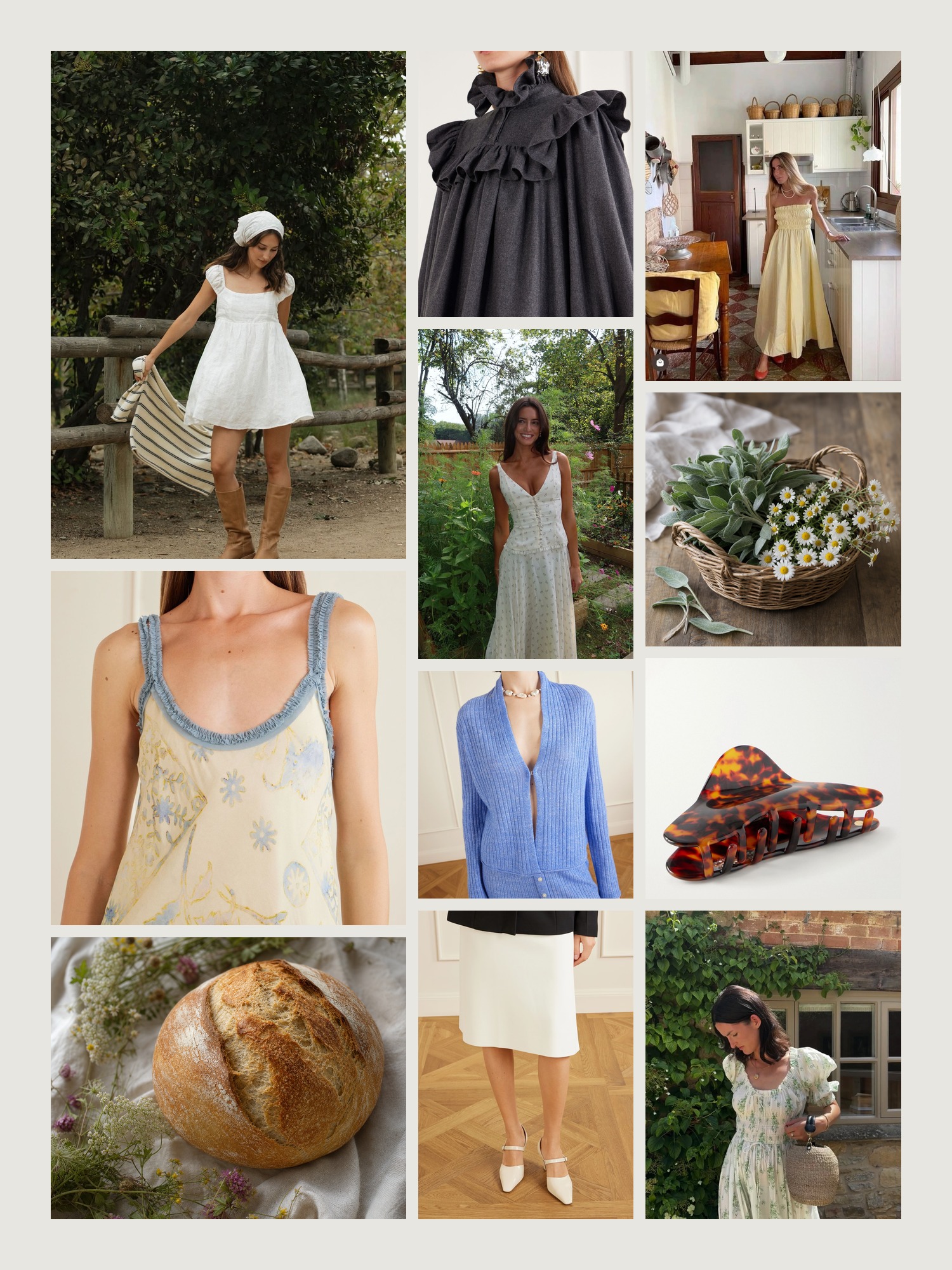
A floral maxi can go two ways. Done right it looks like a woman who knows the names of her herbs. Done wrong it looks like a very nice costume. The difference is almost always one grounding piece.
The look has a pedigree. Laura Ashley, the brand, got its start in 1953 when Laura and her husband Bernard began printing fabrics at home, inspired by an exhibition on traditional crafts and the floral patterns and Victorian silhouettes they loved. That is the blueprint for the whole genre. Picture her in the Farm Rio Daniela, all embroidered ruffles, with a plain leather belt and nothing else. Or in the Alémais Josie gathered midi, which is earthy brown and easy to wear with a crisp white tee underneath.
The SIR Freja linen maxi and the SIR Cecile chiffon dress, both cream, are the quietest options here, and the La DoubleJ Belle in silk twill is the loudest. The Oscar de la Renta faille midi is the one I would wear with flat shoes and a denim jacket, so it reads as an evening plan rather than a pageant.
What I would skip: the two baby pink Pucci pieces if your hair is also long, wavy and flowered. That is a lot of pretty in one place. Although if you commit fully, I will not stop you.
Prairie and floral dresses

Cecile ruffled printed chiffon maxi dress
SIR
$580

Belle floral-print silk-twill maxi dress
La DoubleJ
$1,390

Daniela ruffled printed embroidered crepe maxi dress
Farm Rio
$300

Printed stretch-tulle maxi dress
Pucci
$1,140

Printed silk-twill maxi dress
Pucci
$1,680

Josie gathered floral-print twill midi dress
Alémais
$690

Darted floral-print faille midi dress
Oscar de la Renta
$4,990

Freja pleated floral-print linen maxi dress
SIR
$490
2. Puff sleeves and smocking do the romance for you.
Smocking is the most honest romantic detail there is, because it started out being useful. It was invented in England on the loose shirts of estate workers, and the word comes from the Old English smock, a big shirt for shepherds, woodsmen and gardeners. Gathering the fabric gave warmth at the chest and wrists while leaving room to move. The V&A even holds a child's linen smock from 1840 with white smocking on the cuffs, shoulders and chest.
The puff sleeve, meanwhile, had its own recent comeback. Vogue pinned the latest wave to spring 2018, first on Victorian-inspired shirts and romantic house dresses. That is exactly the kind of top this section is about. The Dôen Henri shirred blouse in merlot has the gathering and a lace trim. The Ulla Johnson floral jersey blouse is soft and easy. The Joseph Eris is gathered linen and silk in brown, which is the one I would pair with a long denim skirt.
For the cooler end, Chloé's ruffled flannel blouse and the Zimmermann Valiant turtleneck in cream have the sleeve but keep the neck warm. The Veronica Beard Nuvina in army green and the Zimmermann gathered denim shirt are the ones for people who do not like to say the word ruffle.
Test it: raise your arms to the height of a shelf. If the sleeve lifts your whole blouse, size up.
What I would skip: stacking a puff sleeve under a puffy coat. Although I admit that is a problem for January me.
Puff-sleeve and smocked blouses

Ruffled wool and cashmere-blend flannel blouse
Chloé
$2,190

Gathered floral-print stretch-jersey blouse
Ulla Johnson
$290

Nuvina gathered checked stretch-mesh blouse
Veronica Beard
$240

Eris gathered linen and silk-blend blouse
Joseph
$835

Lace-trimmed silk-crepe blouse
Chloé
$2,400

Gathered denim shirt
Zimmermann
$650

Henri shirred lace-trimmed organic cotton blouse
Dôen
$250

Valiant lace-trimmed Lyocell-blend turtleneck blouse
Zimmermann
$850
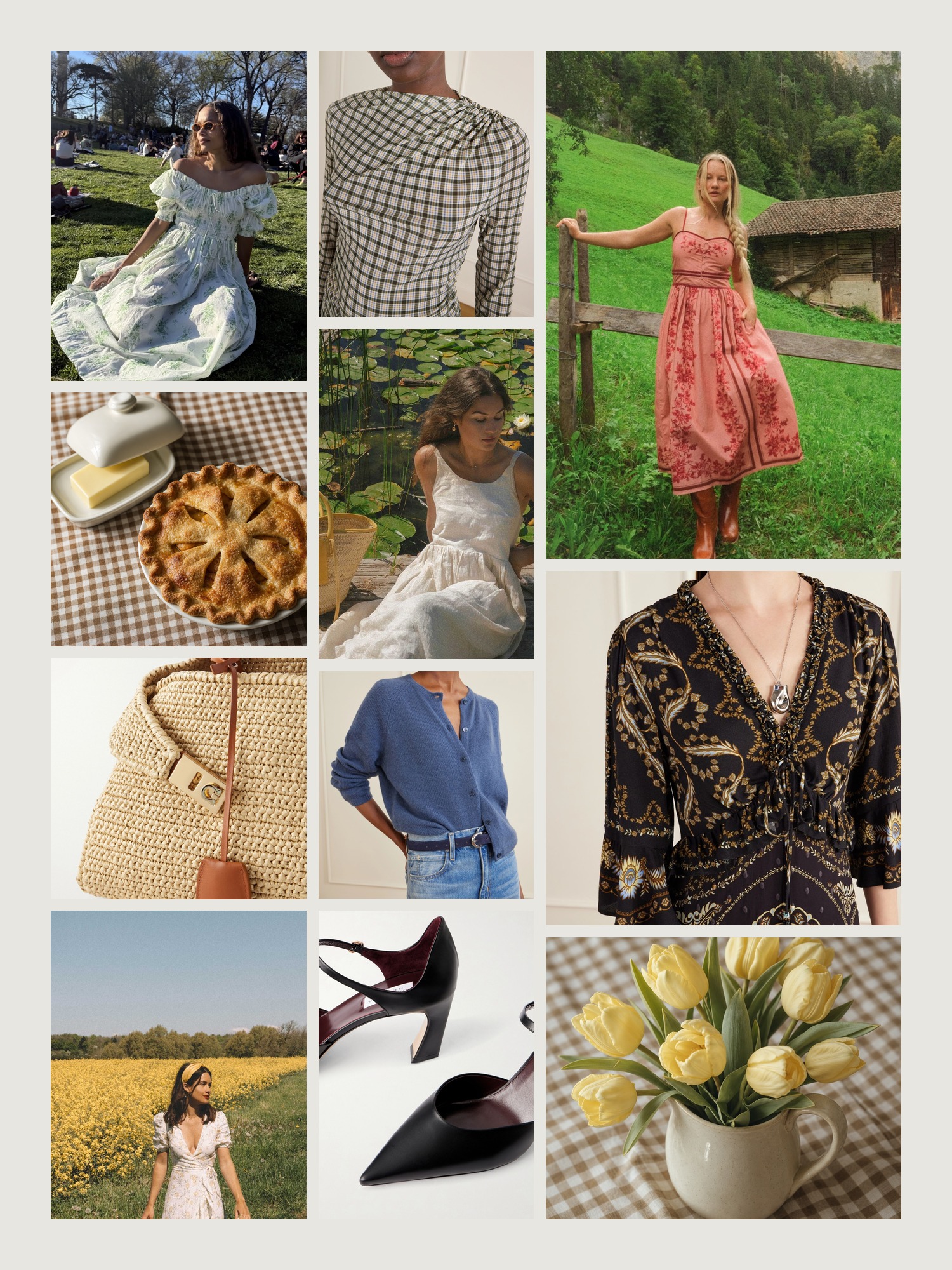
3. Cardigans should look like someone knitted them for you.
A cardigan is the one piece in cottagecore fashion that has to earn its keep in winter. Fred Rogers understood this. His red cardigan now sits at the Smithsonian National Museum of American History in Washington, which tells you what a sweater can say about a person, quietly and without a single ruffle.
Here the texture does the talking. The Dôen Peroline in storm blue and the Dôen Thea in peach are both cashmere, soft and a little bit grandmother. The Khaite Annora, a beige turtleneck cardigan in wool and cashmere, is the one I would wear with an apron skirt. The Guest In Residence Stealth is a ribbed cashmere and linen blend, lighter than the rest, and the La Ligne Ben in pastel yellow is the shade of butter on warm toast.
For something with a little attitude, the Frame Airy Teddy Cardi in camel is plush, and the Vivienne Westwood Bea has the embroidered logo for anyone who needs a wink. The Róhe wool blend in blue is the sensible one.
Test it: button it wrong on purpose by one hole. If it still looks charming, it is the right cardigan.
What I would skip: anything too sleek if you want the cottage look. A shiny finish says boardroom. Although a cashmere one is always forgiven.
Cardigans

Stealth ribbed cashmere and linen-blend cardigan
Guest In Residence
$295

Annora wool and cashmere-blend turtleneck cardigan
Khaite
$1,580

Peroline cashmere cardigan
Dôen
$380

Mélange wool-blend cardigan
Róhe
$870

Thea cashmere cardigan
Dôen
$370

Ben silk, wool and cashmere-blend cardigan
La Ligne
$295

The Cashmere Airy Teddy Cardi wool and cashmere-blend cardigan
Frame
$550

Bea logo-embroidered wool and silk-blend cardigan
Vivienne Westwood
$480
4. Mary Janes and ballet flats beat any boot.
A boot says you are going somewhere. A strapped shoe says you are already home. That is the whole point.
The Mary Jane has a funny past. The shoes used to be called Buster Browns, after a comic strip that debuted in 1902, and in 1904 the Brown Shoe Company licensed Buster Brown to market its children's shoes. Somewhere along the way the sweet strap pump grew up. The Aeyde Isidora 75 in cream calf leather is the classic. The Staud Nora is an espadrille Mary Jane in red canvas, which I would pair with a gingham dress and nothing else. The two Gabriela Hearst pairs, the Devil Pump 80 in black and the Riley 25 in burgundy croc-effect leather, are the serious ones.
For the ballet flat camp, the Le Monde Beryl and the Alaïa La Ballerine are both suede with shearling, which makes them the warm answer for November. The Loeffler Randall Tove has gathered suede, so it echoes the smocking. The Jamie Haller High Vamp in red is the one that looks like a lipstick for your feet.
What I would skip: a heavy lug sole under a floaty dress. The dress and the boot will argue all day. Although a thick sock can fix a lot.
Mary Janes and ballet flats

Isidora 75 calf-leather Mary Jane pumps
Aeyde
$695

Nora canvas espadrille Mary Jane flats
Staud
$295

Devil Pump 80 leather Mary Jane pumps
Gabriela Hearst
$1,300

Riley 25 croc-effect leather Mary Jane flats
Gabriela Hearst
$1,090

Shearling-lined suede ballet flats
Le Monde Beryl
$625

La Ballerine shearling-trimmed suede ballet flats
Alaïa
$1,050

The High Vamp leather ballet flats
Jamie Haller
$525

Tove gathered suede ballet flats
Loeffler Randall
$350
5. A small country detail finishes it.
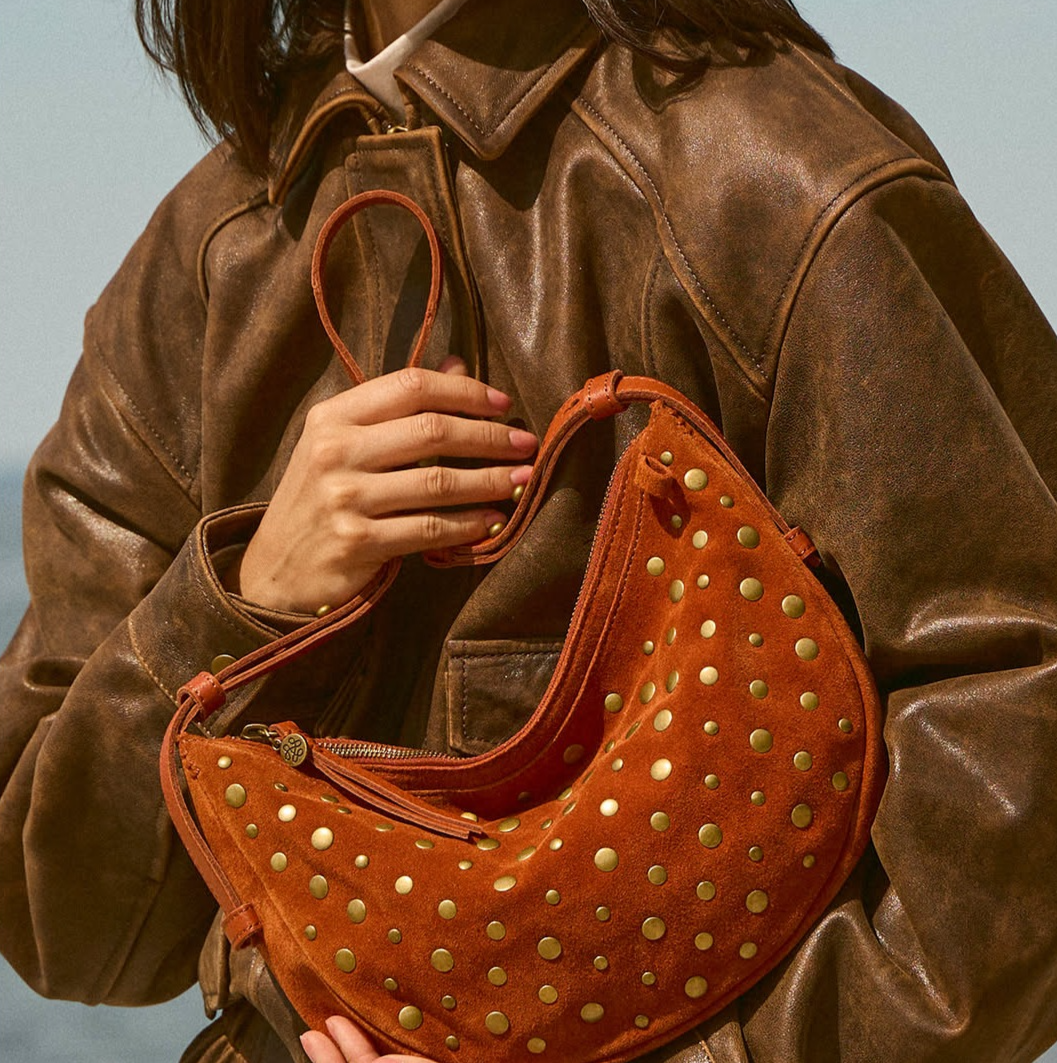
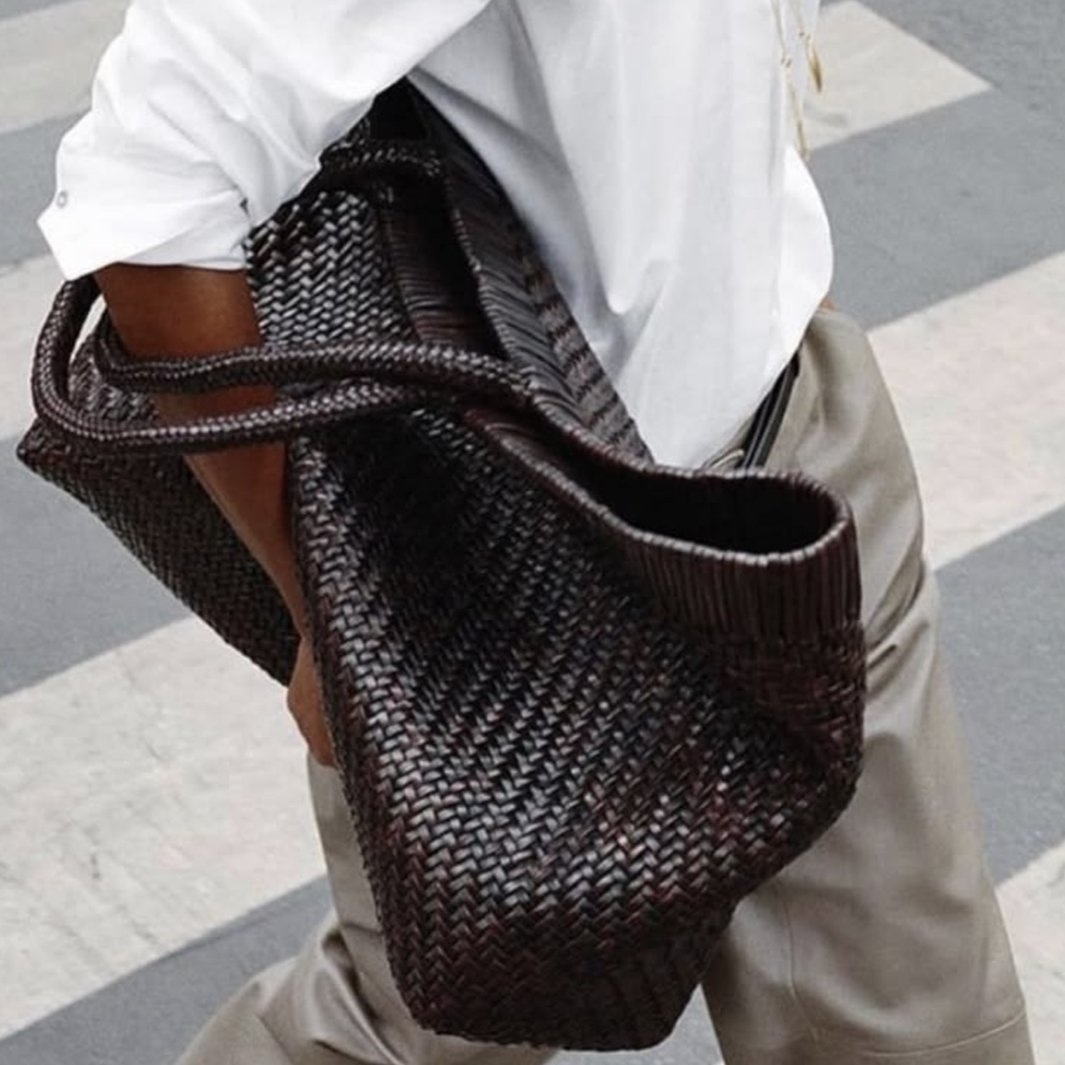
The final move is never another garment. It is the thing you pick up on the way out of the door. A woven bag, a clip, a scarf tied somewhere unexpected. Cottagecore fashion has always lived in the small things.
Raffia does this best. The Anya Hindmarch Mortimer tote in sand is the market bag you wish you had been given, and the Anya Hindmarch Bow clutch in sand is its smaller cousin. The Aquazzura Paradise Mini and the Ferragamo Hug top-handle bag are the dressier takes, and the Hunting Season Zip clutch in black is for anyone who wants the texture without the sunshine.
For your hair, two tortoiseshell pieces from Jennifer Behr, the Amira clip and the Lydia headband, look like they came out of a drawer in a farmhouse. The Pucci printed silk bandana is the wild card, and I would knot it at the neck or the handle of a bag.
Test it: pick one detail. If you have a clip, a bag and a bandana on, take off the loudest one.
What I would skip: all of them at once. Although the temptation is real.
Country bags and hair accessories

Paradise Mini leather-trimmed raffia bag
Aquazzura
$1,360

Zip leather-trimmed raffia clutch
Hunting Season
$350

Hug leather-trimmed raffia top-handle bag
Ferragamo
$3,400

Mortimer leather-trimmed woven raffia tote
Anya Hindmarch
$1,390

Bow leather-trimmed raffia clutch
Anya Hindmarch
$620

Amira tortoiseshell acetate hairclip
Jennifer Behr
$130

Printed silk-twill bandana
Pucci
$385

Lydia tortoiseshell acetate headband
Jennifer Behr
$150
The cottage you actually live in
Five lessons in, I think the secret is that nobody wears a cottage. They wear a cardigan, a sleeve, a sensible shoe and one good bag, and then go to the shop. Marie Antoinette had a whole village built so she could pretend. We just have to get dressed.
I will still be tempted by another ruffle. I will still check the cuffs of every dress in the room within four seconds. But the next time I leave the house in something gathered, I will wear one thing that belongs to the century I am in.
The bread, sadly, is not included.