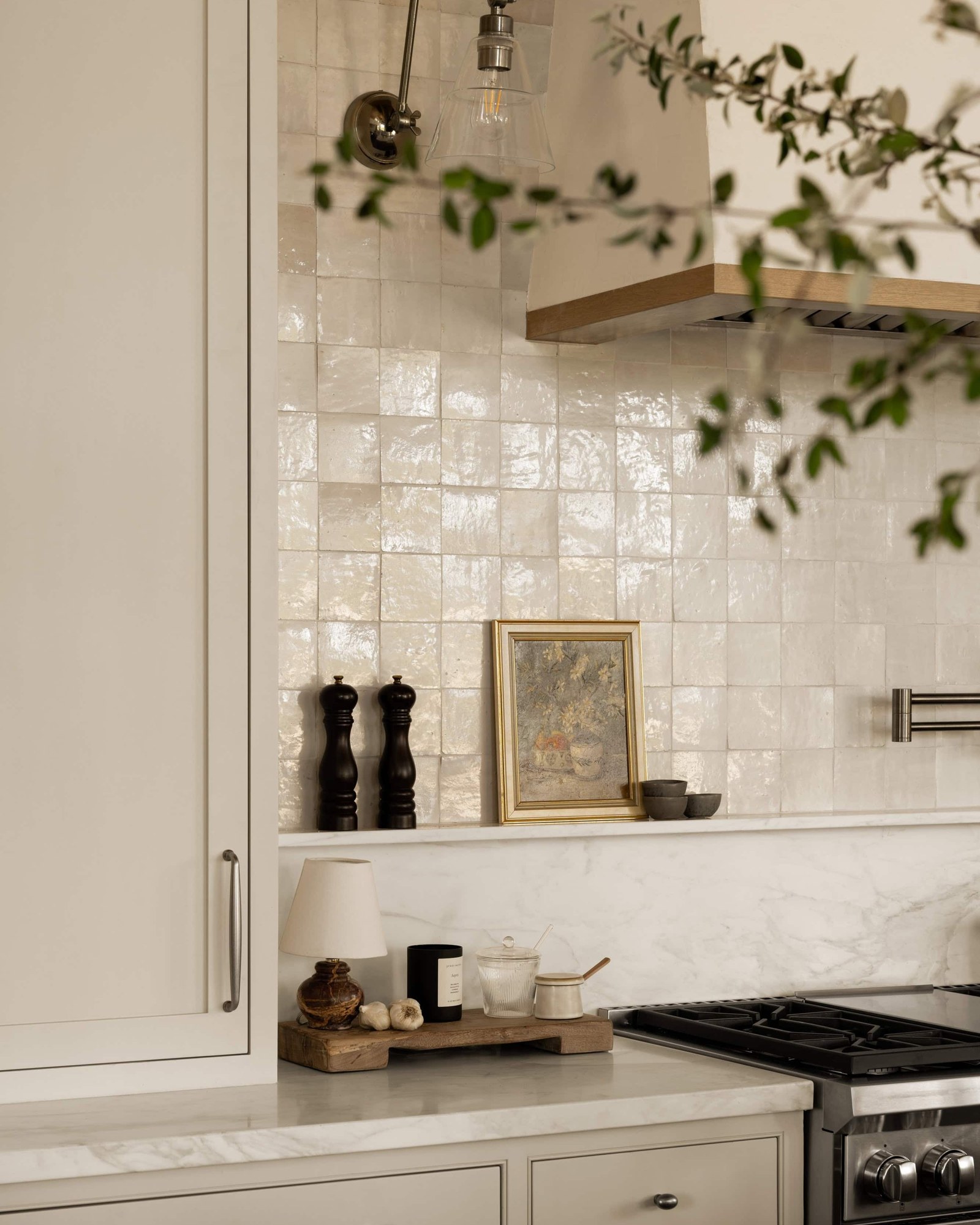
A kitchen subway tile backsplash is the safest choice in design, which is exactly why it is worth doing thoughtfully. Here is how I would choose the tile, the finish and the layout, including options for renters.
The Kitchen Subway Tile Backsplash, Reconsidered
When New York's first subway opened on October 27, 1904, its stations were lined in glossy white tile. The architects, George Heins and Christopher Grant LaFarge, wanted something that would bounce light around underground and survive endless scrubbing, and the little white rectangle they used went on to have a much longer life above ground than anyone could have planned. Every time you see it behind a stove, you are looking at a piece of transit engineering.
That history is why I will never be snobby about a kitchen subway tile backsplash. It exists because it works. It is easy to clean, it reflects light into a dark corner, and it sits quietly behind whatever else you put in the room. The problem is not the tile. It is that most people pick the first white one they see, have it installed in the tightest possible grid, and then wonder why their kitchen looks like a rental.
A few choices change everything: the size of the tile, whether it is glossy or matte, the color of the grout and the pattern it is laid in. The first grid is classic ceramic and porcelain. Merola's Crown Heights is the traditional three by six, and Bond Tile's Baton Rouge and PIXL's Urban Domain are close cousins. Supreme Tile's Kezma and The Tile Life's Waverly stretch to three by twelve, which looks longer and calmer on a wide wall, while Supreme's Borgo is polished porcelain. Qube's Shades is matte, softer in a kitchen with lots of daylight, and Ackland's Ryze Kuro is a glossy black for anyone who wants to flip the whole idea.
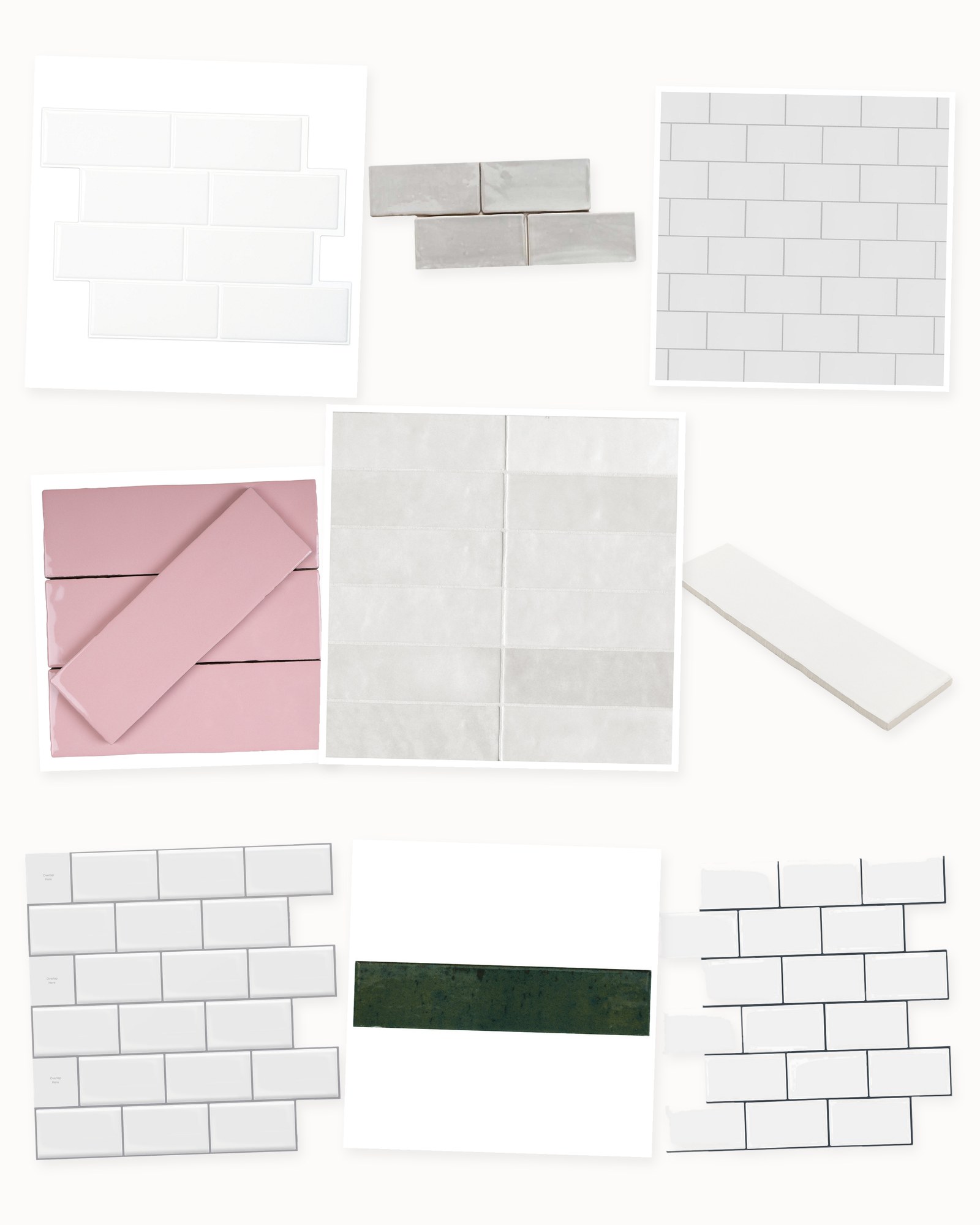
Classic ceramic subway tile

Baton Rouge Ceramic Subway Tile
Bond Tile
$6.69

Kezma 3 in. x 12 in. Ceramic Subway Wall Tile
Supreme Tile
$7.97

Crown Heights 3" x 6" Ceramic Subway Wall Tile
Merola Tile
$8.2

Borgo Polished Porcelain Subway Tile
Supreme Tile
$7.12

Urban Domain Ceramic Subway Tile
PIXL
$6.69

Waverly 3" x 12" Glossy Ceramic Subway Wall Tile
The Tile Life
$67.8

Shades 3" x 12" Matte Subway Wall Tile
Qube Tiles
$5.19

Ryze Kuro Glossy Ceramic Subway Tile
Ackland
$2.79
Tile that looks made by hand
If the first grid is the subway itself, this second one is what happens when the idea travels to Morocco and Mexico for a while. Handmade-look and zellige tiles keep the rectangle but let each piece vary, so the glaze pools a little deeper here and the edge rolls a little softer there. On a wall, that variation catches light like water.
Zellige is glazed clay tile from Morocco, and several of these are made to capture that look. Qube's Mila and Fiona are both sold as zellige, with the Fiona in a slim two by six that looks especially nice stacked vertically. Bedrosians' Cloe is the one designers reach for when they want the handmade feel in a more predictable tile. Merola's Antic Special and Viva Antic have a slightly crackled, vintage surface, and Supreme Tile's Rustic has a gentle wave to it. Daltile's Remedy and The Tile Life's Talavera-inspired tile lean warmer and a little more rustic, which I love with wood open shelving.
Two notes from experience. First, uneven tiles need a slightly wider grout line, because they do not sit perfectly flat, so ask your installer before you choose a thin grout. Second, order extra. The whole charm of these tiles is that no two look quite the same, which also means a second batch can arrive a shade off. Get everything at once, then mix the boxes as you go so the variation looks natural instead of patchy.
Handmade-look and zellige subway tile

Cloe Handmade-Look Glossy Subway Tile
Bedrosians
$94.59

Antic Special Vintage Ceramic Subway Tile
Merola Tile
$19.96

Mila 3" x 12" Zellige Subway Wall Tiles
Qube Tiles
$7.49

Rustic Polished Ceramic Subway Tile
Supreme Tile
$9.4

Daltile Remedy Hand-Crafted Wall Tile
Daltile
$12.5

Talavera Handmolded-Look Glossy Wall Tile
The Tile Life
$93.01

Viva Antic 3" x 12" Ceramic Subway Wall Tile
Merola Tile
$19.96

Fiona 2" x 6" Zellige Glossy Subway Wall Tiles
Qube Tiles
$8
For renters, and for trying it first
Not everyone can tile a wall, and not everyone should commit before they have lived with a look. That is where peel-and-stick comes in, and it has improved a lot from the flat plastic sheets of a decade ago.
Smart Tiles' Metro is the one I see most often in real kitchens. It has a slightly raised gel surface that mimics grout lines, so from a few feet away it reads as tile. Art3d makes both a plain white backsplash sheet and a subway version that holds up behind a sink. WS Tiles offers glass peel-and-stick, including a hand-painted option, which feels nicer to the touch than vinyl. Clevermosaics' thick vinyl, WallPops' resin tile and Colamo's pure white PVC round out the group, all easy to cut around outlets with a craft knife.
A few rules I would follow. Clean the wall with rubbing alcohol before you start, or the adhesive will lift within a month. Keep peel-and-stick a few inches back from the side of a gas burner, where heat can warp it. And start at the counter, not the ceiling, so the first full row sits straight along the line people actually see.
What I would skip: bright white grout with bright white tile. It looks crisp for about a week, then it looks like it needs cleaning forever. A soft gray or a warm off-white grout is kinder and makes the pattern read more clearly.
Peel-and-stick subway tile for renters

Metro Peel and Stick Gel Backsplash Tile
Smart Tiles
$11.79

White Peel and Stick Backsplash Tiles
Art3d
$3.59

Peel and Stick Subway Tile
Art3d
$3.24

Glass Peel and Stick Subway Tile
WS Tiles
$5.09

Thick Vinyl Peel and Stick Subway Tile
Clevermosaics
$39.88

Hand Painted Glass Peel and Stick Subway Tile
WS Tiles
$5.09

Resin Peel and Stick Subway Tile
WallPops!
$16.99

Pure White PVC Peel and Stick Subway Tile
Colamo
$76.9
Our honest take
I think subway tile is one of the few design choices that is genuinely hard to regret, as long as you make it on purpose. It was designed to reflect light and be scrubbed, and it still does both better than almost anything else behind a stove.
If you take one thing away, let it be this: change one variable from the default. A longer tile, a matte or handmade finish, a vertical stack or a warmer grout. Any one of those turns the most common backsplash into a considered one, and you do not need all four. Tape a few samples to the wall, look at them in the morning and again at night, and you will quickly see which one belongs in your kitchen.