Mock neck sweater notes for five lessons: choosing cashmere by fiber and care, using rib for texture, keeping fine gauge light, balancing oversized knits, and styling vests or sweater dresses. I would let the short collar do one small job at a time, which is how I avoid turning a sweater into a committee meeting.

The Mock Neck Sweater Edit: Five Lessons for a Collar That Knows When to Stop
The collar noticed me first
I am the person who decides whether a knit belongs in my mental wardrobe within approximately four seconds: the collar, the sleeve, and whether it makes my coat look like it has a neck problem. I have no shame about this.
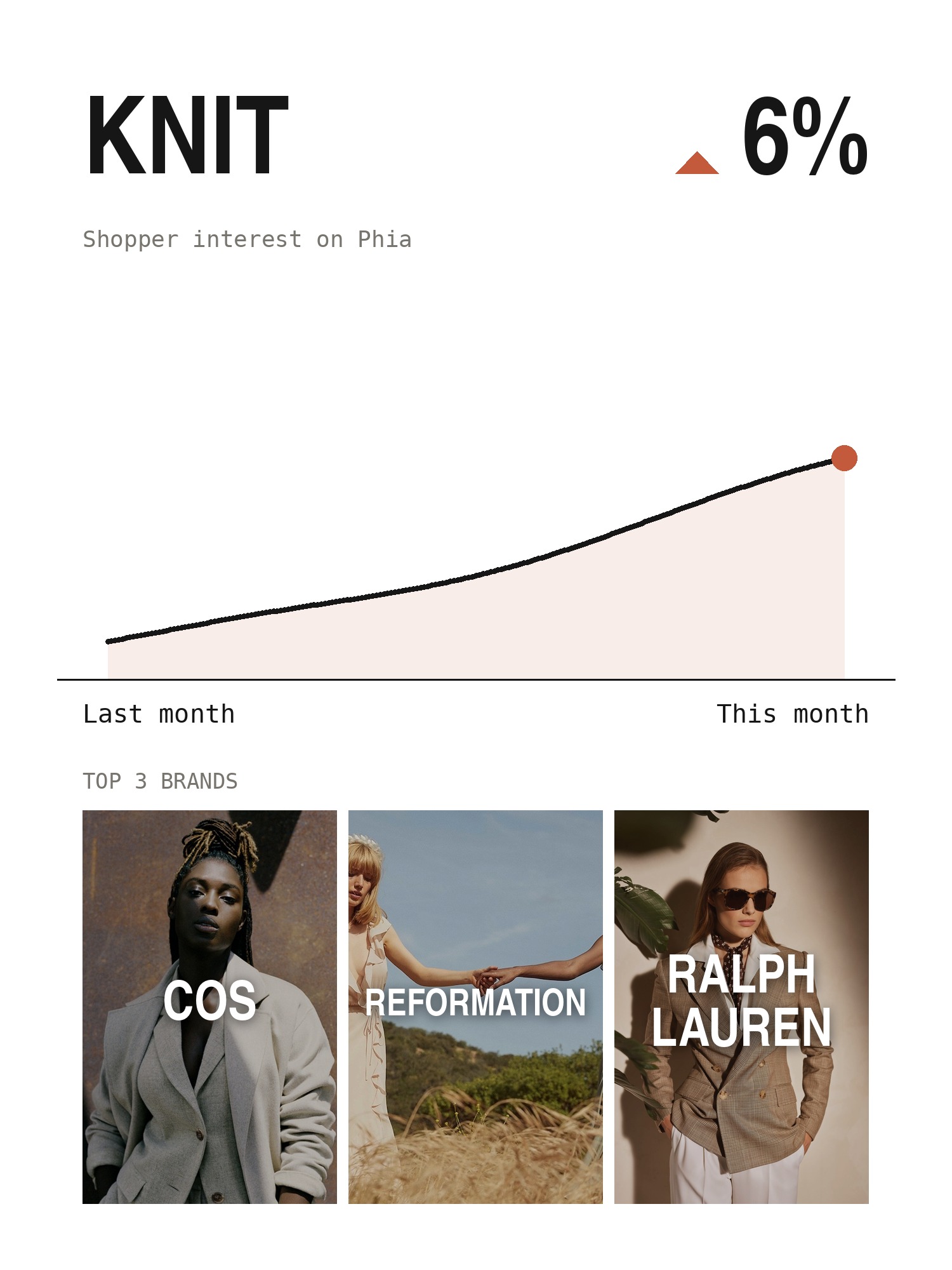
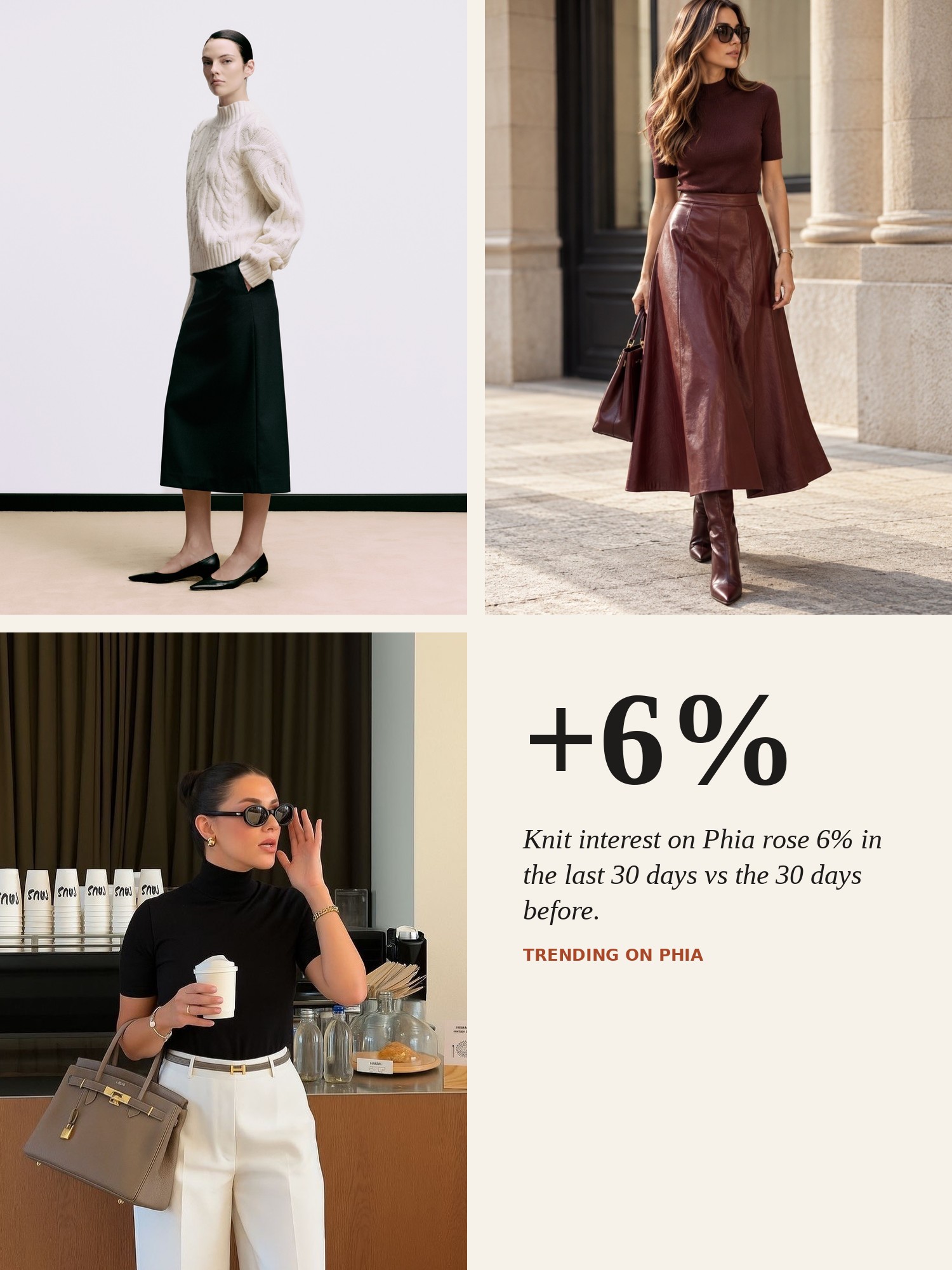
But somewhere between the roll necks, the collars that almost fold, and the yearly request to make winter dressing more interesting, this little neckline has become a surprisingly serious decision. We are told to frame the face, but also to keep every layer light. Phia shopper data shows knit interest rose 6% in the last 30 days vs the 30 days before. The bigger knit category is moving, and my collar thoughts are still multiplying.
Which brings me to Paris in 1957, when Audrey Hepburn’s Jo Stockton wore a black turtleneck in Funny Face. Vogue described the look as capturing the emerging beatnik-style zeitgeist. It is technically a turtleneck, not a mock neck, but the high neckline’s power to make a whole outfit feel deliberate is the useful part.
Some sweaters begin with a fiber story, some with a stitch, and some with a silhouette that earns its own dress code. So here are five lessons in cashmere, rib, fine gauge, volume, and knitwear without sleeves or with a hem. The mock neck sweater can be punctuation, not a referendum. I would like to keep the conversation to that scale.
1. Cashmere is a fiber, not a softness filter.
Cashmere is not only a softness adjective; it has a very particular origin. The CFDA says it comes from the soft inner coat of the Cashmere goat, which is shed naturally in spring. For higher-quality fiber, the fine hairs are usually combed by hand because they are difficult to separate from the coarser outer coat. I like knowing that a quiet-looking sweater begins with a fairly intricate bit of sorting.
That source story makes me more interested in what the fiber is doing than in treating every pale neutral as the same. The light-gray COS Pure Cashmere pullover has chunky ribbed trims; the brown COS Argyle Brushed Cashmere version gives the surface a pattern. Charter Club’s Fisherman Mock Neck Cable Knit Sweater puts cable texture beside coral, while Calvin Klein’s lilac cashmere-blend pullover uses a square-stitch pattern in a relaxed shape.
I would use a fiber-label test: check the cashmere content, then compare the weight and shape notes. MANGO’s Selection Cashmere Mock-Neck Lightweight Sweater is straight and light; ST. JOHN’s Fine Gauge Cashmere Mock Neck has elbow sleeves; Vince’s Cashmere & Silk Mock Neck mixes two fibers; Favorite Daughter’s Bonnie is the blush, short-sleeve option.
The CFDA says cashmere quality depends on fiber length, fineness, and color. Its care guidance says hand-wash in cold water or dry clean, and cashmere knits should be stored flat because hangers can stretch them. What I would skip: choosing the fiber before checking the care label. Although that is a practical sentence from someone who can be distracted by a soft sleeve.
Cashmere mock neck sweaters

Pure Cashmere Mock-Neck Sweater
COS
$329

Argyle Brushed Pure Cashmere Mock-Neck Sweater
COS
$349

100% Cashmere Fisherman Mock Neck Cable Knit Sweater
Charter Club
$139.44

Mock-Neck Grid-Stitch Cashmere-Blend Pullover Sweater
Calvin Klein
$84

Selection Cashmere Mock-Neck Lightweight Sweater
MANGO
$146.99

Fine Gauge Cashmere Mock Neck Sweater
ST. JOHN
$595

Cashmere & Silk Mock Neck Sweater
Vince
$398

The Bonnie Mock Neck Cashmere Sweater
Favorite Daughter
$218
2. Rib is texture with a job.
A rib is not just a stripe. Britannica describes rib knitting as loops from the same course drawn to both sides of the fabric, which gives the texture a real structure. The V&A also records the black polo neck’s association with beatniks in the 1950s and ’60s, then its adoption by designers including Mary Quant. I like a neckline that can be practical and a little oppositional at once.
That is why the details matter. DKNY Jeans’ Long-Sleeve Mock-Neck Raglan Sweater mixes beet and black in a marled rib; Sonia Rykiel’s Tie-Front Mock-Neck Long-Sleeve Ribbed Sweater adds a tie at the collar. I.N.C. International Concepts’ Mock Neck Ribbed Long-Sleeve Sweater pairs warm toffee with small cuff accents, while Style & Co’s Whip Stitch Rib Mock Neck Loose-Fit Sweater makes the sleeve trim part of the conversation.
French Connection’s Babysoft Mock Neck Ribbed Sweater goes wide and black; oyun’s Classic Rib Mock Neck uses variegated texture in midnight. ELOQUII’s Peplum Sweater adds an asymmetric hem, so the rib has company without needing another print.
My practical check would be to look from collar to cuff and decide whether those textures speak the same language. A plain lower half gives the stitch room to register. What I would skip: adding another strong vertical pattern beside an already busy rib. Although the sweater itself is making a persuasive case.
Ribbed and textured mock neck sweaters

Long-Sleeve Mock-Neck Raglan Sweater
DKNY Jeans
$69.3

Tie-Front Mock-Neck Long-Sleeve Ribbed Sweater
Sonia Rykiel
$111.3

Mock Neck Ribbed Long-Sleeve Sweater
I.N.C. International Concepts
$44.52

Whip Stitch Rib Mock Neck Long-Sleeve Loose-Fit Sweater
Style & Co
$45.15

Ribbed-Knit Asymmetrical-Hem Mockneck Sweater
I.N.C. International Concepts
$47.32

Babysoft Mock Neck Ribbed Sweater
French Connection
$128

Classic Rib Mock Neck
oyun
$95

Peplum Sweater
ELOQUII
$58.99
3. Fine gauge is the sweater’s inside voice.
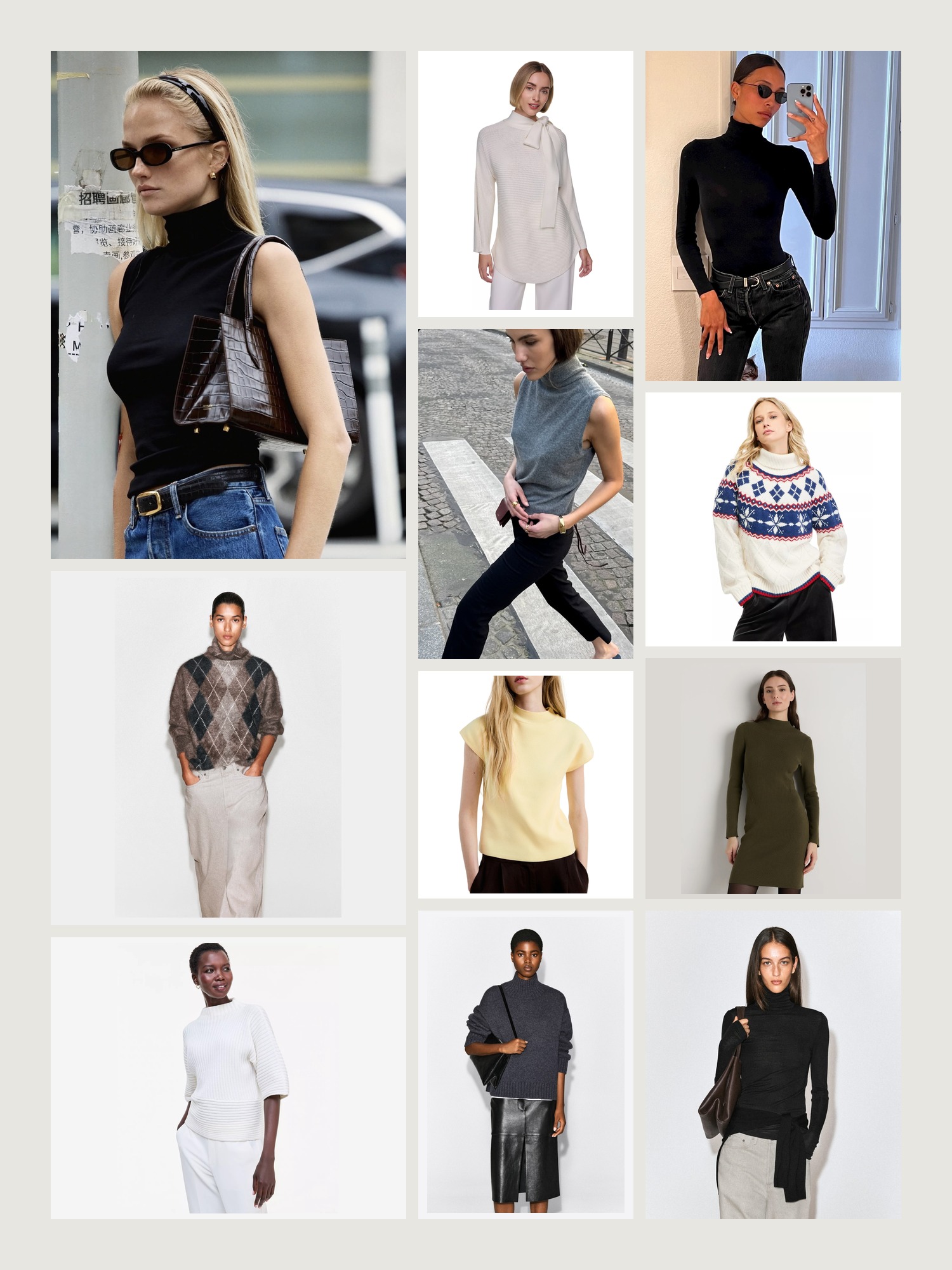
A finer knit lets the neckline read as a clean line instead of the whole event. Vogue’s 2015 report tracked mock-neck versions into the 2016 runway season: Alexander Wang used casual cotton for Resort 2016, while Proenza Schouler turned it into a tiered dress for Spring 2016. That history is a useful reminder that this shape can move between a base layer and the main idea. A mock neck sweater in fine gauge can read more like a top than a second coat layer.
Phia shopper data shows cotton fell 25% in the last 30 days vs the 30 days before. That is a broad material signal, not a finding about any one mock neck. The knit category and a particular fiber can move differently, which is why I would treat the percentage as context, not a shopping verdict.
The COS Merino Wool Buttoned Mock-Neck Top has an extended cuff and buttoned placket; the MANGO smooth short-sleeve fine-gauge knit is a quieter option. The DKNY Mock Neck Knit Top brings two-tone vertical rib, and Jessica London’s Fine Gauge Mockneck Sweater is sleeveless in burnt red. The WAYF Everett Short Sleeve Sweater adds scalloped edges, while Favorite Daughter’s Cecila cardigan keeps the collar and buttons in a light blue layer.
My layer test would be to picture a shirt or bomber over the top and check whether the collar still has room to show. Keep the rest simple, or let a single detail like the placket do the work. Although an extended cuff is allowed to be the most dramatic thing in the room.
Fine-gauge mock neck tops

Merino Wool Buttoned Mock-Neck Top
COS
$89

Short Sleeve Mock Neck Sweater
MANGO
$59.99

Mock Neck Knit Top
DKNY
$79

Fine Gauge Mockneck Sweater
Jessica London
$37.99

Everett Short Sleeve Sweater
WAYF
$69

The Cecila Short Sleeve Cardigan
Favorite Daughter
$188

Mock Neck Long Sleeve Sweater
Tahari ASL
$74

Mock Neck Sweater
MANGO
$69.99
4. Volume likes a straight answer.
The V&A traces the sweater to seamless guernsey or gansey knits worn by fishermen for warmth and protection, with wider appeal by the late 19th century. I like that practical ancestry as a counterpoint to the drama of an oversized silhouette. A roomy pullover can be useful in spirit and visually generous.
COS’s charcoal chunky cashmere pullover puts a ribbed collar and cuffs around an oversized body. Quince’s cropped Australian merino turns a heavyweight yarn into a short shape with bell sleeves; MANGO’s sky-blue chunky knit keeps the ribbed edges. Free People’s Torres Mock Neck Oversized Long-Sleeve Sweater uses an allover print, while Tommy Hilfiger’s Fair Isle cable pullover places pattern across the yoke.
For a longer line, Free People’s Beaumont Mock Neck Tunic Sweater gives the hem more room; English Factory’s Mock Neck Cable Stitch Sweater brings puff sleeves, and Kenneth Cole Collection’s oversized cable-knit pullover makes the cable the focal point. I would choose one proportion to lead, then let the other pieces stay quiet.
The practical test is to decide where the outfit ends: a straight skirt, a narrow trouser, or a tuck only if the sweater’s length allows it. What I would skip: asking a huge sweater to compete with five other huge statements. Although the temptation to add one more layer is very real.
Chunky and oversized mock necks

Chunky Pure Cashmere Mock-Neck Sweater
COS
$399

Australian Merino Wool Cropped Mock Neck Sweater
Quince
$72

Mock Neck Sweater
MANGO
$99.99

Torres Mock Neck Oversized Long-Sleeve Sweater
Free People
$103.6

Fair-Isle Cable-Knit Mock-Neck Sweater
Tommy Hilfiger
$104.3

Beaumont Mock Neck Tunic Sweater
Free People
$148

Mock Neck Cable Stitch Sweater
English Factory
$110

Oversized Cable Knit Mock Neck Sweater
Kenneth Cole Collection
$100
5. A sweater can stop being a sweater.
By the 1920s, the V&A says sweaters had moved into fashion and Coco Chanel promoted knitted jersey as everyday wear. The Prince of Wales wore Fair Isle for golf in 1921, and the sweater appeared in American Vogue in 1927. I like that history for this last group because it shows knitwear changing jobs, from sport to outfit.
Quince’s Mongolian Cashmere Vest is black and fine-gauge; Cloth & Stone’s camel rib vest has a straight shape. Vince Camuto’s Cable Stitch Sweater Vest makes the cable the focus. For dresses, Quince’s Cotton Cashmere Mock Neck Mini Dress is olive and ribbed, while Susana Monaco’s oversized rib-knit pullover reads as a mini dress.
Petal & Pup’s Wright dress has short dolman sleeves; its Tobin Mock Neck Long Sleeve Maxi Sweater Dress gives the same neckline a long hem. Endless Rose’s Stripe Mock Neck Rib Mini Sweater Dress brings a stripe and sleeveless shape. I would settle the hem question first: with a vest, choose whether the layer underneath should be fitted or crisp; with a dress, make the shoes agree with the length.
My quick test is to decide whether I want the outfit to read as a two-piece or as one continuous line. What I would skip: expecting a sweater dress to handle every setting without a layer or a change of shoe. Although the vest already has the advantage of being halfway dressed.
Mock neck sweater vests and dresses

Mongolian Cashmere Mock Neck Sweater Vest
Quince
$59.9

Cotton Cashmere Mock Neck Mini Dress
Quince
$60

Rib Knit Oversized Mock Neck Sweater
Susana Monaco
$158

Mock Neck Sweater Vest
Cloth & Stone
$98

Cable Stitch Sweater Vest
Vince Camuto
$79

Wright Mock Neck Sweater Dress
Petal & Pup
$79

Tobin Mock Neck Long Sleeve Maxi Sweater Dress
Petal & Pup
$109

Stripe Mock Neck Rib Mini Sweater Dress
Endless Rose
$150
A collar, not a committee
These five lessons are mostly one permission: let a neckline be modest in size and still do real work. Cashmere is fiber and care, rib is structure, fine gauge gives a close layer, chunkier knits borrow their practical ancestry, and vests and dresses prove a sweater can travel beyond the pullover.
I still know how this goes. I will see one collar sitting at exactly the right height within approximately four seconds and start building an outfit around it: a trouser, a coat, a life that includes clearing the laundry chair. The useful part is that I can now say what caught my eye. The laundry chair remains a separate editorial.