The Ordinary hyaluronic acid is the little dropper bottle that made plain labels popular, and this edit starts there. It covers the hyaluronic picks from the brand, the rest of the range I actually use, and the hyaluronic serums from other labels worth sitting beside them.
The Ordinary Hyaluronic Acid, and the Toronto Lab Behind the Bottle
The Ordinary began in 2016, started by Brandon Truaxe as a challenge to the beauty industry, and it is based in Toronto. It came out of DECIEM, the parent company he had founded three years earlier, in 2013. The tagline says everything about the tone: clinical formulations with integrity. No fairy dust, no story about a rare flower, just a name of an ingredient and a number on a white label.
That plainness is why the hyaluronic acid bottle ended up on so many bathroom shelves. Hyaluronic Acid 2% + B5 has been one of the brand's most popular products since that 2016 launch, and an updated version arrived on February 13, 2024. The new one has five types of hyaluronic acid, added ceramides, and the same vitamin B5 as the original. If you are searching for the ordinary hyaluronic acid, that ceramide version is the one to look for, and it is what I would open first.
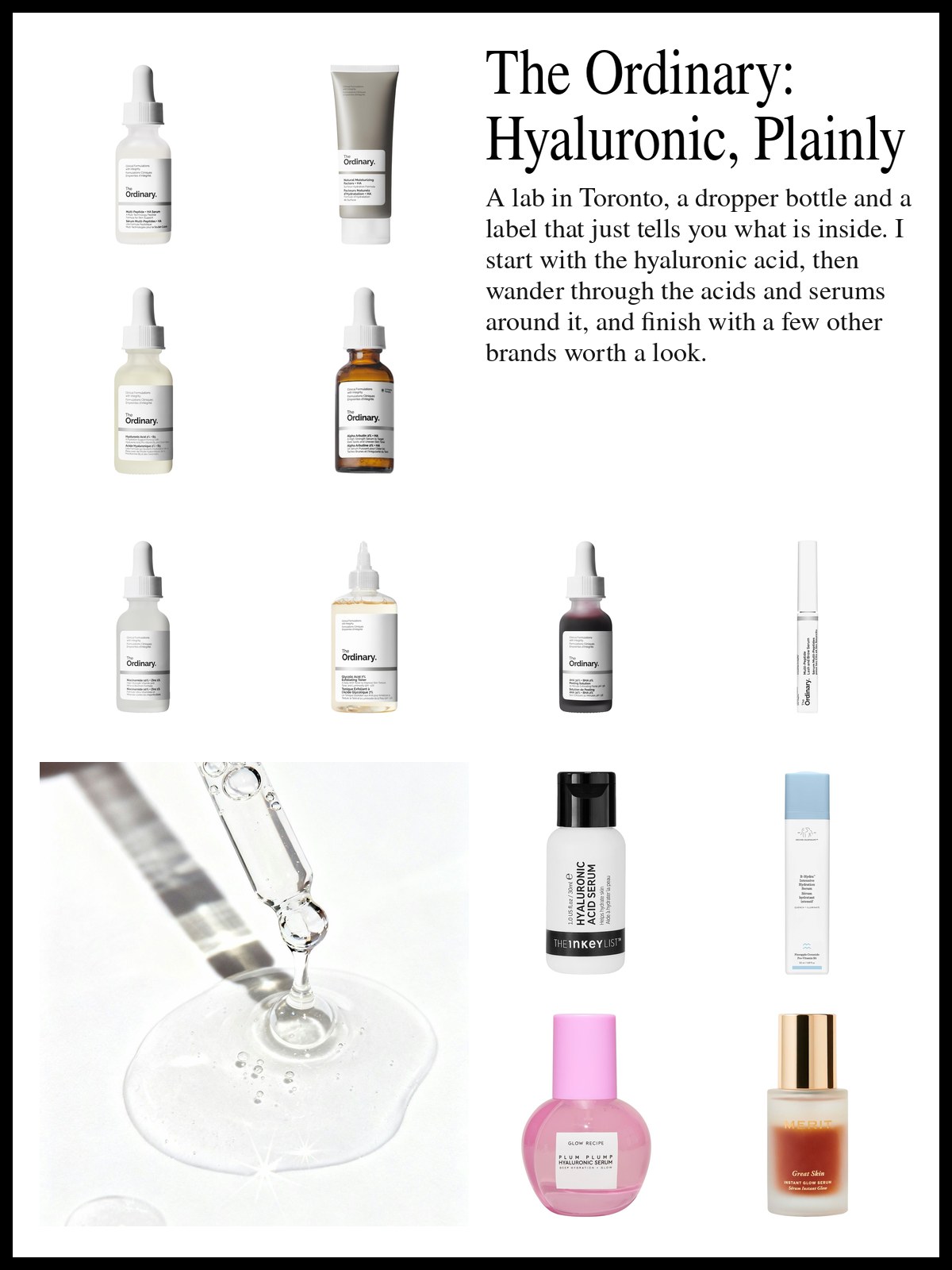
The other three in this grid are the same idea, pointed at different jobs. The Multi-Peptide + Hyaluronic Acid Serum for Firmness and Elasticity is the one I use at night when I want a bit more going on. The Natural Moisturizing Factors + Hyaluronic Acid Daily Moisturizer is the easy morning cream, and I like that it does not pretend to be anything fancier. Alpha Arbutin 2% + Hyaluronic Acid is made for uneven-looking tone, so give it weeks, not days.
Apply the serums to damp skin, then close with a cream. That one habit matters more than which bottle you choose.
The Ordinary picks with hyaluronic acid

Multi-Peptide + Hyaluronic Acid Serum for Firmness and Elasticity
The Ordinary
$19.9

Natural Moisturizing Factors + Hyaluronic Acid Daily Moisturizer
The Ordinary
$12.5

Hyaluronic Acid 2% + B5 Hydrating Serum with Ceramides
The Ordinary
$9.9

Alpha Arbutin 2% + Hyaluronic Acid for Hyperpigmentation
The Ordinary
$11.5
The rest of the shelf: acids and actives
Once you have a hydrator you trust, The Ordinary gets more interesting, because the rest of the range is mostly acids and actives at clearly stated strengths. That is useful, and it also means you can overdo it very quickly. I treat this shelf like a spice rack: small amounts, one at a time.
Niacinamide 10% + Zinc 1% Serum is made for oily skin and is the easiest thing here to slot into a morning routine. Glycolic Acid 7% Exfoliating and Brightening Daily Toner is the daily acid, and Lactic Acid 10% + HA 2% is made for uneven texture, with hyaluronic acid in the mix to keep skin from feeling tight. AHA 30% + BHA 2% is the strong one. It is a peeling solution, it is meant to stay on skin for a short time only, following the directions on the box, and it belongs to the person who already knows how their skin behaves with acids.
The Soothing & Barrier Support Serum for Sensitive Skin Hydration is what I put on afterwards, or on the days my face feels sulky. And the Multi-Peptide Lash and Brow Serum is the odd one out, made for thicker, fuller looking lashes and brows, and worth a spot if you are patient about daily routines.
Use acids in the evening, not on the same night as each other, and wear sunscreen the next day. Every time. I keep the bottle by the toothbrush so that I cannot forget, because a routine that lives in a cupboard tends not to happen.
More from The Ordinary

Niacinamide 10% + Zinc 1% Serum for Oily Skin
The Ordinary
$6

Glycolic Acid 7% Exfoliating and Brightening Daily Toner
The Ordinary
$13.5

AHA 30% + BHA 2% High-Strength Peeling Solution for Brightening
The Ordinary
$9.5

Multi-Peptide Lash and Brow Serum for Thicker, Fuller Looking Lashes & Brows
The Ordinary
$14.9

Lactic Acid 10% + HA 2% High-Strength Exfoliating Serum for Uneven Texture
The Ordinary
$9.2

Soothing & Barrier Support Serum for Sensitive Skin Hydration
The Ordinary
$17
Hyaluronic serums from other labels
Hyaluronic acid is not a single-brand idea, and it is worth seeing how other labels handle it. The basic principle is the same everywhere: it draws in water, and the formula around it decides how nice that feels on your face.
The INKEY List's Hyaluronic Acid serum is the closest thing to The Ordinary in spirit: a plain name and a plain job. Drunk Elephant's B-Hydra Intensive Hydration Serum is the one to try if you like a hydrator with a few extras in the formula. Glow Recipe's Plum Plump is the prettier bottle on the shelf. Merit's Great Skin Instant Glow Serum pairs niacinamide with hyaluronic acid, and the glow is right there in the name.
Caudalie's Premier Cru serum also has niacinamide and is an anti-aging serum by name, and Estée Lauder's Advanced Night Repair, with hyaluronic acid, is the night serum many people already know from a relative's bathroom.
What I would skip: layering three hyaluronic serums in one sitting, and applying any of them to bone-dry skin in a dry room. Hyaluronic acid works best when there is water available to bind, so mist your face or start with damp skin, then finish with a cream to keep it there. If your skin feels tight after a serum, you probably used it on dry skin. Add water, not another serum.
Hyaluronic acid serums from other brands

Hyaluronic Acid (HA) Hydrating Face Serum
The INKEY List
$13

B-Hydra Intensive Hydration Serum with Hyaluronic Acid
Drunk Elephant
$56

Plum Plump Hyaluronic Acid Hydrating Serum
Glow Recipe
$38

Great Skin Instant Glow Serum with Niacinamide and Hyaluronic Acid
Merit
$42

Premier Cru Anti-Aging Serum with Niacinamide and Hyaluronic Acid
Caudalie
$129

Advanced Night Repair Synchronized Multi-Recovery Complex Serum with Hyaluronic Acid
Estée Lauder
$135

Moisture Surge Active Glow Serum with Hyaluronic Acid
Clinique
$49

Vital Skin-Strengthening Hyaluronic Acid Super Serum
Kiehl's
$150
How I layer it, day to day
My own routine is short. Cleanse, a hyaluronic serum on damp skin, a moisturizer, and sunscreen in the morning. At night I swap sunscreen for whichever active is on the schedule, never more than one.
When you are trying something new, change a single product at a time and give it a couple of weeks. Patch test behind the ear if your skin is reactive. If something stings, stop, and if a breakout or redness sticks around, ask a doctor or dermatologist rather than adding more bottles. A simple shelf, used every day, will do more for you than a complicated one used on Sundays. I also keep a small note on my phone with the date I started each bottle, so that three weeks later I can actually say whether it earned its place beside the basin or should go back in the drawer. If you want to keep browsing, I also put together Best Hyaluronic Acid Serum, Named After the Greek Word for Glass and A Hyaluronic Acid Lip Balm With a Strange Backstory.