Polène was founded in Paris in 2016 by three siblings, and its bags are made in Ubrique, Spain. This edit sorts the Polène bag shape by shape, from the Numéro Un to the newer silhouettes.
The Polène Bag, From a Paris Studio and the Workshops of Ubrique
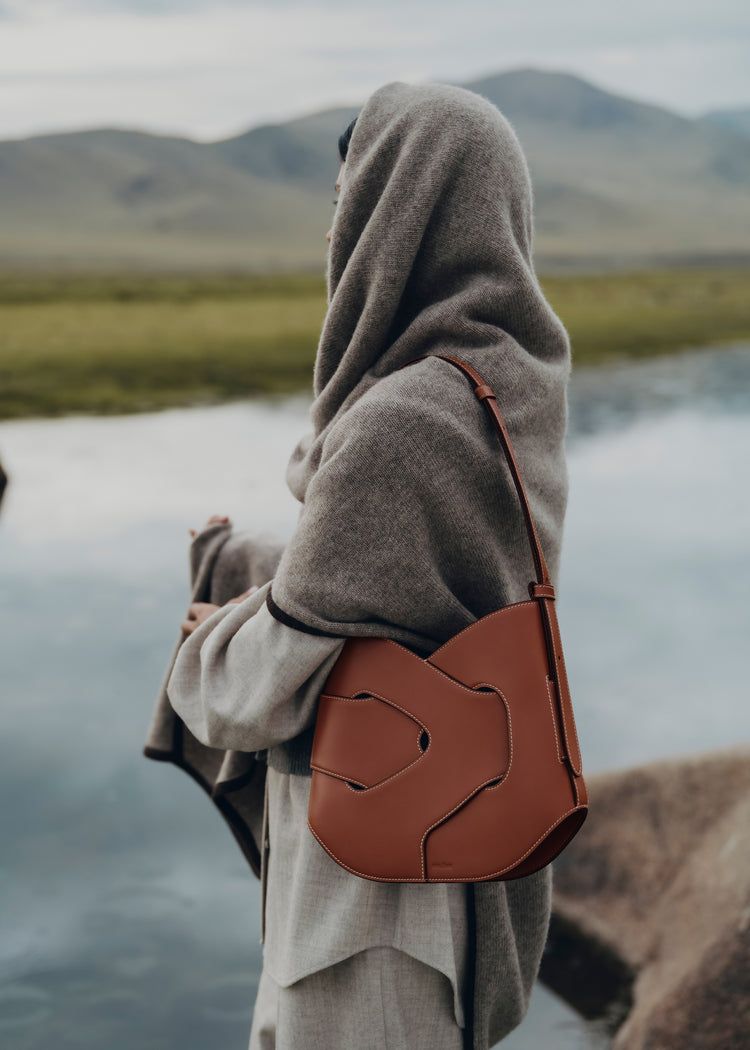
Polène is a family story before it is a handbag story. The brand was founded in 2016 by three siblings, Antoine, Mathieu and Elsa Mothay, and Monocle points out that they are great-grandchildren of the founders of Saint James, the Breton knitwear house. Le Monde tells the part I find most charming: Antoine first discovered leatherwork at an Hermès workshop open day in Madrid, and the first 500 Polène bags were made in Ubrique, the Andalusian town known for leather. The brand still says its bags are made there, with leather from Spanish and Italian tanneries.
That is the frame for every Polène bag in this edit. The first grid is the two shapes I would start with. The Numéro Un is the one people recognise from across a room, with a curved flap and a little leather crescent at the front, and here it comes in textured black, a soft pink and a three-tone camel. The Numéro Un Nano shrinks it to an evening size, in burgundy and smooth sand. The Numéro Neuf is slouchier and more casual, gathered at the sides, in ebony, as a Mini in terracotta and as an East West version in sand.
A sizing note: the Un is the day bag, and the Nano is for a phone, keys and a lipstick. What I would skip is the Nano as an only bag. It is lovely, but it works best as a second bag for dinners, not as your everyday Polène bag.
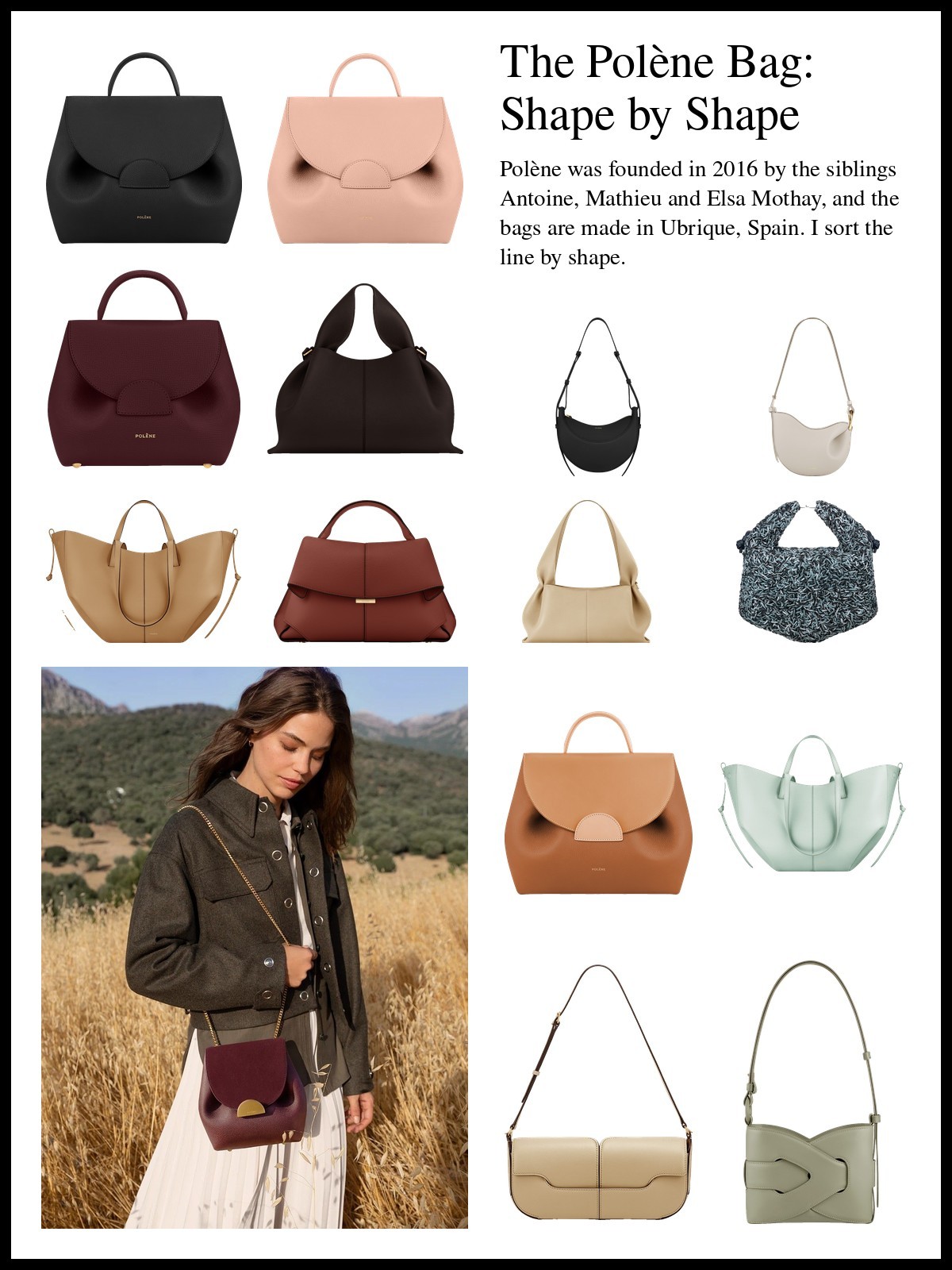
Numéro Un and Numéro Neuf

Numéro Un in Textured Black
Polène
$580

Numéro Un in Textured Pink
Polène
$580

Numéro Un in Trio Camel
Polène
$580

Numéro Un Nano in Textured Burgundy
Polène
$470

Numéro Un Nano in Smooth Sand
Polène
$510

Numéro Neuf in Textured Ebony
Polène
$610

Numéro Neuf Mini in Textured Terracotta
Polène
$540

Numéro Neuf East West in Textured Sand
Polène
$610
Numéro Dix and Cyme
The second grid is where Polène gets more architectural. The Numéro Dix is a half-moon shoulder bag on a long, thin strap, and it sits close under the arm in a way that feels practical on a busy street. There are three here: textured black, a woven Onda black that looks almost like basketwork, and smooth clay. The Numéro Dix Galop in root adds a small leather horse charm, the only bag in this edit with a real sense of humour.
The Cyme is the tote. Its sides fold out like wings, so it reads structured when it is empty and generous when it is full. I picked it in textured ocher, black and a pale sea foam, plus the Cyme Mini in a stone merino knit for colder months. If you want one Polène bag for the office, this is the shape to look at.
A practical test before you choose between them: think about what you carry on a Tuesday. If it is a phone, a card holder and sunglasses, the Dix is plenty. If it is a notebook, a water bottle and a jumper, you want the Cyme. What I would skip is the sea foam Cyme if your coats are mostly dark wool, since pale leather can pick up colour from a black coat over a long winter.


Tonca, Béri, Mokki and Nodde
This third grid is the softer side of the brand. The Tonca is a curved crescent on a single shoulder strap, and it comes here in textured chalk and a two-tone camel. It is the shape I would choose for weekends, because it sits flat against the body and leaves both hands free.
The Béri is the one I would look at most closely. It is a rounded bag with a top handle, and I included three surfaces: a navy Rizom weave, the Onda in fresh almond, and plain textured black. The Mokki and Mokki Mini are more formal, with a structured flap and a slim gold bar, in red clay and a misty grey. The Nodde in smooth olive is a little shoulder bag with crossed leather bands at the front, the most unexpected Polène bag in this edit.
Leather from Spanish and Italian tanneries is part of the brand story, and you can see it in how differently these surfaces behave. Textured grain hides small scratches well, while smooth leather shows marks but softens with wear. A pairing tip: woven Béri bags look best with plain knits and simple cotton, where the texture becomes the detail. What I would skip is putting a woven bag next to a busy print, which turns both into noise.


Numéro Sept and the newer shapes
The last grid is where Polène has been experimenting. The Numéro Sept in textured taupe is the most classic, a squared satchel with a top handle and a gold clasp, the kind of Polène bag that looks right with a blazer at work. Next to it are the newer silhouettes. The Osmo in smooth sand is a slim shoulder bag, the Neyu in chalk is a curved sling, the Boky in camel is a slim, upright shoulder bag, and the Shuldo in mist is a large, slouchy hobo.
Then there are the summer pieces. The Nomad Solé in porcelain is an open mesh tote, the Tsubi pairs raffia with a leather strap, and the Button Bow Sphere in ink is a small round bag that works more like jewellery than luggage.
A practical tip if you are deciding between a classic and a new shape: buy the classic first. A Numéro Sept or a Numéro Un will work with most of your wardrobe, while an Osmo or a Sphere is the bag you add once your everyday piece is settled. What I would skip is buying the raffia Tsubi for a city winter. Save it for holidays and warm weekends, where it will look its best and last longer.


Choosing your first Polène
If I were choosing my first Polène bag today, I would pick a Numéro Un in a dark textured leather, because it is the shape people know and the grain hides daily wear. My second would be a Cyme for work. Everything else in this edit comes down to personal taste, and the brand makes enough shapes that you can find one that fits how you actually carry things.
Care is simple. Stuff the bag with tissue when you are not using it so the curves hold, store it in its dust bag away from sunlight, and wipe smooth leather with a soft dry cloth. Textured leather needs even less, which is another reason I lean that way for a first bag. If it gets caught in the rain, let it dry at room temperature, away from a radiator. Heat can stiffen leather and pull a curved shape out of line.
What stays with me about Polène is the beginning: three siblings, an open day at a leather workshop, and 500 bags made in Ubrique. It is a small, human origin for a label that is now recognised far beyond Paris, and you can still feel that origin in the way each shape is cut and finished.