What actually goes on an empty console table, in what order, and how to fill a surface with three objects instead of ten.
What To Put On An Empty Console Table: Vases, Bowls And Trays
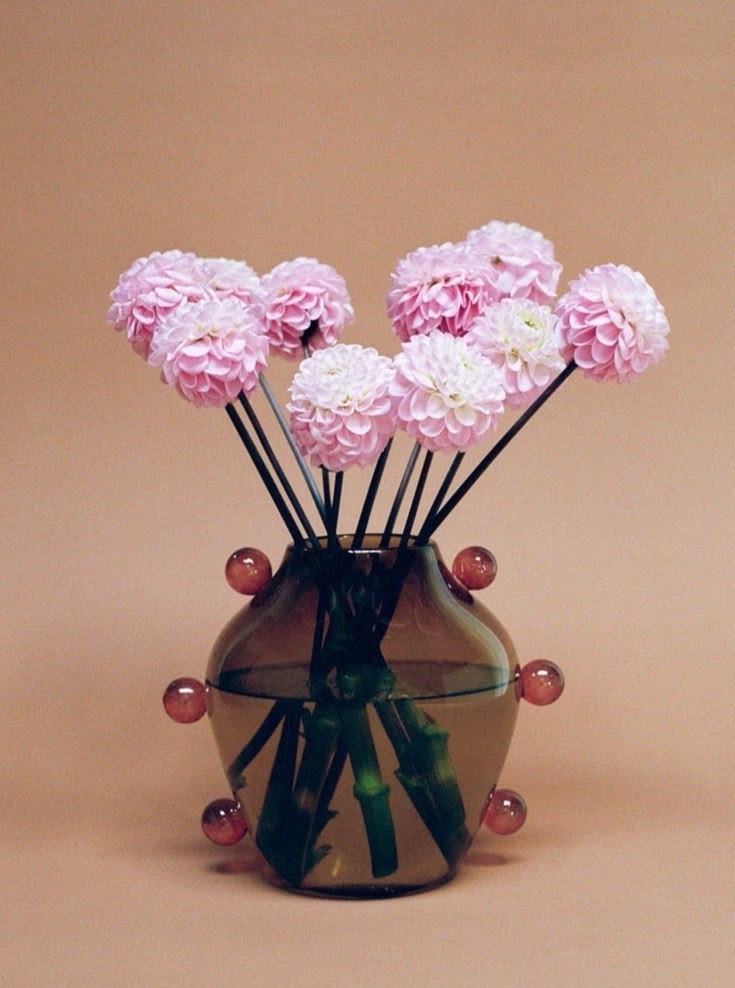
What to put on an empty console table
An empty console is harder than an empty wall because there is no obvious right answer and every solution is reversible, which means most people keep adding. The arrangement that works almost everywhere is three objects at three different heights, grouped rather than spread. Something tall at one end, something low and wide at the other, and something small in between or slightly in front. A vase, a bowl and a tray covers all three roles and costs less than a single large piece would. The instinct to spread objects evenly along the length of the table is the thing to resist. Evenly spaced objects read as a display; a group with space beside it reads as a room someone lives in. If the console is behind a sofa or in a hallway, leave the end nearest the traffic clear, because that is where keys, post and glasses will land whether you planned for it or not.
Vases

Sable Travertine Vase
Venus et Fleur
$499

Royal Delft Hand-Painted 28.5 Cm Vase
Royal Delft
$675

Sakura Medium Crystal Vase
Lalique
$790

Sara Vase
ELENA MORGAN STROHFELDT
$700

Roxanne Vase
ELENA MORGAN STROHFELDT
$800

Matrice H110 Vase
Saint-Louis
$655

Utah Vase
Reflections Copenhagen
$830

Aphrodite Porcelain Vase
Venus et Fleur
$479
The tall thing: vases and why height wins
The vase is doing structural work here, not floral work. Its job is to break the horizontal line of the table and connect it to whatever is on the wall above, which is why height matters more than whether you keep anything in it. A good rule is that the tall object should reach roughly one third of the distance between the table and the bottom of the mirror or artwork above it. Anything shorter leaves an awkward gap. An empty sculptural vase is a legitimate finished object and does not need branches in it, though a single stem is the cheapest way to make a console look tended. Material sets the tone: clear crystal and glass keep a small hallway feeling open, ceramic and stoneware add weight to a room that is already busy, and hand-thrown pieces read as warmer than machine-made ones at any price.
Bowls

Aperitivo Serving Bowl with Octopus
Moda Domus
$200

Sculpt Medium Tapered Resin Bowl
Tina Frey Designs
$196

Exclusive Batik Porcelain Soup Bowl
Tiffany & Co.
$190

Set-of-Six Saint Tropez Melamine Bowl
Mario Luca Giusti
$180

Cuadrado Extra Large Resin Bowl
Tina Frey Designs
$180

Set-of-Six Marinella Melamine Bowl
Mario Luca Giusti
$180

4" Classic Nut Bowl
Hôtel Silver
$225

Vintage Large Footed Sorbet Bowl
Hôtel Silver
$225
The low thing and the useful thing
A bowl at the other end of the console is the most useful object in the group, because it is where everything small ends up. Make it wide and shallow rather than deep, so that what goes in can be seen and retrieved, and make it something you do not mind looking at half full of keys. This is also the one place where a slightly imperfect handmade piece works better than a flawless one. The tray is the quiet organiser. Everything you would otherwise leave loose on the surface goes onto it, and the surface instantly reads as tidy even when it is not. A tray with a lip contains better; a flat one looks lighter. Marble and stone hold their position and feel substantial under a lamp; woven and rattan soften a hard hallway. Pick the material that contrasts with the table, or the tray will disappear into it.
Trays

Folk Fleur Breakfast Tray
UNDERWATER WEAVING STUDIO
$312

Bubble Glass, Grape Tray
LOUISE ROE
$309

Purist Large Resin Tray
Tina Frey Designs
$326

Natalie Marble Tray
Anastasio Home
$265

Box Scalloped Marble Square Tray
Anastasio Home
$260

Ceramic Balloon Tray 07
LOUISE ROE
$371

Oriente Italiano Large Square Change Tray
Ginori 1735
$375

Small Wicker Pocket Tray
Moda Domus
$245
Putting it together
Buy the tall piece first, because it sets the scale for everything else and is the hardest to get right. Add the bowl second and the tray third, and stop. If the console still looks bare after three objects, the fix is usually a larger vase rather than a fourth object. Keep the group to one half or two thirds of the table's length and leave the rest genuinely empty. If you take one thing away, remember that the empty stretch is doing as much work as the objects are, and it is the first thing lost when a fourth piece arrives.
Next read
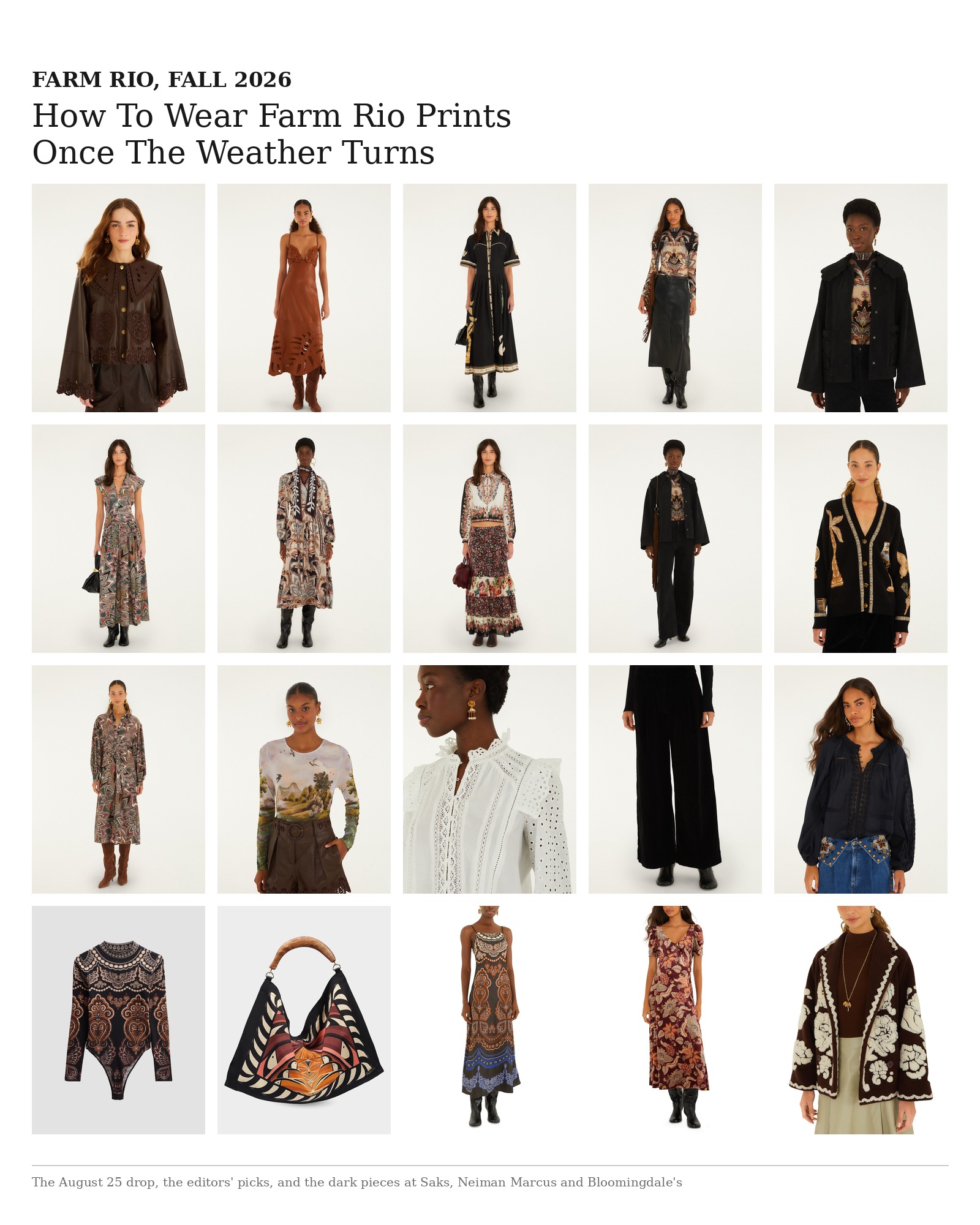
How To Wear Farm Rio Prints Once The Weather Turns
Farm Rio's fall drop trades tropical brights for chocolate leather, black denim and dark florals. Here is how to wear the prints past September, plus the dark pieces our editors are buying at Saks, Neiman Marcus and Bloomingdale's.
Read Editorial
Necklace Or Studs: Which To Buy First
Choosing necklaces first is usually the better buy when one piece should change several outfits, but choice depends on your neckline and daily habits. Start with placement