Idle Studs
Zimmermann
$325
A high neck, a halter and a plunge each want something different from an earring. Here is the pairing that works, and why.
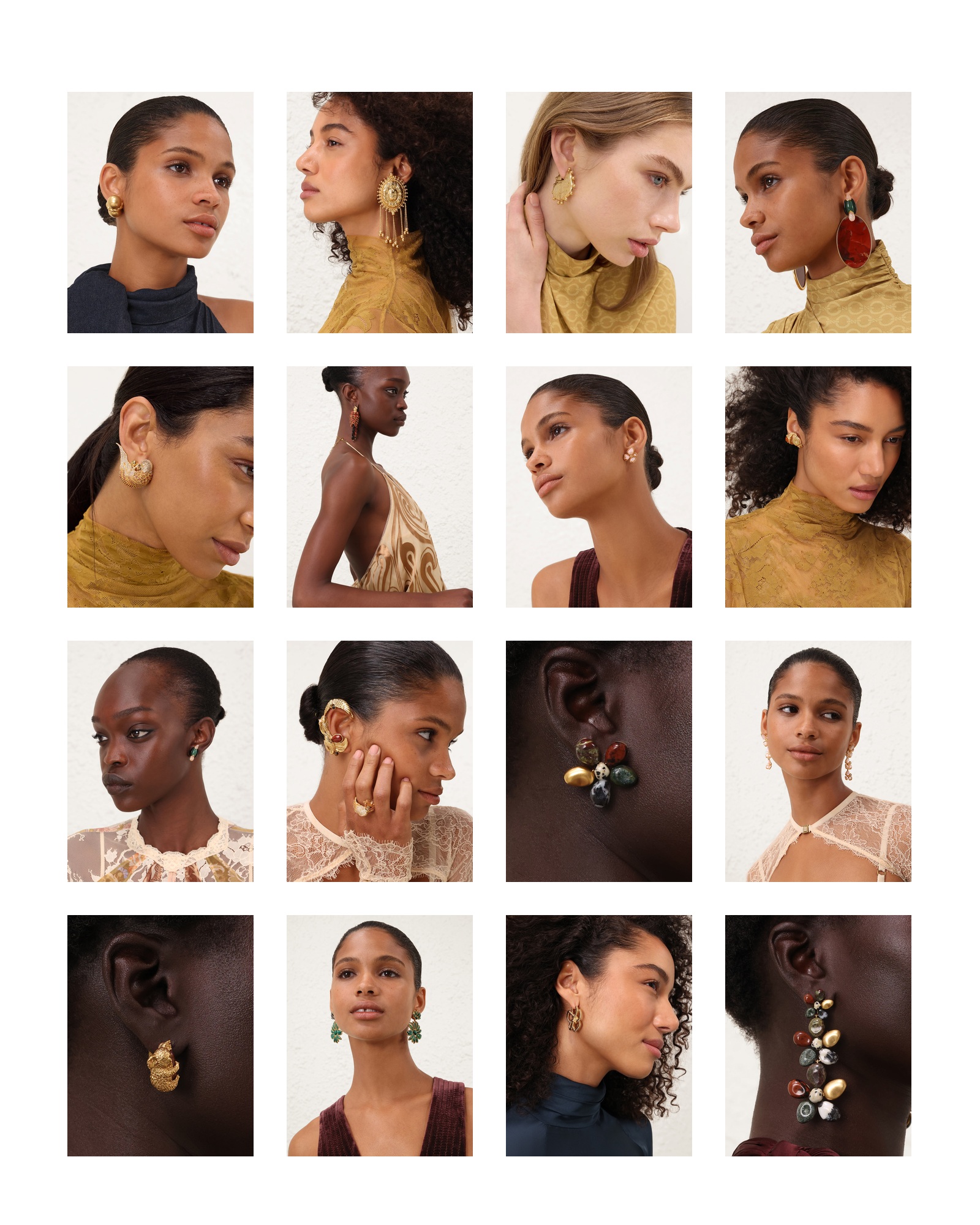
Jewellery is not chosen against a face shape nearly as much as it is chosen against the shape of the space between the jaw and the shoulder. That space is what the neckline sets. Fill it with a collar or a scarf tie and a long earring has nothing to hang against. Leave it open with a plunge or a halter and a small stud disappears into it.
The practical version is simple. The busier the neckline, the smaller the earring. The emptier the neckline, the more length and movement you can carry. Everything else is preference.
The pieces below run from $250 to $1,050, and cost tracks size more than it tracks anything else here. A pair of studs sits at the bottom of that range and a long chandelier at the top, which is worth knowing if you are choosing between one showy pair and two quiet ones. The quiet ones will get worn more, and the showy pair will get photographed more. Both are legitimate reasons to buy.
A high neck, a buttoned collar or a neck scarf already draws a line across the throat, so the earring only needs to sit above it. Studs are the obvious answer and a small hoop is the better one, because a hoop catches light while moving and a stud does not.
Keep the earring clear of the fabric. Anything long enough to touch a high collar will catch on it, drag it sideways and sit crooked all evening, which is the single most common jewellery annoyance and entirely avoidable. If the collar is tall, measure by holding the earring against your jaw and checking it ends above where the fabric starts.
Hair matters as much as the neckline. Down and thick, a stud is simply invisible and you may as well not have bothered, so this is where a wider hoop or a sculptural stud earns its place. Hair up against a high neck is the one combination where a small stud looks intentional rather than forgotten, because the ear is fully visible and nothing else is competing.
We would buy the studs and hoops first and treat the long pieces as the second purchase, because the first grid is what actually leaves the house. A pair of gold studs at $250 will outlast every trend in this edit and go with every neckline in your wardrobe, which is not something we can say about a chandelier at $1,050.
That said, do not buy a drop earring and then only wear high necks. It will sit in the box. If you own strapless, halter or plunge necklines and you like them, the long pieces are the ones that finish those outfits, and a bare neckline with tiny studs often looks unresolved rather than minimal.
If you take one thing away, hold the earring against your jaw in front of a mirror before you commit and look at where it ends. If it stops above your collar you can wear it with anything. If it hangs past your jaw, it needs an open neckline to hang into.
A high neck, a halter and a plunge each want something different from an earring. Here is the pairing that works, and why.
Jewellery is not chosen against a face shape nearly as much as it is chosen against the shape of the space between the jaw and the shoulder. That space is what the neckline sets. Fill it with a collar or a scarf tie and a long earring has nothing to hang against. Leave it open with a plunge or a halter and a small stud disappears into it.
The practical version is simple. The busier the neckline, the smaller the earring. The emptier the neckline, the more length and movement you can carry. Everything else is preference.
The pieces below run from $250 to $1,050, and cost tracks size more than it tracks anything else here. A pair of studs sits at the bottom of that range and a long chandelier at the top, which is worth knowing if you are choosing between one showy pair and two quiet ones. The quiet ones will get worn more, and the showy pair will get photographed more. Both are legitimate reasons to buy.
A high neck, a buttoned collar or a neck scarf already draws a line across the throat, so the earring only needs to sit above it. Studs are the obvious answer and a small hoop is the better one, because a hoop catches light while moving and a stud does not.
Keep the earring clear of the fabric. Anything long enough to touch a high collar will catch on it, drag it sideways and sit crooked all evening, which is the single most common jewellery annoyance and entirely avoidable. If the collar is tall, measure by holding the earring against your jaw and checking it ends above where the fabric starts.
Hair matters as much as the neckline. Down and thick, a stud is simply invisible and you may as well not have bothered, so this is where a wider hoop or a sculptural stud earns its place. Hair up against a high neck is the one combination where a small stud looks intentional rather than forgotten, because the ear is fully visible and nothing else is competing.
We would buy the studs and hoops first and treat the long pieces as the second purchase, because the first grid is what actually leaves the house. A pair of gold studs at $250 will outlast every trend in this edit and go with every neckline in your wardrobe, which is not something we can say about a chandelier at $1,050.
That said, do not buy a drop earring and then only wear high necks. It will sit in the box. If you own strapless, halter or plunge necklines and you like them, the long pieces are the ones that finish those outfits, and a bare neckline with tiny studs often looks unresolved rather than minimal.
If you take one thing away, hold the earring against your jaw in front of a mirror before you commit and look at where it ends. If it stops above your collar you can wear it with anything. If it hangs past your jaw, it needs an open neckline to hang into.