Burberry is owned by public shareholders, independent as a listed company since 2005. Here is the founder story and what to buy.
Who Owns Burberry? The Public Company Behind the Trench
The Company Behind the Trench
Burberry is owned by public shareholders through its London-listed parent company. Its shares first listed in 2002, and independent public ownership began when it demerged from Great Universal Stores (GUS) in 2005.
That is the short answer to who owns Burberry. The latest annual report says ordinary shares trade on the London Stock Exchange, each carries one vote, and no person has special rights of control. Burberry's parent company is the listed company behind the label, not a label beneath another luxury house.
As for who makes Burberry, the craft map has a specific Yorkshire address: heritage trench coats have been made at Castleford for more than 50 years, while gabardine is woven in Keighley. I like that the ownership answer is abstract, but the product story still points to a long-running trench workshop and a working mill. For a label founded on weather protection, that split between public ownership and hands-on making is useful to keep in view.
The Weatherproof Beginning
Who founded Burberry? Thomas Burberry established the company in Basingstoke in 1856, on the practical idea that clothing should protect people from British weather. He developed gabardine in 1879, then patented the Tielocken coat in 1912, a forerunner of the trench.
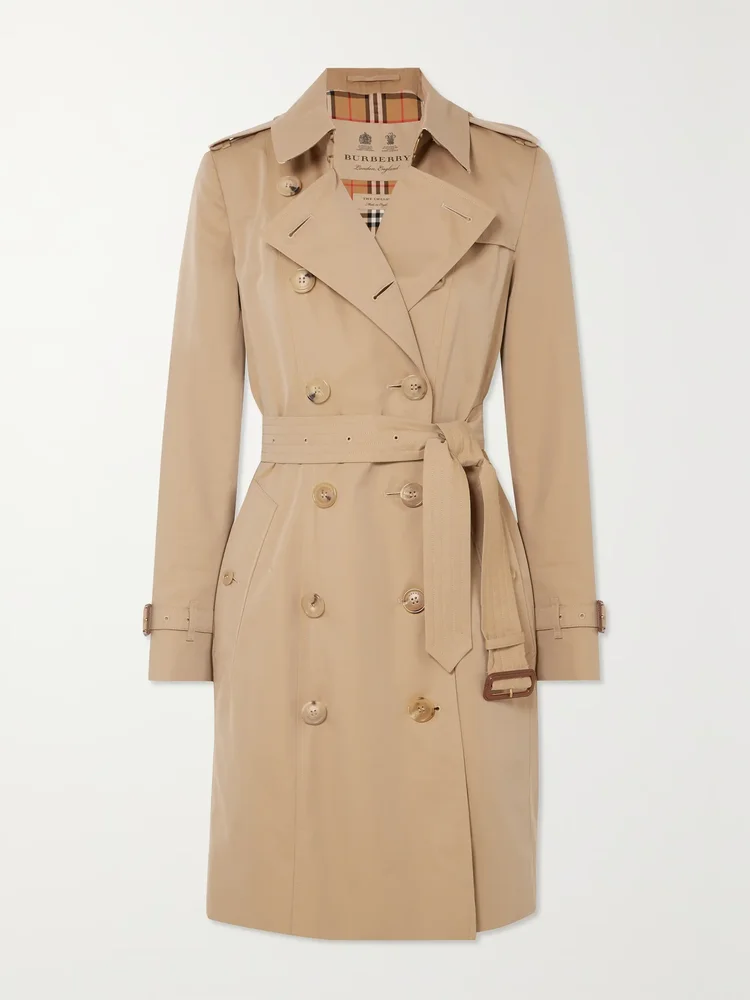
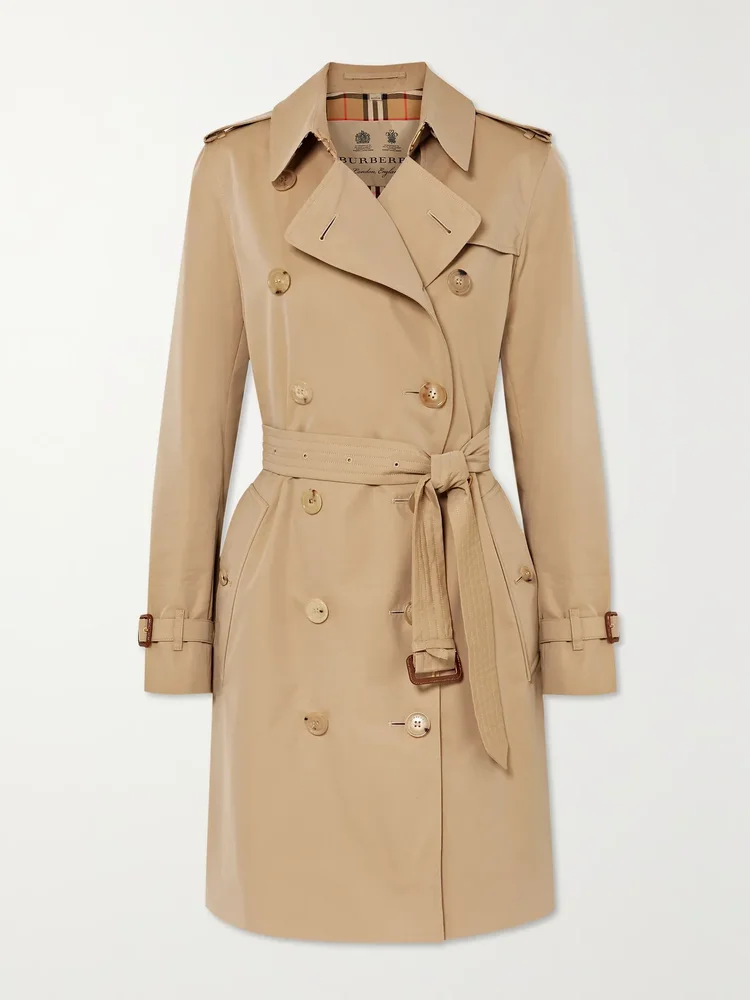
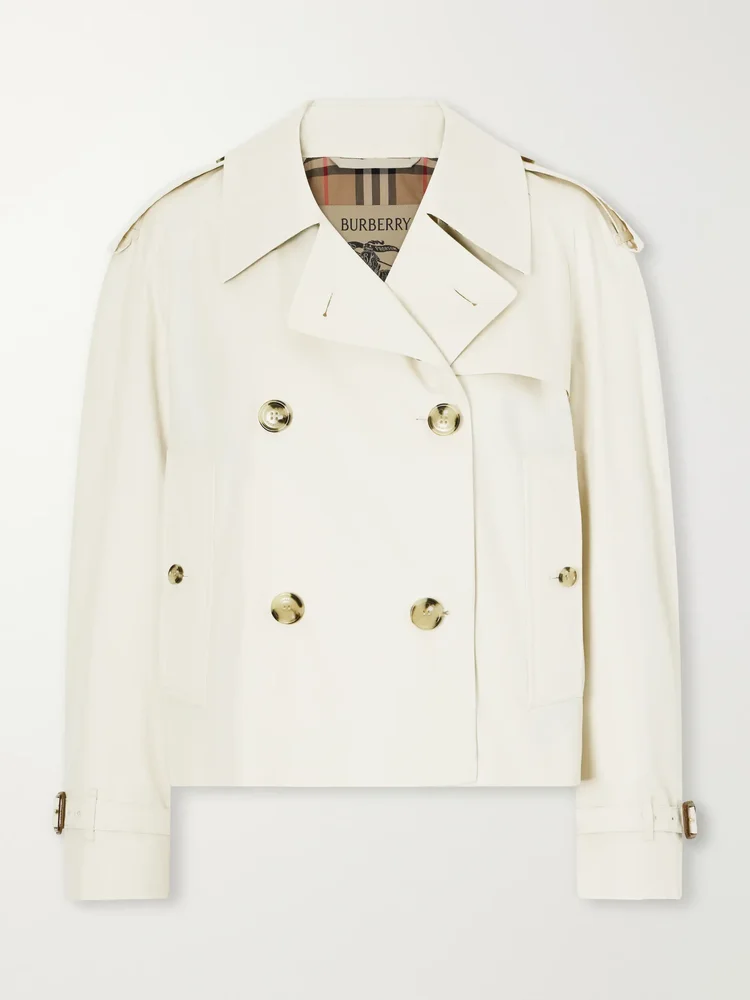
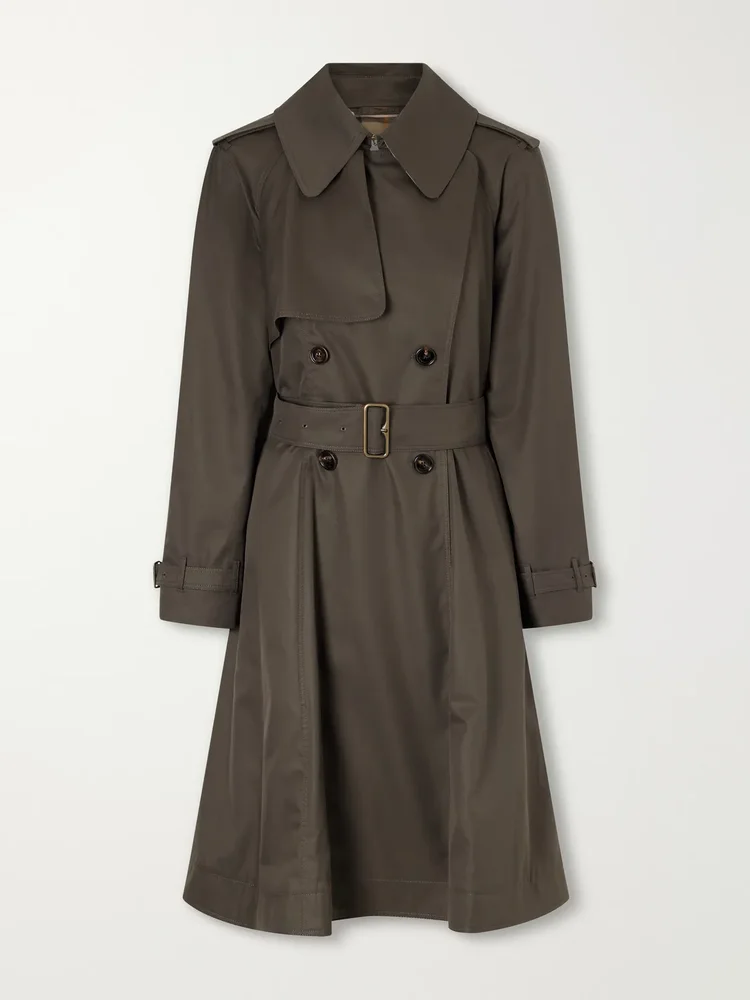
The Chelsea Organic Cotton Gabardine Trench Coat is the closest-fitting version, nipped at the waist with a detachable belt and archive-check lining. I would start there if you want the house's original shape with a little definition. The Kensington Organic Cotton Gabardine Trench Coat keeps the double-breasted front, storm flap, epaulettes and check lining in a slightly relaxed fit.
The Mayfair Cropped Double Breasted Cotton Gabardine Trench Coat cuts the silhouette to hip length, with D-ring epaulettes; the Pembury Belted Cotton Gabardine Trench Coat is shower-resistant, fit-and-flare, and finished with a storm shield. My pick is Kensington if one coat has to carry weekday and weekend errands.
From GUS to the Public Market
Burberry's ownership has changed hands, but the design vocabulary stayed remarkably legible. Great Universal Stores acquired Burberry in 1955; it listed on the London Stock Exchange in July 2002, then completed its demerger from GUS in 2005. That is the ownership change that matters now: a public company with the same single house name, rather than an umbrella of sister luxury labels.
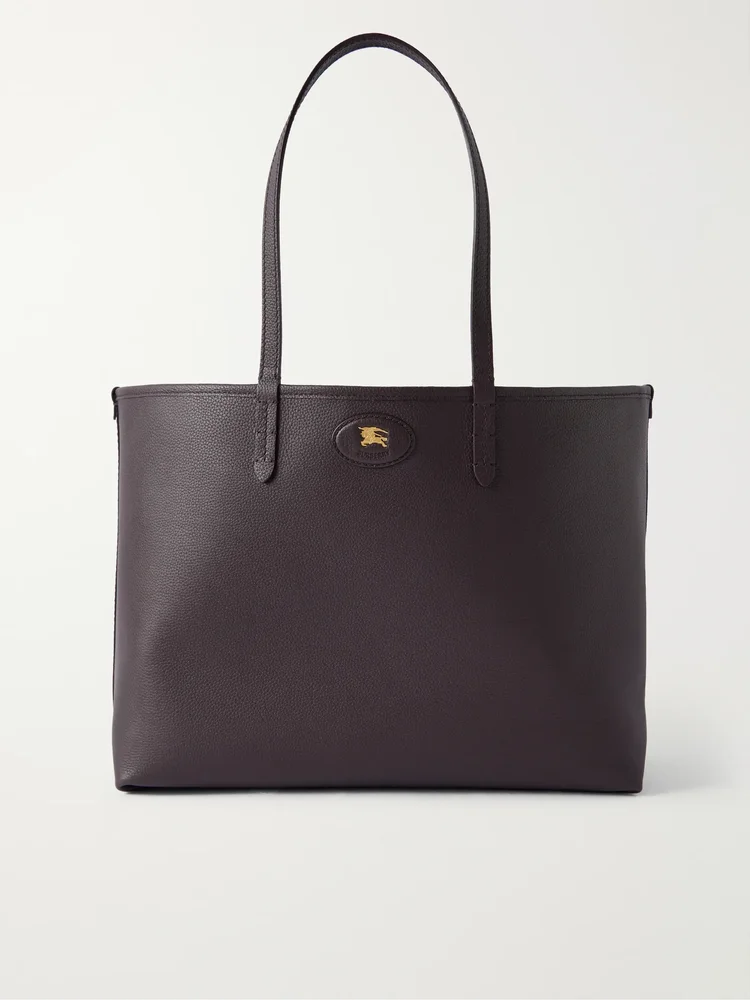
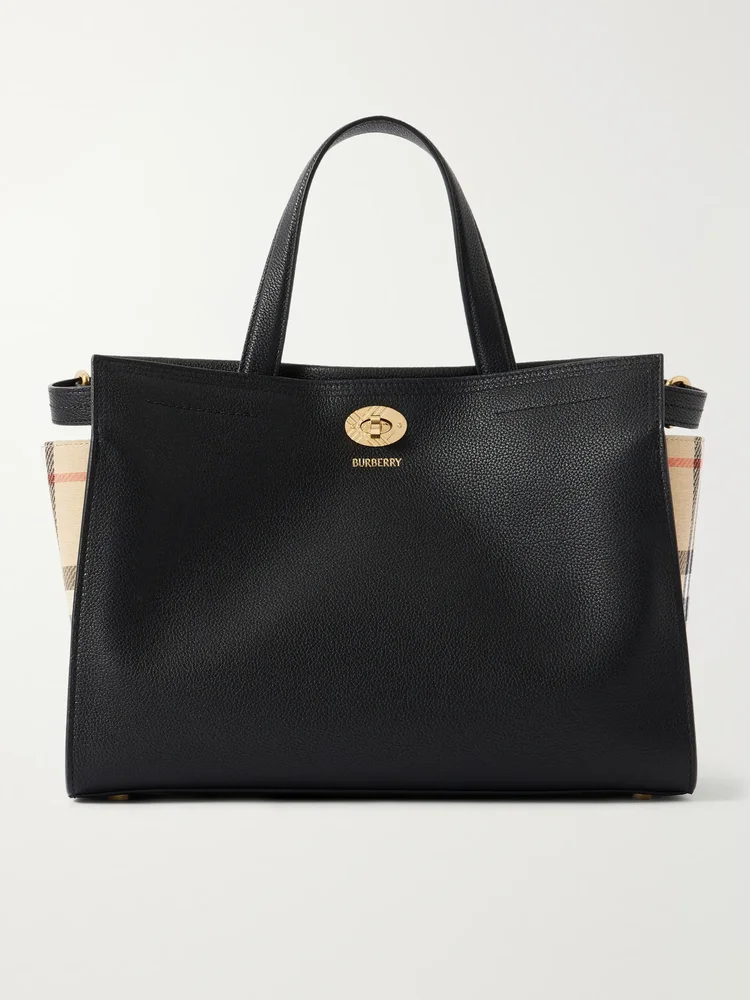
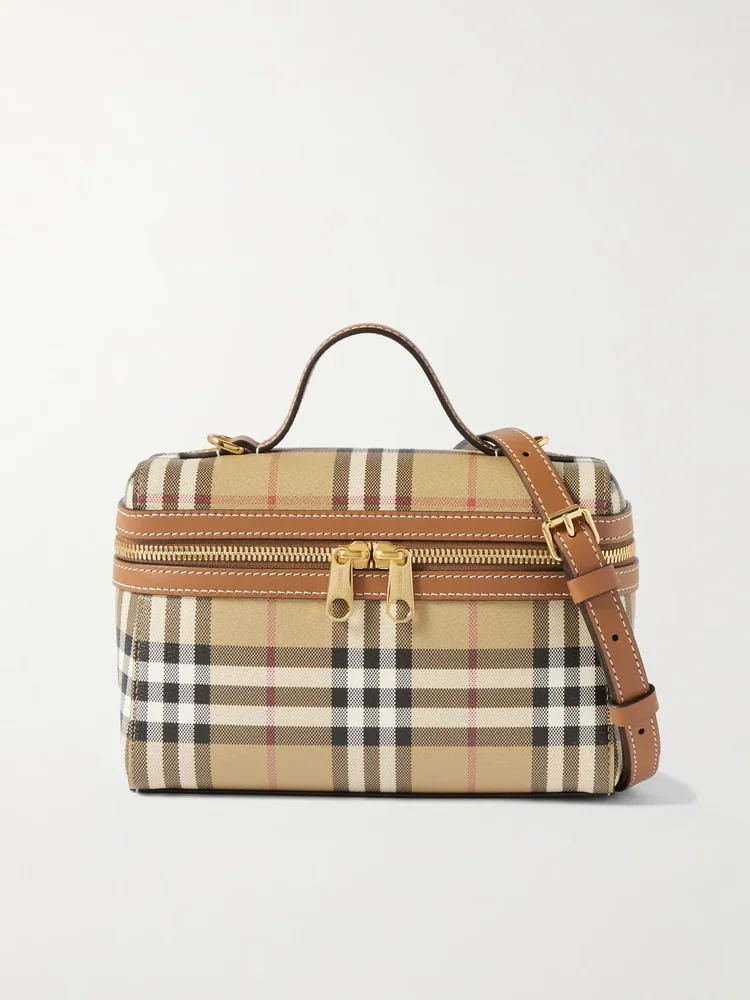
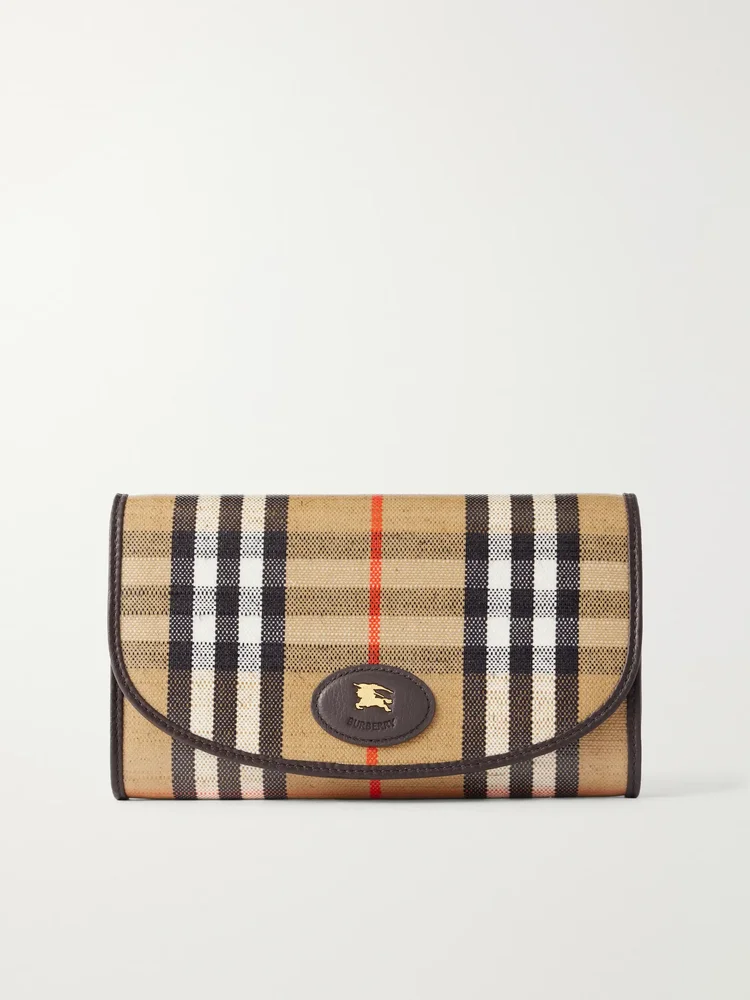
For something less formal than outerwear, the Reversible Full Grain Leather Tote is my practical pick for two looks in one bag. The Cotswold Check Trimmed Full Grain Leather Tote puts a checked trim beside full-grain leather. The Check Vanity Bag brings the pattern to a vanity-bag shape, while the Highlands Checked Clutch keeps it in a checked clutch format. I would choose Cotswold for daily use, then stop there rather than buying every check at once.
Check, in Smaller Doses
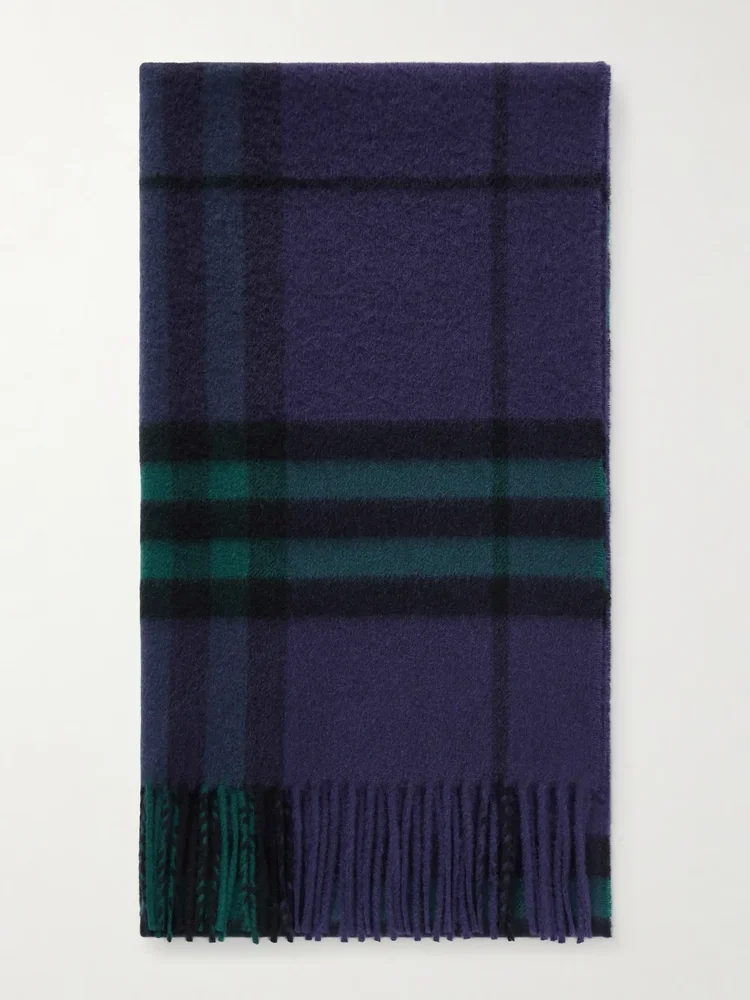
I would buy the Fringed Checked Cashmere Woven Scarf first: it is pure cashmere, patterned in an oversized variation of the Check, and finished with fringe. That combination feels like the most approachable way into Burberry's history without committing to a coat.
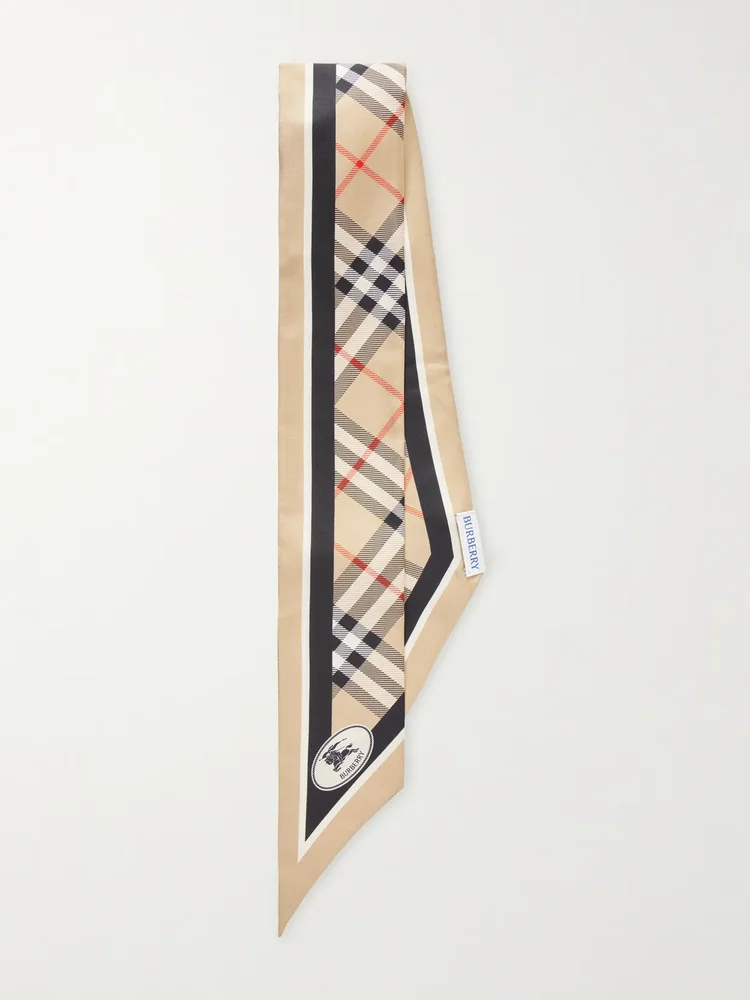
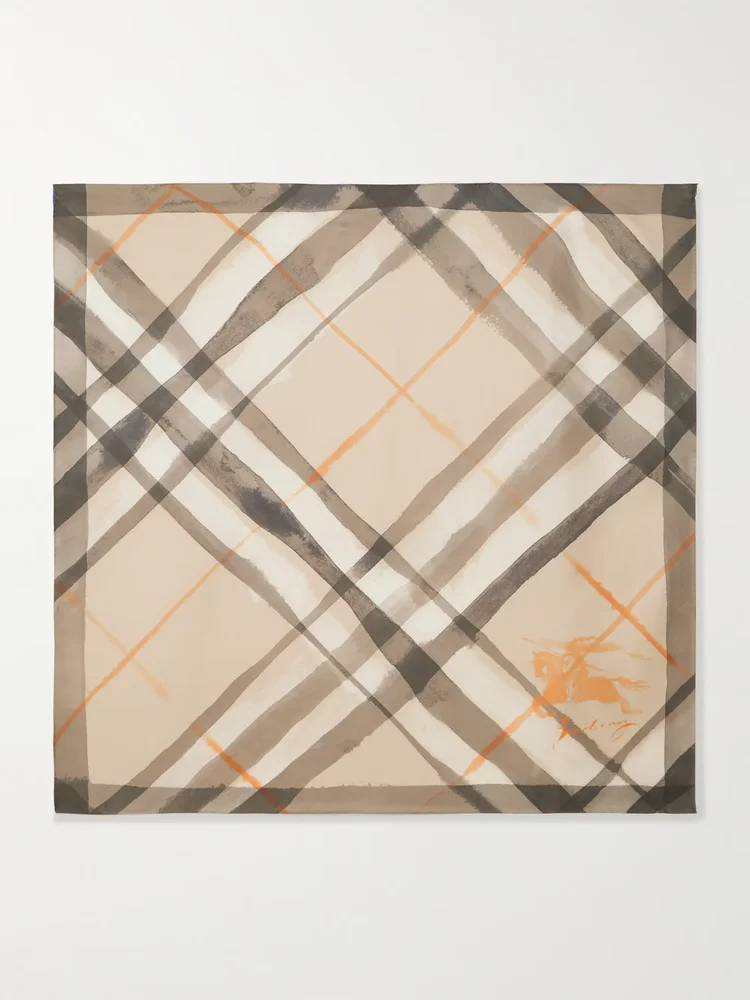
The Checked Silk Twill Scarf is the narrow tie-style option, 180 centimeters long by 8 centimeters wide, with the Knight Stamp; the Printed Silk Twill Scarf is a 90-centimeter square in watercolor-inspired check and Equestrian Knight motifs. I like the slim version around a coat collar and the square one knotted on a tote.
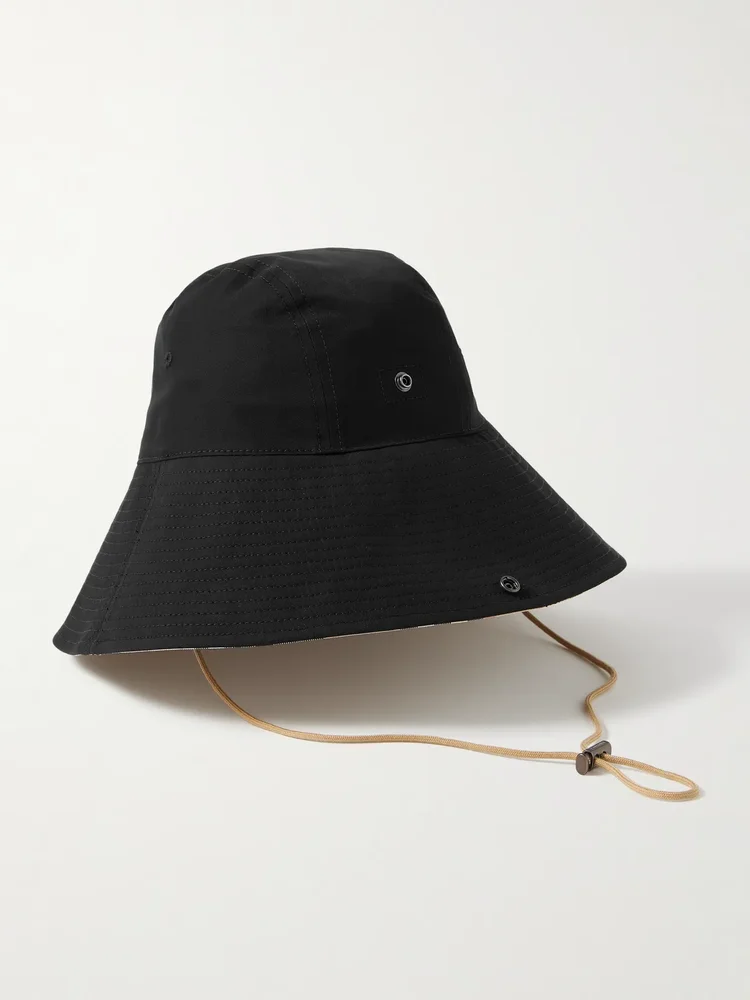
The Cotton Gabardine Bucket Hat adds shower-resistant fabric, an adjustable strap and checked lining. What I would skip is wearing it with the printed scarf at once; one check is enough punctuation for me. If I were choosing one first, cashmere wins.