Barefoot shoes span everyday sneakers, boots, sandals and trail runners, with a level profile and more room at the toes. I sort them by use and say what I would test before a long day.
Barefoot Shoes: Sneakers, Boots and Trail Runners
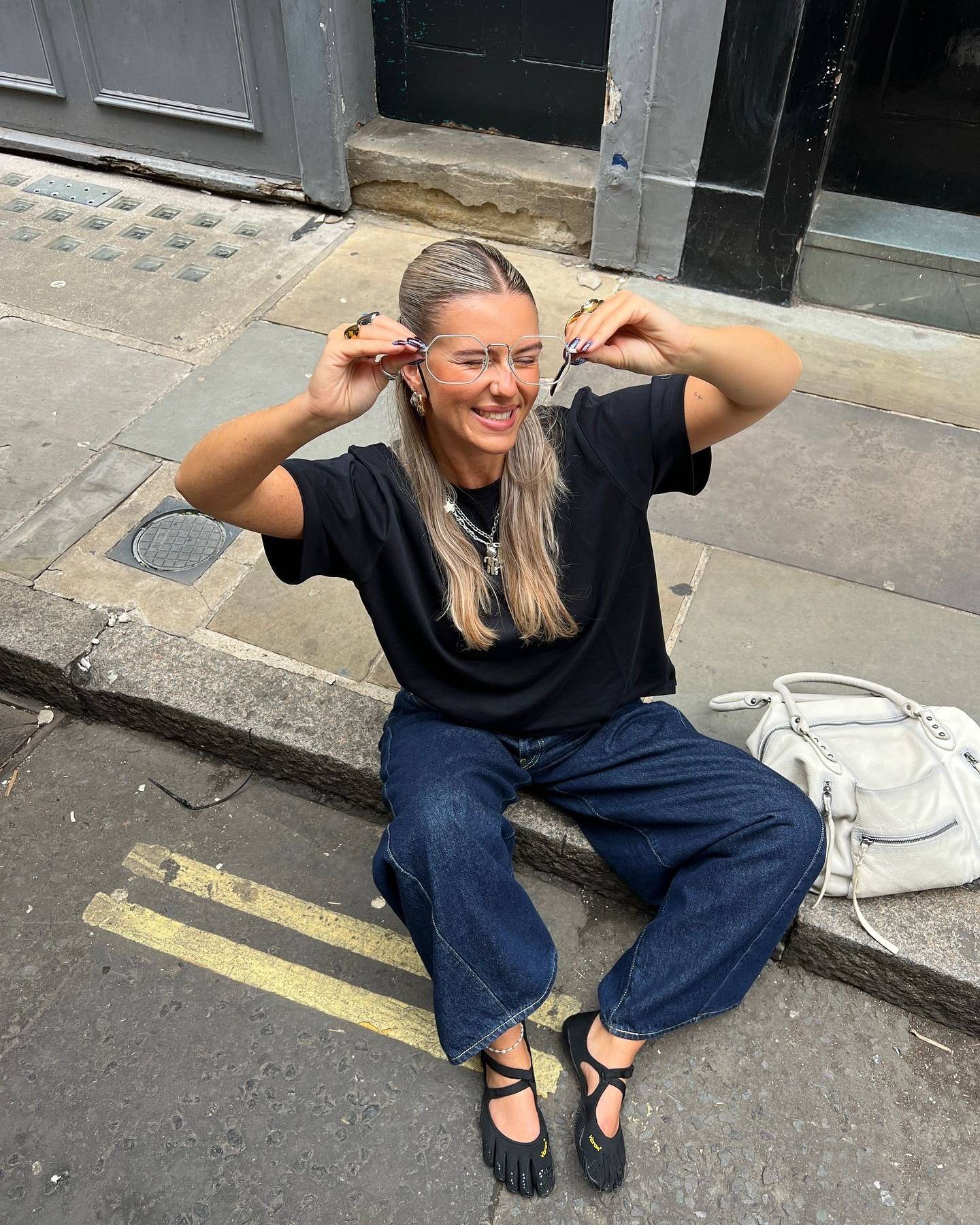
In Oregon’s Northern Great Basin, the University of Oregon’s Museum of Natural and Cultural History dates Fort Rock-style sandals to about 10,200 to 9,300 years ago, among the oldest directly dated shoes in the world. They were woven from sagebrush bark and other fibers. A foot covering made for the ground beneath it is a pretty good starting point. I love that.
Barefoot shoes are less a look than a small design argument. Merrell’s guide describes a zero-drop sole, minimal cushioning and a foot-shaped design that lets toes spread, while its feature note points to a thin, flexible sole. I like the plainness of that brief: give the foot room, keep the silhouette simple, let the ground remain part of the conversation.
Vivobarefoot’s story names cousins Galahad and Asher Clark among its seventh-generation cobblers, and dates its first thin-soled, wide-toed, flexible prototypes to 2002 before the standalone launch in 2012. Xero Shoes began when Steven Sashen and Lena Phoenix launched Feel The World in 2009, after Sashen started making huarache sandals. I like the practical roots of both stories, even if my own version is just trying a new pair on a familiar walk.
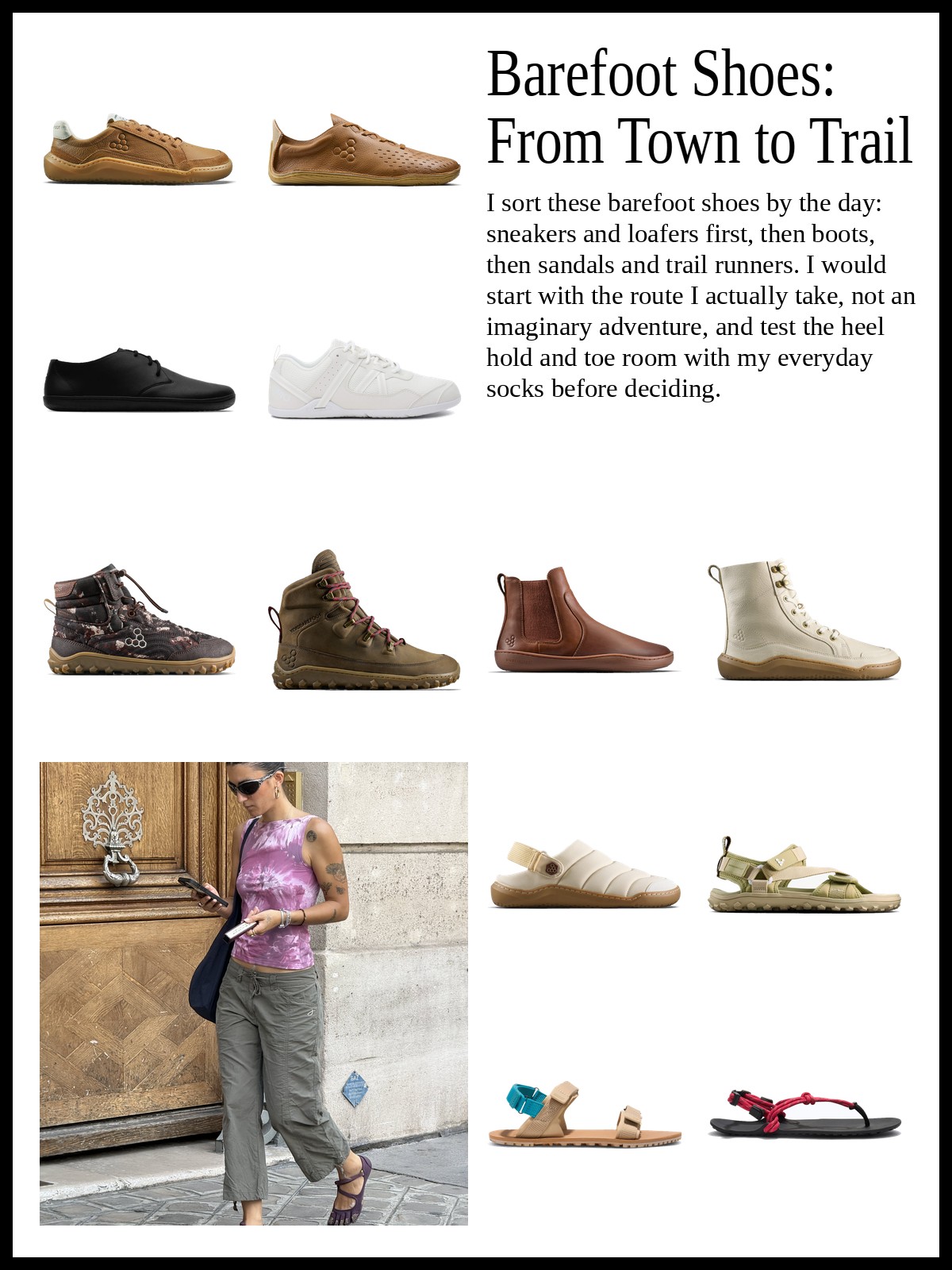
The everyday picks start quietly: the tan Gobi III Sneaker Leather and obsidian Ra IV work with straight-leg jeans, while the mocha bisque Dillon Leather Loafer makes sense under a cropped trouser. The white Xero Prio has a familiar sneaker shape; black Nexus Knit is the low-key option. I would keep the basalt Merrell Vapor Glove 7 for a day when I want to feel each step. Try them on with your usual socks and check that your toes have room while the heel stays secure.


Boots for different days
With boots, fit shows up at the heel before the mirror does. Vivobarefoot Tracker Tova Mid in Mole Print and Tracker Leather AT II in Bracken feel like the more outdoorsy options to me. Gobi Boot II in Sand is softer in color, while Sensus Chelsea in Dark Tan looks ready for a city trouser.
Xero adds two warmer notes: Ridgeway Suede in Pink Sand brings a blush tone, and Tari II in Cappuccino keeps things muted. Merrell’s Wrapt Mid Waterproof in Maple reads like a cleaner daily boot. Primus Trail Flow Waterproof in Eclipse / Molten Lava is the more vivid trail shape, with color doing the talking.
I would wear the Chelsea under straight black pants and let the pink suede pair soften denim. For a wet route, I would lean toward the explicitly waterproof models. Check the top of the boot with the sock you will really wear, then walk up and down stairs: the heel should stay put, and the forefoot should not feel crowded.
What I would skip: choosing a rugged-looking boot for a mostly pavement week just because its name sounds adventurous. The cleaner Chelsea may be the pair I actually reach for.


Open toes, moving days
Sandals are honest about fit; three steps tell me more than a mirror. The strap either stays where I want it or I start thinking about it, and that is usually the whole review.
Vivobarefoot Gobi Wavey Mule Textile in Sand is the slip-on shape; Tracker Ora Sandal in Dune gives this group an open-toe option. Xero D-Trail in Irish Cream / Lake Blue has the bolder two-color look, while the Raspberry Genesis Sandal is the simple accent. I would pair that brighter sandal with plain shorts or relaxed linen trousers.
Among closed-toe picks, Mesa Trail II in Asphalt / Raspberry is the colorful trail runner. Merrell’s Edgecomb Trail Glove 8 brings a quieter neutral, while Vapor Glove 7 BOA in Black has a more technical-looking fastening. Xero HFS II in Black rounds out the darker options. I would wear the trail runners with cropped denim or easy joggers. The Z-Trail EV and Pagosa are the sandals I would pack for water, and the Scrambler Trail Low WP, Scrambler Low EV and Mesa Summit are the heavier trail shapes.
Before choosing, check the sandal straps while walking, not just standing, then flex the sole. For a runner, make sure the heel stays secure without pinching the instep. These are small checks, but they tell me more than another minute studying the side view.
Sandals, trail runners and more barefoot styles

Gobi Wavey Mule Textile
Vivobarefoot
$160

Tracker Ora Sandal
Vivobarefoot
$90

D-Trail
Xero Shoes
$79.99

Genesis Sandal
Xero Shoes
$49.99

Mesa Trail II
Xero Shoes
$119.99

Trail Glove 8
Merrell
$130

Vapor Glove 7 BOA
Merrell
$140

HFS II
Xero Shoes
$129.99

Z-Trail EV - Women
Xero Shoes
$79.99

Pagosa - Women
Xero Shoes
$74.99

GROUNDIES® Nova GO1 Women
Groundies
$140

GROUNDIES® Panama Women
Groundies
$140

GROUNDIES® Active Knit Women
Groundies
$120

GROUNDIES® Portland Women
Groundies
$190

GROUNDIES® Zurich Women
Groundies
$150

Tracker Tova Sneaker Womens
Vivobarefoot
$180

Tracker Winter III SG Womens
Vivobarefoot
$270

Tracker Forest ESC Womens
Vivobarefoot
$260

Primus Trail Knit FG Grounding Womens
Vivobarefoot
$160

Motus Flex Natural Womens
Vivobarefoot
$180

Primus Flow Knit Womens
Vivobarefoot
$140

Gobi II Sneaker Leather Womens
Vivobarefoot
$128

Primus Trail Flow Womens
Vivobarefoot
$127.5

Mesa Summit - Women
Xero Shoes
$124.99

Coast Suede - Women
Xero Shoes
$114.99

Cassie Knit - Women
Xero Shoes
$89.99

Z-Trek - Women
Xero Shoes
$59.99

Aqua Cloud - Women
Xero Shoes
$49.99

Scrambler Trail Mid WP - Women
Xero Shoes
$169.99

Phoenix - Knit
Xero Shoes
$79.99

Scrambler Trail Low WP - Women
Xero Shoes
$159.99

Scrambler Low EV - Women
Xero Shoes
$159.99
Choose by where you walk
I would choose in this order: decide how you spend most of your week, pick the shape that suits that route, then test it with your real sock and an ordinary walk. For everyday, I would start with the sneaker or loafer; for trail days, a boot or running shape; sandals when open toes make sense.
If the toe box feels roomy but the heel stays secure, that is the balance I would keep. A shoe can be spare without being a project. I keep coming back to Fort Rock: the old answer was a simple layer between foot and ground, and I like the modern version best when it has a clear assignment. If you want to keep browsing, I also put together Everyday Shoes and VEJA Shoes Women Live In.






