My pick for the best exfoliator for acne prone skin here is Paula's Choice Skin Perfecting 2% BHA Exfoliating Toner, which is built around salicylic acid. I also sort scrubs, liquid exfoliants and pads, with one rule: acid at night, sunscreen every morning.
Best Exfoliator for Acne Prone Skin: Scrubs, Toners and Pads
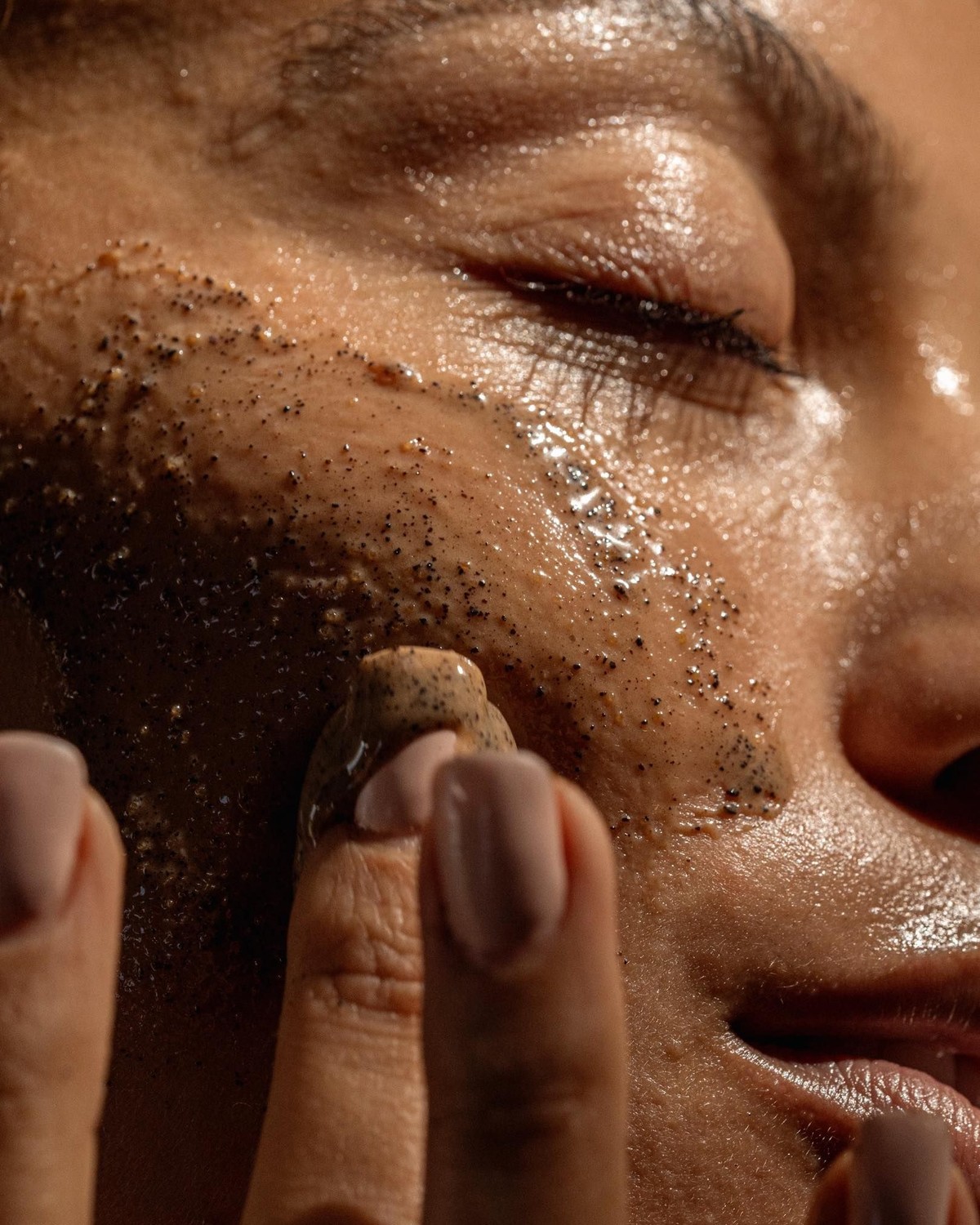
The American Academy of Dermatology describes two main ways to exfoliate at home. Mechanical means a brush, sponge, pad or scrub that physically removes dead skin cells, and chemical means alpha and beta hydroxy acids. I keep that split in my head whenever someone asks me for the best exfoliator for face, because the honest answer starts with which method suits your skin, not which product has the loudest claim.
The AAD also says frequency depends on your skin type and the method, and that the more aggressive the exfoliation, the less often you should do it. That is the rule I actually live by. If a scrub leaves your face tight or pink, it was too much, or too often, or both.
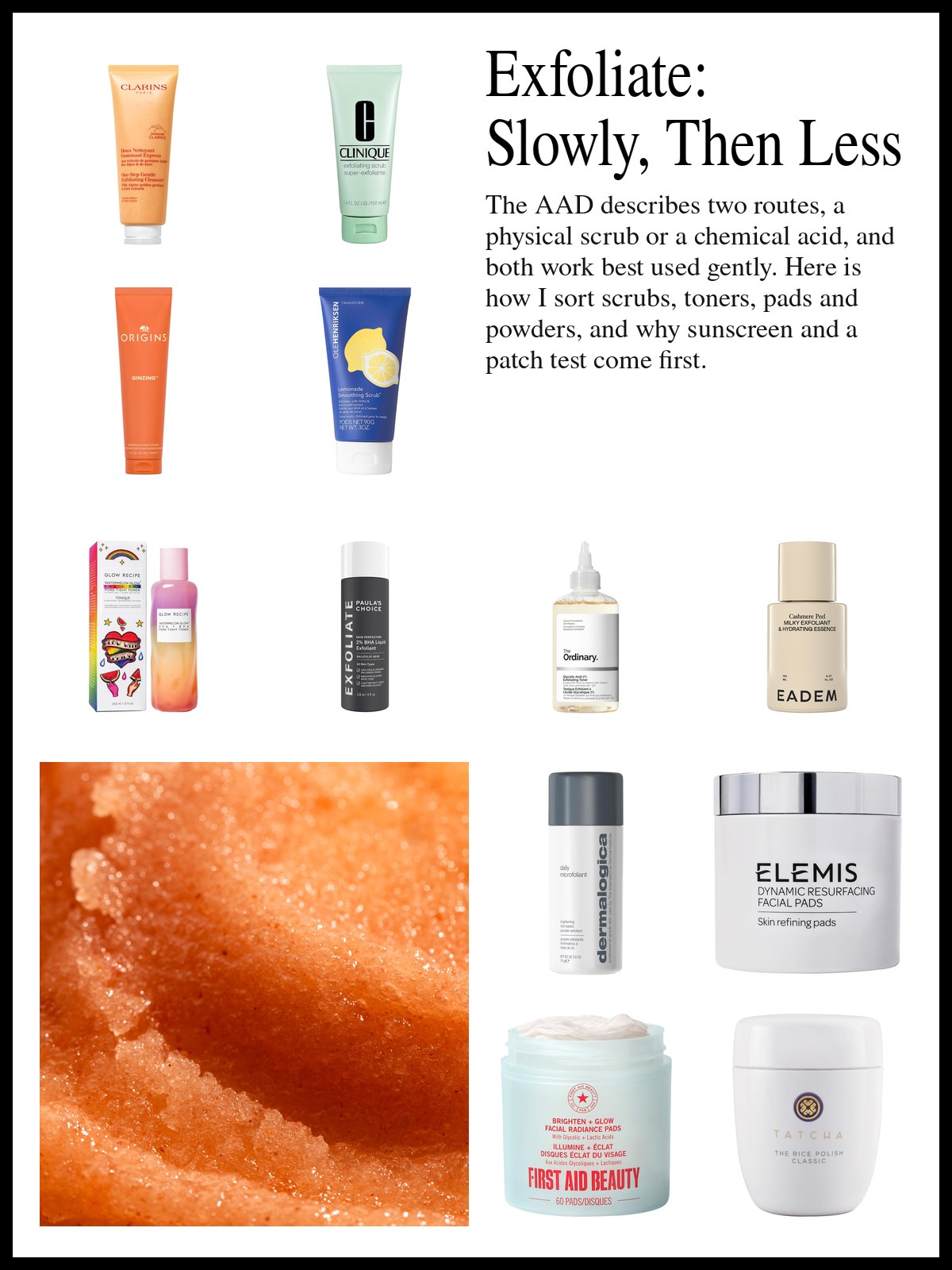
Grid one is the scrub and cleanser end. Clarins' One-Step Gentle Exfoliating Cleanser is the simplest idea here, a cleanser that does a little polishing while it washes. Clinique's Exfoliating Face Scrub with Salicylic Acid combines a scrub with a beta hydroxy acid. Origins' GinZing Refreshing Scrub Cleanser is the one I would keep for a quick morning wash. OLEHENRIKSEN's 10% AHA Lemonade Smoothing Scrub pairs grains with an alpha hydroxy acid, so start slowly with it. Tata Harper's Regenerating BHA Exfoliating Cleanser rounds out the grid with a beta hydroxy acid in cleanser form.
Whichever you pick, patch test on your jaw first, and use it once or twice a week to start. Rinse well, pat dry, and skip the washcloth scrubbing on top of a scrub, since the product is already doing the polishing.
Scrubs and exfoliating cleansers

One-Step Gentle Exfoliating Cleanser
Clarins
$40

Exfoliating Face Scrub with Salicylic Acid
Clinique
$30

GinZing Refreshing Scrub Cleanser
Origins
$22

10% AHA Lemonade Smoothing Scrub
OLEHENRIKSEN
$36

Regenerating BHA Exfoliating Cleanser
Tata Harper
$88

Moisture Surge Gentle Exfoliating Glow Face Cleanser
Clinique
$29

Skin Clarity Gentle Exfoliating Cleanser
Rose Inc
$36

Clearly Corrective Brightening & Exfoliating Daily Cleanser
Kiehl's
$39
Toners and liquids that do the work for you
Liquid exfoliants are where most people end up, because you can sweep one over a cotton pad or your palms and be done. They are also where it is easiest to overdo things, since a toner feels so light that you forget it is an acid.
The FDA says the most common alpha hydroxy acids in cosmetics are glycolic acid and lactic acid, and that they may make skin more sensitive to the sun, so sunscreen is advised. It also notes that salicylic acid is the beta hydroxy acid most often used and recommends sun protection with those too. I take that seriously, and my rule is simple: acid at night, sunscreen every morning.
Paula's Choice's Skin Perfecting 2% BHA Exfoliating Toner is built around salicylic acid. The Ordinary's Glycolic Acid 7% Exfoliating and Brightening Daily Toner is the glycolic option, and the name has the word daily in it, but I would still build up slowly. Glow Recipe's Watermelon Glow PHA + BHA Pore-Tight Toner is the watermelon one, pairing a PHA with a BHA. Eadem's Cashmere Peel Milky Exfoliant is a hydrating essence with a milky feel. Farmacy's Brighten Up 3% TXA Dark Spot Toner adds azelaic acid to the mix.
Clinique's Clarifying Face Lotion 2 is named for gentle exfoliation of dry combination skin, so it is a sensible first liquid to try if you are new to this, with a patch test like the rest.
Follow any of them with a plain moisturizer, and give your skin a few days to show you how it feels before the next round. A little tightness is a sign to wait, not to push on.
Acid toners and liquid exfoliants

Watermelon Glow PHA + BHA Pore-Tight Toner
Glow Recipe
$36

Skin Perfecting 2% BHA Exfoliating Toner for Clear Skin
Paula's Choice
$37

Glycolic Acid 7% Exfoliating and Brightening Daily Toner
The Ordinary
$13.5

Cashmere Peel Milky Exfoliant & Hydrating Essence — Daily AHA + PHA Formula with 9% Azelaic, Lactic & Tranexamic Acids
Eadem
$42

Brighten Up 3% TXA Dark Spot Toner with Azelaic Acid
Farmacy
$34

Clarifying Face Lotion 2 Toner for Gentle Exfoliation of Dry Combination Skin
Clinique
$43

Acne Solutions Clarifying Lotion
Clinique
$23

Clarifying Lotion Twice a Day Exfoliator 1.0
Clinique
$37
Pads and powders for the shortcut
Pads and powders are the exfoliators for people who like a measured dose. A pad has the product built in, and a powder only wakes up when you add water, so you decide how much you use each time.
Dr. Dennis Gross's Alpha Beta Extra Strength Exfoliating AHA/BHA Peel Pads are the more active choice in this grid, and the name says extra strength, so respect that and keep them to nights when nothing else is going on. Elemis' Dynamic Gentle Resurfacing Pads with Lactic Acid are the softer alternative. First Aid Beauty's Brighten + Glow Facial Radiance Pads bring glycolic and lactic acids together for a brighter looking finish.
Then the powders. Dermalogica's Daily Microfoliant is a salicylic acid powder exfoliator, and you mix a small amount with water in your palm. Tatcha's The Rice Polish Foaming Enzyme Powder is a foaming enzyme powder you rub into a foam with wet hands. It is the format I would try first, since you control the water and how long it stays on.
What I would skip: layering several exfoliants in one evening, or using a scrub, a toner and a pad all in the same week. Skip them altogether on skin that is sunburned, freshly shaved, cracked or stinging. The AAD suggests that dry, sensitive or acne-prone skin may prefer a washcloth and a mild chemical exfoliator, followed by moisturizer, which is a calm place to begin.
Peel pads and enzyme powders

Alpha Beta Extra Strength Exfoliating AHA/BHA Peel Pads for Pores, Dark Spots & Texture
Dr. Dennis Gross
$94

Daily Microfoliant, Salicylic Acid Powder Exfoliator for Pores, Spots & Uneven Skin Tone
Dermalogica
$69

Dynamic Gentle Resurfacing Pads with Lactic Acid
Elemis
$69

Brighten + Glow Facial Radiance Pads with Glycolic + Lactic Acids
First Aid Beauty
$39

The Rice Polish Foaming Enzyme Powder
Tatcha
$69

Gentle Reset Daily Exfoliating Pads
Summer Fridays
$42

Glow Peel Pads
Pixi
$22

Glycolic Pads
Uncommon Beauty
$45
The rhythm I would set
Here is how I would set the rhythm. Choose one exfoliant, not three, and use it one evening a week for the first month. If your skin stays comfortable, you can add a second night, but stay where you are if it does not.
Apply sunscreen every morning, since acids can leave skin more sensitive to sun. Always moisturize afterward. Patch test behind the ear or along the jaw for a couple of days before your first full use. If you notice stinging, peeling or redness that hangs around, stop and let your skin rest. Keep a small note of which night you used what, because it makes the pattern easy to spot. For anything persistent, a dermatologist can look at your skin properly, which no toner or pad can do.