What to pair with azelaic acid: a plain moisturizer and a daily sunscreen, added one companion at a time to The Ordinary 10% suspension. I start with the suspension alone for two weeks, then go through the companions, other brands and calming serums.
What to Pair With Azelaic Acid: The Ordinary 10% and Its Companions
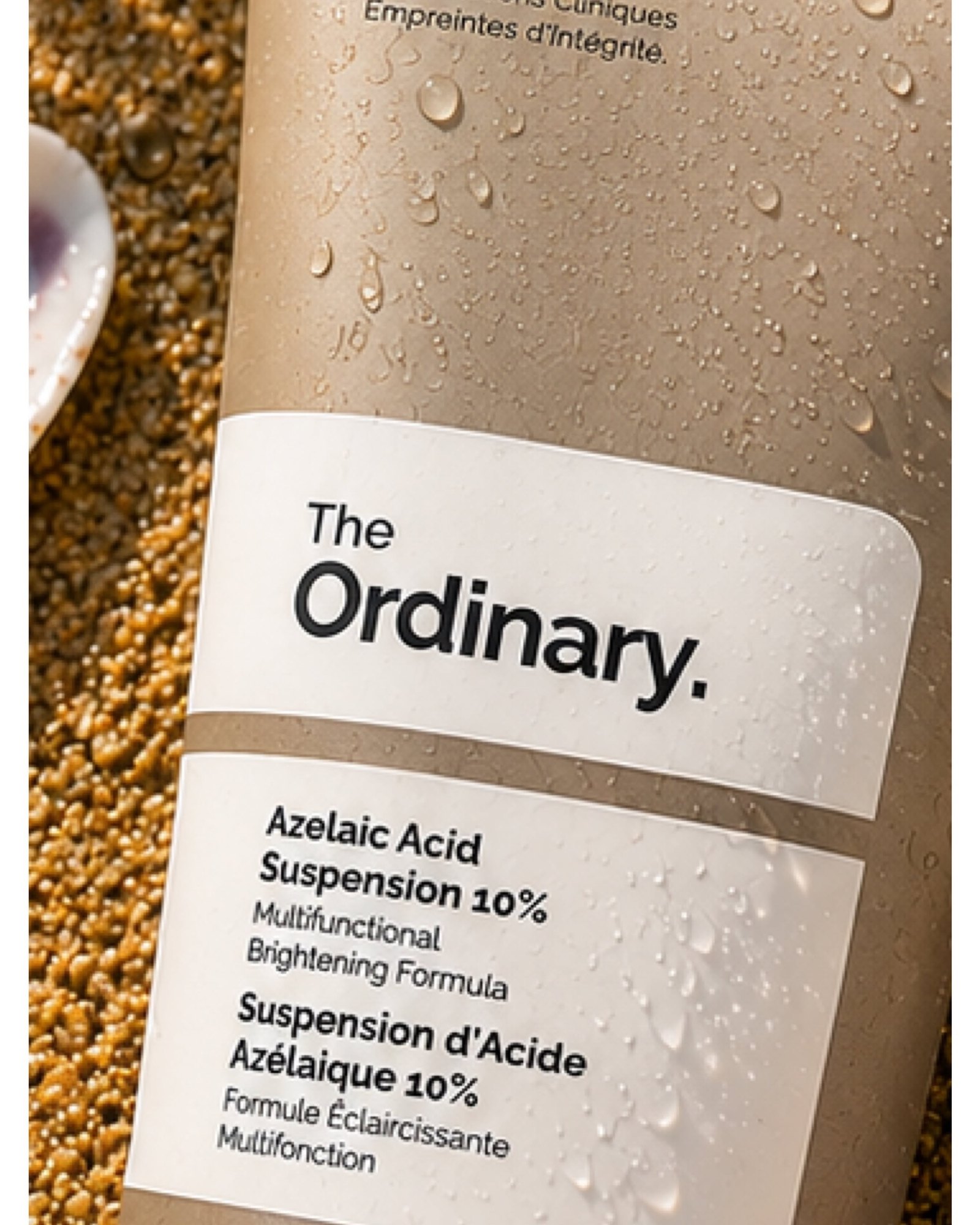
The acid a yeast made first
Rome, the 1970s. An Italian dermatologist notices that the skin of patients with pityriasis versicolor is strikingly paler where the rash sits. Researchers Nazzaro-Porro and Passi follow the clue, and in 1978 they show in the Journal of Investigative Dermatology that a skin yeast, Malassezia, turns fatty acids on the skin into azelaic acid, which inhibits tyrosinase. A yeast's by-product became a serum. I find that more charming than most launch stories.
The Ordinary azelaic acid is the everyday version of that discovery. DECIEM, founded in Toronto in 2013 by Brandon Truaxe, launched The Ordinary in August 2016 with 27 products, and the Azelaic Acid Suspension 10% was among them and is still sold. Estée Lauder completed full ownership in May 2024. The brand calls it a cream-like brightening formulation that improves the look of uneven skin tone and texture. The American Academy of Dermatology says azelaic acid opens clogged pores, works on acne bacteria, reduces inflammation and can treat dark spots after acne clears. I like it because it is the quiet acid, for people who are tired of acids.
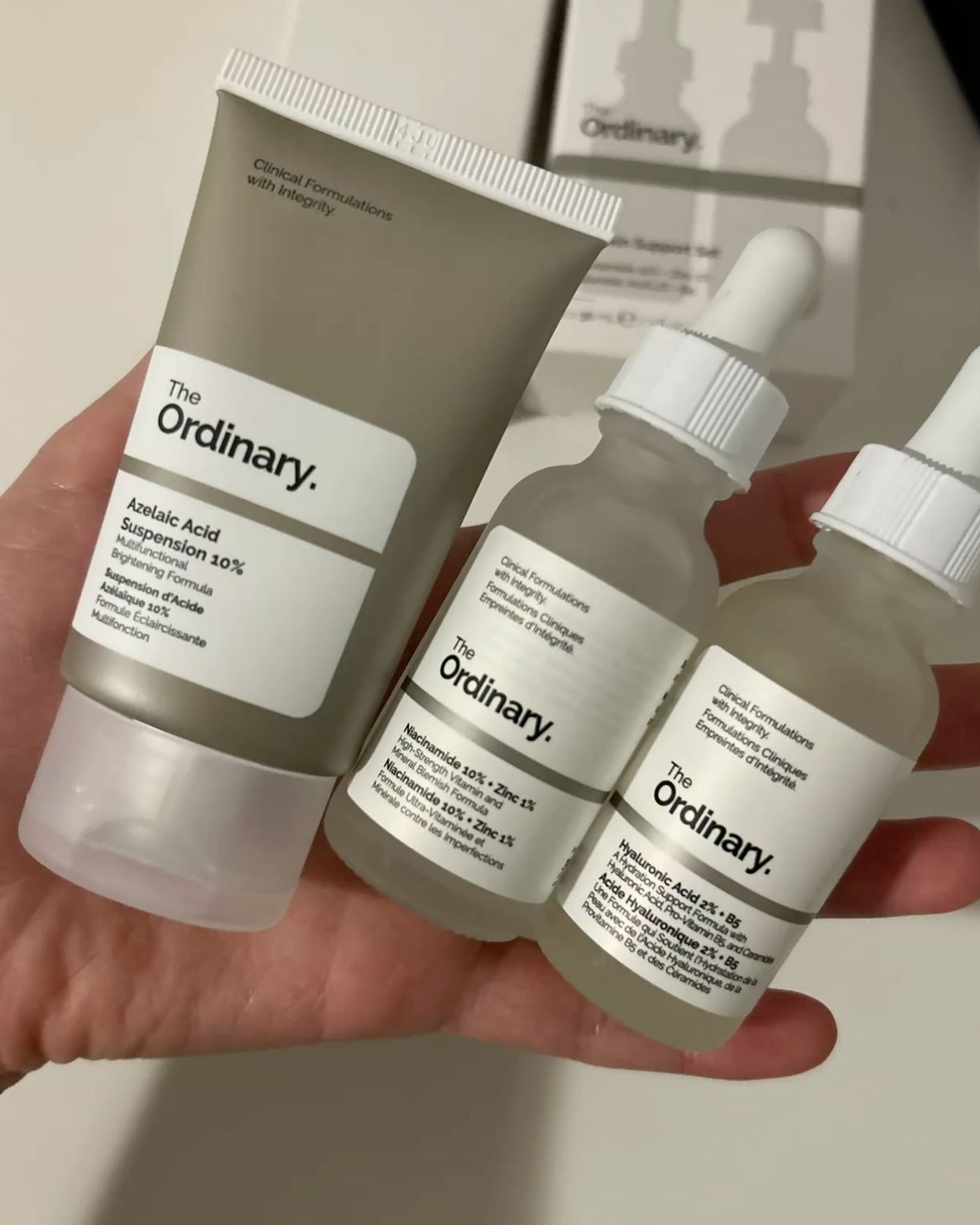
So the trick is to build around it instead of stacking on top. The brand says to use a small amount morning and evening, patch test first, and avoid strong acids, retinoids and peptides in the same routine. The first grid gives you the companions: Alpha Arbutin 2% + Hyaluronic Acid for marks, Niacinamide 5% Face and Body Emulsion for uneven tone, the Soothing & Barrier Support Serum for sensitive skin, and Aloe 2% + NAG 2% for post-acne marks. Hyaluronic Acid 2% + B5 and the Natural Moisturizing Factors moisturizer keep things comfortable, and the UV Filters SPF 45 Serum finishes the morning.
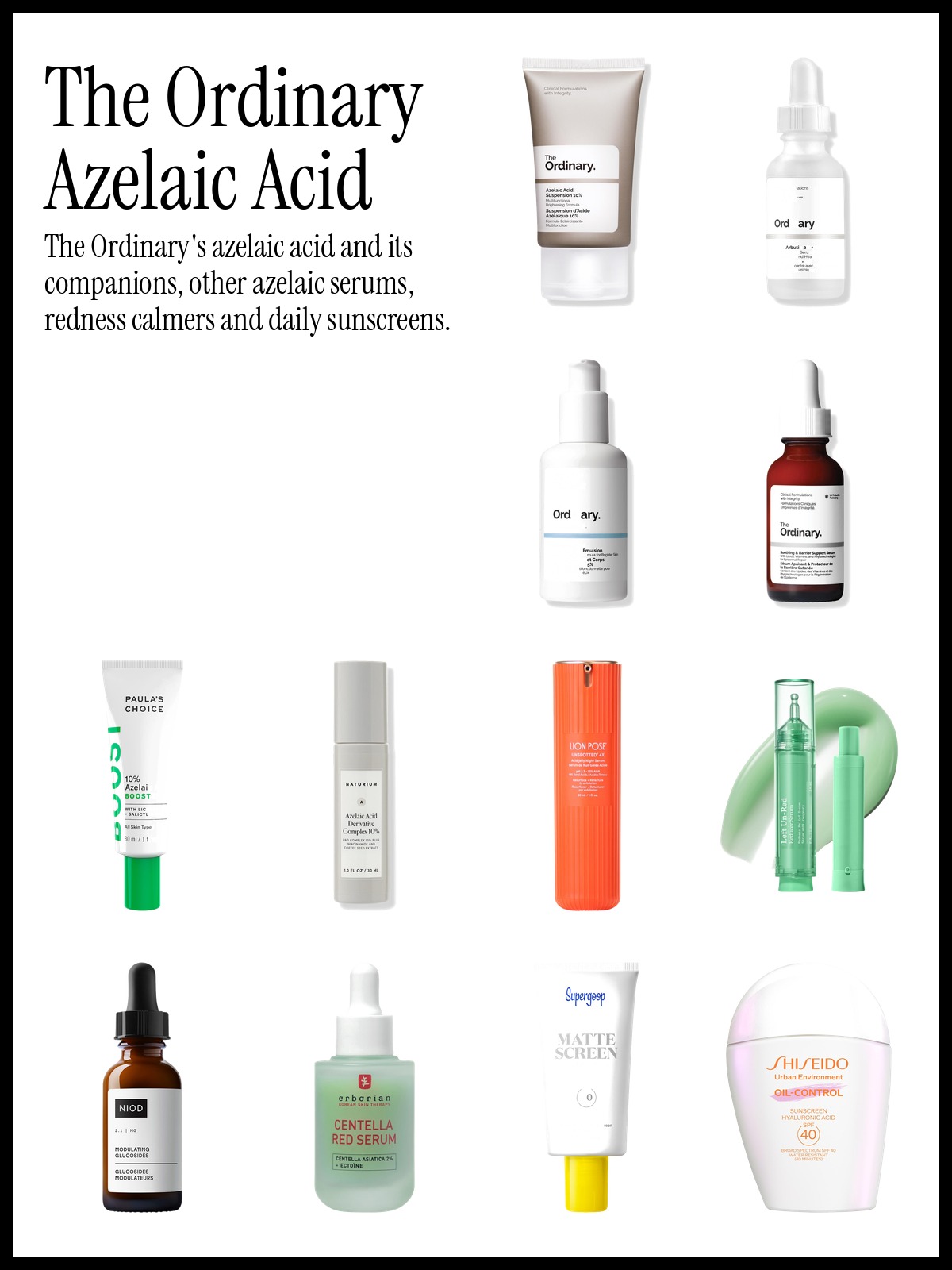
The Ordinary azelaic acid and its companions

Azelaic Acid Suspension 10% Cream for Redness and Blemish-Prone Skin
The Ordinary
$12.2

Alpha Arbutin 2% + Hyaluronic Acid for Hyperpigmentation
The Ordinary
$11.5

Niacinamide 5% Face and Body Emulsion for Dark Spots & Uneven Tone
The Ordinary
$14

Soothing & Barrier Support Serum for Sensitive Skin & Hydration
The Ordinary
$17

Aloe 2% + NAG 2% Solution for Post-Acne Marks
The Ordinary
$14.5

Hyaluronic Acid 2% + B5 Hydrating Serum with Ceramides
The Ordinary
$9.9

Natural Moisturizing Factors + Hyaluronic Acid Daily Moisturizer
The Ordinary
$12.5

UV Filters SPF 45 Serum
The Ordinary
$19
Azelaic Acid Replacement: Other Brands' Serums and Creams
A percentage on the label tells you half the story, and the word after it tells the rest. Ten percent azelaic acid, azelaic acid derivative and azelaic complex are different things, and the label tells you which one you are buying.
Paula's Choice's 10% Azelaic Acid Booster is the one you add to a moisturizer. Naturium's Azelaic Acid Derivative Complex 10% is the derivative version. Lion Pose's Unspotted 4X Azelaic Acid Serum is aimed at dark spots, and The INKEY List's SuperSolutions 10% Azelaic Serum is aimed at redness. Good Molecules' 10% Azelaic Acid Face Treatment is a plain name for a plain product, and THOME's ABC Triple-Synergy Redness Comfort Serum is a redness comfort serum by name and intent. Shani Darden's Rescue Serum uses a 10% azelaic complex for dark spots, and COSRX's Azelaic Acid 10 B5 is a cream, which is better if your skin is dry.
A pairing I like: azelaic acid in the morning under sunscreen and a simple moisturizer at night. Skin that is not being asked to do five things at once tends to settle faster.
What I would skip: adding one of these on top of a strong acid or retinoid routine. The Ordinary's own advice is to avoid that, and even at these strengths a little tingling is possible.

10% Azelaic Acid Booster for Redness Relief
Paula's Choice
$42

Azelaic Acid Derivative Complex 10%
Naturium
$19.99

Unspotted 4X Azelaic Acid Serum for Dark Spots
Lion Pose
$79

SuperSolutions 10% Azelaic Serum Redness Relief Solution
The INKEY List
$20

10% Azelaic Acid Face Treatment
Good Molecules
$14.19

ABC Triple-Synergy Redness Comfort Serum
THOME
$27

Rescue Serum With 10% Azelaic Complex for Dark Spots
Shani Darden Skin Care
$68

Azelaic Acid 10 B5 Redness Soothing Cream
COSRX
$20
Redness calming serums for sensitive skin
Red skin is easier to read when you change one thing at a time and give it two weeks. If your skin is red, you want to know which product helped and which one did not, and you cannot know that if three arrive at once.
Dr. Idriss' Left Un-Red is aimed at redness and blemish-prone skin, and NIOD's Modulating Glucosides is the science-forward, slightly austere one. Erborian's Centella Red Serum and AESTURA's A-CICA365, which is formulated at pH 4.5, are the two centella picks. Beauty of Joseon's Calming Barrier Serum is the gentle K-beauty one, Torriden's Balanceful 5D Cica Complex is the lightweight pick, and Facile's Destress Redness Calming Serum adds vitamin C and ceramides. Dr. Barbara Sturm's Calming Serum is the most minimal of the group.
If redness is persistent, or comes with bumps and burning, see a dermatologist. The AAD describes rosacea treatments that are prescription-only, including azelaic acid at 15%, and a 10% cosmetic is a different thing.
What I would skip: stacking three calming serums in one night. They do not add up, and you will not know which one you needed.

Left Un-Red Reducer Face Serum for Redness and Blemish Prone Skin
Dr. Idriss
$68
%20Serum%20to%20Soothe%20Redness%20and%20Irritation&link=https%3A%2F%2Fwww.sephora.com%2Fproduct%2Fmodulating-glucosides-P526818%3FskuId%3D3030822)
Modulating Glucosides (MG) Serum to Soothe Redness and Irritation
NIOD
$29

Centella Red Serum
Erborian
$39

A-CICA365 Soothing Redness Relief Face Serum pH4.5
AESTURA
$38

Calming Barrier Serum for the Appearance of Redness
Beauty of Joseon
$17

BALANCEFUL 5D Cica Complex Redness Reducing Serum
Torriden
$25

Destress Redness Calming Serum with Vitamin C & Ceramides
Facile
$38

Calming Serum — Daily Calming & Hydrating Serum to Soothe
Dr. Barbara Sturm
$260
Daily facial sunscreens to wear over your serums
Serums go on thinnest to thickest, and sunscreen goes on last. Sunscreen is a shield, so it goes on the outside. Give it a minute to settle before makeup, and it will sit better.
Supergoop's Mineral Mattescreen SPF 40 is the matte mineral one, and Shiseido's Urban Environment Oil-Control SPF 40 is named for oily skin, and Shiseido's Mineral Clear SPF 50 is the mineral version. IT Cosmetics' Hello Sunshine is an invisible SPF 50, and KORA Organics' Silky Sun Drops is a sunscreen serum. Dermalogica's Porescreen SPF 40 is a mineral one for pores, and Ultra Violette's Future Screen SPF 50 is a fragrance-free sunscreen serum. Supergoop's Unseen is the invisible everyday pick.
I keep the morning short: the azelaic step, one calming serum if needed, and any of these on top. It is short enough to do before coffee. Reapply if you are outside all day, and keep a small tube in your bag.
What I would skip: leaving out sunscreen because the brand says azelaic acid does not significantly increase sun sensitivity. It still tells you to use sun protection, and so do I.

Mineral Mattescreen SPF 40
Supergoop!
$40

Urban Environment Oil-Control Sunscreen SPF 40
Shiseido
$52

Urban Environment Mineral Clear Sunscreen SPF 50
Shiseido
$39

Hello Sunshine Invisible Sunscreen For Face SPF 50
IT Cosmetics
$36

Silky Sun Drops Organic Sunscreen Serum
KORA Organics
$58

Porescreen SPF 40 Mineral Sunscreen
Dermalogica
$57

Future Screen SPF 50 Mineral Fragrance Free Facial Sunscreen Serum
Ultra Violette
$40

Unseen Sunscreen Invisible Broad Spectrum SPF 50 PA +++
Supergoop!
$38
Azelaic acid, The Ordinary way
In my book, the ordinary way is the right way with azelaic acid: one 10% suspension, used patiently, with a plain moisturizer and sunscreen around it. It will not do the work of a prescription, and it is honest about that.
Begin with the suspension alone for two weeks, add one companion, and keep the sunscreen daily. If redness keeps coming back, book the appointment, and bring the list of what you have tried so the conversation starts further along. A yeast made it first, and you only have to remember to put it on. Do that every day, and then put sunscreen over it.
If you are thinking of adding a BHA on alternate nights, I also wrote up how to use The Ordinary Salicylic Acid 2% Solution.






